
Pita Bread
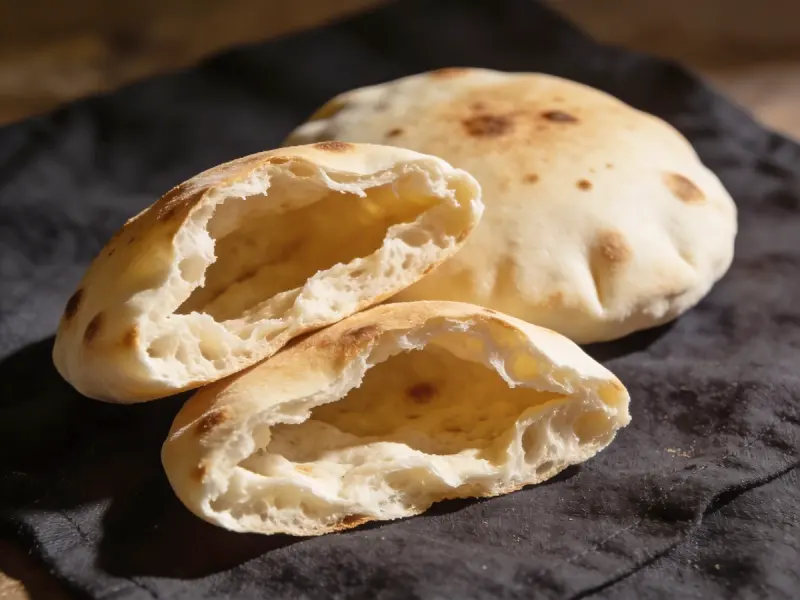
Pita (from the Greek πίτα) is the leavened flatbread of the Middle East and Eastern Mediterranean. Flatbreads like it have been baked in the Near East for thousands of years, though the steam-puffed pocket is thought to be a much later development. The pocket forms during baking: when a thin disc of well-hydrated yeast dough hits an extremely hot baking surface, the water in the dough converts instantly to steam, inflating the two layers of dough apart like a balloon. As the bread cools, the steam escapes and the pocket collapses — but the internal separation remains, creating the pocket that makes pita the ideal vehicle for falafel, shawarma, hummus, and mezze. The technique is simple but precise: the right dough hydration, the correct thickness (4 to 5 mm), and a screaming-hot baking surface are the three variables that determine whether a pita puffs completely or bakes flat.
Ingredients
- 400 gbread flour or plain flour
- 7 ginstant yeast
- 1 tspsugar
- 1 tspfine salt
- 2 tbspolive oil
- 260 mlwarm water
Method
- Make the dough. Combine flour, instant yeast, sugar, and salt in a large bowl. Add the olive oil and warm water. Mix until a shaggy dough forms, then turn out and knead by hand for 8 to 10 minutes until the dough is smooth, elastic, and slightly tacky. It should pass the windowpane test: a small piece stretched with both hands should become translucent without tearing. Pita dough is soft and slightly tacky, and that moisture is what turns to steam and opens the pocket. Do not add extra flour to make the dough easier to handle.
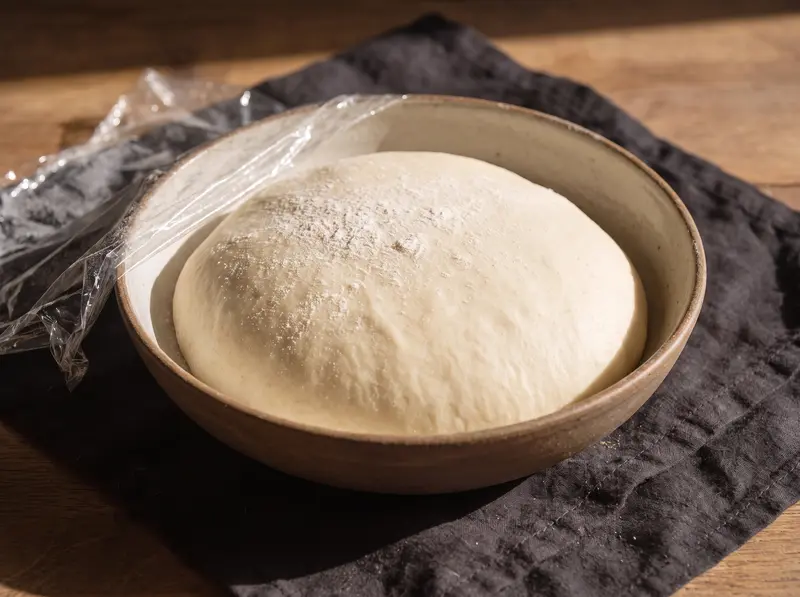
- Rise. Shape the dough into a ball and place in a lightly oiled bowl. Cover with cling film or a damp cloth and leave at room temperature until doubled in size, 60 to 90 minutes depending on kitchen temperature. The rise develops flavor and gluten strength. Alternatively, rise in the refrigerator overnight (8 to 16 hours) for more complex flavor — bring to room temperature for 30 minutes before shaping.
- Preheat the oven. Place a pizza stone, heavy cast-iron pan, or an inverted heavy baking sheet on the highest rack of the oven. Preheat to the highest temperature your oven can reach — 250 to 260°C (480 to 500°F) — for at least 30 minutes. This extended preheating is essential: the baking surface must be scorching hot for the steam to form instantly when the dough makes contact. A surface that is merely warm will produce flat, dense pita with no pocket.
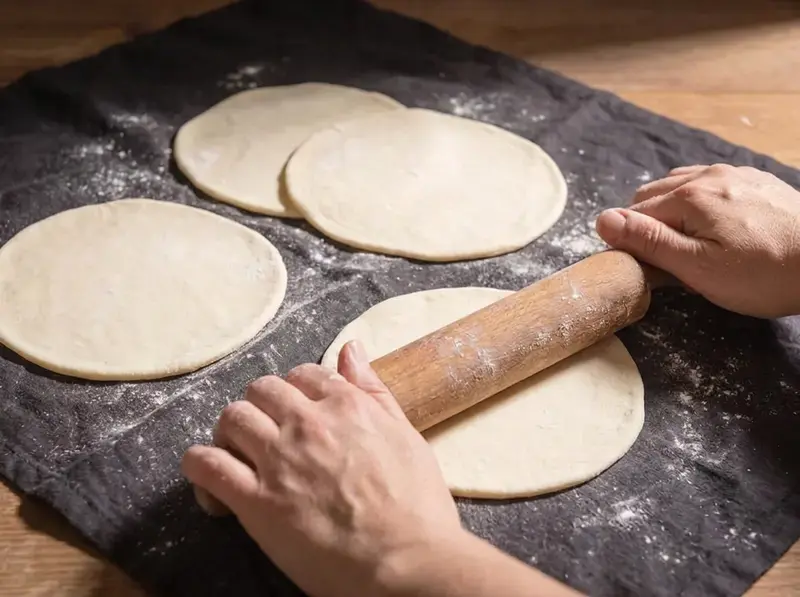
- Shape the pitas. Punch down the risen dough. Divide into 8 equal portions (about 88 g each). Roll each portion into a smooth ball. Working with one at a time (keep the rest covered), roll on a lightly floured surface to a circle about 15 cm (6 inches) across, 4 to 5 mm thick. Uniform thickness is critical — thicker areas will not inflate, thinner areas may tear. Do not roll thinner than 4 mm. Do not poke or press with your fingers — any hole in the surface will prevent puffing.
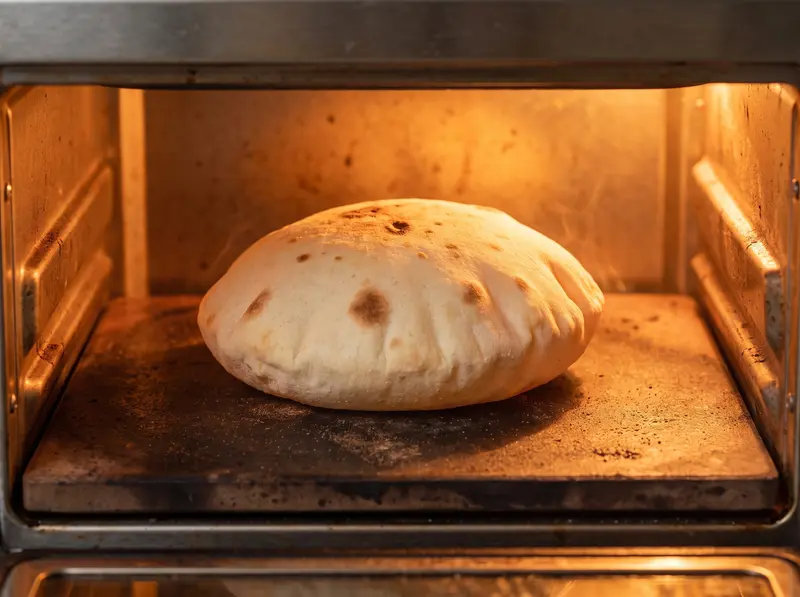
- Bake. Working quickly, slide one pita directly onto the screaming-hot baking surface. Bake for 3 to 5 minutes. Within 2 to 3 minutes the pita should balloon dramatically to a full sphere. Do not open the oven door during the first 2 minutes. Once puffed and very lightly colored (not golden — pale), remove immediately with tongs or a spatula. Stack the baked pitas under a clean cloth — the trapped steam keeps them soft and pliable as they deflate and cool. Serve warm. Any pita that did not puff is still edible as a flatbread.
FAQ
Flat pita is almost always caused by one of four problems. First and most common: the oven and baking surface were not hot enough. The baking surface must be preheated for at least 30 minutes at the highest temperature your oven can reach — 250 to 260°C. A surface that is merely warm produces flat bread. Second: the pita was rolled too thick or too thin. The sweet spot is 4 to 5 mm — thicker areas cannot generate enough steam pressure to separate the layers; much thinner than 3 mm and the dough dries out before it can inflate. Third: there are holes or tears in the dough from rolling, which allow the steam to escape. Fourth: the dough is under-hydrated. This recipe is at 65% hydration, which is enough for the pocket to open, so do not add extra flour.
The pocket-forming pita described here is the Levantine style — common in Lebanon, Syria, Israel, Jordan, Palestine, and Egypt — where the bread is used to scoop, dip, and fill. It is baked very quickly at high heat, producing a thin, pale bread with a clear hollow interior. Greek-style pita (used for souvlaki and gyros) is usually thicker and has no pocket; it is made to be wrapped around meat. Neither is more authentic than the other; they serve different purposes. The technique in this recipe produces the pocket-forming Levantine style.
Yes — on a cast-iron pan or heavy skillet over high heat. Heat the pan for 3 to 4 minutes until a drop of water sizzles immediately on contact. Place the rolled pita in the dry, ungreased pan. After 30 seconds, bubbles will form. Flip and cook 1 to 2 minutes on the second side until dark spots appear and the bread begins to puff. Flip back and cook 1 minute more. Press gently with a cloth if puffing is incomplete. Stovetop pita is more accessible but puffs less dramatically and evenly than oven pita; the oven method produces a more complete pocket. The stovetop method also produces some char marks that many people prefer for the flavor.
Fresh pita is best eaten within hours of baking — the pocket collapses as it cools but can be reopened with a knife. Store cooled pita in a sealed plastic bag at room temperature for 2 to 3 days. Refrigeration is not recommended — cold accelerates staling in bread. To refresh day-old pita: wrap in foil and place in a 180°C oven for 5 minutes, or toast briefly in a dry pan. Pita freezes excellently for up to 3 months — freeze flat and separate with baking paper, then reheat from frozen in a dry pan or oven. The dough can also be refrigerated after the first rise for up to 24 hours and baked to order.
In Levantine cuisine, pita is used in several ways. As a scoop: torn into pieces and used to scoop hummus, baba ganoush, labneh, mutabbal, and any mezze dish. As a sandwich: the pocket filled with falafel, shawarma, grilled halloumi, or kofta, dressed with tahini sauce, pickles, fresh parsley, and tomato. As a base for manakish (Lebanese za'atar flatbread): the shaped, unbaked pita is brushed with za'atar and olive oil paste and baked. In Egypt, the smaller, thicker version called aish baladi is torn and used to scoop ful medames (stewed fava beans). In Greece, the thicker version wraps souvlaki and gyros. Za'atar, tahini, olive oil, and hummus are the most common accompaniments.
Keep browsing
More dishes from the Lebanese archive — picked by overlap with what you're cooking now.
Recipes by email
One letter a week: a recipe picked for your taste, plus whatever is new on the site. Unsubscribe in one click.
Welcome gift: Sergei's cookbook (e-book).
By subscribing you agree to the privacy policy.
Tell us what you like to cook (30 seconds) →
Join the conversation
Comments
No comments yet — be the first!