
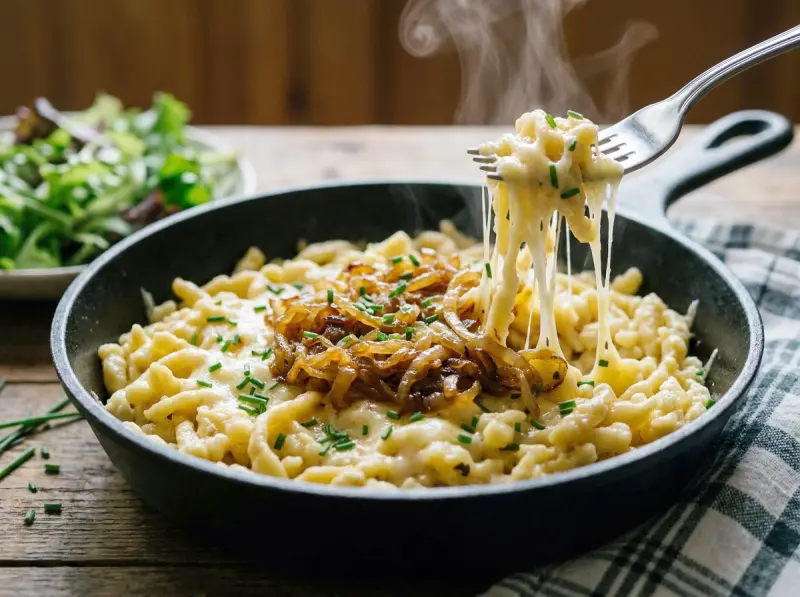
Käsespätzle
Swabia's answer to macaroni cheese: fresh egg noodles layered hot with two kinds of grated cheese and buried under slowly caramelised onions. There is no sauce and no oven required — the cheese melts on the residual heat of the noodles, which is exactly why the layering has to happen fast.
Ingredients
- 400 gflour
- 4 pcseggs
- 200 gEmmental cheese
- 100 gGruyère cheese
- 2 pcsonion
- 60 gbutter
- 100 mlmilk
- 1 gnutmeg
- 2 gblack pepper
- 10 gchives
Method
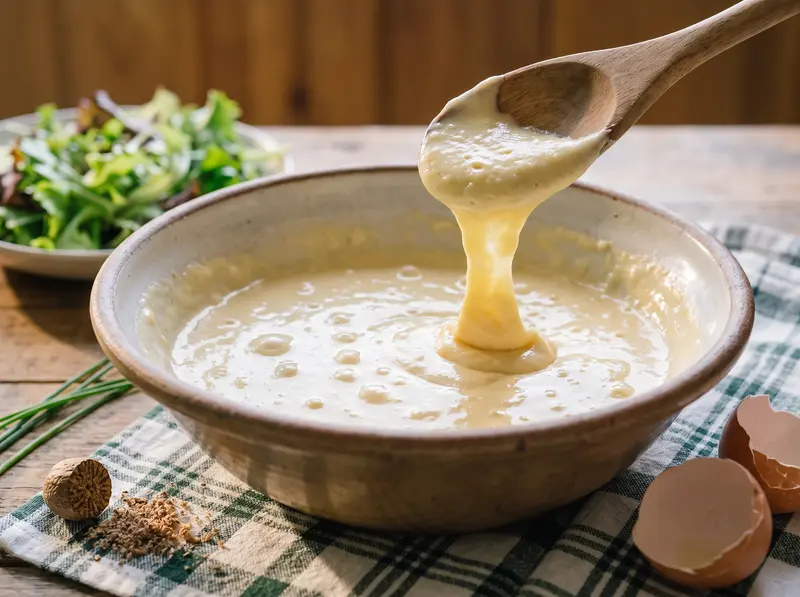
- Make the batter: beat the flour, eggs, milk, a good pinch of salt, and the nutmeg with a wooden spoon until the batter is smooth, glossy, and forms blisters when you lift the spoon. Beating it hard develops the gluten that holds the spätzle together. Rest it for 15 minutes.
- While it rests, slice the onions thinly and cook them in half the butter over medium-low heat until deep golden and sweet, 15 to 20 minutes. Stir now and then and don't rush it — the fried onions are half the dish, not a garnish.
- Grate both cheeses and mix them together. Emmental brings the stretch, Gruyère brings the flavour; using only one gives you either rubber or grease.
- Bring a wide pot of salted water to a rolling boil. Press or scrape the batter into the water in batches — through a spätzle press, a coarse colander, or off a wet board with a knife.
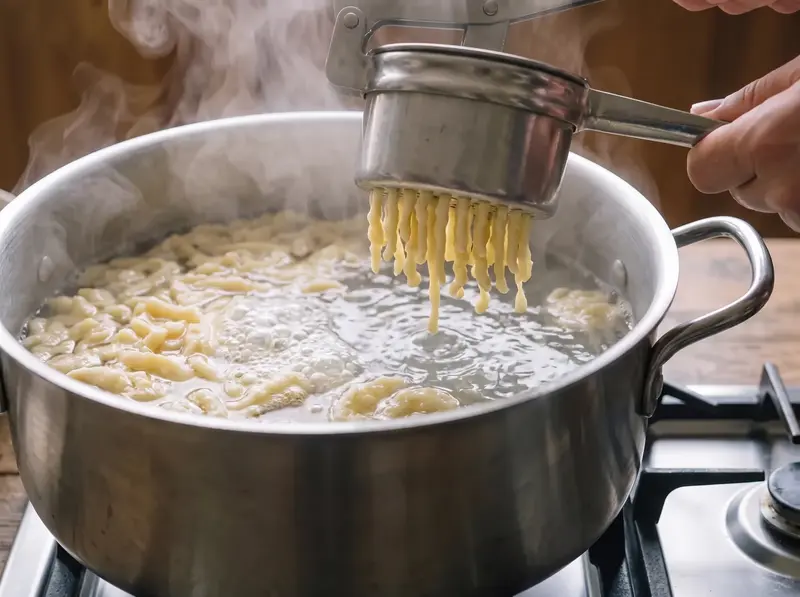
- The spätzle are done about 30 seconds after they float, roughly 2 minutes. Lift them out with a slotted spoon and drain briefly; don't rinse them, since the surface starch helps the cheese cling.
- Rub the warmed bowl or pan with a little of the remaining 30 g butter and keep the rest for dotting between the layers. Layer straight away in a warmed bowl or the pan: a layer of hot spätzle, a handful of cheese, more spätzle, more cheese, finishing with cheese. Cover for 2 to 3 minutes and let the heat of the noodles do the melting.
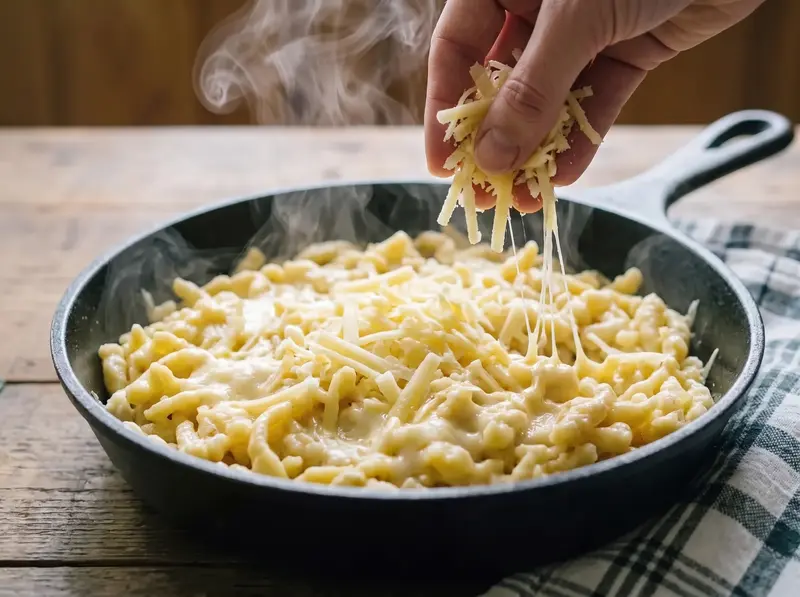
- Fold once, gently, so the cheese pulls into strands without turning gluey. Top with the caramelised onions and chives, grind over black pepper, and serve immediately.
FAQ
A mix. Emmental or young Allgäuer melt into strands, while Bergkäse or Gruyère bring the nutty flavour that stands up to the onions. Avoid hard dry cheeses like aged Parmesan, which separate into oil instead of melting.
A coarse colander with 5 mm holes works, pressed with a spatula. So does the traditional method: spread batter on a wet wooden board and shave thin strips off the edge into the water with a knife, dipping the knife in the boiling water between strokes.
The batter was too thin or not beaten enough. It should be thick enough to fall in a slow ribbon, not to pour. Beat it hard until bubbles appear, and add flour a spoonful at a time if it still runs off the spoon like cream.
Yes — fresh ones from the chilled section are the closest. Blanch them for a minute in boiling salted water so they're properly hot, drain, and layer as usual. Hot noodles matter more than homemade ones here.
There's no sauce. Macaroni cheese is bound with a béchamel and baked; Käsespätzle is just noodles, cheese melted by residual heat, and fried onions on top. That makes it faster, and it also means it has to be eaten straight away.
Keep browsing
More dishes from the German archive — picked by overlap with what you're cooking now.
Recipes by email
One letter a week: a recipe picked for your taste, plus whatever is new on the site. Unsubscribe in one click.
Welcome gift: Sergei's cookbook (e-book).
By subscribing you agree to the privacy policy.
Tell us what you like to cook (30 seconds) →
Join the conversation
Comments
No comments yet — be the first!