
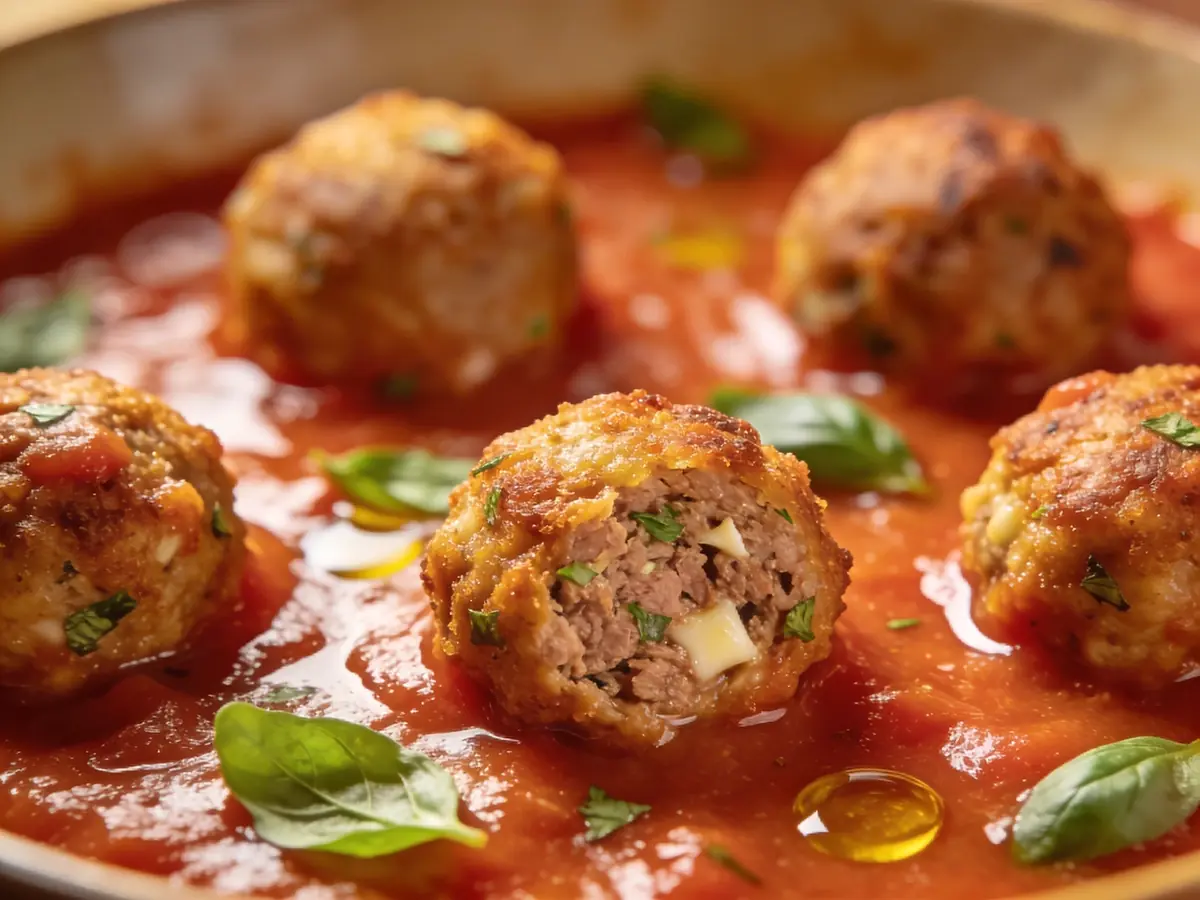
Meatballs
Italian meatballs (polpette) — juicy balls of mixed minced meat seasoned with aromatic herbs and cheese, fried to a golden crust and stewed in a rich tomato sauce.
Ingredients
- 500 gmixed minced meat
- 100 gbreadcrumbs
- 100 mlmilk
- 1 egg
- 50 gParmesan
- 2 clovesgarlic
- 2 tbspfresh parsley
- to tastesalt and black pepper
- 2 tbspolive oil for frying
- 800 gcanned tomatoes in their own juice
- 1 onion
- 2 clovesgarlic
- 2 tbspolive oil
- 1 tspdried oregano
- to tastesalt and pepper
- a few leavesfresh basil
Method
- In a bowl, mix the breadcrumbs with the milk and leave for 5 minutes. Add the minced meat, egg, Parmesan, garlic, parsley, salt and pepper. Mix thoroughly.
- Form the mince into small balls about 3-4 cm in diameter.
- Heat the olive oil in a large frying pan and fry the meatballs on all sides until golden.

- For the sauce: in another frying pan, sauté the onion and garlic in olive oil until soft. Add the tomatoes, oregano, salt and pepper. Simmer over low heat for 15-20 minutes.

- Add the sautéed meatballs to the sauce and braise for another 15-20 minutes over low heat. Add fresh basil at the end.
FAQ
The most common reason is too little binder. Add one egg per 500 g of meat and 2–3 tablespoons of breadcrumbs soaked in milk for a few minutes. The soaked bread absorbs moisture and holds the mixture together better than dry crumbs. Also make sure to mix the meat thoroughly — knead it for at least 2 minutes so the proteins form a network that keeps the ball intact. Chilling the shaped meatballs in the fridge for 20–30 minutes before cooking also helps them hold their shape.
A 50/50 mix of ground beef and ground pork gives the best result: beef provides flavor and structure, while pork adds fat that keeps the meatballs moist. Lean beef alone (especially 90% lean) tends to produce dry, dense balls. If you prefer only beef, choose an 80/20 grind. Veal is another excellent option — it is tender and mild. For extra juiciness some cooks add 10–15% ground lamb or a tablespoon of cold butter per 500 g of meat.
Browning is optional but highly recommended. Searing meatballs in a hot pan with a little oil for 2–3 minutes per side creates a Maillard crust that adds deep savory flavor and helps them keep their shape during the long simmer in sauce. If you skip browning, the meatballs will be softer and the sauce will be lighter in color. For a quicker weeknight version you can skip this step and simmer directly, but the flavor will be noticeably milder.
Cooked meatballs in sauce keep well in an airtight container in the refrigerator for up to 4 days. Reheat gently in the sauce over low heat to prevent drying out. Raw meatballs freeze beautifully: arrange them on a tray in a single layer, freeze for 1–2 hours until solid, then transfer to freezer bags — they keep for up to 3 months. Cook directly from frozen, adding 5–7 extra minutes to the cooking time. Cooked meatballs can also be frozen for up to 3 months.
The egg acts as a protein binder when heated. Good substitutes include: 1 tablespoon of ground flaxseed mixed with 3 tablespoons of water (let sit 5 minutes to gel), 2 tablespoons of aquafaba (liquid from canned chickpeas), or 1 tablespoon of tomato paste which also adds flavor. Another effective option is mashed potato (2 tablespoons per 500 g of meat) — the starch binds and adds moisture. Chilling the shaped meatballs for 30 minutes before cooking is especially important when using egg-free binders.
Rate this
Recipes by email
One letter a week: a recipe picked for your taste, plus whatever is new on the site. Unsubscribe in one click.
Welcome gift: Sergei's cookbook (e-book).
By subscribing you agree to the privacy policy.
Tell us what you like to cook (30 seconds) →Keep browsing
More dishes from the Italian archive — picked by overlap with what you're cooking now.

Join the conversation
Comments (1)
I never cut into the mixed minced meat to check doneness for meatballs. A thermometer preserves the juices; a knife wound lets them escape. Every cut is flavor leaving the meat.