
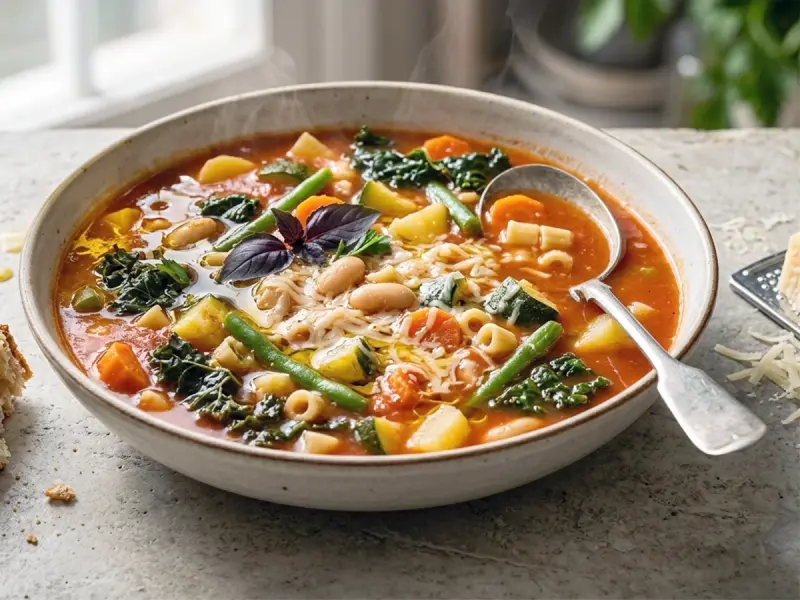
Minestrone
Italian vegetable and bean soup with pasta. The vegetables soften in olive oil before any liquid goes in. A Parmesan rind simmers in the broth. The result tastes nothing like the tinned version.
Ingredients
- 4 tbspolive oil, plus more to finish
- 1 large onion
- 2 carrots
- 2 celery stalks
- 4 garlic cloves
- 2 tbsptomato paste
- 400 gcanned crushed tomatoes
- 400 gcanned cannellini beans
- 2 medium potatoes, peeled and diced 1.5 cm
- 1 medium zucchini, diced 1.5 cm
- 150 ggreen beans
- 100 gcavolo nero or kale, stems removed, leaves torn
- 1.5 lvegetable broth
- 1 Parmesan rind
- 1 bay leaf
- 1 tspdried oregano
- 120 gsmall pasta
- 1 tspsalt
- 0.5 tspblack pepper
- 50 gParmesan
Method
- Heat olive oil in a large heavy pot over medium heat. Add onion, carrots, and celery with a pinch of salt. Cook 8–10 minutes, stirring occasionally, until soft and the onion is translucent.
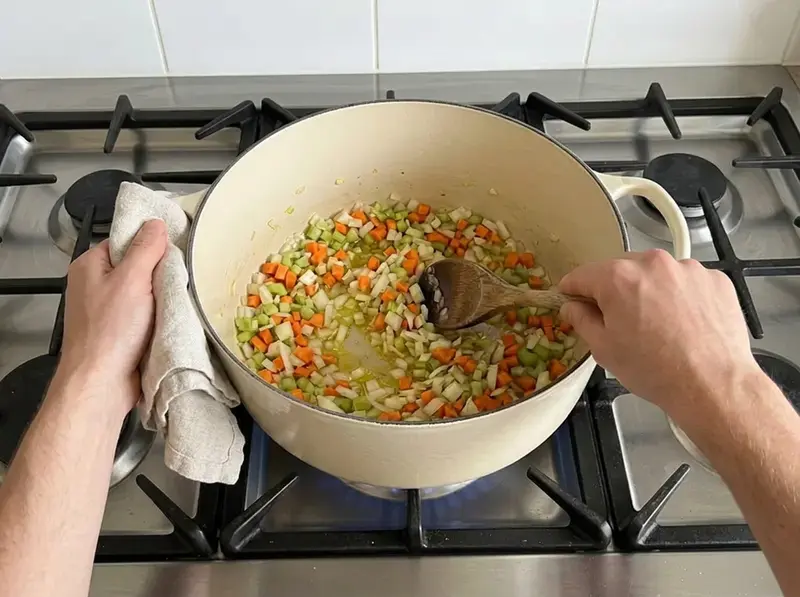
- Add garlic and tomato paste. Cook 2 minutes, stirring constantly, until the paste darkens slightly.
- Add crushed tomatoes, potatoes, broth, bay leaf, oregano, and Parmesan rind. Bring to a boil, then reduce to a steady simmer.
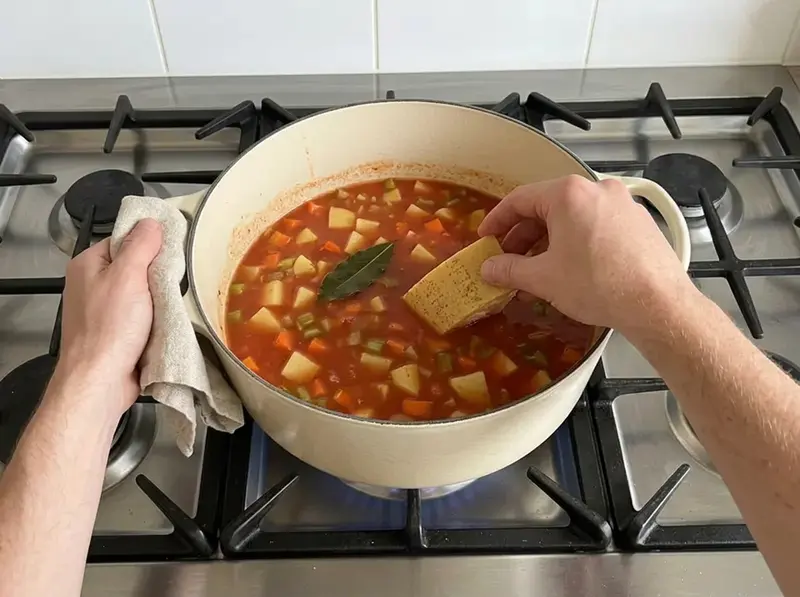
- Cook 15 minutes. Add the cannellini beans, zucchini, and green beans. Continue simmering 10 more minutes.
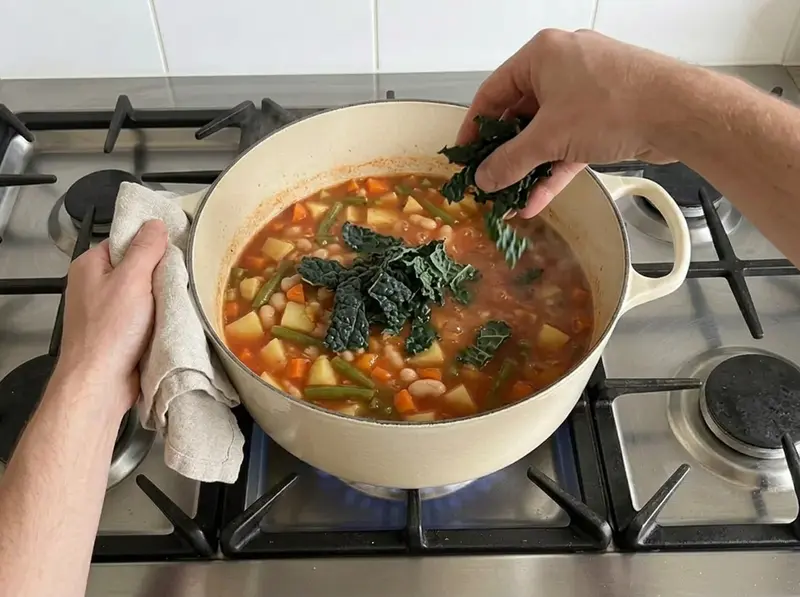
- Add the cavolo nero or kale. Simmer another 5 minutes until the leaves are tender.
- Meanwhile, cook the pasta separately in salted water until al dente. Drain and toss with a little olive oil so it doesn't stick.
- Remove the Parmesan rind and bay leaf. Taste the soup, add the black pepper, and adjust seasoning. Ladle into bowls, add a portion of pasta to each bowl, drizzle with olive oil, and top with grated Parmesan.
FAQ
Three things cause this. First: the vegetables weren't softened in olive oil before adding liquid — that step builds the flavor base. Second: no Parmesan rind in the broth — it dissolves slowly and adds an umami depth that seasoning alone can't replace. Third: not enough cooking time — minestrone needs at least 30 to 40 minutes for the flavors to come together. Salt added only at the end rather than in layers also produces a flat result even if the total quantity is right.
Add in stages based on cooking time. First: onion, carrot, celery, and garlic — softened in olive oil for 8 to 10 minutes before any liquid. Then: potatoes, beans, and tomatoes — simmer 20 minutes. Last: zucchini, green beans, spinach, or kale — add 5 to 7 minutes before the end. Pasta goes in last according to packet instructions, cooked separately.
Yes, but store the pasta separately. The soup without pasta keeps 5 days in the fridge and freezes well for 3 months. Pasta left in hot soup absorbs the broth within 30 minutes and swells. Cook pasta separately and add directly to each bowl at serving time.
A bundle of fresh thyme and rosemary tied with kitchen twine gives aroma but not the same depth. A handful of dried porcini or shiitake mushrooms added at the start give comparable umami. If nothing is available, stir in 1 teaspoon of white miso paste at the end — not Italian, but it works. The best solution is to start saving Parmesan rinds in the freezer every time you finish a block.
Small shapes: ditalini, elbows, small shells, or orecchiette. They stay proportionate to the vegetables and fit on a spoon. For 6 servings of soup, 120 g of dry pasta is enough. More and the soup becomes pasta in tomato sauce rather than minestrone.
Rate this
Recipes by email
One letter a week: a recipe picked for your taste, plus whatever is new on the site. Unsubscribe in one click.
Welcome gift: Sergei's cookbook (e-book).
By subscribing you agree to the privacy policy.
Tell us what you like to cook (30 seconds) →Keep browsing
More dishes from the Italian archive — picked by overlap with what you're cooking now.
Join the conversation
Comments (1)
I always make a larger batch of this minestrone and freeze individual portions. It reheats beautifully and having homemade soup in the freezer is one of the best investments of a Sunday afternoon.