


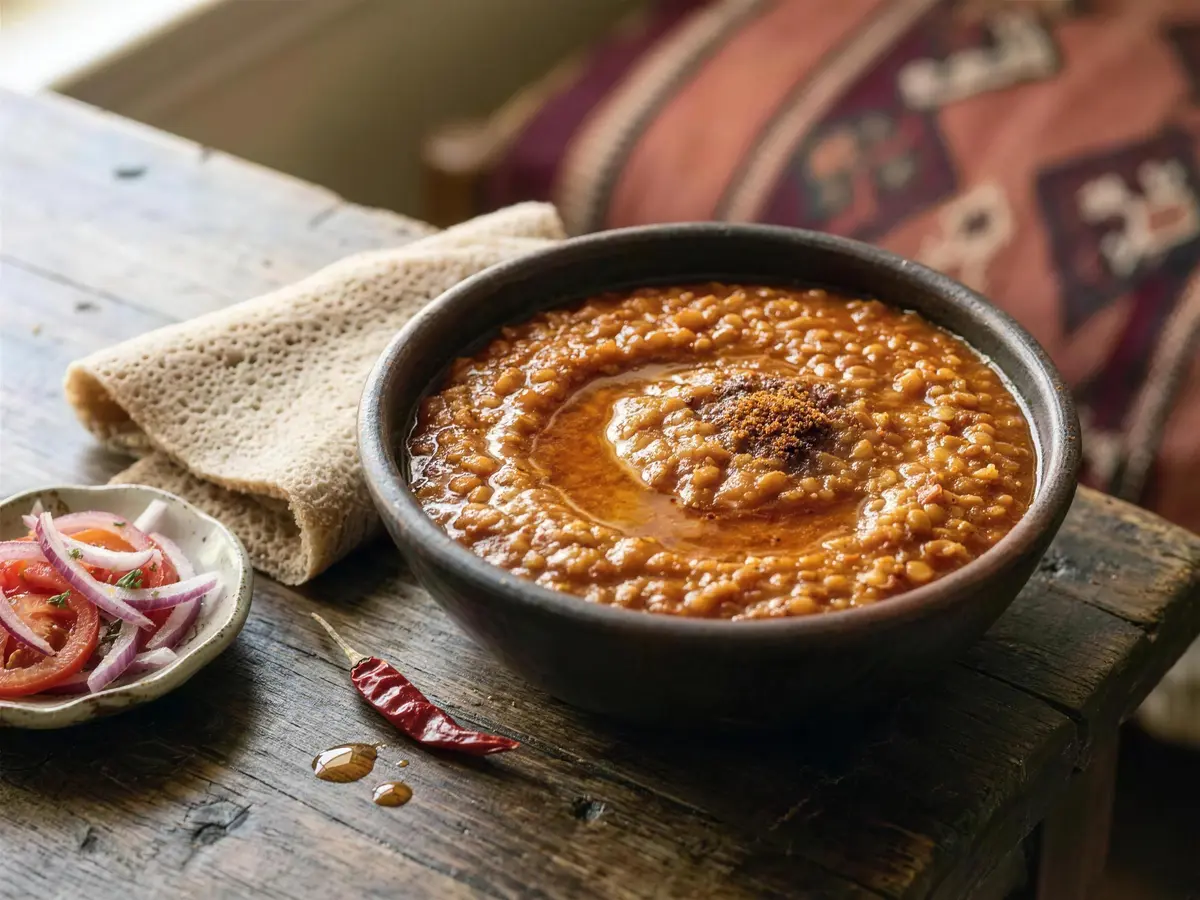
Misir Wot (Ethiopian Red Lentil Stew)
Misir wot is an Ethiopian stew of split red lentils simmered with slowly cooked onions, berbere spice and niter kibbeh (spiced clarified butter) until the lentils collapse and the pot turns thick and creamy. It's the dish that appears on every Ethiopian vegetarian platter, scooped up with injera. On fasting days it is made with oil instead of the spiced butter. The flavor is hot, earthy, and faintly bitter from the berbere spice blend. This recipe serves 6. Rest it for 10 minutes before serving; it is better the next day.
Ingredients
- 300 gred split lentils
- 3 large red onions
- 4 tbspniter kibbeh
- 5 garlic cloves
- 20 gfresh ginger
- 2 tbsptomato paste
- 3 tbspberbere spice
- 1 lvegetable stock
- 1 tspsalt
Method
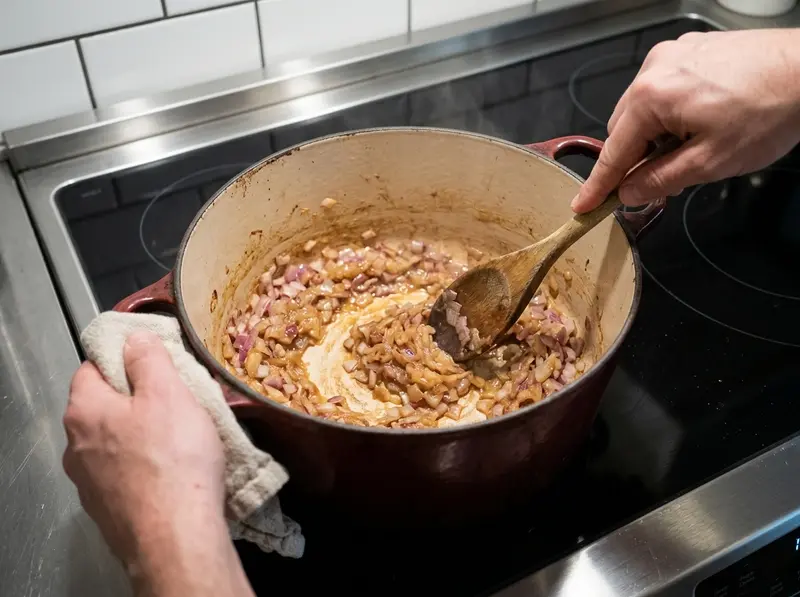
- Dry-caramelize the onions. Finely dice the onions and place them in a cold, dry pot — no oil, no butter — over medium-low heat. Cook uncovered for 25 to 30 minutes, stirring every few minutes, until the onions collapse into a soft paste. Add a tablespoon of water if they stick. This step cannot be rushed: the onion paste is the thickening agent and flavor base. Without it, the wot will be thin and the berbere will taste raw.
- Add niter kibbeh and aromatics. Add 3 tablespoons of niter kibbeh to the onion paste and stir until it melts. Add the minced garlic and grated ginger. Cook over medium heat, stirring constantly, for 3 minutes until fragrant and glossy.
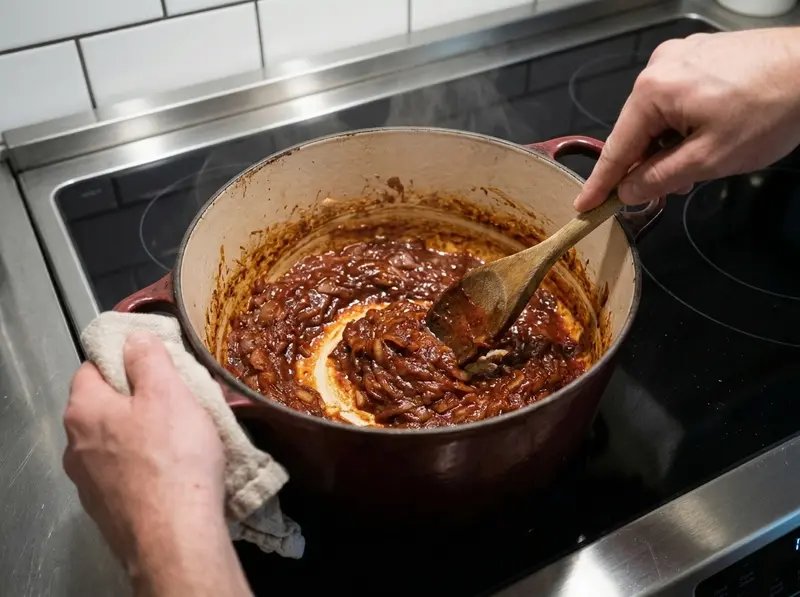
- Bloom the berbere. Add the tomato paste and berbere to the pot. Stir continuously for 3 to 4 minutes over medium-low heat. The mixture will darken, thicken, and begin to release an intensely aromatic smell. This is the most important step: berbere dry and raw tastes dusty and sharp; bloomed in fat it becomes rich and complex. Do not skip it and do not rush it.
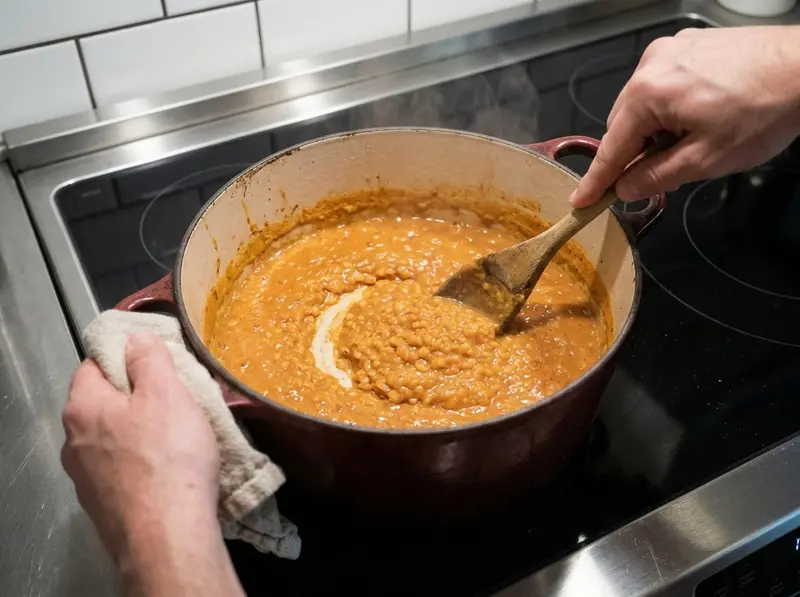
- Add lentils and stock. Rinse the red lentils under cold water until the water runs clear. Add them to the pot and stir to coat them in the spice paste for about 1 minute. Pour in 800 ml of the stock, add salt, and stir well. Bring to a gentle boil, then reduce heat to low.
- Simmer to creamy. Cover and simmer for 30 to 35 minutes, stirring every 5 to 7 minutes to prevent the lentils from catching on the bottom. The wot is done when the lentils have fully broken down into a thick, creamy, scoopable stew. If it becomes too thick, loosen it with the remaining stock, 50 ml at a time. Stir in the remaining tablespoon of niter kibbeh, taste and adjust salt. Remove from heat and rest 10 minutes before serving.
Cooked it? Rate the recipe
FAQ
Niter kibbeh is spiced clarified butter infused with onion, garlic, ginger, cardamom, and turmeric. The closest substitute is plain ghee with aromatics: warm the ghee gently with half a teaspoon each of turmeric and ground cardamom and two crushed garlic cloves for 2 minutes before using it. For a vegan version, use coconut oil or a neutral vegetable oil — the wot loses some depth but is still excellent. Plain butter without the spicing is the weakest substitute. The berbere carries most of the flavor anyway.
Berbere is a blend of dried chili, fenugreek, coriander, cumin, cardamom, ginger, cinnamon, and cloves. It is increasingly available online and in specialty spice shops. If you cannot find it, a basic substitute for the 3 tablespoons in this recipe: 1.5 tablespoons smoked paprika, 1.5 teaspoons cayenne, three-quarters of a teaspoon each of ground coriander, cumin, and cardamom, plus a good pinch of cinnamon. This lacks fenugreek's characteristic slight bitterness, so the result will be simpler. Making your own berbere from scratch is worth doing if you cook Ethiopian food regularly.
You can cook the base in an Instant Pot on Sauté mode: dry-cook the onions first, then add the niter kibbeh, garlic, ginger, tomato paste, and berbere and cook for 3 minutes. Add the rinsed lentils and 800 ml of stock and finish as in the stovetop steps. This recipe has not been tested under pressure, so there is no pressure time to give here.
The most common cause is skipping or rushing the dry onion step. The onions need to cook down without oil for 25 to 30 minutes until they form a near-paste. This is what thickens the wot naturally. A second reason is too much liquid at once: start with 800 ml of stock, add the rest only if the wot gets too stiff, and keep the heat low with the lid on so the lentils absorb liquid steadily rather than boiling in it. If the wot is already thin, remove the lid and simmer uncovered on medium-low for 10 to 15 minutes, stirring constantly to prevent burning.
Injera is a fermented flatbread made from teff, spongy enough to scoop thick stews and slightly sour to balance the berbere heat. If you cannot buy it from an Ethiopian restaurant or grocery, the best substitutes, in order, are flatbread or pita, which works similarly as a scoop; basmati rice, which provides a neutral base; sourdough bread, which shares some of the fermented tang. If you cook gluten-free, check the labels on shop-bought injera, the berbere and the stock. If making a fuller Ethiopian-style spread, add a simple cabbage and potato stew alongside and any leafy greens sautéed with garlic. For another thick, richly savoury stew, see egusi soup, a Nigerian soup built on ground melon seeds.
Keep browsing
More dishes from the Ethiopian archive — picked by overlap with what you're cooking now.









Recipes by email
One letter a week: a recipe picked for your taste, plus whatever is new on the site. You can stop the letters in one click.
Welcome gift: Sergei's cookbook (e-book).
By signing up for the newsletter you agree to the privacy policy.
Tell us what you like to cook (30 seconds) →
Join the conversation
Comments
No comments yet — be the first!