
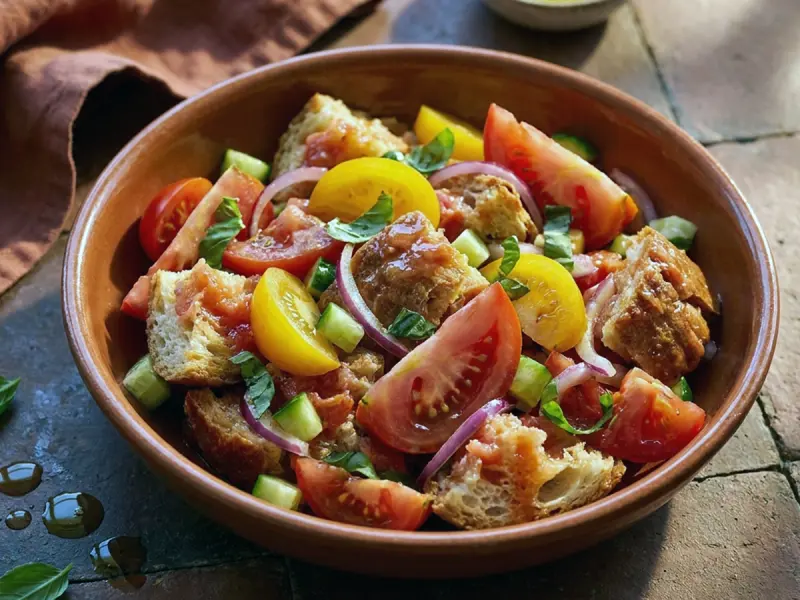
Panzanella (Tuscan Bread and Tomato Salad)
Panzanella is a classic Tuscan salad of stale bread and ripe summer tomatoes, dressed with olive oil and red wine vinegar, with red onion and basil. It is a summer dish of central Italy (Tuscany and around), and a clear example of cucina povera — a way to use up stale bread, like its relatives Pappa al pomodoro and Ribollita. The name comes from pane (bread) and zanella (a deep bowl), reflecting its humble roots, and the dish goes back to the Middle Ages and the Tuscan countryside. A curious fact: the first panzanella had no tomatoes at all — it was made with bread, onion, and purslane, and the tomato only became the central ingredient in the 20th century. Unlike ordinary salads, panzanella is built on bread as its base: pieces of stale bread soak up the tomato juice, olive oil, and vinegar, turning soft but springy — never soggy when made correctly. The technical keys: stale bread, not fresh; soak and wring it out rather than toasting it (the authentic Tuscan way); ripe seasonal tomatoes whose juice becomes part of the dressing; red wine vinegar, not balsamic; and a 15-30 minute rest so the flavors come together. Served at room temperature as an antipasto or a light summer meal, it is summer on a plate — and best eaten the same day it is made.
Ingredients
- 300 gstale bread
- 600 gtomatoes
- 1 red onion
- 1 cucumber
- 30 gbasil
- 5 tbspextra virgin olive oil
- 2 tbspred wine vinegar
- 1 tspsalt
- 0.25 tspblack pepper
Method
- Prepare the bread. Use stale bread, at least 2-3 days old (authentically Tuscan pane sciocco, the unsalted bread, or a similar crusty country loaf, ciabatta, or dense sourdough). Cut about 300 g into thick slices or large pieces. If the bread is not stale enough, leave it out overnight or dry it in a 150°C oven — dry it out, do not brown it. Fresh bread will turn to mush, so this step matters.
- Soak and wring out the bread. Soak the bread pieces in cold water for about 15 minutes, until they soften and absorb the water. Then wring out the excess moisture thoroughly with your hands (or in a colander or cheesecloth) — the bread should be damp but not wet. Tear or crumble it into rough pieces by hand. This is the authentic Tuscan method: the bread is soaked, not toasted. Wring out ordinary bread more thoroughly than Tuscan bread, as it absorbs more.
- Prepare the vegetables. Cut about 600 g of ripe summer tomatoes into bite-sized pieces, saving any juice that runs out — that juice is part of the dressing. Thinly slice 1 red onion; if it is very sharp, soak the slices in cold water for 10 minutes and drain. Peel and dice 1 cucumber if using (it is optional and debated by purists, but adds freshness). Tear 30 g of basil leaves by hand — do not cut with a knife, or they darken.
- Make the dressing and combine. In a small bowl, whisk 5 tablespoons of extra virgin olive oil with 2 tablespoons of red wine vinegar, 1 teaspoon of salt, and a few grinds of black pepper — use red wine vinegar, not balsamic, which is too sweet and dark for panzanella. In a large bowl, combine the wrung-out bread, tomatoes with their juice, onion, cucumber, and basil. Pour over the dressing and toss gently.
- Rest and serve. Let the salad rest at room temperature for 15-30 minutes, so the bread soaks up the tomato juice and dressing and the flavors come together — this is when panzanella comes into its own. Taste and adjust salt, oil, or a drop of vinegar. Serve at room temperature, not chilled, since cold mutes the tomatoes and olive oil. If it seems dry, add a little more oil; if too wet, add a few pieces of dried bread to absorb the excess. Eat the same day; panzanella does not improve overnight.
FAQ
Panzanella is a classic Tuscan salad of stale bread and ripe tomatoes, dressed with olive oil and red wine vinegar, with red onion and basil. It is a summer dish of central Italy (Tuscany and around), and a clear example of cucina povera ('peasant cooking'): a way to use up stale bread, like its relatives Pappa al pomodoro and Ribollita. Origin of the name: panzanella comes from the Italian pane (bread) plus zanella (a deep bowl), reflecting the dish's humble roots. History: the salad goes back to the Middle Ages and the Tuscan countryside, where families of modest means did not throw bread away but gave it a second life. A curious fact: the first panzanella had no tomatoes at all — it was made with bread, onion, and purslane. Tomatoes only became the central ingredient in the 20th century, after the tomato took hold in Europe (it came from the Americas). Why bread in a salad works: unlike ordinary salads, panzanella is built on bread as its base. Cubes or pieces of stale bread soak up the tomato juice, olive oil, and vinegar, turning into a soft but springy texture — never soggy when made correctly. The bread here is not a garnish but the heart of the dish. Its place in the cuisine: panzanella is served as an antipasto, a primo (first course), or as a standalone light summer meal in the rustic trattorias and homes of Tuscany. It is 'summer on a plate' — a celebration of peak tomato season, and alongside caprese one of the best-known Italian summer dishes.
The bread is the heart of panzanella, and everything depends on it. The authentic choice is Tuscan pane sciocco (Tuscan dialect for 'bland bread,' meaning bread without salt). It is a durum-wheat bread with a very firm crumb and a crunchy crust. Its special quality: soaked and well wrung out, the crumb stays grainy, like couscous, and does not turn into a sticky porridge the way ordinary bread does. Why stale and not fresh: the bread must be stale, at least 2-3 days old. Fresh bread absorbs too much water and dissolves into mush. Stale, dried-out bread absorbs just enough moisture and juice, keeping its structure. If you do not have Tuscan bread: use something similar — stale ciabatta, country bread (pane casereccio), or a dense sourdough with a good crust and firm crumb. What matters is a firm structure that can absorb the dressing without falling apart. What to avoid: soft sliced sandwich bread, brioche, any sweet or fluffy bread — they will go to mush. If the bread is not stale enough: cut it into pieces and leave it out overnight, or dry it in a 150°C oven (but do not toast it golden — you want it dried out, not browned). How much bread: roughly equal in volume to the tomatoes — this is a salad where bread is a full ingredient, not an add-on.
This is where the line runs between authentic Tuscan panzanella and its adaptations. The authentic Tuscan method — soak, do NOT toast: (1) Cut stale bread into thick slices or large pieces. (2) Soak it in cold water for about 15 minutes, until it absorbs water and softens. (3) Wring out the excess moisture well with your hands (or in a colander or cheesecloth) — the bread should be damp but not wet. (4) Crumble or tear it into pieces by hand and combine with the vegetables. As the Tuscans themselves say, 'no Italian makes panzanella with toasted bread.' The American adaptation — toasting: many Western recipes dry or toast bread cubes in the oven instead of soaking, to control the texture (crisp edges, soft middle). It is tasty and easier to keep from going soggy, but it is no longer the traditional panzanella — toasted bread gives a different, more crouton-like texture. How to keep it from going soggy (the main problem): (a) Use only stale bread — fresh will go soggy for sure. (b) Wring out the water thoroughly after soaking. (c) If using ordinary (not Tuscan) bread, wring it out even more thoroughly, as it absorbs more. (d) Do not let it sit too long — assemble the salad and rest it, but eat it the same day. Recovery: if the salad turns out a bit dry, add more good olive oil and tomato juice; if too wet, add a few pieces of dried bread to soak up the excess.
The vegetables are seasonal, the tomatoes central. (1) Ripe summer tomatoes are the heart of the salad alongside the bread. Use varieties at the peak of the season, as tasty and juicy as possible (San Marzano, beefsteak, cherry). Their juice is part of the dressing, so save the liquid when cutting. (2) Red onion, thinly sliced, gives sharpness and color. If the onion is too sharp, you can soak it in cold water for 10 minutes. (3) Fresh basil — tear it by hand, do not cut (a knife darkens it). Is cucumber required? Cucumber is a common but debated ingredient. It appears in many modern recipes (it adds freshness and crunch), but purists consider it not quite traditional: remember the first panzanella had onion and purslane, while the classic Tuscan canon is bread + tomatoes + onion + basil. Cucumber is a pleasant summer addition, but not essential. Decide to taste. Vinegar or balsamic? Authentically, red wine vinegar, NOT balsamic. The Tuscan classic: excellent extra virgin olive oil + red wine vinegar + salt + freshly ground pepper. Balsamic is too sweet and dark for panzanella — it overpowers the clean flavor of the tomatoes and bread. Dressing ratio: about 3 parts oil to 1 part vinegar, but adjust: the juicier the tomatoes, the less extra liquid you need. If the salad is dry, do not be afraid to add more oil. Regional additions: some versions add capers, olives, anchovies (as in the Saveur recipe), but that is no longer the base Tuscan panzanella.
Panzanella is a dish of the moment, and the serving underlines that. How to serve: (1) Let it rest before serving — once assembled, leave the salad for 15-30 minutes at room temperature, so the bread soaks up the tomato juice and dressing and the flavors come together. This is the key step: panzanella 'ripens.' (2) Serve at room temperature, not from the fridge — cold mutes the flavor of the tomatoes and olive oil. (3) Before serving, taste and add salt, oil, or a drop of vinegar if needed. Storage: panzanella is best eaten the day it is made. You can keep it in the fridge in a covered container, but only until the next day — and the quality will drop: bread that has already been 'repurposed' once goes soggy the longer it sits. This is not a dish that improves on the second day. Make-ahead tip: you can prepare the components in advance (cut the vegetables, dry the bread, mix the dressing) and assemble the salad 15-30 minutes before serving. What to pair it with: (a) As an antipasto or a light summer meal on its own. (b) As a side for grilled meat or fish in summer. (c) Panzanella goes well with cold foods: mozzarella, prosciutto, melon, cheeses. (d) A glass of light Tuscan white (Vernaccia) or rose. Key principle: freshness and quality. Panzanella is a celebration of summer tomatoes, good bread, and olive oil. Do not complicate it; use the best seasonal produce and serve it fresh.
Keep browsing
More dishes from the Italian archive — picked by overlap with what you're cooking now.
Recipes by email
One letter a week: a recipe picked for your taste, plus whatever is new on the site. Unsubscribe in one click.
Welcome gift: Sergei's cookbook (e-book).
By subscribing you agree to the privacy policy.
Tell us what you like to cook (30 seconds) →
Join the conversation
Comments
No comments yet — be the first!