
Pesto al Limone (Lemon Basil Pesto)
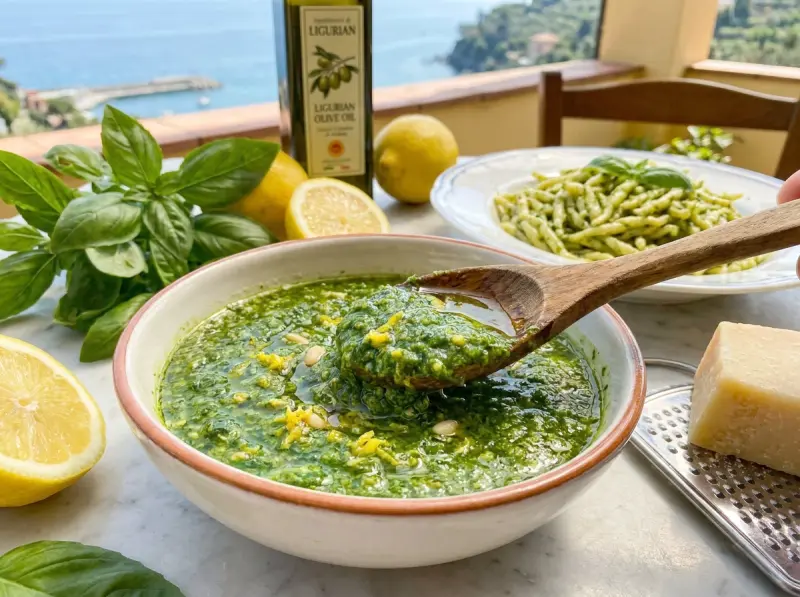
Pesto al limone is basil pesto with lemon zest and juice worked in — a citrus twist on the Genovese original that shows up along the Amalfi coast and in Campania. The lemon brightens the basil, and the freshly made sauce is a vivid green. Everything is pulsed cold and briefly, never blended smooth — heat from a running motor is what makes pesto taste bitter and dull. Fifteen minutes of work yields about 250 ml, enough for 500 g of pasta.
Ingredients
- 60 gfresh basil leaves
- 30 gpine nuts
- 50 gparmesan
- 1 clovegarlic
- 2 lemons
- 100 mlextra virgin olive oil
- 1 pinchsalt
Method
- Toast the pine nuts. Heat a small dry skillet over medium-low heat and add 30 g of pine nuts in a single layer. Toast for 4–5 minutes, shaking the pan every minute, until the nuts turn light golden and release a nutty aroma. Watch carefully — pine nuts go from golden to burnt in 30 seconds. Transfer immediately to a plate to stop the cooking and cool to room temperature. Toasting is my addition — Italian recipes use the nuts raw — and it gives a deeper, nuttier flavour.

- Prepare the lemons. Wash 2 lemons (unwaxed, untreated lemons are best — wax and post-harvest fungicides sit on the peel). If yours are waxed or treated, scrub with a stiff brush, warm water, and 1 tsp baking soda for 30 seconds, rinse and dry. Use a microplane or fine zester to remove only the yellow zest from both lemons (about 2 tablespoons total) — avoid the white pith underneath, which is bitter and ruins the sauce. Cut the zested lemons in half and squeeze out 2 tablespoons of fresh juice; reserve.

- Prep the remaining ingredients. Pick 60 g of fresh basil leaves from the stems — choose small Genovese-type leaves for the best flavour and avoid large leaves with a liquorice note. Wash gently and pat completely dry — wet basil leaves dilute the sauce and accelerate oxidation. Grate 50 g of Parmigiano-Reggiano finely on a microplane. Peel 1 garlic clove and remove the green germ from the centre with a knife tip — it's the bitter part. For best colour: chill the food processor bowl and 100 ml of extra virgin olive oil in the fridge for 10 minutes.

- Combine in food processor. Add the toasted pine nuts, garlic clove, and a pinch of salt to the chilled food processor or high-powered blender. Pulse 4–5 times for 1–2 seconds each to break down the nuts and garlic into a coarse paste. Then add the dry basil leaves, lemon zest, lemon juice, and grated Parmigiano. Pulse another 5–6 times for 2–3 seconds — never continuous blending at this stage, which heats the basil and turns the pesto brown.

- Drizzle in the olive oil. With the motor running on low speed, slowly drizzle in 100 ml of chilled delicate extra virgin olive oil through the feed tube in a thin stream. Total active blending time: 20–30 seconds maximum. Use mild Ligurian (Olio Riviera Ligure DOP) or Spanish Arbequina — never aggressive peppery Sicilian or Tuscan, which overpowers the lemon and turns the sauce bitter from oxidised polyphenols. The final pesto should be bright emerald-green, slightly chunky with visible flecks of basil and pine nut.

- Taste and adjust. The texture should be a thick paste, looser than a butter spread but holding shape on a spoon. Too thick: add 1–2 tablespoons more olive oil and pulse briefly. Too loose: add a tablespoon more grated Parmigiano. Taste — salt may not be needed (Parmigiano provides salinity), but add a pinch if flat. More lemon juice (½ tablespoon) brightens; more zest deepens citrus aroma without thinning.

- Use immediately or store. Best fresh — use within 2 hours of making for peak aroma and bright green colour. To store: transfer to a glass jar, smooth the surface flat, drizzle a thin film of olive oil on top to seal against air, cover tightly, refrigerate for up to 4 days. Never leave the jar at room temperature: raw garlic and herbs under oil are a botulism risk without cold. For longer storage: freeze in ice cube trays (~30 ml per cube), transfer to a freezer bag; keeps 3 months.

- Serve with pasta or as a condiment. For pasta: cook 500 g of linguine (or trofie, trenette, spaghetti) al dente, reserve 120 ml (½ cup) of the pasta water, drain. In a large warm bowl, mix nearly the whole batch of pesto — about 200–250 ml — with 2–3 tablespoons of the starchy pasta water, then add the hot pasta and toss; the warm water helps the sauce coat evenly instead of clumping. Don't heat the pesto directly on the stove — direct heat kills the lemon aroma. Finish with extra Parmigiano and a little more zest. As a condiment: spread it on focaccia or bruschetta, spoon it over grilled fish or chicken, toss it with roasted vegetables, or stir it into risotto.

FAQ
Pesto al limone is basil pesto with lemon zest and juice blended in, alongside the usual pine nuts, Parmesan, garlic, and olive oil. It's lighter and more citrus-forward than classic Genovese pesto, which uses more basil and often a blend of Parmesan and pecorino rather than Parmesan alone. Because the lemon's acid helps keep the colour stable, this version tolerates a food processor better than a straight Genovese, which traditionally calls for a mortar and pestle to avoid bruising the basil. It works with the same pasta shapes as classic pesto, but its brighter flavour also holds up well on grilled fish, roasted vegetables, and sandwiches, where a heavier basil pesto can feel too rich.
Yes — you're using the zest, so an unwaxed, organic lemon matters more here than in most recipes, since commercial lemons are often coated in wax and treated with fungicides that concentrate on the peel. If organic isn't available, scrub the lemons with a stiff brush under warm water for about 30 seconds before zesting. Use a microplane and take only the thin yellow layer; the white pith underneath is bitter and will throw off the whole sauce if any gets in. Two medium lemons give roughly 2 tablespoons of zest and enough juice for the 2 tablespoons the recipe calls for, with extra juice left over for finishing the pasta.
Yes, and some cooks prefer it — a mortar and pestle crush the basil and nuts rather than shearing them, which gives a rounder flavour and a coarser, more rustic texture. Start with the garlic and a pinch of salt, work it into a paste, then add the toasted pine nuts, then the basil in small handfuls, then the cheese, and finish by working in the lemon zest, juice, and olive oil in a thin stream. It takes 15–20 minutes by hand versus about 30 seconds of pulsing in a food processor, so most people reach for the processor on a weeknight and save the mortar for when they have time to enjoy the process.
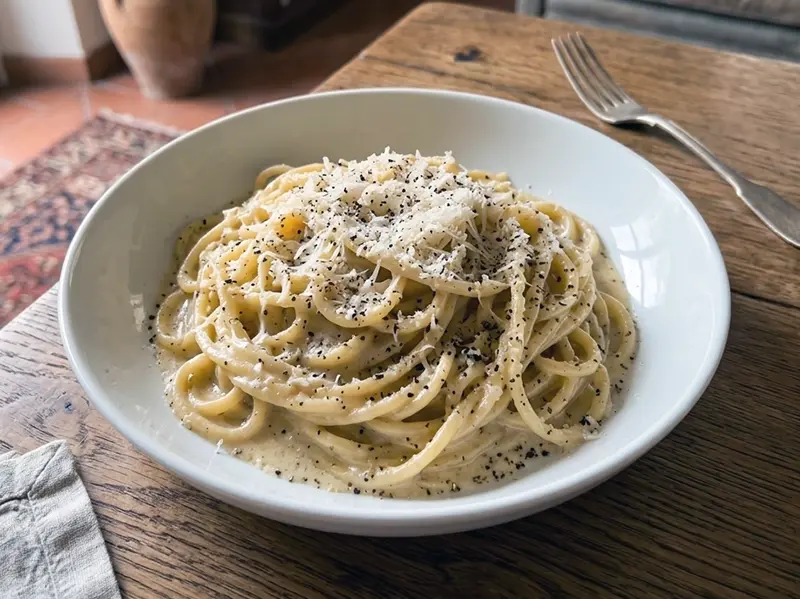
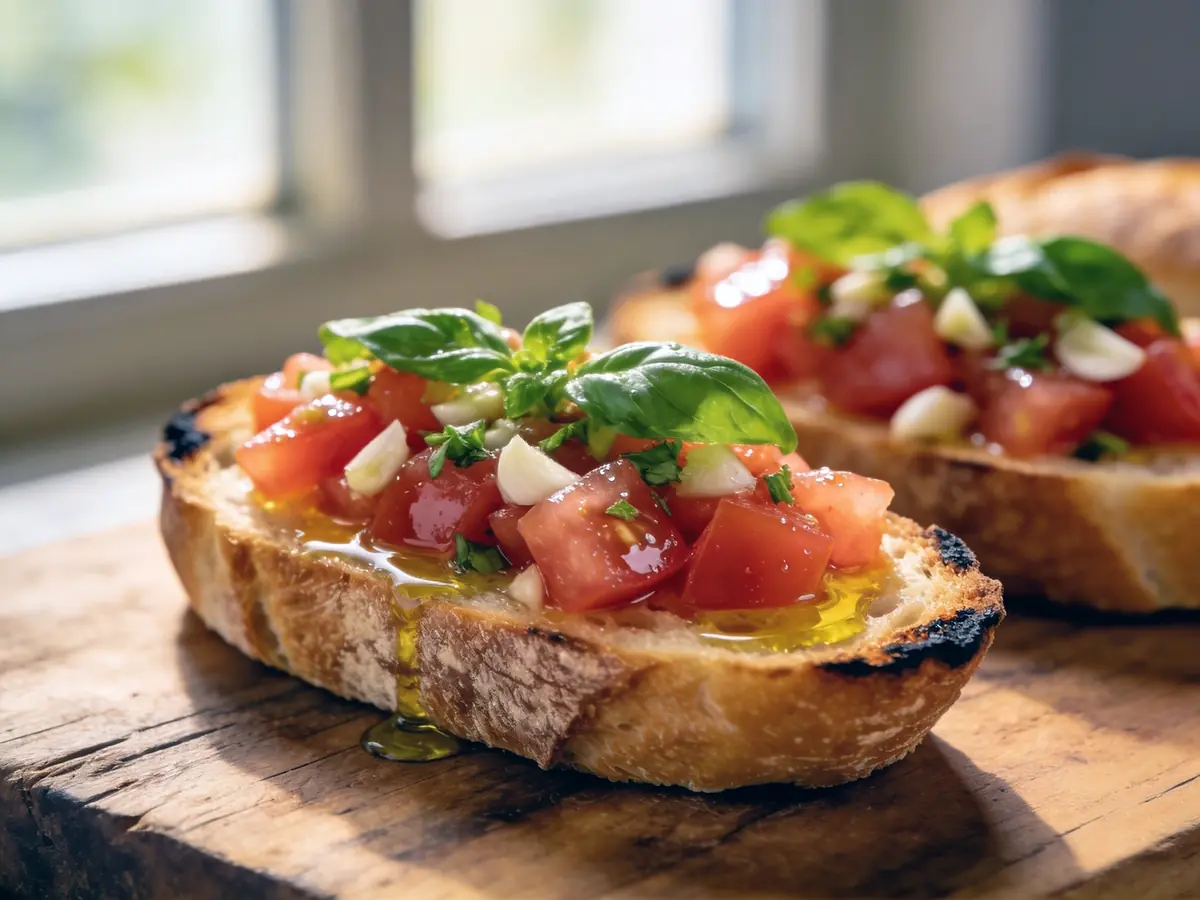
It's good on grilled or baked white fish, like sea bass or sole, where the lemon reinforces rather than competes with the fish. It also works spooned over roasted asparagus or zucchini, spread on grilled chicken, or stirred through a bowl of warm boiled potatoes. For pasta, toss 500 g of hot, drained linguine, trofie, or spaghetti with nearly the whole batch of pesto loosened with a few tablespoons of the starchy cooking water — this keeps the sauce from clumping and helps it coat the noodles evenly. On bread, it's a good stand-in for butter on focaccia or bruschetta, especially topped with a slice of fresh mozzarella. Cacio e pepe uses the same trick of finishing a sauce with starchy pasta water, if you want another simple pantry pasta to try.
In the fridge, in a sealed glass jar with a thin film of olive oil poured over the surface to block air, it keeps up to 4 days. The lemon slows browning but does not make the sauce keep longer: raw garlic and basil under oil need the fridge, and whatever you won't use within 4 days should go into the freezer on the day you make it. For longer storage, freeze it in an ice cube tray, then transfer the frozen cubes to a freezer bag; it keeps well for up to 3 months, and two cubes are about the right amount for a single pasta serving. Some people leave the Parmesan out before freezing and stir it in after thawing, since the cheese's texture can turn slightly grainy after a freeze-thaw cycle, though plenty of people skip that step and don't notice a difference. Either way, thaw it in the fridge overnight or drop the frozen cube straight into hot, drained pasta with a splash of the cooking water.
Rate this
Recipes by email
One letter a week: a recipe picked for your taste, plus whatever is new on the site. Unsubscribe in one click.
Welcome gift: Sergei's cookbook (e-book).
By subscribing you agree to the privacy policy.
Tell us what you like to cook (30 seconds) →Keep browsing
More dishes from the Italian archive — picked by overlap with what you're cooking now.
Join the conversation
Comments
No comments yet — be the first!