
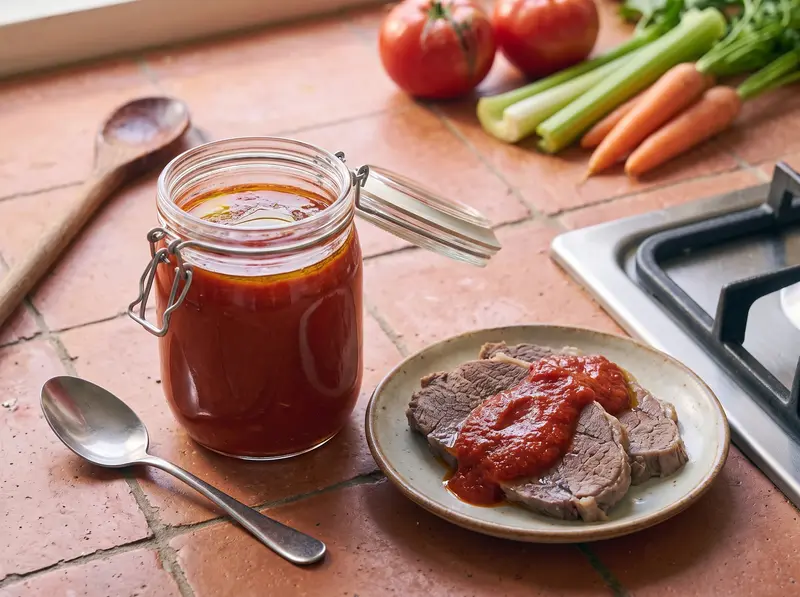
Italian Salsa Rossa (Piedmontese Bagnet Ross Tomato Sauce)
Salsa rossa — known as bagnet ross in Piedmontese dialect — is a slow-cooked tomato sauce from Piedmont in northern Italy, traditionally spooned alongside bollito misto, the region's winter dish of mixed boiled meats. This version keeps to a plain vegetable base: ripe tomatoes, onion, carrot, celery, and garlic simmered until thick, then balanced with sugar and red wine vinegar. Many Piedmontese households build a richer version with roasted bell pepper and a pinch of cinnamon and clove, closer to what's sold as salsa rubra, but the tomato-and-soffritto core stays the same either way. Let it cool for about an hour before serving. Naturally vegan and gluten-free.
Ingredients
- 800 gripe tomatoes
- 2 yellow onion
- 1 carrot
- 1 celery stalk
- 3 clovesgarlic
- 1 tbspsugar
- 2 tbspred wine vinegar
- 75 mlextra virgin olive oil
- 1 tbspextra virgin olive oil, to finish
- 1 pinchchili flakes
- 1 pinchsalt
Method
- Prepare the tomatoes. For ripe seasonal tomatoes (the ideal): score a small X on the bottom of each tomato, blanch in boiling water for 30 seconds, then transfer to ice water for 1 minute. Peel the skins (they slip off easily), halve each tomato, scoop out the seeds with a spoon — the seeds carry bitterness and excess water. Rough-chop the flesh. For canned: drain 800 g of San Marzano DOP pelati, reserve the juice, and rough-chop the whole tomatoes; use the reserved juice to thin the sauce later if needed. This peeling and seeding matters most if you'll be finishing the sauce in a blender rather than a food mill — the mill strains out skins and seeds on its own, but starting with cleaner tomatoes still keeps a blended sauce from turning watery or bitter.
- Prepare the soffritto vegetables. Peel and rough-chop 2 yellow onions (about 250 g total). Peel and rough-chop 1 medium carrot (about 120 g). Trim and rough-chop 1 celery stalk (about 80 g) — remove the strings if tough. Peel 3 garlic cloves and lightly crush them with the flat of a knife — no need to mince, the food mill will catch any larger pieces at the end. The cuts can be coarse since everything will be milled later.
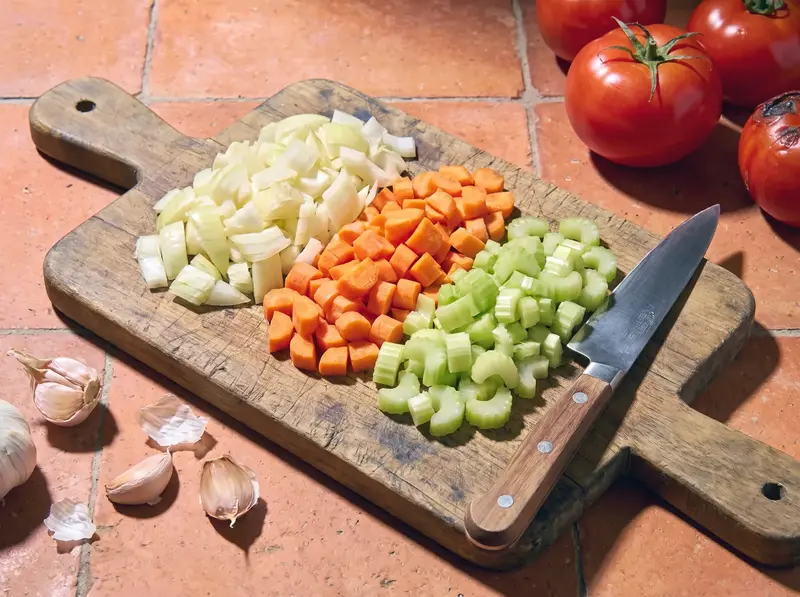
- Start the simmer. Pour 75 ml of extra virgin olive oil into a heavy-bottomed pot or Dutch oven (4-litre minimum). Add the chopped onions, carrot, celery, garlic, and a pinch of salt. Cook over medium-low heat for 8–10 minutes, stirring every minute or two, until the vegetables are softened and the onions are translucent — but do not let them brown. Browning gives a caramelized note that conflicts with the bright vegetable character of bagnet ross.
- Add the tomatoes and aromatics. Add the chopped tomatoes (with reserved juice if using canned), 1 tablespoon of sugar, a pinch of chili flakes (peperoncino), and another pinch of salt. Stir well to combine. Bring to a gentle simmer over medium heat, then reduce to low — you want a steady but lazy bubble, not a rolling boil. Slow reduction concentrates the flavour; a hard boil dulls it.
- Simmer 60 minutes uncovered. Cook on low heat for 60 minutes, uncovered, stirring every 10–15 minutes to prevent scorching at the bottom. The sauce should reduce to about half its original volume and become thick — when you draw a wooden spoon through it, the trail should hold for a moment before the sauce closes back. If it reduces too fast or sticks to the bottom, lower the heat further and add 50 ml of water.
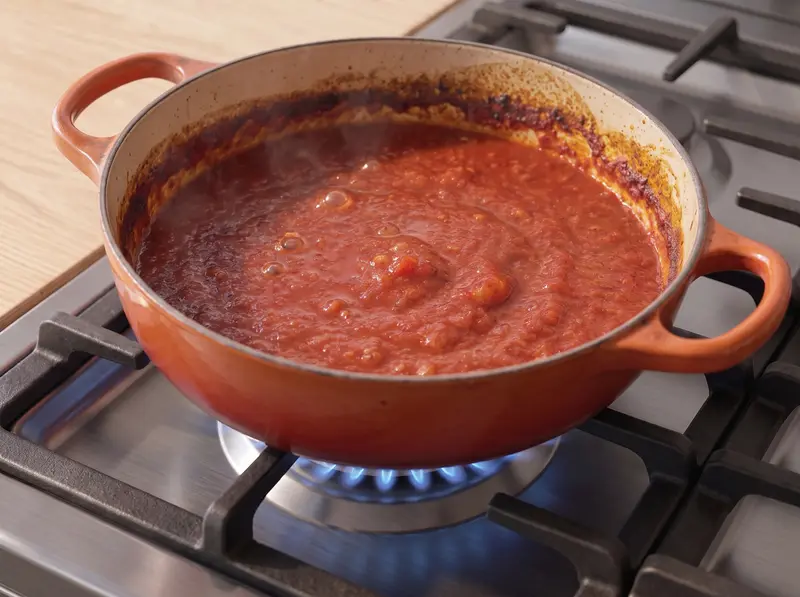
- Add the vinegar and finish cooking. Stir in 2 tablespoons of red wine vinegar and cook 5 more minutes — the vinegar must cook briefly to lose its raw bite and integrate with the tomato. Taste and adjust: more salt if flat; more sugar if too sour (sometimes happens with winter pelati); more vinegar if too sweet (rare with seasonal tomatoes). Remove from heat.
- Pass through a food mill (passatutto). The traditional Piedmontese method: ladle the hot sauce into a food mill fitted with a 3–4 mm disc, set over a clean bowl, and crank handle steadily. The mill catches any tomato seeds and skin remnants and produces a velvety smooth red sauce of even consistency. If using a blender or immersion blender (less ideal): let the sauce cool for 10 minutes first; with a jug blender, fill the jug no more than half full, vent the lid and hold it down with a folded towel, because steam from hot sauce can blow the lid off. Blend on low speed for 20–30 seconds at most — high speed whips air, fades the colour from rich red to orange-pink, and pulverises any remaining seeds into a bitter haze.
- Adjust and rest. Stir 1 tablespoon of fresh olive oil into the milled sauce — this final raw drizzle adds gloss and aroma the cooking destroys. Taste once more — the sauce develops as it cools, so go light on salt at this stage. Let cool to room temperature before serving (about 1 hour) for best flavour. To keep it, spoon into a clean glass jar, cover with a film of olive oil and refrigerate within 2 hours of cooking. Serve at room temperature or slightly warm with bollito misto, grilled meats, polpettoni, tomini cheese, or as a dip with crusty bread.
FAQ
Bagnet ross is a Piedmontese tomato sauce served alongside bollito misto, the region's dish of mixed boiled meats — it's the red counterpart to the herbier green bagnet verd. The base recipe is a slow-cooked purée of tomatoes, onion, carrot, celery, and garlic, balanced with sugar and vinegar; some households keep it plain, others add roasted bell pepper and warm spices for a richer version closer to what's sold as salsa rubra. American ketchup is a different product: a smooth, much sweeter bottled condiment. Mexican salsa roja is unrelated beyond the colour — tomato, chili, onion, and cilantro, usually charred or boiled, much spicier and used with tacos and enchiladas rather than boiled meats.
Ripe seasonal tomatoes from a paste variety like San Marzano or Roma — dense flesh, few seeds, concentrated sweet-tart flavour — are the ideal, blanched for 30 seconds, peeled, and seeded before cooking. Out of season, a can of quality DOP peeled whole tomatoes, without added citric acid or sugar, is a solid substitute and often better than an underripe supermarket tomato. Avoid large watery salad tomatoes, cherry tomatoes on their own (too little flesh for the volume needed), and boxed passata, which is already puréed and loses texture. A useful compromise is 600 g canned tomatoes plus 200 g fresh cherry tomatoes, combining the depth of the can with the brightness of fresh fruit.
The traditional Piedmontese tool is a food mill (passatutto) fitted with a 3–4 mm disc: the vegetables simmer in whole chunks, then get cranked through the mill, which strains out seeds and skins on its own and doesn't whip air into the sauce, so the colour stays a true red rather than fading to orange-pink. A blender works, but blitzes air into the sauce and can pulverize tomato seeds into a bitter texture, so seed the tomatoes beforehand and blend on low for no more than 20–30 seconds. An immersion blender directly in the pot saves a step but has the same drawbacks. If you cook tomato sauces often, a food mill is also useful for passata, applesauce, and mashed potatoes.
Once cooled, bagnet ross keeps in a sealed glass jar in the fridge for 4–5 days if the surface is covered with a thin film of olive oil to slow oxidation; the colour may darken slightly, which doesn't affect the flavour. For longer storage, freeze it in airtight containers or portioned in ice cube trays for up to 3 months — the sauce can turn a little watery after thawing since the tomatoes release liquid, but a five-minute simmer brings the texture back. Freezing in 50–60 ml portions is convenient, since that's roughly one serving alongside bollito misto. Discard the sauce if it smells sour or shows any mould, and don't taste it to check.
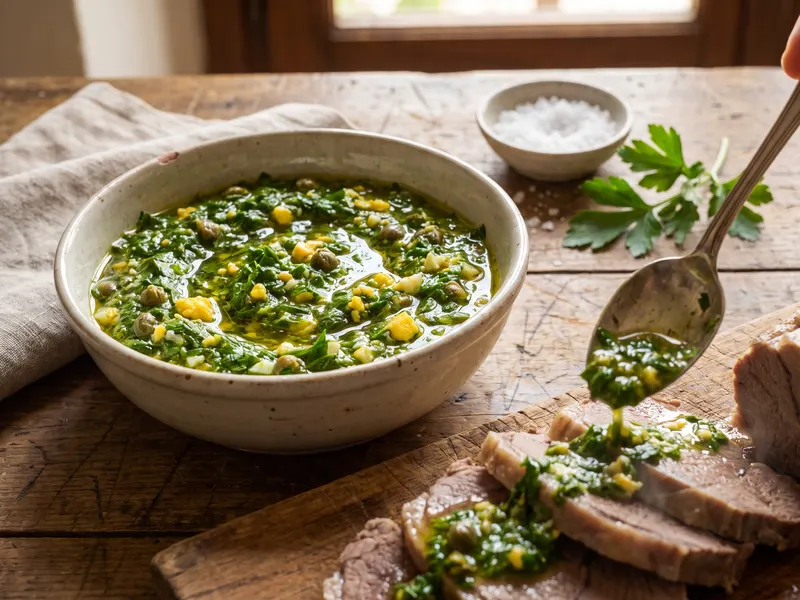
In Piedmont, bagnet ross is the second condiment for bollito misto, served alongside the green bagnet verd — the red sauce's sweet-tart vegetable balance cuts through the fattiness of the meat from a different angle than the herbal, anchovy-forward green one. Beyond bollito, Piedmontese cooks serve it with boiled tongue, boiled chicken, hard-boiled eggs, tomini cheese, and salt-cured anchovies; it is also good with poached fish, raw or steamed vegetables, and on bread. Outside the tradition, try it with meatballs or as a base for pizza sauce. Serve it at room temperature or slightly warm, in a small dish alongside the main course rather than mixed in.
Rate this
Recipes by email
One letter a week: a recipe picked for your taste, plus whatever is new on the site. Unsubscribe in one click.
Welcome gift: Sergei's cookbook (e-book).
By subscribing you agree to the privacy policy.
Tell us what you like to cook (30 seconds) →Keep browsing
More dishes from the Italian archive — picked by overlap with what you're cooking now.

Join the conversation
Comments
No comments yet — be the first!