
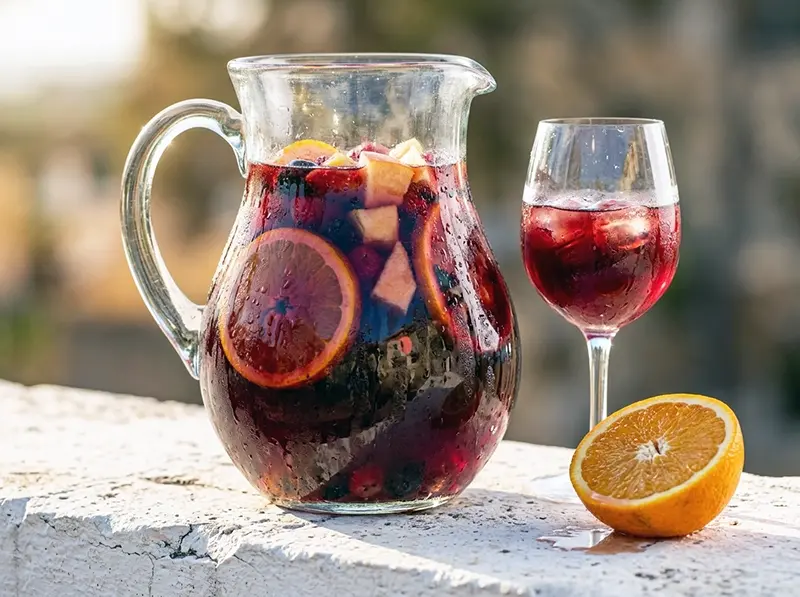
Spanish Red Sangria
Red wine, fruit, brandy, and eight hours in the fridge. The ratio matters less than the resting time — sangria made two hours ahead tastes like wine with fruit floating in it; sangria made overnight tastes like something worth a second glass. Garnacha or Tempranillo, a cinnamon stick, orange and apple, a splash of brandy. No fancy liqueurs needed.
Ingredients
- 750 mldry red wine, Garnacha or Tempranillo
- 60 mlbrandy
- 120 mlfresh orange juice
- 1 orange, half juiced, half sliced into rounds
- 1 Granny Smith apple, cored and cut into 2 cm pieces
- 1 lemon
- 1 cinnamon stick
- 2 tbspbrown sugar or maple syrup
- 1 handfulice cubes
- 120 mlsparkling water or soda, to top each glass
Method
- Pick your wine carefully. The single biggest variable in sangria is the wine. You need something fruity and low in tannins — Garnacha (Grenache) is ideal because it stays bright and berry-forward even cold. Tempranillo works well too. Avoid Cabernet Sauvignon: its high tannins taste metallic when chilled, and no amount of fruit fixes that. You don't need an expensive bottle. With this much fruit and brandy going in, the subtleties of a costly wine will disappear entirely — but a genuinely bad wine will still make bad sangria. Spend $12 to $18 on something you'd drink on its own.
- Prep the fruit. Halve the orange: squeeze one half into the pitcher to get roughly 120 ml of juice, then slice the other half into thin rounds. Core the apple and cut it into 2 cm pieces — big enough that they don't turn to mush after hours of soaking, small enough to eat with a spoon. Slice the lemon thinly. Note: lemon pith releases bitter compounds after 6 hours of soaking. If you're planning to chill the sangria overnight, add the lemon slices in the last 2 to 3 hours rather than at the start.
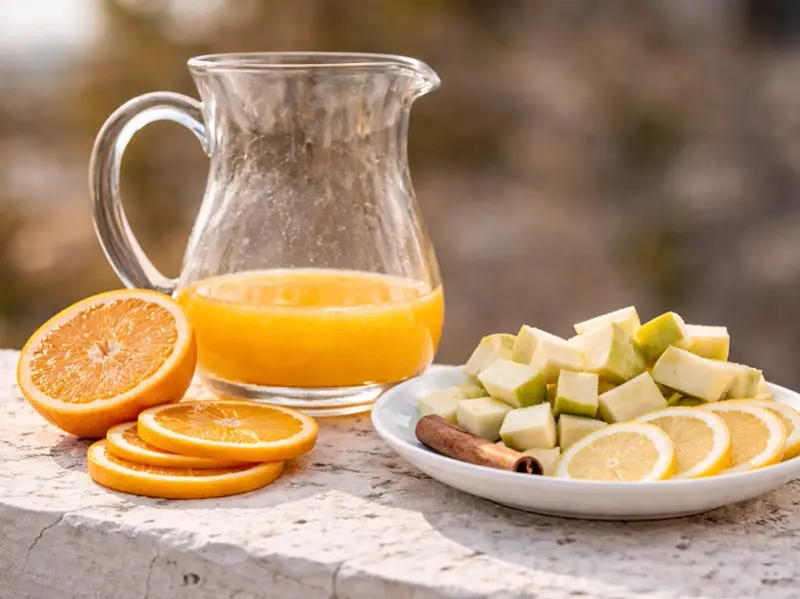
- Build and sweeten. Pour the wine into a large pitcher. Add the brandy, orange juice, orange rounds, apple pieces, lemon slices, and cinnamon stick. Stir briefly. Add the brown sugar or maple syrup — start with one tablespoon, stir until dissolved (about 20 seconds), then taste and add more if needed. How sweet you want it depends on the fruit and the wine. Some bottles and some batches of fruit don't need any sugar at all.
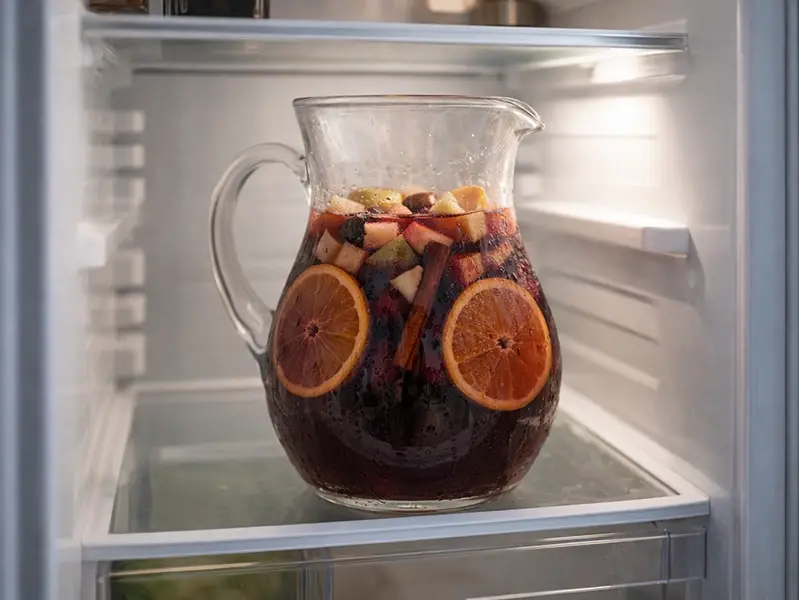
- Chill. Cover the pitcher and refrigerate for at least 6 hours, overnight if possible. This is not optional patience — it's how sangria actually works. Six hours is when the fruit starts releasing its juice into the wine and the wine starts soaking into the fruit. Eight hours is better. Do not skip this step and serve immediately. It won't taste right.
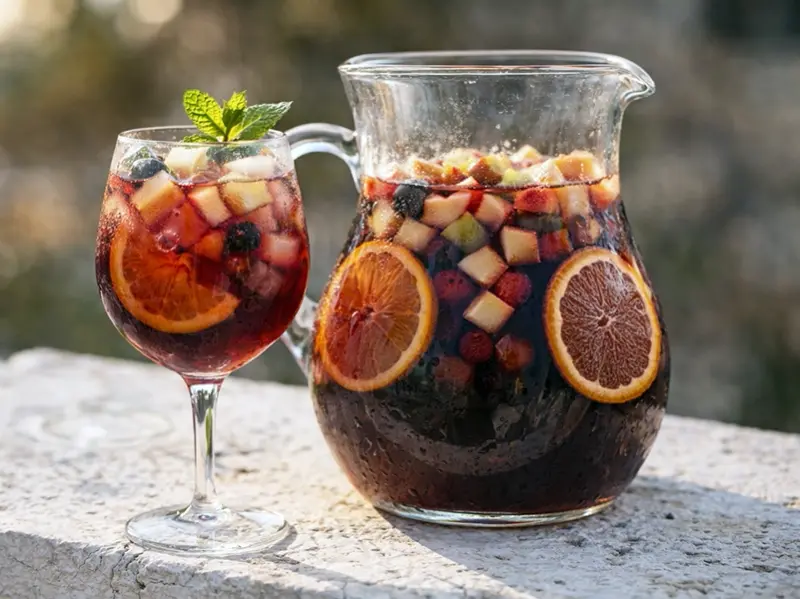
- Serve. Fill glasses with ice. Give the pitcher a good stir — sugar and fruit juice settle to the bottom. Pour the sangria over the ice and add a splash of sparkling water or soda to each glass if you want some fizz. Fish out a few pieces of fruit for each glass. The soaked fruit is often the best part.
FAQ
Both work well, but Garnacha is the better starting point: it has bright fruit flavors and low tannins, which means it stays pleasant and not bitter when cold. Tempranillo brings cherry and blackcurrant notes with a little oak. Avoid Cabernet Sauvignon — its high tannins taste metallic once chilled, which no amount of brandy or fruit will fix. You don't need to spend much. Anything between $12 and $18 that you'd enjoy drinking on its own is exactly right. Once you add brandy, orange juice, and a day of chilling, the nuances of an expensive bottle are gone anyway.
You can drink it immediately, but the difference between fresh sangria and overnight sangria is significant. Fresh, it's just wine with fruit floating in it. After 6 to 8 hours, the fruit has released its juice into the wine and the wine has soaked into the fruit — everything comes together into something cohesive. Eight hours is good, overnight is better. Beyond 24 hours, the fruit starts to break down. Lemon is the fastest to go bitter; add it in the last 2 to 3 hours if you're planning a long chill.
Orange liqueur (Cointreau, Grand Marnier, or triple sec) is the most common swap and gives bright citrus depth instead of the brandy's warmth. Rum makes the sangria sweeter with a slight tropical edge. Gin produces a drier result with herbal notes. You can also skip the spirit entirely and replace it with more orange juice — the sangria will be lighter and less complex, but still good. Start with a little less liquid than the recipe calls for and adjust to taste.
The most reliable base is a 50/50 blend of pomegranate juice and unsweetened apple juice — it gives you similar depth of color and a pleasant tartness that red wine provides. Skip the brandy, or add a teaspoon of apple cider vinegar for a little acidity that mimics the spirit's role. Everything else stays the same: fruit, orange juice, cinnamon stick, several hours of chilling. It works better than you'd expect. Just taste before serving since fruit juices vary significantly in sweetness.
Sangria with fruit keeps well for 3 to 5 days covered in the fridge. The main issue is the fruit itself: after 2 to 3 days the pieces soften and start turning bitter, especially lemon. The cleanest approach is to strain out the fruit after 24 hours and store the wine separately — it keeps longer and doesn't pick up any off-flavors. Add sparkling water only when serving, never into the pitcher, or it goes flat within minutes. Do not freeze sangria; wine loses its structure when thawed.
Rate this
Recipes by email
One letter a week: a recipe picked for your taste, plus whatever is new on the site. Unsubscribe in one click.
Welcome gift: Sergei's cookbook (e-book).
By subscribing you agree to the privacy policy.
Tell us what you like to cook (30 seconds) →Keep browsing
More dishes from the Spanish archive — picked by overlap with what you're cooking now.
Join the conversation
Comments (1)
Pre-warming your mugs makes a surprising difference for this spanish red sangria. Pour boiling water into them while you prepare the drink, then empty just before serving. It stays hot nearly twice as long.