

Sausage and Pea Pasta
Italian pork sausages browned until the fat renders and the casing crisps, then simmered in a quick tomato-cream sauce with peas and finished with parmesan. This is the kind of pasta that feels like a restaurant dish but comes together in under 30 minutes on a weeknight. Rigatoni's ridged tubes hold the sauce inside and out — every forkful pulls a bit of everything.
Ingredients
- 400 grigatoni
- 500 gItalian pork sausages, casings removed
- 2 tbspolive oil
- 1 medium onion
- 4 garlic cloves
- 2 tbsptomato paste
- 400 gcanned crushed tomatoes
- 100 mlheavy cream
- 200 gfrozen peas
- 0.5 tspdried chili flakes
- 60 gParmesan
- salt and black pepper to taste
- fresh basil to serve
Method
- Bring a large pot of water to a boil. Salt it generously — it should taste like mild sea water. Cook the rigatoni 1–2 minutes less than the package instructions (you'll finish it in the sauce). Reserve 150 ml of pasta water before draining.
- While the water heats, warm the olive oil in a wide, deep pan over medium-high heat. Add the sausage meat and press it into a single layer. Let it sit untouched for 2 minutes to develop a proper crust, then break into rough pieces with a wooden spoon. Cook until deeply browned, another 3–4 minutes. The browning matters — pale sausage means a pale sauce.
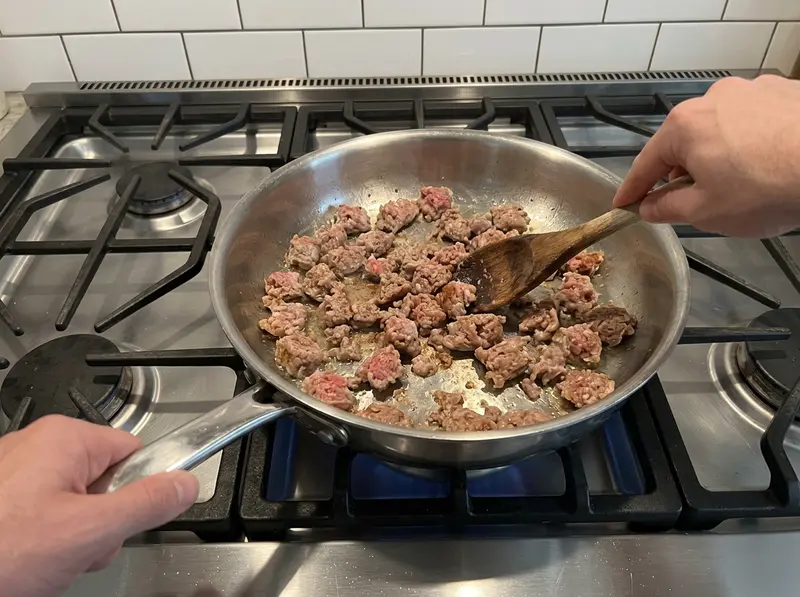
- Push the sausage to one side. Add the onion to the empty part of the pan and cook 3–4 minutes until soft. Add the garlic and chili flakes, cook 1 minute. Then stir in the tomato paste and cook it for 2 minutes, stirring — this caramelizes the paste and removes the raw tomato taste.
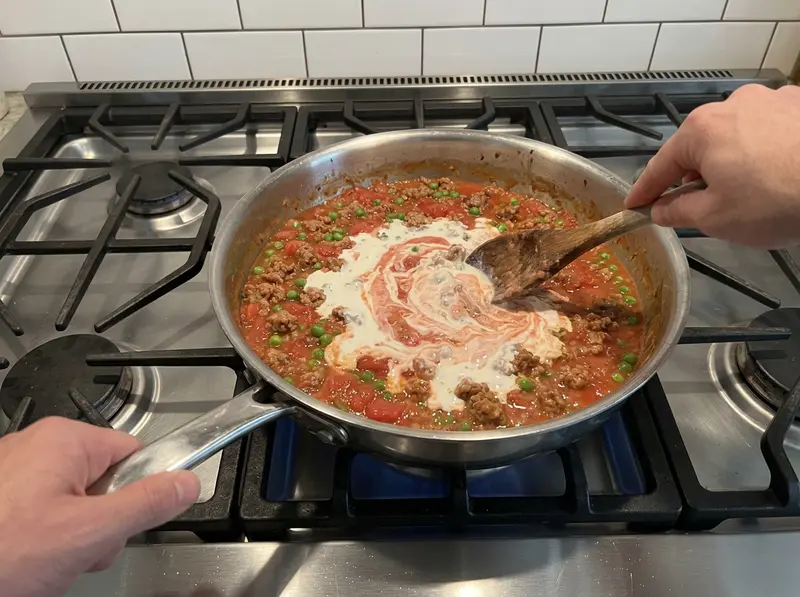
- Pour in the crushed tomatoes, stir to combine, and simmer on medium-low heat for 8–10 minutes until the sauce thickens slightly. Stir in the cream and peas. Simmer 2 more minutes until the peas are just cooked through. Taste and adjust salt and pepper.
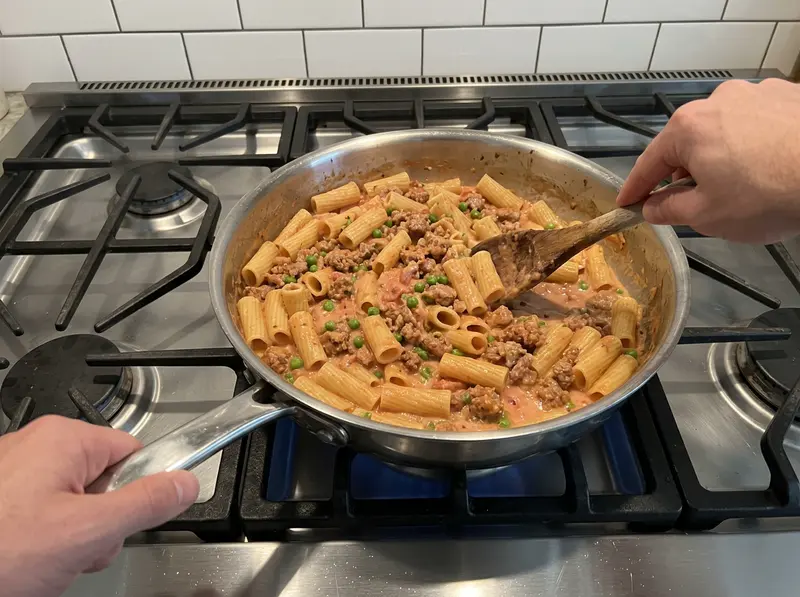
- Add the drained rigatoni to the sauce. Toss over medium heat for 1–2 minutes, adding pasta water a splash at a time until the sauce coats every piece of pasta and looks glossy, not dry. The starch from the pasta water binds the sauce and gives it that restaurant texture.
- Remove from heat. Add the parmesan and toss quickly. Serve immediately in warm bowls with more parmesan and fresh basil. The pasta waits for no one — it thickens as it sits.
FAQ
Italian pork sausages — especially those seasoned with fennel — are the classic choice and give the most balanced flavor with the tomato and cream sauce. But the recipe works with any good-quality fresh sausage: spicy Calabrian, chorizo (removed from casings), or even chicken sausage for a lighter version. Avoid pre-cooked smoked sausages — they don't release fat the same way and skip the browning stage that builds most of the sauce's flavor.
Usually one of three things: the sausage wasn't browned enough (pale sausage means no Maillard flavor in the sauce), the tomato paste wasn't cooked in the fat before liquid was added (raw paste tastes metallic), or the pasta wasn't finished in the sauce with pasta water. All three steps add depth that can't be recovered at the end. Salt also matters — under-salted pasta water produces a flat-tasting finished dish no matter how good the sauce is.
Yes. Without cream the sauce is lighter, more acidic, and closer to a traditional Italian ragu. It works well — just simmer the tomato base a little longer (12–15 minutes instead of 8) to deepen the flavor. If you want richness without cream, stir in 2–3 tablespoons of mascarpone or a knob of butter off the heat at the end. Both give body to the sauce without changing its acidity. A generous pour of pasta water also helps the sauce coat the pasta without feeling dry.
When pasta finishes in the sauce over heat, it absorbs some of the liquid and the starch on the pasta surface mingles with the fats in the sauce — this is what creates a glossy, clingy coating rather than a watery puddle. Sauce poured over separately-plated pasta stays on top and slides to the bottom of the bowl. The difference is especially noticeable with a cream-tomato sauce like this one. Always finish in the pan, always toss, and always add a splash of starchy pasta water.
Up to 3 days in an airtight container. The pasta will absorb the sauce as it sits and thicken considerably. To reheat: add a few tablespoons of water or cream to the portion, cover and microwave on medium power for 90 seconds, or reheat gently in a pan with a splash of water over low heat. Don't reheat at high heat — it tightens the cream sauce and makes the pasta rubbery. The sausage and pea flavor actually develops more depth on day two.
Rate this
Recipes by email
One letter a week: a recipe picked for your taste, plus whatever is new on the site. Unsubscribe in one click.
Welcome gift: Sergei's cookbook (e-book).
By subscribing you agree to the privacy policy.
Tell us what you like to cook (30 seconds) →Keep browsing
More dishes from the Italian archive — picked by overlap with what you're cooking now.
Join the conversation
Comments (1)
Finish cooking the rigatoni in the sauce, not in the water. Those last 2 minutes of simmering together create a bond between grain and sauce that plating separately never achieves.