
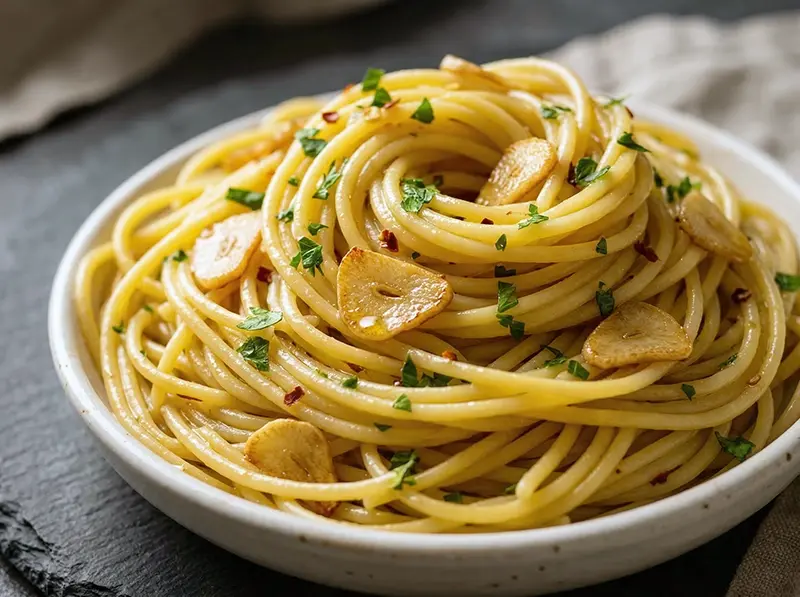
Spaghetti Aglio e Olio
Spaghetti, olive oil, garlic, chili flakes, parsley. From pantry to table in 20 minutes. The pasta water is what turns the oil into a sauce — don't skip it.
Ingredients
- 400 gspaghetti
- 80 mlextra virgin olive oil, best quality you have
- 8 garlic cloves
- 1 tspred pepper flakes
- 4 tbspfresh parsley
- 1 tspsalt, for pasta water
- 0.5 tspblack pepper
Method
- Bring a large pot of generously salted water to a boil. The water should taste like the sea — this is where the pasta gets its flavor.
- Add spaghetti and cook until 1 minute shy of al dente according to the package. Before draining, scoop out at least 250 ml of starchy pasta water and set aside.
- While the pasta cooks, place the sliced garlic and olive oil in a cold large skillet. Set over medium heat. Cook slowly, stirring often, for 3–5 minutes until the garlic is golden and fragrant — not brown. The moment it smells ready, it's close. Brown garlic is bitter.
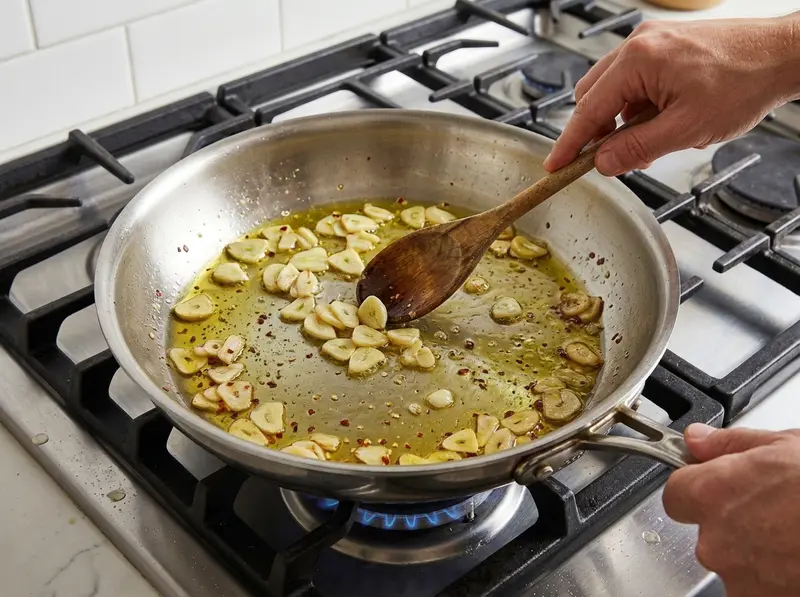
- Add red pepper flakes and stir for 30 seconds. Pull the pan off the heat.
- Transfer the still-slightly-undercooked pasta directly into the skillet using tongs — don't drain it completely. Add a full ladleful (about 120 ml) of hot pasta water. Return to medium heat.
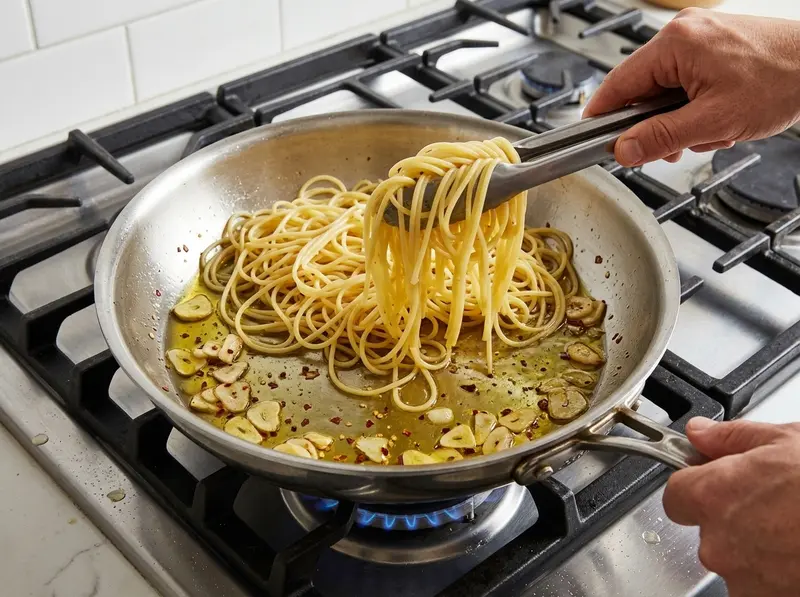
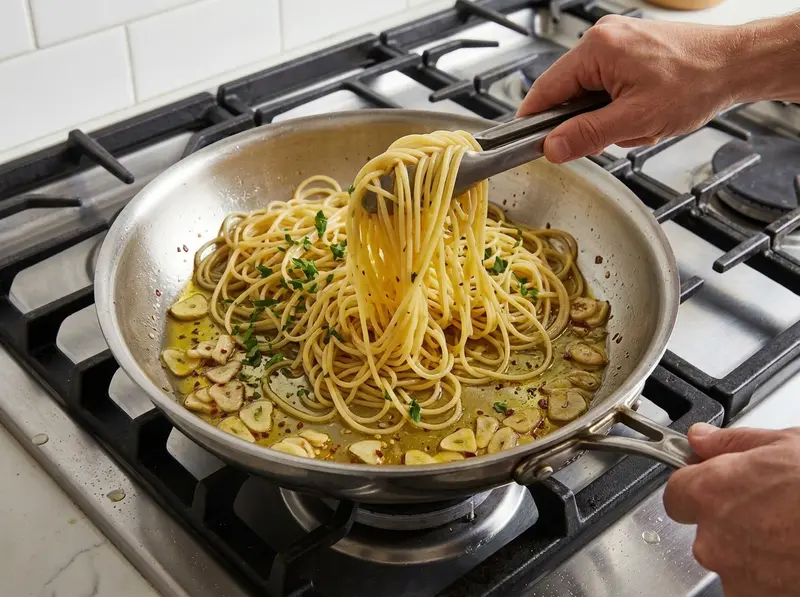
- Toss continuously for 1–2 minutes. The starch in the water emulsifies with the oil and coats every strand. Add more pasta water a splash at a time if it looks dry. The sauce should be glossy and just barely clinging to the pasta.
- Remove from heat, toss in parsley and a grind of black pepper. Serve immediately in warm bowls.
FAQ
The pasta water is what makes it work. Oil and water don't mix on their own, but the starch dissolved in the cooking water acts as an emulsifier. Add a full ladleful of hot pasta water to the garlicky oil off the heat, then add the pasta and toss hard for 1 to 2 minutes. The mixture should go creamy and slightly thicken. If the oil still separates, either the water was too cold or you didn't add enough — try again with another splash.
Bitterness almost always means the garlic burned. Always start sliced garlic in cold oil and only then set the pan on medium heat — it warms gradually and evenly this way. Aim for golden and fragrant, not brown. The moment you smell it, it's nearly done. If the pasta isn't ready when the garlic is, pull the pan off the heat and wait. You can always return it to warmth; you can't undo burnt garlic.
The traditional Roman and Neapolitan recipe contains no cheese — it's one of the rare Italian pastas where the dish is considered complete without it. Parmesan or pecorino can be added if you enjoy it, but it changes the character of the dish: heavier, richer, less clean. The authentic version finishes with nothing but parsley.
4 to 6 cloves for a mild version, 8 to 10 for something with presence — personal preference. Traditionally the garlic flavor should be the point of the dish, not a background note. Slice thin rather than crush: crushed garlic burns faster and gives a sharper, more aggressive taste. Thin slices cook evenly and mellow as they color.
This dish doesn't store or reheat well. The emulsion breaks as soon as the pasta cools — the oil separates back out and the noodles clump. A reheated version is noticeably different from a fresh one. Cook only what you'll eat immediately. With a 20-minute total time, there's no good reason to make it in advance.
Rate this
Recipes by email
One letter a week: a recipe picked for your taste, plus whatever is new on the site. Unsubscribe in one click.
Welcome gift: Sergei's cookbook (e-book).
By subscribing you agree to the privacy policy.
Tell us what you like to cook (30 seconds) →Keep browsing
More dishes from the Italian archive — picked by overlap with what you're cooking now.
Join the conversation
Comments (1)
The widest pan you own works best for spaghetti aglio e olio. Maximum surface area means faster evaporation, more concentrated sauce, and better coating. A deep pot keeps things too wet.