

Spaghetti alle Vongole
A Neapolitan pasta of spaghetti tossed with fresh clams, garlic, olive oil, a splash of dry white wine, and parsley. Made in bianco, with no tomato and no cheese, the sauce is built only from the clam liquor emulsified with the pasta starch.
Ingredients
- 1 kgManila clams
- 350 gspaghetti
- 4 tbspextra virgin olive oil
- 3 clovesgarlic
- 60 mldry white wine
- 3 tbspflat-leaf parsley
- 0.5 tspred pepper flakes
- 15 gsalt for the pasta water (about 3 litres)
- 60 gcoarse salt for the clam soaking water (2 litres)
Method
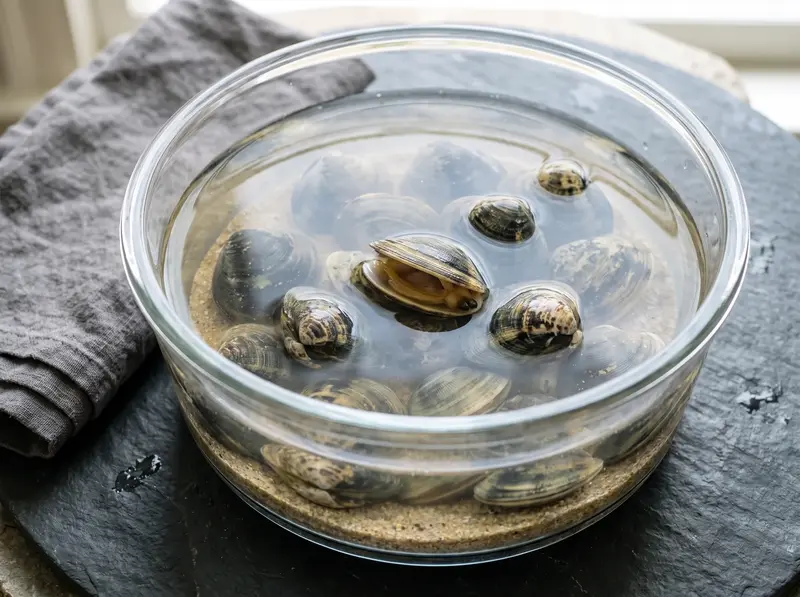
- Purge the clams: soak them in a bowl of cold salted water (2 litres of water with 60 g coarse salt, about 30 g per litre) for 30 to 60 minutes so they spit out sand, then lift them out by hand, leaving the sand at the bottom of the bowl, and rinse. Discard any that stay open when tapped.
- Put a large pot with about 3 litres of water on to boil now, and salt it lightly with 15 g of salt, about 5 g per litre, half the usual amount; the clam liquor is already salty.
- Warm the extra virgin olive oil in a large skillet over medium heat. Add the sliced garlic and red pepper flakes and cook until fragrant, about 1 minute; do not let the garlic brown.
- Add the clams and the dry white wine, cover, and cook 2 to 4 minutes until the shells open. Discard any that stay shut.
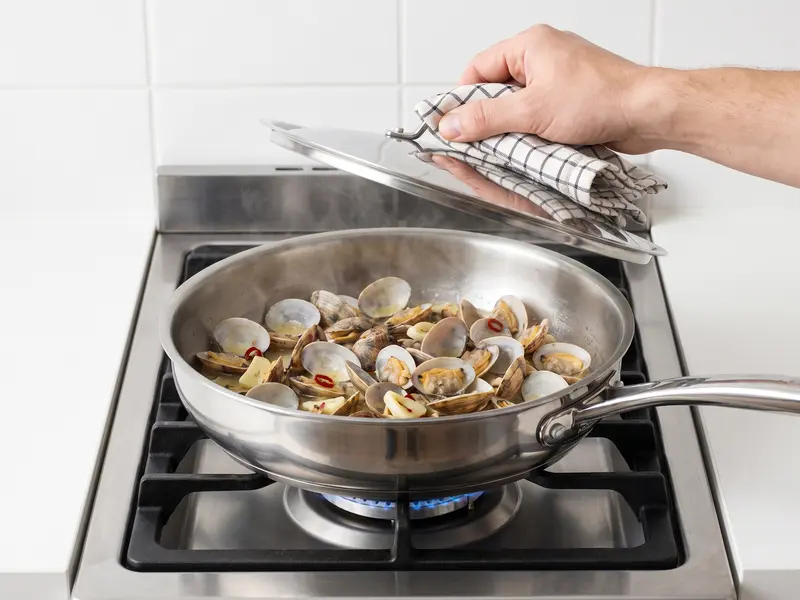
- Lift out the clams. Strain the liquid through a fine sieve to remove grit and return it to the pan. Shell most of the clams, keeping a few in the shell for serving.
- Meanwhile cook the spaghetti 1 to 2 minutes short of the package time; reserve a cup of the starchy water before draining.
- Transfer the spaghetti to the skillet with the clam liquor. Toss vigorously over medium heat, adding a splash of pasta water, until the oil and liquor emulsify into a silky sauce that coats the strands (mantecatura).
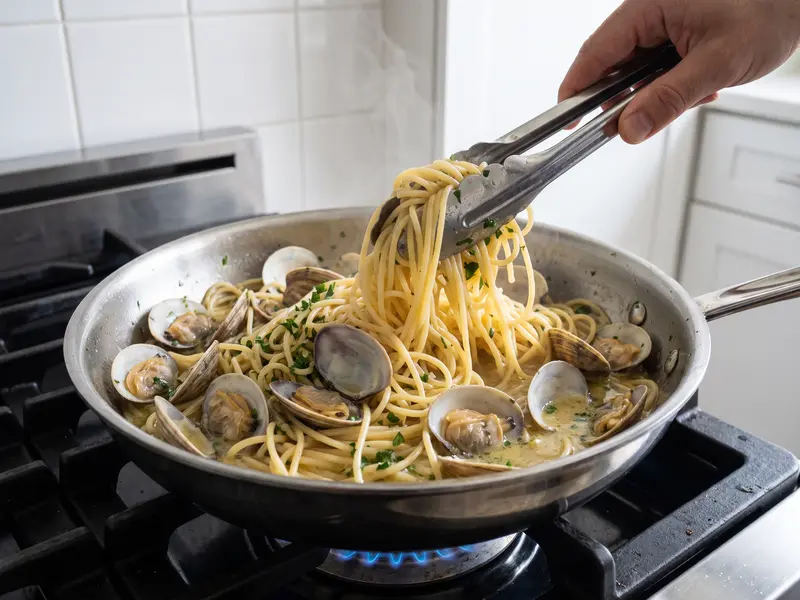
- Return the clams and stir in the chopped parsley. Do not add cheese. Serve at once with the reserved shells on top.
FAQ
Both versions exist. Many Neapolitan cooks skip the wine and rely on the clam liquor, olive oil and starchy pasta water. Newer in bianco versions, like this one, add 60 ml of dry white wine, such as Vermentino or Pinot Grigio, to the pan with the clams for acidity and aroma. Sweet or heavily oaked wine overpowers the sea. If you leave the wine out, add 60 ml of boiling water from the pasta pot instead, so the clams have liquid to open in.
Soak the clams for 30 to 60 minutes in cold water with 30 g of coarse salt per litre, which is about as salty as seawater. Lift them out by hand instead of pouring them into a colander, so the sand stays at the bottom of the bowl, then rinse. Discard clams with broken shells and any that stay open when tapped. Some grit can remain even so, which is why the cooking liquor goes through a fine sieve, or one lined with a paper towel, before it returns to the pan.
They were cooked too long. Under a lid, clams need only 2 to 4 minutes, and each one should come out as soon as its shell opens. Cook them in a wide pan in a single layer so they open at the same time, and in two batches if the pan is crowded. Shell most of them and stir the meat back into the pasta only at the end, for 20 to 30 seconds. Clams that stay closed after cooking go in the bin.
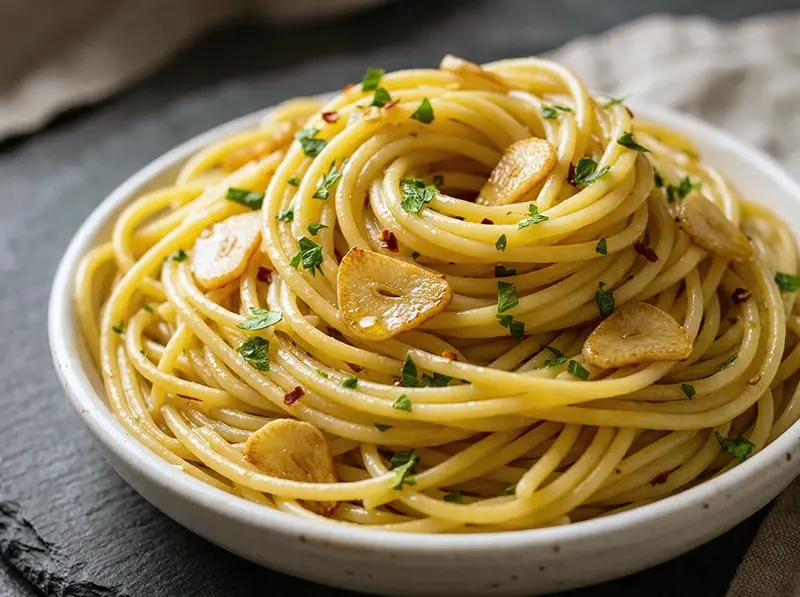
Most Italian cooks leave cheese off pasta with shellfish, because Parmesan overpowers the delicate sea flavour. The richness comes from technique instead: finish the spaghetti in the pan over medium heat, adding the starchy pasta water 2 tablespoons at a time and tossing for about a minute, until the oil and clam liquor turn into a glossy sauce. Stop when it coats the strands; it should not pool on the plate. The same emulsion works in spaghetti aglio e olio, which has no clams.
They are best eaten right away, because the clams toughen while the pasta sits. If you have leftovers, remove all the shells, cool the pasta within 2 hours, and keep it in a sealed container in the fridge for 1 to 2 days at most. Reheat in a skillet over medium heat with 2 to 3 tablespoons of water for 2 to 3 minutes, stirring, rather than in a microwave, which makes the clams rubbery. Do not freeze it.
Rate this
Recipes by email
One letter a week: a recipe picked for your taste, plus whatever is new on the site. Unsubscribe in one click.
Welcome gift: Sergei's cookbook (e-book).
By subscribing you agree to the privacy policy.
Tell us what you like to cook (30 seconds) →Keep browsing
More dishes from the Italian archive — picked by overlap with what you're cooking now.

Join the conversation
Comments
No comments yet — be the first!