
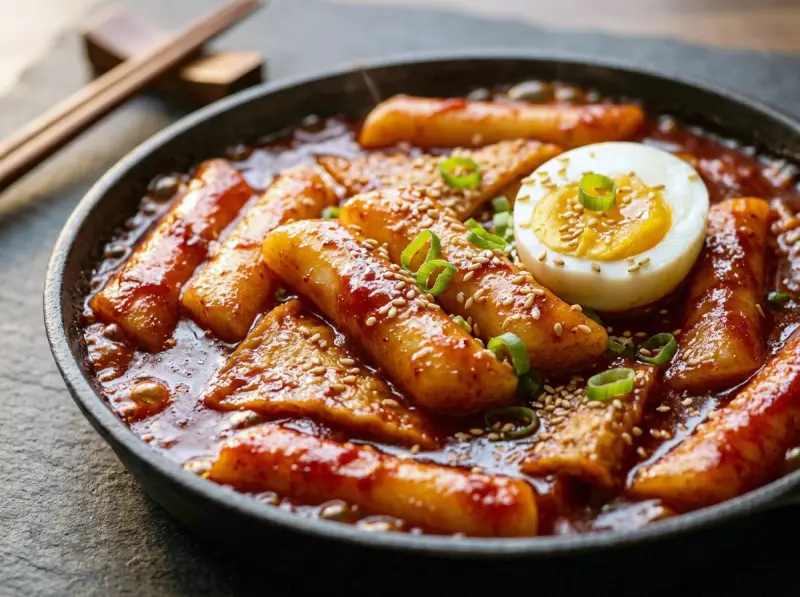
Tteokbokki (Korean Spicy Rice Cakes)
Korea's most iconic street food: thick cylindrical rice cakes (garaetteok) simmered in a fiery, sweet-glossy gochujang sauce until soft and bouncy, with fish cake sheets and boiled eggs absorbing the sauce alongside. The sauce coats every piece in a deep red lacquer. Sold from street carts (pojangmacha) all over Korea, especially around school exits in the afternoon. The modern gochujang version was born in post-Korean War Sindang-dong, Seoul, when vendors replaced expensive royal court ingredients with affordable fermented chilli paste. The sauce must be sweet as well as hot — that balance is what makes it addictive. Best eaten immediately while the rice cakes are at peak chewiness.
Ingredients
- 500 ggaraetteok
- 200 gKorean fish cake sheets, cut into bite-size triangles or strips
- 3 tbspgochujang
- 1 tbspgochugaru
- 2 tbspsoy sauce
- 1 tbspsugar
- 1 tbspcorn syrup or honey
- 3 garlic cloves
- 600 mlanchovy-kelp stock or water
- 4 hard-boiled eggs
- 2 scallions, cut into 5 cm lengths
- 1 tsptoasted sesame oil
- 1 tsptoasted sesame seeds
Method
- Prepare the rice cakes. If using refrigerated or frozen rice cakes, soak them in warm water for 10 to 20 minutes to soften and separate them. Drain. Fresh rice cakes can be used immediately. If the rice cakes are stuck together, gently pull them apart — forcing them can break them. The soaking step is essential; unsoftened rice cakes will remain hard at the center even after long simmering.

- Make the stock (optional but recommended). For anchovy-kelp stock: combine 700 ml water with 8 to 10 dried anchovies (guts removed) and a 10 cm piece of dried kelp (dashima). Bring to a boil and simmer 10 minutes. Remove the anchovies and kelp. Use 600 ml of this stock. Alternatively, dissolve a Korean anchovy stock sachet in 600 ml of water. The stock adds a savory umami base that plain water cannot — the sauce will taste notably deeper.
- Build the sauce. In a wide shallow pan or deep skillet, combine the stock, gochujang, gochugaru, soy sauce, sugar, corn syrup, and garlic. Stir vigorously until the gochujang dissolves completely — no lumps. Bring to a boil over medium-high heat.
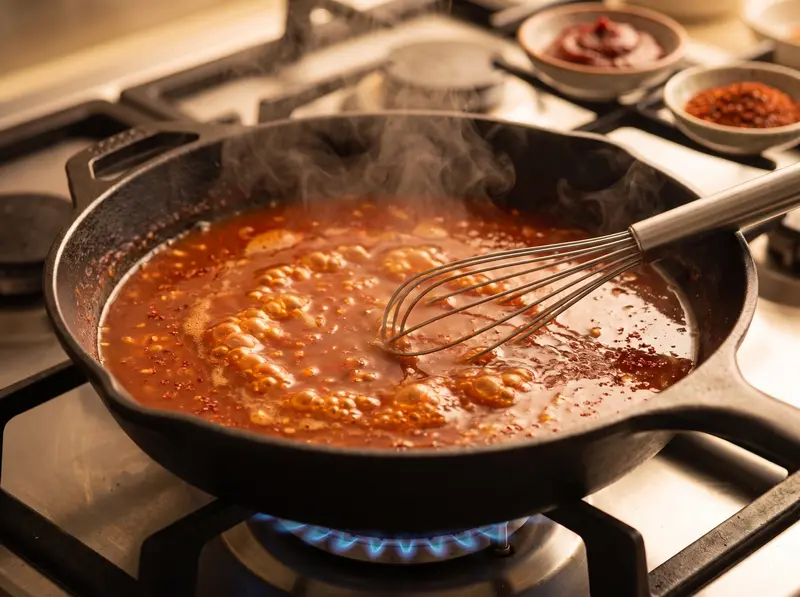
- Simmer the rice cakes. Add the drained rice cakes and stir to coat. Cook over medium-high heat, stirring frequently, for 8 to 10 minutes. The rice cakes are done when they are soft and chewy all the way through and the sauce has thickened to a glossy, clingy consistency. Stir constantly in the last 3 minutes — the sauce concentrates quickly and will burn at the bottom if left alone. If the sauce becomes too thick, add a splash of water; if too thin, simmer a little longer.
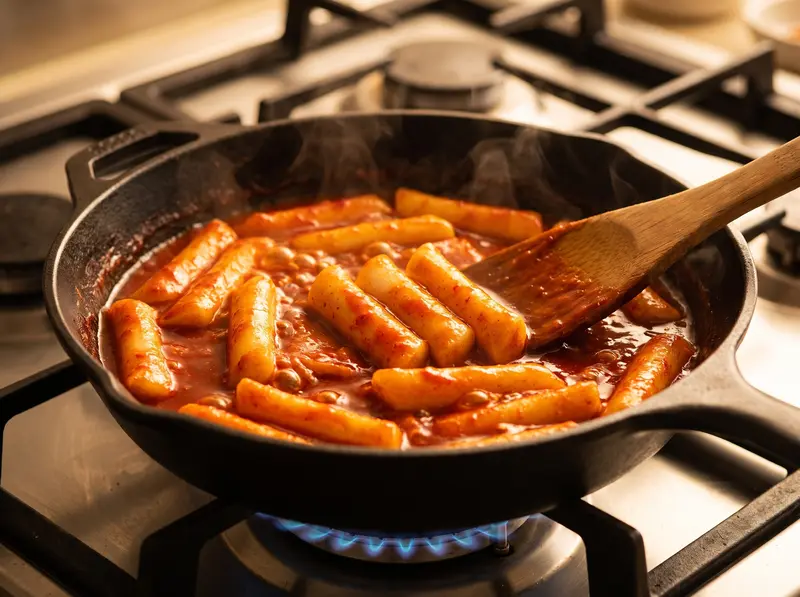
- Finish and serve. Add the fish cake strips and spring onions. Simmer 2 more minutes until the fish cake is heated through. Remove from heat and drizzle with sesame oil. Serve immediately in bowls, topped with the halved hard-boiled eggs and sesame seeds. Tteokbokki must be eaten hot — the rice cakes become hard and glue-like as they cool.
FAQ
Garaetteok are the thick, cylindrical, finger-width rice cakes sold fresh, refrigerated, or frozen at Korean supermarkets and most Asian grocery stores. Fresh rice cakes have the best texture — soft and immediately ready. Refrigerated ones need soaking. Frozen ones need full thawing plus soaking. There is no true substitute that provides the same chewy, dense, bouncy character — rice cakes are made from short-grain rice flour pounded or extruded under pressure, which produces a texture no other ingredient replicates. Flat rice cake pieces (tteok for tteok-guk soup) can be used in a pinch for a different but related texture.
Gochujang provides body, fermentation depth, sweetness, and color — it is thick and complex. Gochugaru (red pepper flakes) provides fresh heat and amplifies the red color, giving the sauce a brighter, cleaner spice note. Gochujang alone makes the sauce muddy-tasting; gochugaru alone makes it watery and one-dimensional. Together they create the layered, glossy, deeply red sauce characteristic of Korean street-stall tteokbokki. If you only have gochujang, use it — the result is still very good. If you only have gochugaru, add miso or doenjang (Korean soybean paste) for some of the fermented body.
Reduce the gochugaru first (it contributes pure heat). Then reduce the gochujang slightly but add more soy sauce to compensate for the lost salt and umami. Increase the sugar and corn syrup to balance. Adding a tablespoon of butter or a dash of heavy cream (rose tteokbokki style) rounds the edges of the heat dramatically and adds richness without killing the sauce character. The baseline ratio is still gochujang-centred — you cannot replace it with ketchup or sweet chilli sauce and have the same dish.
Yes. Use dried kelp (dashima or kombu) stock instead of anchovy stock: simmer a 15 cm piece of dried kelp in 700 ml water for 10 minutes, remove. Omit the fish cakes entirely or replace with sliced firm tofu, king oyster mushrooms, or cubed firm tofu pan-fried until golden. Use soy sauce as the seasoning base. The gochujang sauce itself is plant-based. Vegetarian tteokbokki with mushrooms and kelp stock is genuinely excellent — the kelp provides ocean-forward umami that partially compensates for the missing fish.
Rabokki (라볶이) is tteokbokki with instant ramen noodles added — the combined name 'rabokki' merges ramyun (ramen) and tteokbokki. To make it: prepare the tteokbokki base exactly as above but double the stock (1.2 liters) and increase the sauce quantities by 50%. Cook the rice cakes for 5 minutes, then add the dry ramen noodles (break them in half) and the ramen seasoning sachet if using. Simmer 3 to 4 more minutes until the noodles are cooked. The noodles absorb a significant amount of liquid — add more water if the sauce becomes too thick. This is the most popular variation among Korean school-age eaters.
Rate this
Recipes by email
One letter a week: a recipe picked for your taste, plus whatever is new on the site. Unsubscribe in one click.
Welcome gift: Sergei's cookbook (e-book).
By subscribing you agree to the privacy policy.
Tell us what you like to cook (30 seconds) →Keep browsing
More dishes from the Korean archive — picked by overlap with what you're cooking now.


Join the conversation
Comments (2)
Fresh rice cakes and frozen rice cakes behave differently. Frozen ones need a few minutes of simmering to soften before the sauce reduces, otherwise they stay hard in the centre. Fresh ones cook in the time it takes the sauce to thicken. The gochujang amount in this recipe is calibrated for medium heat — if you want it Korean-spicy, add another tablespoon. The fish cakes are not optional, they give the dish its savoury depth.
Ттокбокки это моя зависемость, делаю каждую неделю. Рисовые палочки покупаю в азиатском магазине замороженые, перед готовкой размораживаю. Гочуджан не заменяйте ничем, с кетчупом или срирачой совсем другой вкус получаеться. И рыбные котлетки обязательно добавляйте!