

Vegetable Frittata
Eight eggs whisked with cream and Parmesan, poured over sautéed courgette, red pepper, onion, and cherry tomatoes, cooked on the stovetop for a few minutes and finished in the oven until just set. The Italian frittata is the blueprint for every crustless egg bake that followed it — simpler than a quiche (no pastry, no water bath), more structured than a scramble, and easier to serve because it holds its shape and slices cleanly. It is the correct answer to the question of what to do with vegetables that are a day away from being past their best.
Ingredients
- 8 large eggs
- 3 tbspdouble cream or whole milk
- 40 gParmesan
- 1 tspfine salt
- 1 pinchfreshly ground black pepper
- 2 tbspolive oil
- 1 medium onion
- 1 red pepper
- 1 small courgette, sliced into half-moons
- 150 gcherry tomatoes
- 60 gbaby spinach or chopped kale
- 60 gfeta or goat's cheese
Method
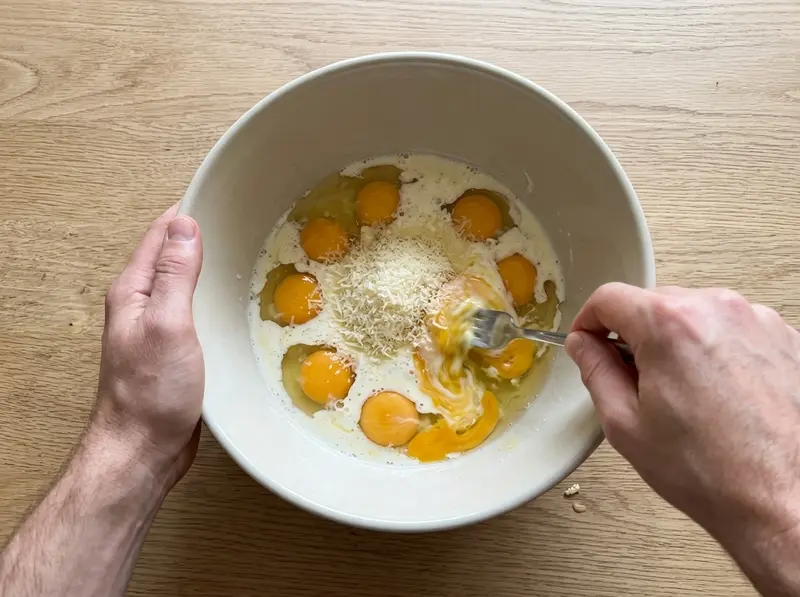
- Preheat the oven to 190°C and prepare the egg mixture. Whisk the eggs, cream, two-thirds of the Parmesan, salt, and pepper in a bowl until the yolks and whites are fully combined and the mixture is uniform. Do not over-whisk — you want a smooth, cohesive liquid, not frothy. Set aside. The Parmesan in the egg mixture adds body and savouriness; the remaining third goes on top before baking to form a golden crust.
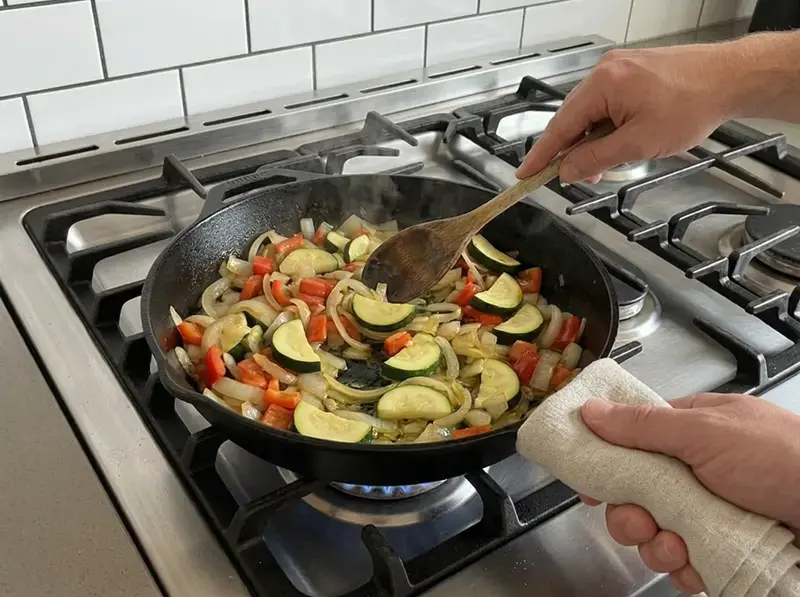
- Cook the vegetables. Heat the olive oil in a 26 cm (10-inch) ovenproof skillet — cast iron or non-stick — over medium heat. Add the onion and red pepper and cook, stirring occasionally, for 6 to 7 minutes until softened and lightly golden at the edges. Add the courgette and cook 3 minutes more. Add the cherry tomatoes and cook 2 minutes, pressing them gently to release their juices. Finally, add the spinach and stir for about 60 seconds until just wilted. Season lightly. This vegetable sequence matters: hard vegetables need longer; soft greens and tomatoes go in last and should not be overcooked — they continue cooking with the eggs.
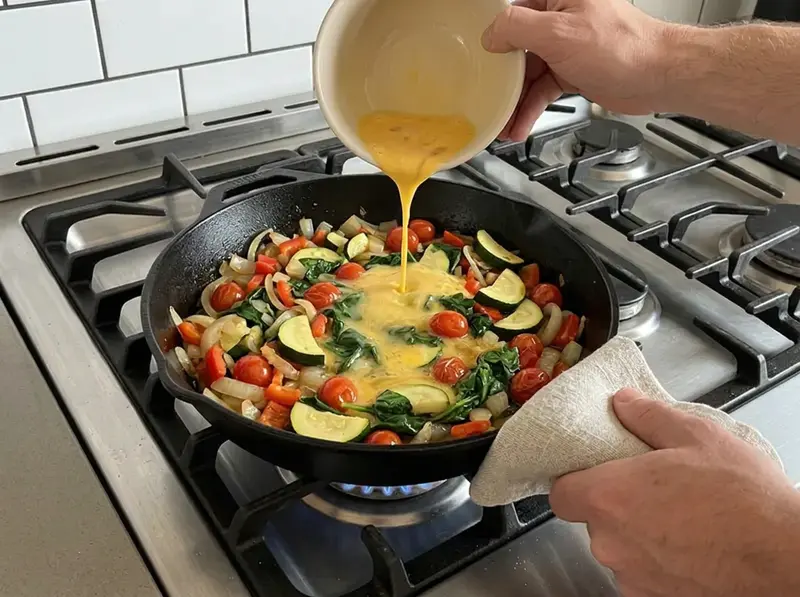
- Pour in the egg mixture. Spread the vegetables in an even layer across the pan. Pour the egg mixture over them in a slow, even stream, letting it settle between the vegetables rather than on top of them. Shake the pan gently to distribute evenly. Do not stir. Scatter the crumbled feta or goat's cheese over the surface if using, then scatter the remaining Parmesan.
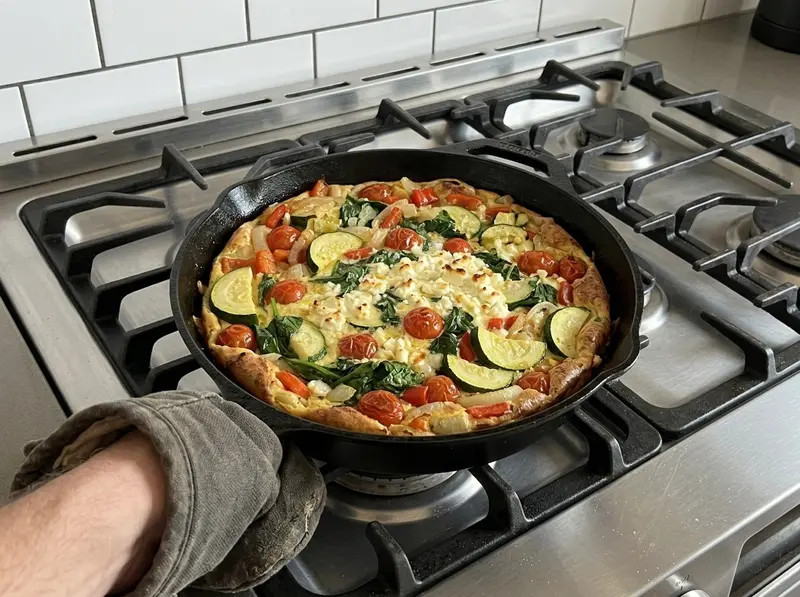
- Cook on the stovetop, then transfer to the oven. Leave the pan on medium heat for 2 to 3 minutes without touching it. You are looking for the edges to turn opaque and just begin to set — the center should still be liquid. This brief stovetop phase starts the cooking from the bottom up and prevents the base from being underdone. Once the edges are set about 2 cm in, carefully transfer the skillet to the oven. Bake for 12 to 15 minutes.
- Remove when the center still has a slight wobble. The frittata is done when the surface is puffed and matte (not glossy and wet), the edges are visibly golden, and the very center has just a small, gentle jiggle when you shake the pan. Remove from the oven. Do not be tempted to cook it further — the residual heat in the pan will finish it during the 5-minute rest. After resting, run a spatula around the edges, slide onto a board or serve directly from the pan. Slice into wedges. Serve warm or at room temperature.
FAQ
A frittata is Italian, crustless, started on the stovetop and finished in the oven, with eggs as the primary texture — firm enough to slice but not custardy. A quiche is French, baked in a pastry case, and uses a higher ratio of cream to eggs that gives it a smoother, more custardy texture. A frittata takes 25 to 30 minutes total; a quiche takes closer to an hour. Both are excellent, but a frittata is significantly faster and requires no pastry work.
Almost any vegetable works, but the key is managing moisture and cooking time. Roasted or sautéed vegetables with most of their moisture driven off produce the best results — raw vegetables added directly to the egg mixture release water as they cook and make the frittata soggy and hard to set. Good choices: red pepper, courgette, cherry tomatoes (cooked briefly), mushrooms (cooked until browned), leek, onion, asparagus, broccoli florets, baby spinach (wilted). Avoid very high-water vegetables like cucumber or raw tomatoes added directly.
Yes. Frittata keeps for 3 to 4 days refrigerated and is good served cold, at room temperature, or gently reheated. To reheat: cover individual slices with foil and warm in a 160°C oven for 8 to 10 minutes. Avoid the microwave if possible — it makes the eggs rubbery. Frittata can technically be frozen, but the texture changes noticeably on thawing and reheating. Best made fresh or 1 day ahead.
Yes, with a lid. After pouring in the eggs, reduce the heat to the lowest setting and cover the pan tightly. The steam trapped under the lid cooks the top of the frittata. It takes longer — about 12 to 15 minutes on the lowest heat — and the top will not have the golden color of the oven version, but the texture inside is similar. Check by pressing the center gently; it should feel just firm, not liquid. Alternatively, the traditional Italian method involves flipping the frittata using a plate — but the oven method is significantly easier and more reliable.
As a guide: 6 eggs for a 22 cm (9-inch) pan serving 3 to 4 people; 8 eggs for a 26 cm (10-inch) pan serving 4 to 6; 10 to 12 eggs for a 28 to 30 cm pan serving 6 to 8. The pan size matters more than anything else. If the layer of egg mixture is too thin, the frittata cooks too fast and turns rubbery. If too deep, the center takes too long and the edges overcook. The egg mixture should sit about 2 cm deep in the pan before baking.
Rate this
Recipes by email
One letter a week: a recipe picked for your taste, plus whatever is new on the site. Unsubscribe in one click.
Welcome gift: Sergei's cookbook (e-book).
By subscribing you agree to the privacy policy.
Tell us what you like to cook (30 seconds) →Keep browsing
More dishes from the Italian archive — picked by overlap with what you're cooking now.

Join the conversation
Comments (1)
Medium-low heat is the secret to perfect vegetable frittata. Everyone uses too much heat. The large eggs needs gentle, even cooking to reach that ideal texture without burning the outside.