
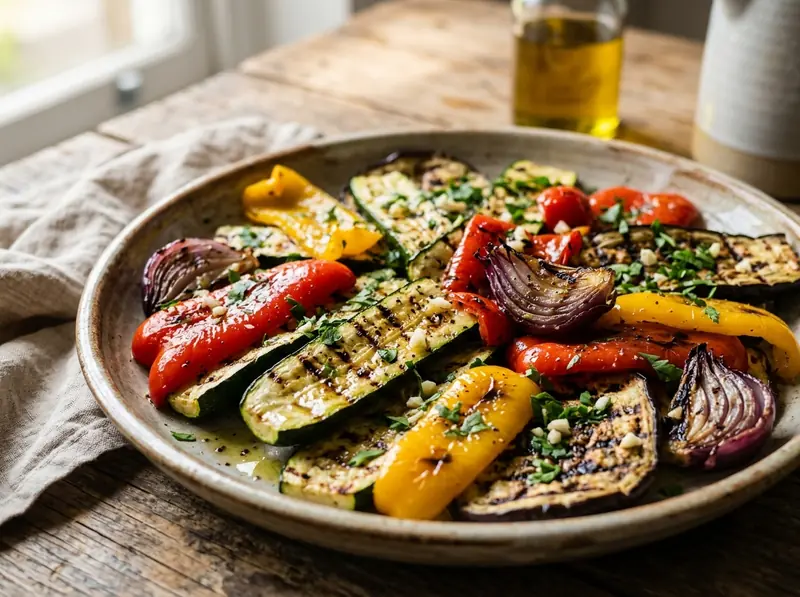
Verdure alla Griglia (Italian Grilled Vegetables)
Verdure alla griglia are Italian grilled vegetables: eggplant, zucchini, bell peppers and red onion, sliced thin, charred on a grill or a ridged pan and dressed with olive oil, garlic, parsley and a spoonful of red wine vinegar. In Italy they go on the table as an antipasto or as a contorno, the side dish served with grilled meat or fish. The slices are patted dry, brushed with a little oil and grilled unsalted on a very hot surface, dressed while still warm and left for half an hour to soak up the dressing.
Ingredients
- 1 eggplant
- 2 zucchini
- 2 bell peppers
- 1 red onion
- 2 clovesgarlic
- 5 tbspextra virgin olive oil
- 1 tbspred wine vinegar
- 10 gparsley
- 0.5 tspsalt
- 0.25 tspblack pepper
Method
- Prepare and slice the vegetables. Wash 1 medium eggplant (about 300 g), 2 medium zucchini (about 200 g each) and 2 bell peppers (one red, one yellow), and peel 1 red onion. Slice the eggplant and zucchini lengthwise into planks about ½ cm thick. Cut the peppers into strips 3–4 cm wide, removing the seeds and white ribs. Cut the onion into 6–8 wedges through the root, leaving the root end on so the layers hold together. Keep the thickness even so everything cooks at the same rate.
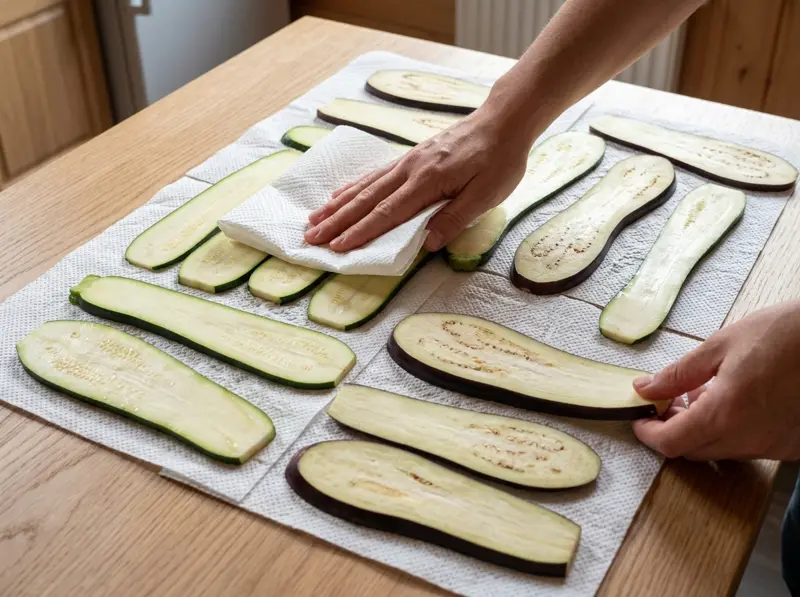
- Dry the vegetables thoroughly. Pat every piece dry with paper towels or a clean cloth, cut sides included. A wet slice steams on the grill and comes out limp and pale, as if it had been boiled. A dry surface browns and takes clear grill marks.
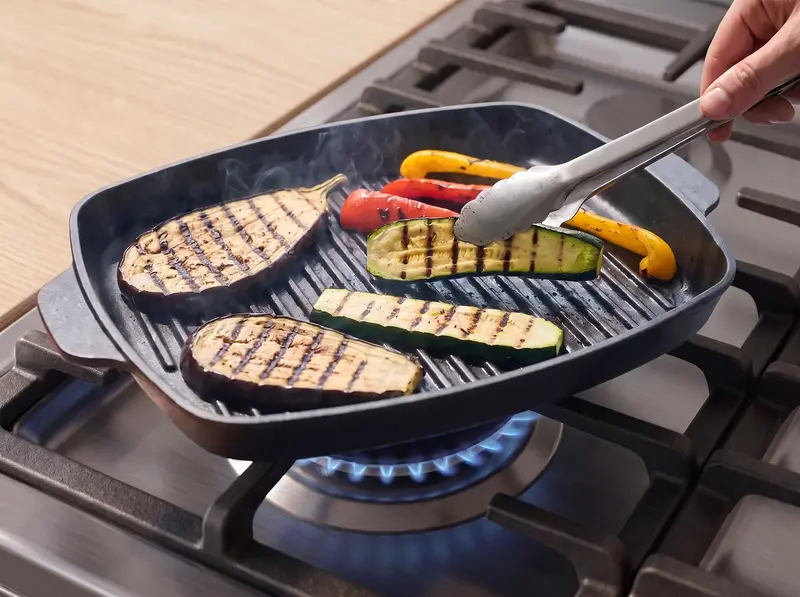
- Grill on a very hot pan. Heat a grill or a ridged cast-iron pan over medium-high heat for about 5 minutes, until a drop of water sizzles away at once. Brush the dry vegetables lightly on both sides with about 2 tablespoons of the olive oil; do not salt them yet. Lay them in a single layer without overlapping: a 26–28 cm pan takes 6–8 pieces, so expect about six batches. Leave them alone for 2–4 minutes, until dark grill marks form, then turn them and give the second side another 2–4 minutes. Eggplant and zucchini are done when they are soft and bend easily; the peppers and onion can take up to 5 minutes per side and are done when the pepper skin blisters and the onion is tender at its thickest part.
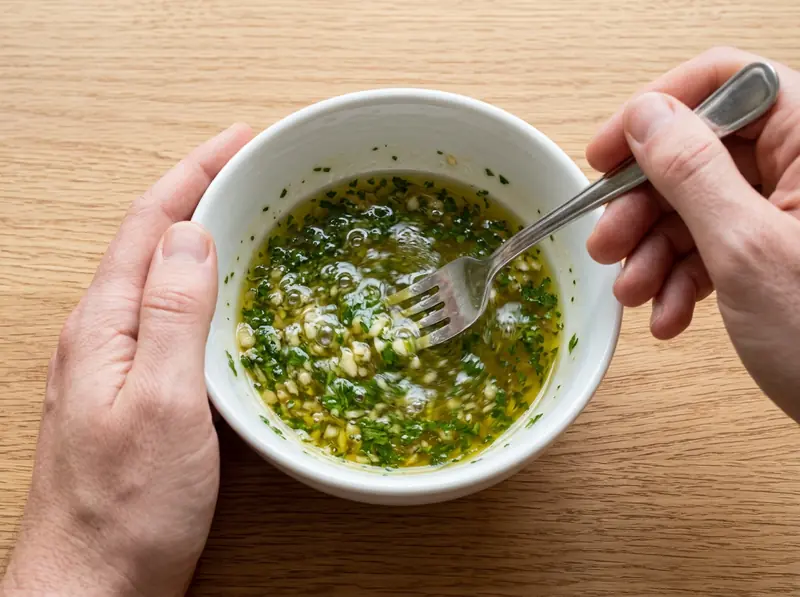
- Make the dressing. While the vegetables grill, whisk the remaining 3 tablespoons of olive oil with 1 tablespoon of red wine vinegar, 2 finely chopped garlic cloves and 10 g of chopped parsley (a small handful); that is about 3 parts oil to 1 part vinegar. White wine vinegar or lemon juice can replace the red wine vinegar in the same amount, and balsamic makes the dressing sweeter. Mint or basil can stand in for part of the parsley. The salt stays out of the dressing: it goes straight onto the vegetables in the next step.
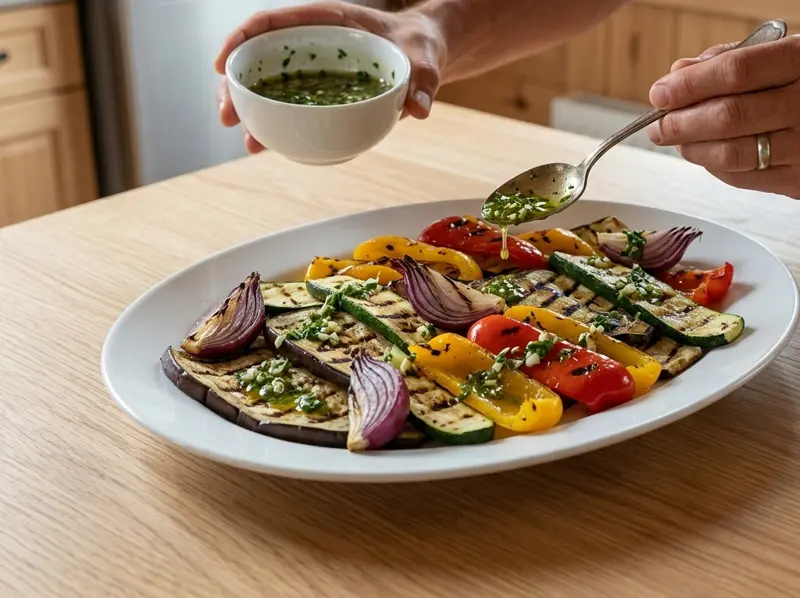
- Dress, rest and serve. Move each batch from the pan to a wide platter, slightly overlapping, and spoon a little of the dressing over it while it is still warm. When everything is on the platter, season with ½ teaspoon of salt and ¼ teaspoon of freshly ground black pepper. Let the vegetables rest for at least 30 minutes so they absorb the dressing. Serve warm or at room temperature: straight from the fridge the oil is thick and the flavor is dull. Leftovers keep for 2–3 days in the fridge in an airtight container; take them out 30 minutes before serving.
FAQ
Verdure alla griglia means 'grilled vegetables' in Italian; the same dish is also called grigliata di verdure or verdure grigliate. The usual set is eggplant, zucchini and bell peppers, often with red onion, fennel or radicchio added. Eggplant and zucchini are cut lengthwise into planks about ½ cm thick, peppers into strips 3–4 cm wide, onion into wedges held together by the root. Choose firm vegetables: soft zucchini and wrinkled eggplant only get softer on the grill.
Almost always the cause is water. Slices that go on the grill wet, or that were salted in advance so the salt has drawn their juice out, steam instead of browning. The second cause is a pan that is not hot enough or is too full: a crowd of cold vegetables cools the surface, so heat it for about 5 minutes and grill 6–8 pieces at a time. Then leave them alone for 2–4 minutes per side, because lifting them every few seconds to check stops the marks from forming.
This recipe dresses the vegetables after grilling, while they are still warm: 3 tablespoons of olive oil, 1 tablespoon of red wine vinegar, 2 garlic cloves and parsley. Chopped garlic burns on a hot pan, so before grilling the slices get only a thin film of oil. Italian recipes use wine vinegar, red or white, or lemon juice; balsamic also appears and gives a sweeter result. Some home cooks marinate the raw slices for 20–30 minutes in oil, garlic and parsley instead; if you try that, wipe the garlic off before the slices touch the pan.
Yes. A ridged cast-iron pan on the stove gives the same dark stripes as an outdoor grill, and it is what this recipe uses. An ordinary heavy frying pan over medium-high heat works too: there are no stripes, but the slices still brown in 2–4 minutes per side. In the oven, lay the slices in a single layer on a tray, switch on the grill (broiler) element at 200°C and cook for about 15 minutes, turning them halfway. Whatever the method, keep the slices dry and in one layer, and salt them after cooking.
Serve it warm or at room temperature, as an antipasto with focaccia, olives and mozzarella, or as a side to grilled meat or fish. It is a good dish to make ahead: after 1–2 hours of resting it tastes better than right off the grill. In the fridge it keeps for 2–3 days in an airtight container. Take it out about 30 minutes before serving, because cold oil thickens and dulls the flavor.
Keep browsing
More dishes from the Italian archive — picked by overlap with what you're cooking now.
Recipes by email
One letter a week: a recipe picked for your taste, plus whatever is new on the site. Unsubscribe in one click.
Welcome gift: Sergei's cookbook (e-book).
By subscribing you agree to the privacy policy.
Tell us what you like to cook (30 seconds) →
Join the conversation
Comments
No comments yet — be the first!