
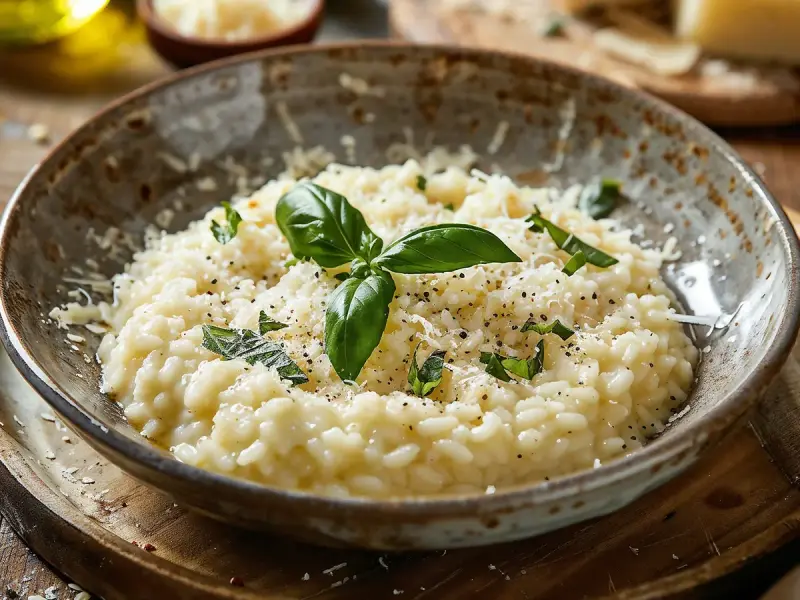
Ризотто
Ризотто — классическое итальянское блюдо: кремообразный рис, приготовленный на бульоне до мягкости, с разнообразными добавками на выбор — грибами, морепродуктами, овощами, мясом или сыром. Подходит для вегетарианского питания при использовании овощного бульона.
Ингредиенты
- 1 стаканрис арборио
- 1 репчатый лук
- 2 зубчиковчеснок
- 4 стакановгорячий куриный или овощной бульон
- 1/2 стакансухое белое вино
- 1/2 стаканпармезан
- 2 ст.л.сливочное масло несолёное
- 2 ст.л.оливковое масло
- соль и свежемолотый чёрный перец
- по желаниюгрибы, морепродукты, тыква или другие добавки
1 стакан = 240 мл
Приготовление
- В отдельной кастрюле довести бульон до кипения, затем убавить огонь и поддерживать его горячим.
- В глубоком сотейнике или кастрюле с толстым дном разогреть оливковое масло на среднем огне. Добавить лук и чеснок, обжарить до мягкости, не допуская зарумянивания.

- Всыпать рис и обжаривать вместе с луком и чесноком около 2 минут, чтобы каждое зёрнышко покрылось маслом. Влить вино и готовить, помешивая, до полного выпаривания.
- Постепенно, по одному половнику, вливать горячий бульон, постоянно помешивая и дожидаясь полного впитывания жидкости перед добавлением следующей порции. Продолжать около 18–20 минут, пока рис не станет мягким, но с лёгкой упругостью в серединке.

- Когда ризотто почти готово, добавить сливочное масло и тёртый пармезан. Энергично перемешать до кремообразной консистенции. Приправить солью и перцем. Если используются дополнительные ингредиенты (грибы, морепродукты), обжарить их отдельно и добавить за несколько минут до готовности. Подавать немедленно.
Вопросы
Постоянное помешивание высвобождает крахмал из риса — именно он даёт ризотто кремовую текстуру без добавления сливок. Если не мешать, рис прилипнет ко дну и потеряется та самая шелковистость. Это главное отличие ризотто от обычной рисовой каши.
Арборио — самый доступный вариант. Но карнароли считается профессиональным выбором: он держит форму лучше и даёт более кремовую текстуру. Виалоне нано — третий вариант, популярный на севере Италии. Обычный длиннозёрный рис не подойдёт — у него мало крахмала.
Да, просто замените вино дополнительным стаканом бульона с чайной ложкой лимонного сока. Вино добавляет кислотность и глубину, но без него ризотто тоже получится вкусным. Если готовите для детей — смело убирайте.
Две причины: мало жидкости или переварили. Ризотто должно оставаться слегка текучим — al onda («волной»). Снимайте с огня, пока рис ещё чуть жидковат: за пару минут он дойдёт сам. И не жалейте масло на финальном этапе — именно оно связывает соус.
Да, но правильно: добавьте 2–3 ложки бульона или воды на порцию и прогрейте на медленном огне, постоянно помешивая. Без жидкости ризотто при разогреве станет сухим комом. В микроволновке — только с накрытой крышкой и той же добавкой воды.
Оцени
Рецепты на почту
Одно письмо в неделю: рецепт под ваш вкус и всё новое на сайте. Отключить рассылку можно в один клик.
В подарок — книга рецептов Сергея (epub).
Нажимая кнопку, вы соглашаетесь с политикой конфиденциальности.
Расскажите, что любите готовить (30 секунд) →Смотри дальше
Ещё блюда из архива — подобраны по пересечению с тем, что ты сейчас готовишь.

Обсудить рецепт
Комментарии (3)
Il trucco del risotto è la pazienza. Non bisogna mescolare continuamente come dicono tutti, basta dare una girata ogni tanto e lasciarlo fare
Ризотто не терпит суеты и не терпит лени одновременно. Бульон добавляется по половнику, и да, надо стоять и мешать. Кто наливает весь бульон разом — готовит рисовую кашу, а не ризотто. Рис должен быть арборио или карнароли, обычный длиннозёрный даже не пытайтесь использовать.
Rinse the rice 3-4 times until the water runs clear for risotto. This removes excess surface starch that causes clumping and gluey texture. Two minutes of rinsing, dramatically different results.