The oldest cheesecake recipe we can actually read was written by a Roman politician. Cato the Elder, around 160 BC, set down instructions for a cake called savillum in his farming manual De Agri Cultura — fresh cheese, flour, eggs, honey, baked and finished with more honey and poppy seeds. He also recorded libum, a cheese bread offered to the household gods. These weren't curiosities. They were everyday food, and the technique behind them never really went away.
What survived is the idea that fresh, soft cheese — drained curds, basically — behaves beautifully in something sweet. Heat it gently with eggs and sugar and the milk proteins set into a tender, sliceable custard. That single trick branched out across the world: into Slavic pan-fried curd cakes, into the dense New York slab, into a Japanese sponge so light it barely holds together. Six dishes, one unbroken line from a Roman farm to your oven.
Libum — the cheese bread the Romans baked for their gods
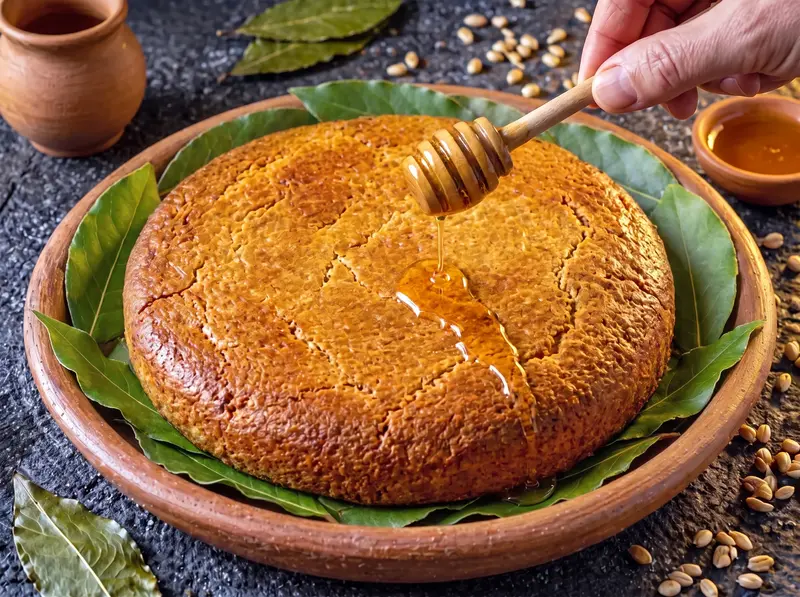
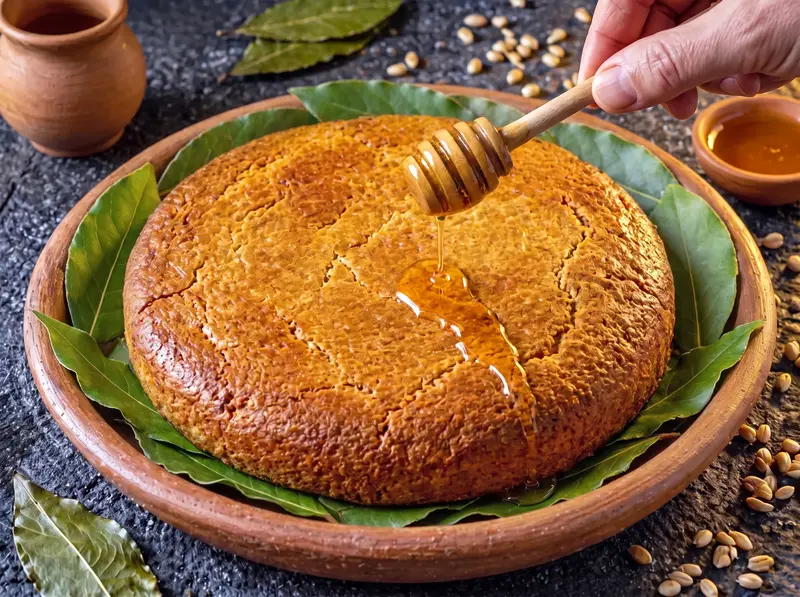
Libum is ricotta-style fresh cheese mashed with flour and egg, shaped into a small loaf, set on bay leaves, and baked under a clay dome. Cato wrote it down as a religious offering, but anyone who has tasted it knows it doubled as breakfast. It's barely sweet on its own; the honey came after, poured warm over the top.
This is the ancestor at the root of everything else here. The principle it establishes is simple and load-bearing: fresh cheese has enough protein and moisture to bind a batter without much else holding it together. The expert move is to drain your cheese well before mixing — sit it in a sieve lined with cloth for an hour. Wet ricotta makes a gummy, heavy loaf, while properly drained curds give you a crumb that's moist but holds its shape.
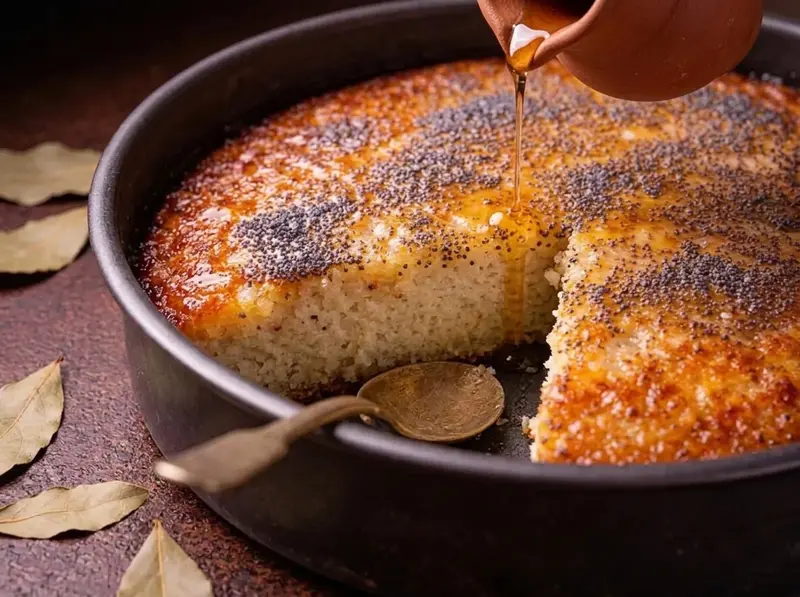
Savillum — the actual first cheesecake, written down before Caesar was born
Savillum is the closer relative to what we'd recognise as cheesecake. Cato's version mixes fresh cheese with flour, eggs and honey, bakes it in an earthenware dish, then glazes it with honey and poppy seeds. Sweeter than libum, softer in the middle, and unmistakably a dessert.
Its place in the lineage is pivotal: this is where cheese stops being a savoury staple and commits to being sweet. The reason it works comes down to the eggs. They're doing two jobs — adding richness and, more importantly, coagulating as they heat to lock the loose curds into a sliceable set. Bake it low and slow, around 160°C, and pull it while the centre still has a slight wobble. Carryover heat finishes the set; an overbaked savillum turns rubbery and weeps liquid.
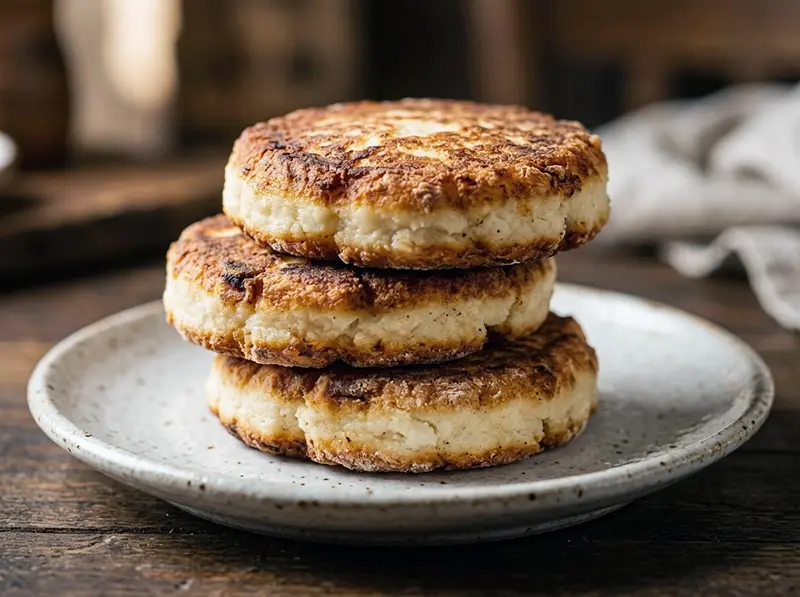
Syrniki — the breakfast version that conquered Eastern Europe
Syrniki are small pan-fried cakes made from tvorog, the Slavic farmer's cheese that's drier and tangier than ricotta. Bound with egg and a little flour, fried in butter until the outside is gold and the inside stays soft and creamy. Ukrainians and Russians eat them by the plateful with sour cream and jam.
They're the same ancient idea, just cooked in a skillet instead of an oven — proof the libum technique travelled north and stuck. The classic failure is adding too much flour to stop the batter spreading, which gives you dense little hockey pucks. Don't. Drain the tvorog, keep the flour minimal, chill the shaped cakes for ten minutes, and fry over medium heat so they set before they collapse. The cheese should taste like the main event, not the binder.
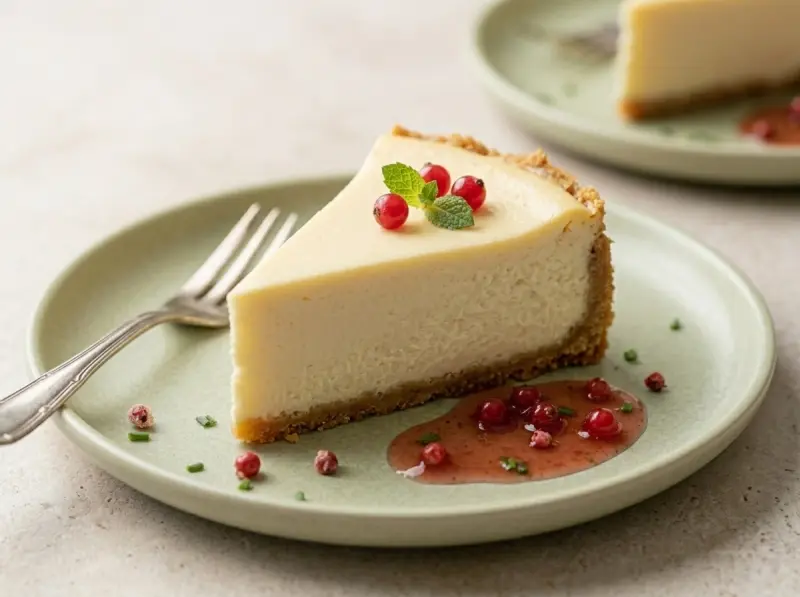
Classic Cheesecake — the dense American slab everyone pictures
This is the one most people mean by "cheesecake": cream cheese beaten with sugar and eggs, poured over a crushed-biscuit base, baked into a thick, tangy block. Cream cheese is a 19th-century American invention, but the structure underneath is pure Roman — sweetened curds set with egg.
Its place in the story is the industrial endpoint, the moment cheese-and-egg custard got rich enough to stand on its own as a whole cake. The technique that separates good from cracked is gentleness. Beat the cream cheese smooth before the eggs go in, then add them on low speed — whip air in and the top domes, then sinks and splits as it cools. Bake in a water bath and let it cool in the turned-off oven with the door ajar. Sudden temperature drops are what crack the surface.
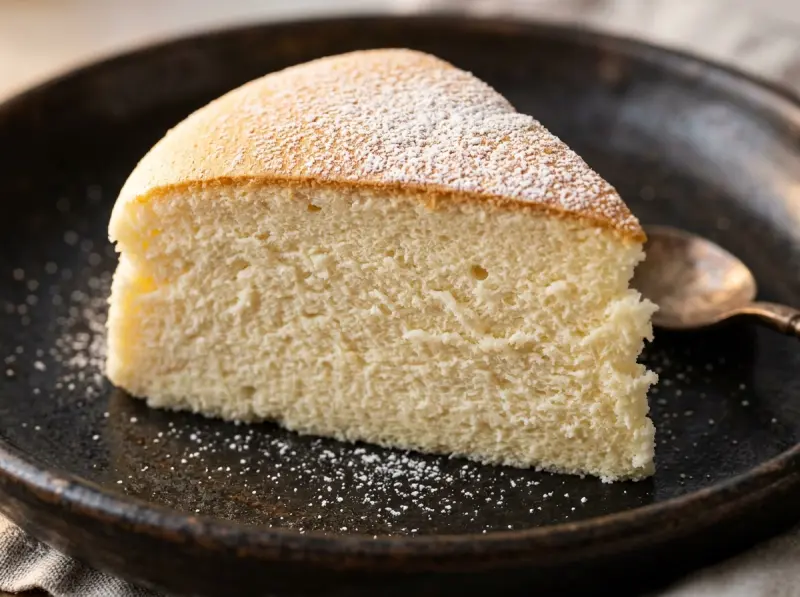
Japanese Cheesecake — the cloud that shouldn't be possible
Sometimes called cotton or soufflé cheesecake, this is cream cheese lightened with whipped egg whites and baked in a water bath until it jiggles like a pillow. Far less sugar and cheese than the American version, far more air. It's a 20th-century reinvention, but it's working with the same curds-and-egg foundation.
Its place in the lineage is the airy extreme — the furthest the ancient technique can be stretched in the opposite direction from the New York slab. Everything depends on the meringue. Whip the whites to soft, droopy peaks, not stiff ones, and fold them into the cheese batter in thirds with a light hand. Overwork it and the air collapses; underwhip and it never rises. Bake in a low water bath and cool it slowly, or the sponge deflates the moment it leaves the heat.
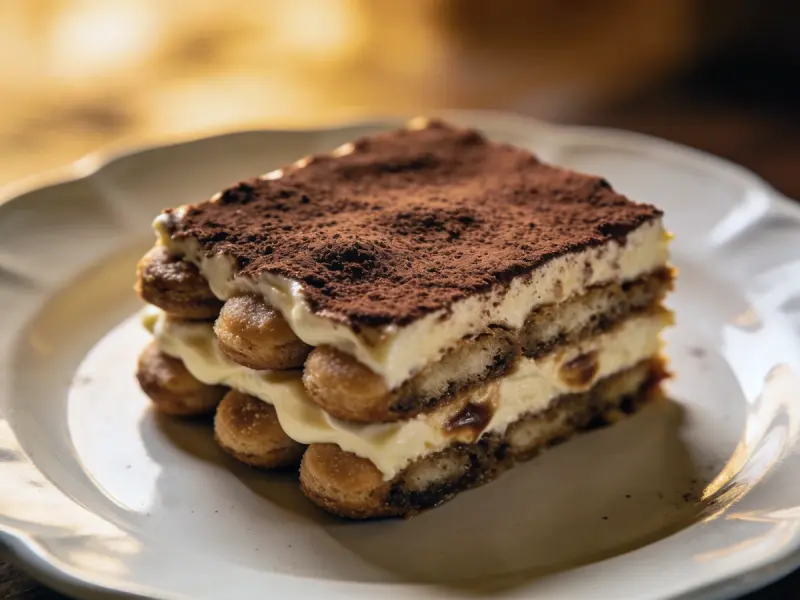
Tiramisu — the cheese dessert that skips the oven
Mascarpone — a thick Italian cream cheese — folded with whipped eggs and sugar, layered between coffee-soaked ladyfingers, dusted with cocoa. No baking at all, which makes it the modern outlier. But it belongs here: it's still sweetened fresh cheese carrying the whole dish.
It shows how the lineage adapts to a no-bake world. Without eggs setting in the oven, the structure comes from beating air into the mascarpone and yolks until thick. The classic mistake is overbeating the mascarpone, which is fragile and splits into grainy curds in seconds. Stop the moment it's combined. And dip the ladyfingers, don't soak them — a quick one-second dunk, or you get a soggy collapse instead of clean layers.
What makes cheese work in dessert
It comes down to curds. Fresh cheese is milk protein with the whey drained off, which means it brings structure, fat and moisture all at once — exactly what a tender dessert needs. Heated with eggs, those proteins coagulate into a custard that slices clean; whipped with air, they hold a cloud. The Romans figured this out by feel, and every dish here is still running on the same chemistry they cooked over a clay oven two thousand years ago.