Something happens to food over live fire that a pan can't fake. Sugars char, fat drips and smokes, and the smell pulls everyone out into the garden before you've even plated anything. That's most of the appeal, honestly. The cooking is half the party.
You don't need a fancy setup. A cheap kettle grill and a bag of charcoal will beat a gas barbecue on flavour every time, though gas wins on a Tuesday when you can't be bothered to wait for coals. Either works for everything below. The one upgrade worth making is a homemade sauce instead of the sticky stuff from a bottle, and if you want one, my homemade BBQ sauce takes twenty minutes and keeps for weeks. Here are six things I light the coals for all summer.
Smash Burger — the one that converted me away from thick patties
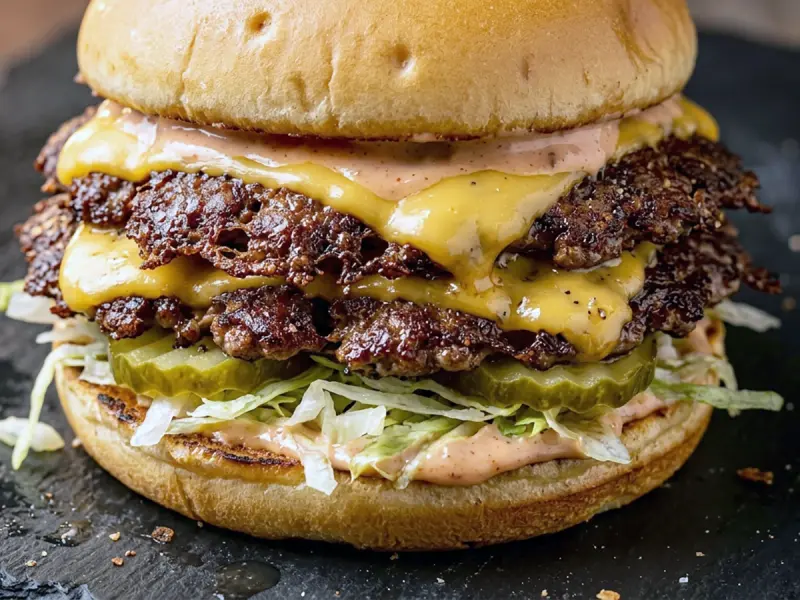
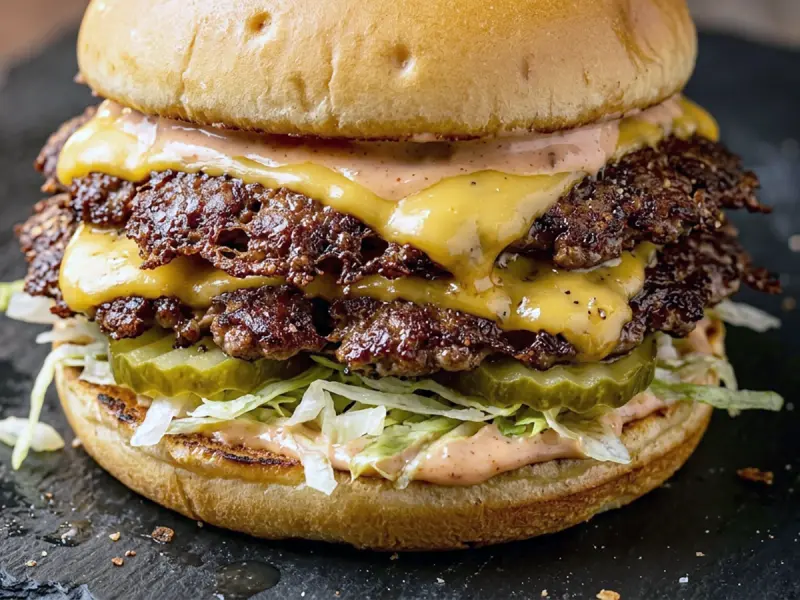
For years I shaped fat, careful patties and treated them like something delicate. The smash burger throws all of that out. You take a loose ball of cold 80/20 beef, drop it on a screaming-hot cast-iron surface, and flatten it hard with a spatula in the first ten seconds. That pressure forces the whole face of the meat onto the metal, and you get a thin patty that's almost all crust: dark, crisp, lacy at the edges.
Two things matter and people skip both. Don't season until after the smash, or the salt draws moisture and you steam instead of sear. And use American cheese. I know how that sounds, but nothing else melts that completely in the forty seconds you've got between flip and bun. Save your good cheddar for something else.
Kabob / Skewers — kofta and shish, the way they're meant to be
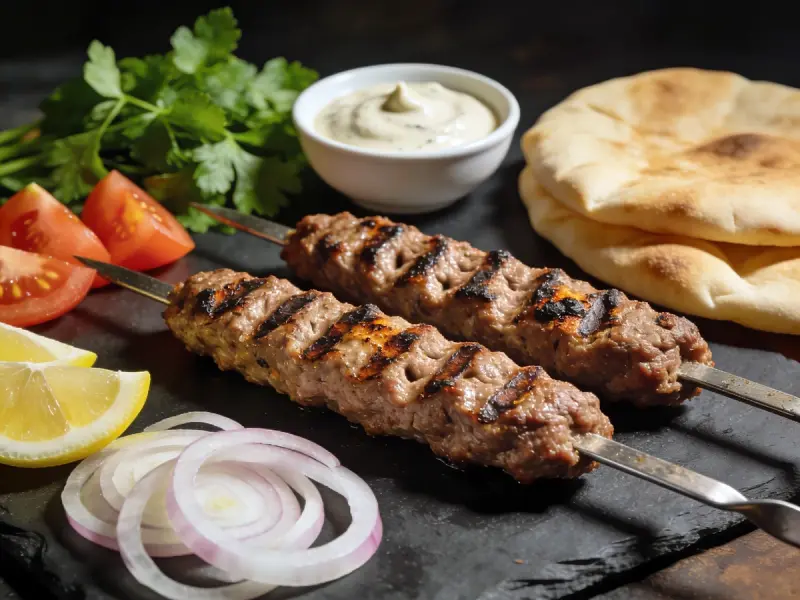
Kebab is one of the oldest things humans do with meat, and you find a version of it everywhere from Morocco across to Central Asia. This covers the two that matter most at home: kofta, which is ground lamb worked with onion, parsley and baharat spice, moulded straight onto flat skewers; and shish, cubes of marinated meat threaded on and grilled hard.
The single thing that separates good kofta from a sad pile of meat falling through the grates is the onion. Grate it, then squeeze it bone dry in a cloth before it goes near the meat. Wet onion releases steam over the fire, the mix loosens, and your kofta drops off the skewer into the coals. Knead the meat until it turns sticky and almost paste-like, too. That's what holds it together. Charcoal genuinely matters here in a way it doesn't for a burger.
Yakitori — Japanese chicken skewers built on patience
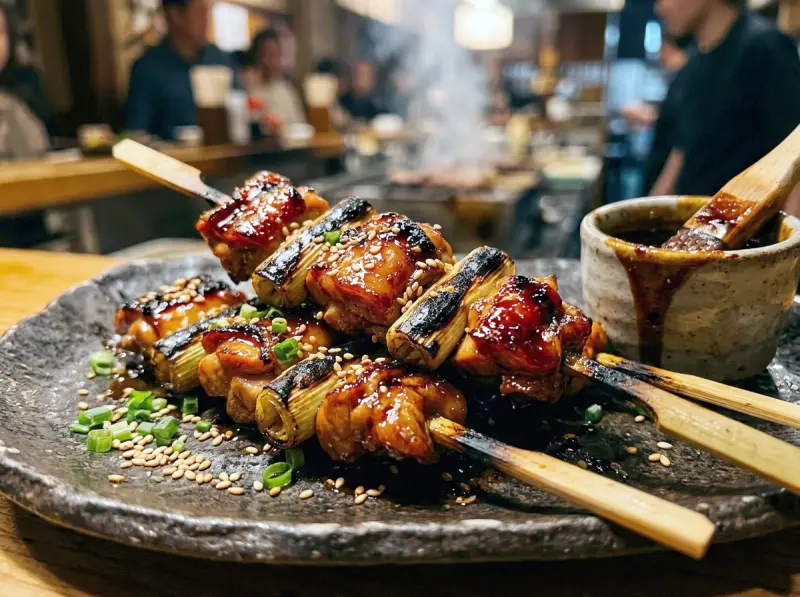
Yakitori is bite-sized chicken thigh on skewers, grilled over coals and either salted simply or brushed again and again with tare, a glaze of soy, mirin and sake that lacquers into something dark and sweet-savoury. It's the soul of a Japanese izakaya, and it's very doable in a back garden.
The technique is repetition. You grill, dip in the tare, grill again, dip again, four or five passes, until the outside is glossy and the inside is just cooked through. Use thigh, not breast. Breast dries out before the glaze builds. I like negima best, thigh alternated with chunks of spring onion that soften and char between the meat. Keep the fire moderate; the sugar in the tare burns fast if you rush it.
Grilled Shrimp — the fastest thing on this list
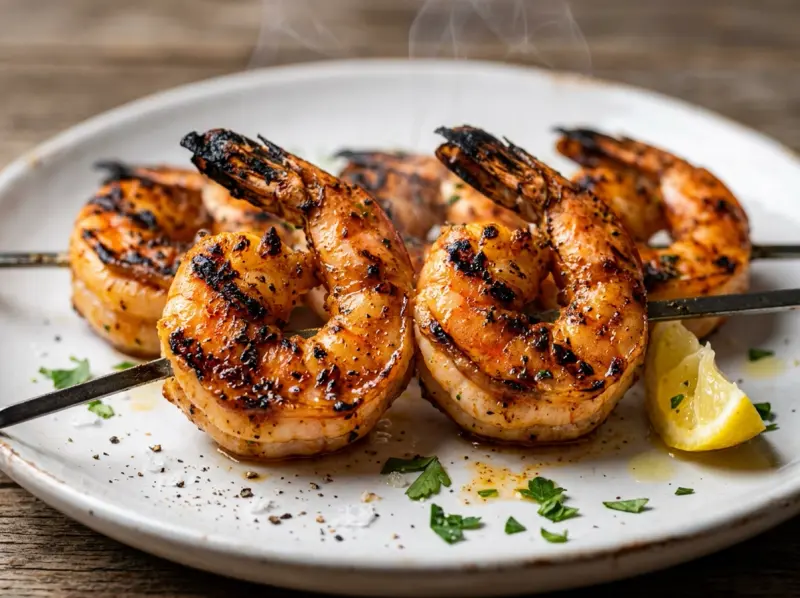
When I don't want to commit to an evening of fire-tending, this is what I make. Jumbo shrimp in garlic, lemon, smoked paprika and oil, then onto a hot grill for a couple of minutes a side. Start to finish it's half an hour, most of which is the marinade sitting.
The whole game with shrimp is not overcooking them. They go from translucent to rubber faster than you'd think, so pull them the moment they turn opaque and curl into a loose C. A tight, clenched O means you left them on too long. Thread them on skewers or use a grill basket so you're not chasing them through the grates, and don't marinate longer than thirty minutes or the lemon starts to cure the flesh and turn it mealy.
Grilled Corn with Herb Butter — the side that steals the meal
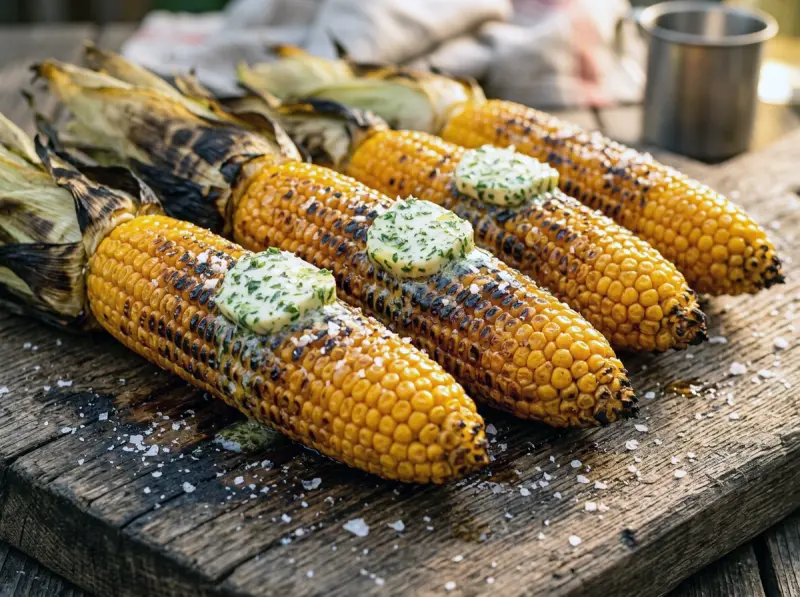
Corn on the cob straight on the grates, husk off, is the most underrated thing at any barbecue. The sugars caramelise against the hot metal and you get a charred sweetness that boiling can't touch. Make a compound butter ahead (soft butter beaten with herbs, garlic and lemon zest, rolled in cling film and chilled into a log) and slice a coin of it over each ear the second it comes off the heat.
If you want to go further, do the Mexican elote treatment: mayonnaise, crumbled cotija, chilli powder and a squeeze of lime over the charred cob. It sounds like too much and it's perfect. Either way, get the corn properly blistered in spots before you pull it. Pale corn is boiled corn that happened to sit near a fire.
→ Grilled Corn with Herb Butter recipe
Grilled Vegetable Platter — the dish that makes everyone happy
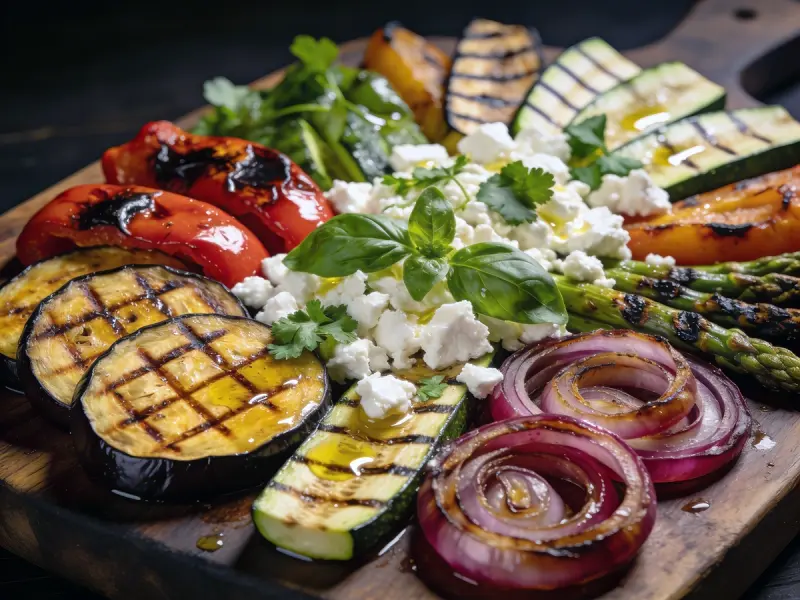
Vegetables are the most forgiving thing on the grill and somehow the most overlooked. They tell you when they're done by releasing cleanly from the grates, and they only improve with a few minutes of rest while the dressing soaks in. Eggplant, courgette, peppers, red onion, mushrooms: all of it works.
Two rules. Oil the vegetables themselves, not just the grate, and oil them more generously than feels right. And dress them while they're hot, because hot vegetables drink up a vinaigrette instead of letting it pool underneath. The only trick is timing: eggplant and peppers want the longest, courgette and asparagus the least. Work in sequence, pull each piece as it's ready, and pile everything onto one warm platter at the end.
→ Grilled Vegetable Platter recipe
A word on fire
Most grilling failures are heat failures. Build your coals so they bank to one side, leaving a cooler zone. That two-zone setup is what saves dinner when something flares or cooks faster than you planned. You sear over the hot side, then move things to the cool side to finish without burning. Give charcoal a good twenty minutes until it's grey and ashed over before anything goes on; flames lick and char, but it's the steady heat off settled coals that actually cooks. And let meat rest off the fire before you cut it. The grill does the drama. The resting does the juiciness.