When people abroad picture Russian food they think of borscht, beef stroganoff, caviar. Fair enough. But the food that was actually on the table on a Tuesday night was quieter than that: meatballs in gravy, a pot of beef and potatoes left to braise while everyone did homework, a fillet of salted herring with boiled potato and raw onion. Comfort food, in the most literal sense, made from cheap cuts and a lot of patience.
A few of these are Ukrainian rather than Russian, and I've said so where it matters, because the home cooking of this whole region grew up together and refuses to be neatly separated. None of them are hard. Most of them are better the next day. Here are six I come back to whenever I want to eat like I'm at my grandmother's table.
Pozharsky Cutlets — chicken patties with a secret of cold butter
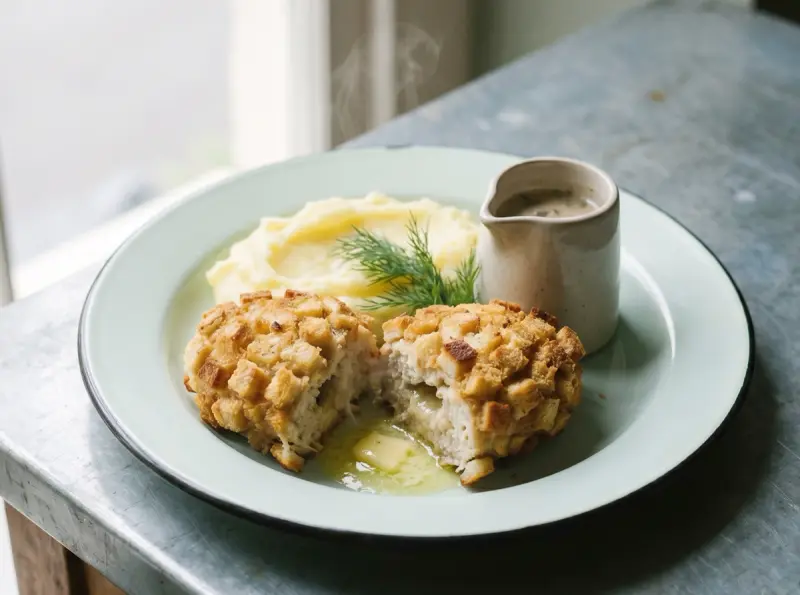
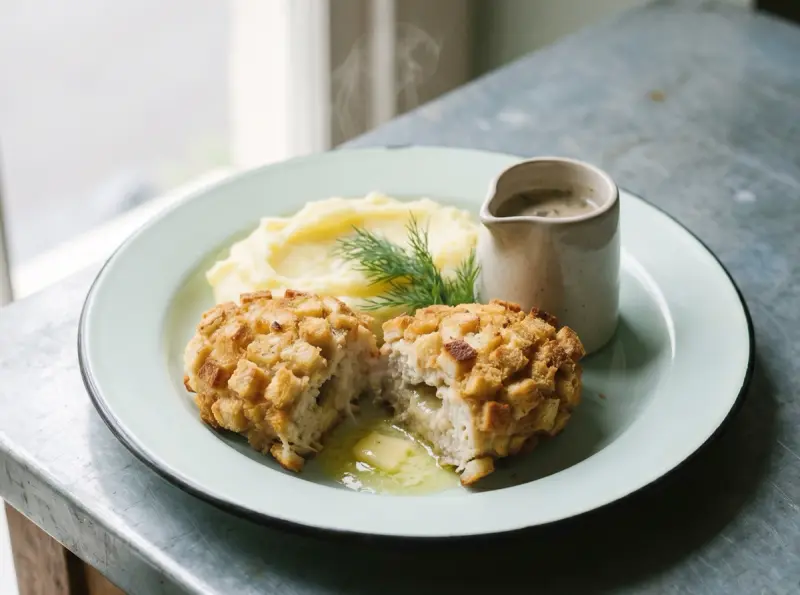
Most people outside Russia have never heard of these, and that's a shame, because a good pozharsky cutlet is one of the great things you can do with chicken. It's a patty of minced chicken in a crust of dried bread cubes, fried until the outside shatters and the inside stays juicy. The juiciness isn't luck. It's cold butter, grated or cubed and worked into the cold mince, which melts as the cutlet fries and bastes it from the inside, the same trick as a chicken Kiev.
Keep everything cold and don't overwork the mince or the butter starts to smear instead of staying in little pockets. The bread-cube crust browns fast, so a moderate pan and a bit of patience beats high heat that burns the coating before the centre cooks. Serve with mashed potato and you've understood the dish.
Tefteli — the meatballs with rice poking out
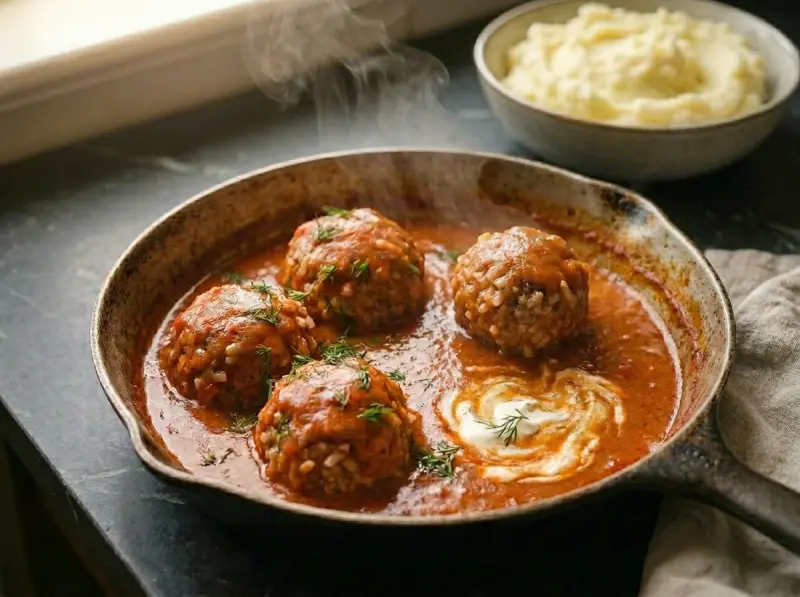
Tefteli are meatballs with rice mixed right into the mince, then braised in a creamy tomato gravy until soft. The rice swells and poked-out grains give them a spiky look, which is why kids call them hedgehogs or porcupines. Unlike Italian meatballs that hold their shape, tefteli are meant to go soft and almost melt into the sauce.
The thing people get wrong is the rice. Use raw or barely par-cooked rice, not leftover cooked rice, because it needs to absorb liquid from the gravy as it braises; fully cooked rice turns to mush. Brown the meatballs lightly first for flavour, then let them simmer gently in the sauce. The gravy is the point: spoon it over rice or mash so nothing is wasted.
Golubtsy — cabbage rolls that reward a slow afternoon
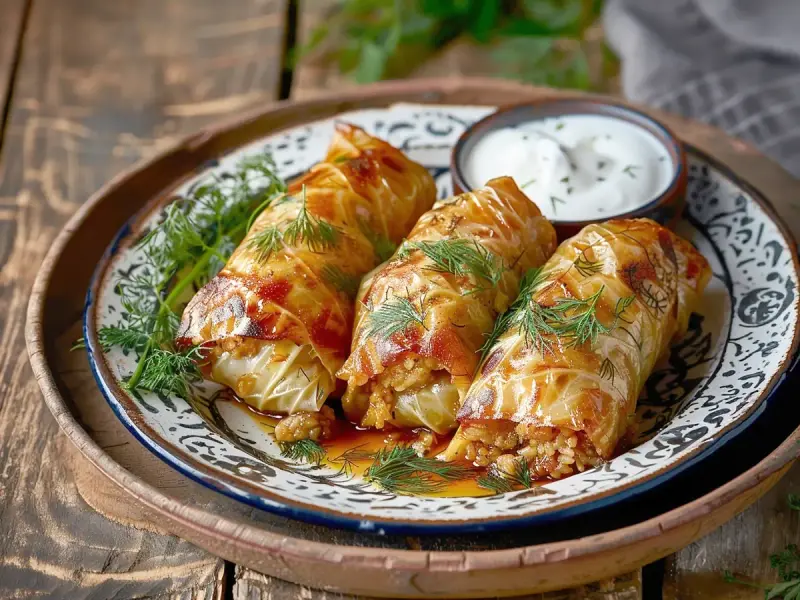
Golubtsy are cabbage leaves wrapped around meat and rice, braised in a tomato and sour cream sauce until everything goes tender. They're Ukrainian as much as Russian, and a cornerstone of the Slavic home table. They take time, mostly because softening the cabbage leaves so they roll without cracking is fiddly, but the actual work is calm.
The old way to loosen the leaves is to boil the whole head and peel them off as they soften. The easier modern way is to freeze the whole cabbage and thaw it; the leaves come away limp and pliable with no boiling at all. Roll them seam-side down so they don't unravel, pack them tight in the pot, and braise low and slow. Don't rush the sauce reduction. This is a dish that wants a free afternoon, not a fast one.
Zharkoe — beef and potatoes braised in one pot
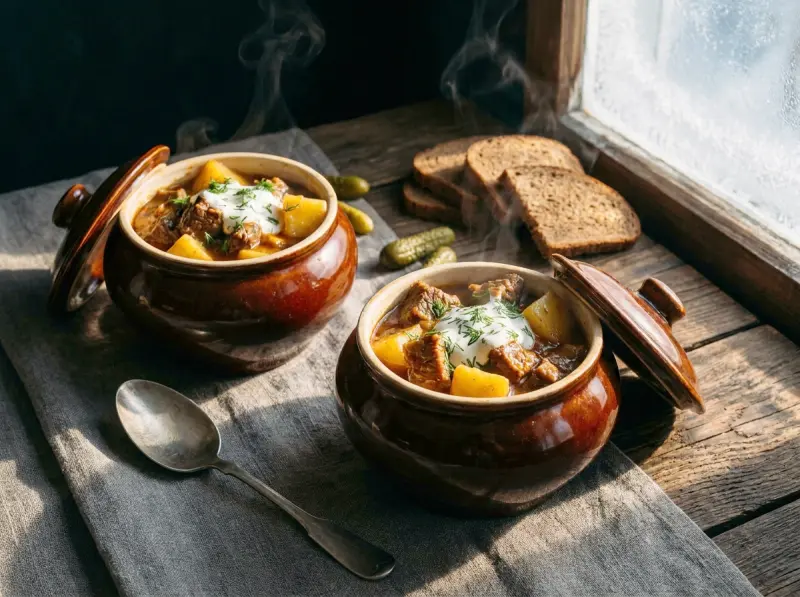
Zharkoe is the most homely thing on this list, and maybe my favourite. Browned beef, onion and carrot, slowly simmered into a thick gravy, with potatoes added near the end so they soak up the flavour without collapsing. It's the pot that sat on the stove of every Soviet kitchen, fed a family on a cheap cut, and tasted better reheated the next day.
Use a tough, well-marbled cut like chuck and give it real time; the collagen needs an hour or more to turn silky. Brown the meat properly before any liquid goes in, because that crust is most of the flavour. Add the potatoes too early and they disintegrate; too late and they're raw in the middle, so put them in for roughly the last half hour. A spoon of sour cream and a handful of dill at the end is not optional in my house.
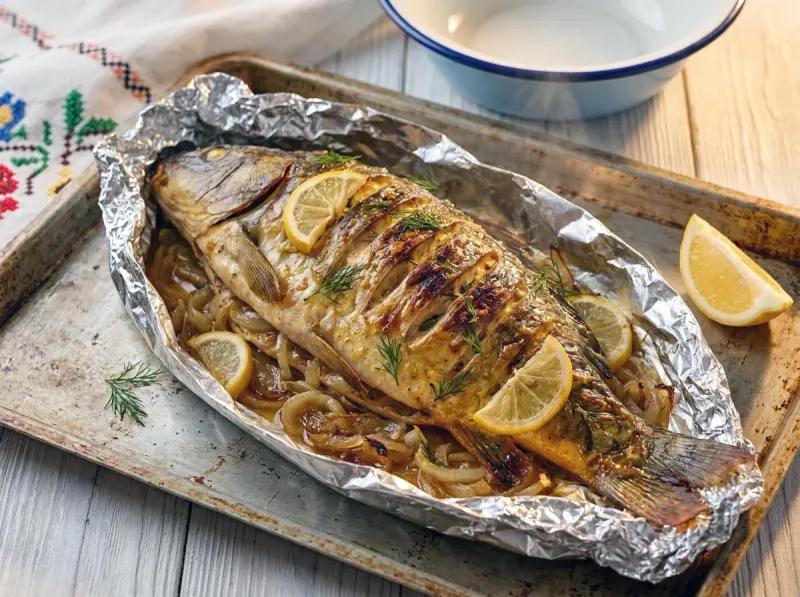
Baked Carp in Sour Cream — the Ukrainian way with a freshwater fish
This one is Ukrainian, and it's how you make carp taste like something special rather than muddy. A whole fish is scored with diagonal slashes, laid on a bed of onions, and coated in a garlicky layer of sour cream, then baked with the foil left open so the top browns. The slashes matter: they let the heat and the sour cream reach inside and soften the fine pin bones that put a lot of people off carp.
Soak or rinse the fish well first to take the edge off any muddiness, and don't skimp on the onion bed, which steams the fish from below while the sour cream protects it from above. Bake until the top is golden and bubbling. Serve it straight from the dish with bread to mop up the sauce.
→ Baked Carp in Sour Cream recipe
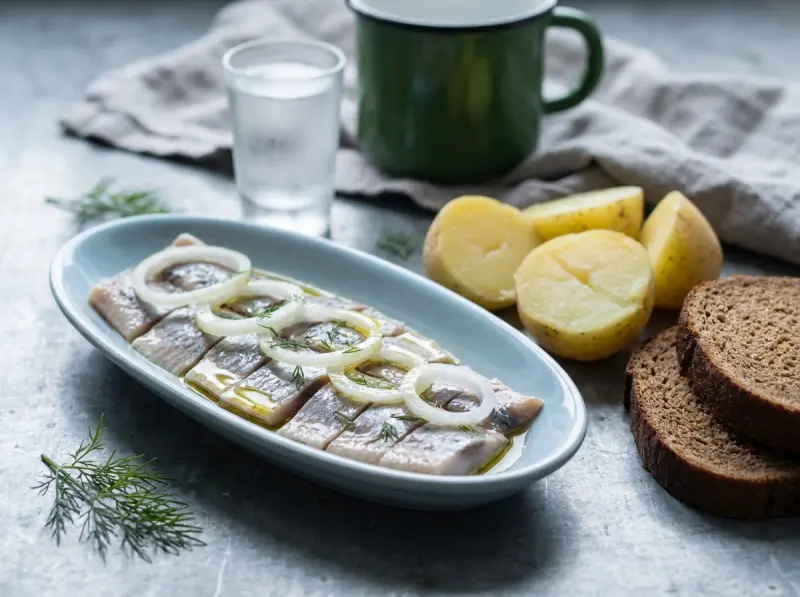
Herring with Onions and Potatoes — the simplest thing here, and the one I'd miss most
There's almost no recipe to this, which is exactly the point. Salted herring fillets, rings of raw onion, warm boiled potatoes, a drizzle of unrefined sunflower oil, a splash of vinegar, dill on top. It's a zakuska, the little salty something that goes alongside a drink, and it's been on Russian tables for as long as anyone can remember.
The whole thing lives or dies on two ingredients. The herring should be properly salt-cured, not bland supermarket fillets in flavoured oil, and the sunflower oil should be the unrefined, deeply aromatic kind, which is what makes the dish smell like home. Serve the potatoes warm against the cold fish; that contrast is the whole pleasure of it.
→ Herring with Onions and Potatoes recipe
What ties them together
Sour cream, dill, onion, a cheap cut, and time. That's most of this cooking. None of these dishes are trying to impress anyone, which is why they've lasted: they're what you make for people you don't need to impress. If you cook one this week, make the zharkoe, eat half, and have the rest the next day. It'll be even better, and you'll understand why a whole region keeps a pot like this going.