
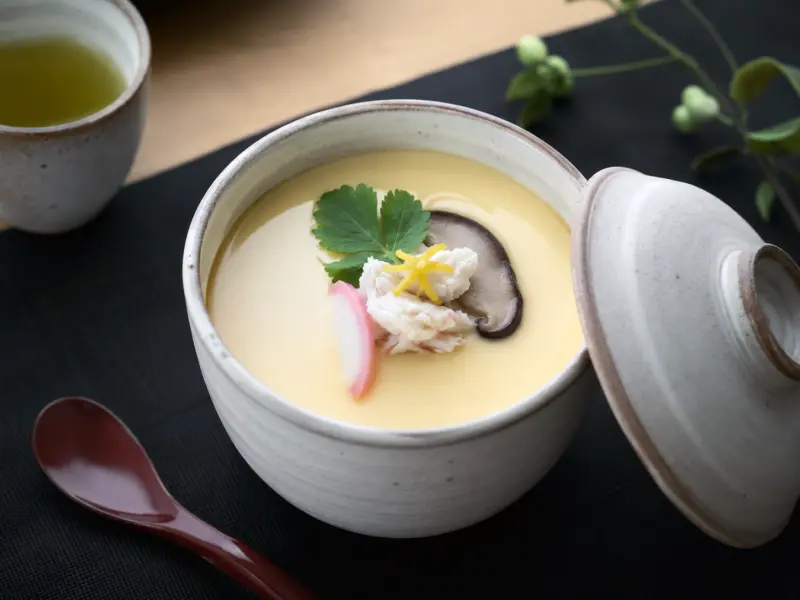
Chawanmushi with Crab and Shiitake (Japanese Steamed Egg Custard)
Chawanmushi is a savoury Japanese egg custard steamed until it barely sets — so soft it trembles on the spoon, with none of the firmness of a Western custard. Dashi carries the flavour, seasoned lightly with mirin and pale soy, while crab, shiitake, kamaboko, and ginkgo nuts sit hidden beneath the surface. Served warm in a lidded cup with a sprig of mitsuba and a shaving of yuzu, it's the quiet, restrained side of Japanese cooking.
Ingredients
- 3 pcsegg
- 500 mldashi
- 120 gcrab meat
- 4 pcsshiitake mushrooms
- 4 sliceskamaboko
- 8 pcsginkgo nuts
- 1 tsplight soy sauce
- 1 tspmirin
- 1 bunchmitsuba
- 1 pinchyuzu zest
Method
- Warm the dashi, stir in the light soy sauce, mirin, and a pinch of salt, then let it cool to lukewarm so it doesn't scramble the eggs.
- Crack the eggs into a bowl and cut through them with chopsticks in a slicing motion rather than whisking — beating in air makes the finished custard porous. Weigh or measure: the ratio is 1 part egg to 3 parts dashi.
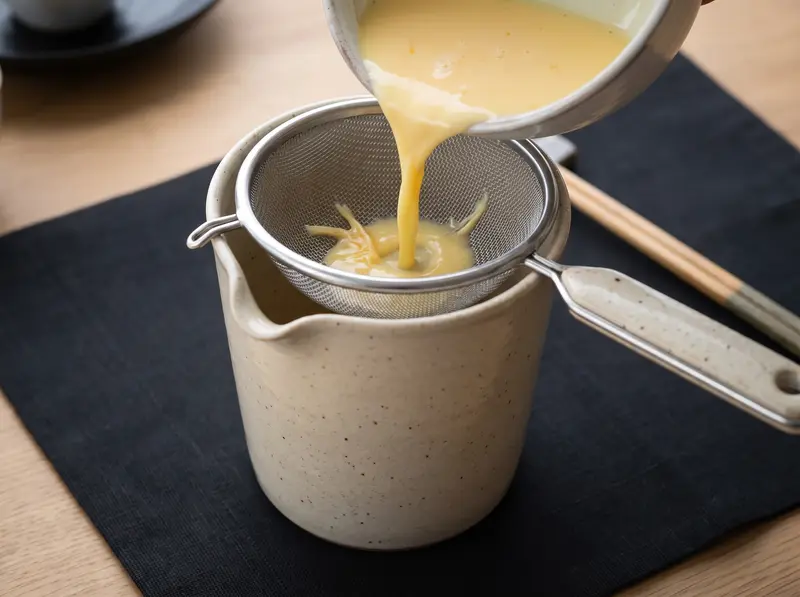
- Pour the seasoned dashi into the eggs slowly, mixing gently, then pass the mixture through a fine sieve. Straining is what makes the difference between a silky custard and a grainy one.
- Slice the shiitake caps thinly. Divide the crab meat, shiitake, kamaboko slices, and ginkgo nuts between four heatproof cups, keeping the fillings to about a third of each cup.
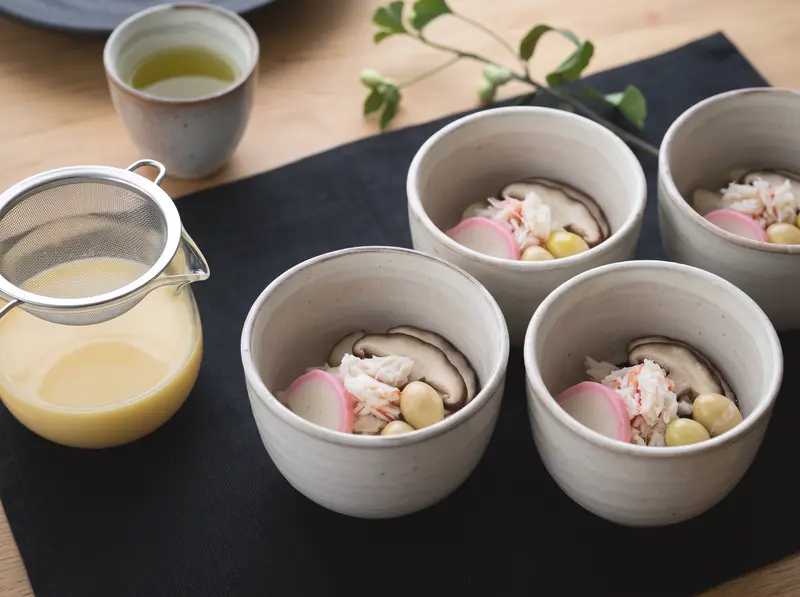
- Pour in the custard until each cup is about 80 percent full, then skim off any bubbles from the surface with a spoon or a skewer tip.
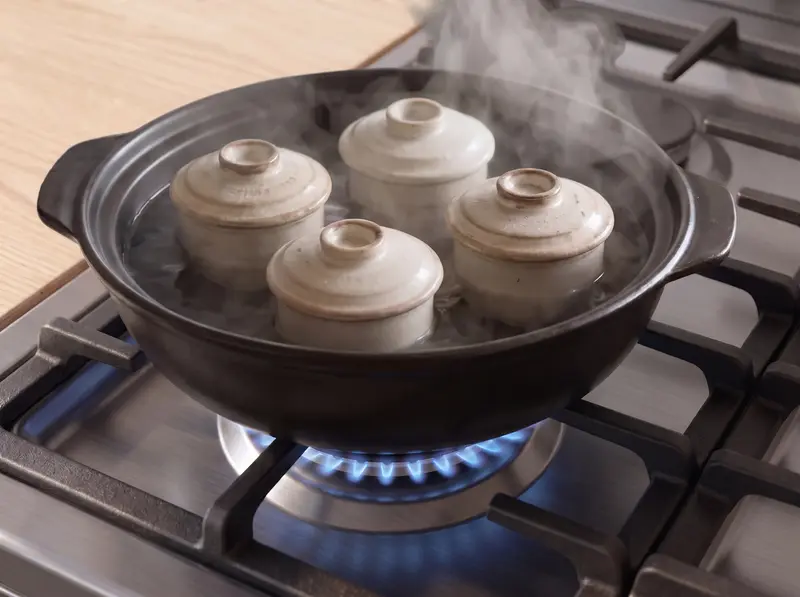
- Set the cups in a pot with 2–3 cm of water, cover each with a lid or foil, and wrap the pot lid in a cloth to catch condensation. Steam over high heat 1 minute, then drop to the lowest heat, keeping the water at 80–90°C, and steam 12–15 minutes with the lid slightly ajar.
- Test with a skewer: the liquid that rises should be clear, not cloudy. Top with mitsuba and a shaving of yuzu zest and serve warm.
FAQ
The standard is 1 part egg to 3 parts dashi, measured by weight or volume — weigh your shelled eggs and multiply by three. This gives the classic barely-set, trembling texture that defines chawanmushi. If you prefer something firmer that holds its shape more cleanly on the spoon, go to 1:2.5. Any thinner than 1:3.5 and the custard struggles to set at all. Since dashi carries almost all the flavour, use a good one — homemade kombu and bonito, or a decent instant.
Holes and a bubbly, spongy texture almost always mean the heat was too high. The water should sit at 80–90°C, barely steaming, not at a rolling boil — hard steam makes the egg bubble as it sets. The other cause is air: whisking the eggs vigorously beats bubbles into the mixture. Cut through the eggs with chopsticks instead, strain the custard, and skim any surface bubbles before steaming. Keeping the pot lid slightly ajar also helps regulate the heat.
Yes, if you want the silky texture chawanmushi is known for. Straining through a fine sieve removes the chalazae, the ropey white strands attached to the yolk, along with any unmixed egg and small bubbles. Skipping it leaves a custard that's noticeably grainy and uneven. It takes seconds and is the single easiest way to improve the result. Some cooks strain twice for an especially smooth finish.
Dashi is where nearly all the flavour comes from, so it's worth using. For a vegetarian or vegan-friendly base, kombu dashi or a shiitake-soaking dashi both work well and are traditional in their own right. At a push, an unsalted light vegetable or chicken stock will make a pleasant custard, though it won't taste distinctly Japanese. If going vegetarian, swap the crab and kamaboko for extra mushrooms, edamame, or blanched vegetables.
Insert a skewer into the centre: if the liquid that rises is clear, it's set; if it's cloudy, it needs a few more minutes. The surface should wobble as a whole rather than ripple like liquid. Chawanmushi keeps in the fridge in its cups for 1–2 days and is good chilled as well as warm — a chilled version is a summer classic. It doesn't freeze. To reheat, sit the cup in very hot water for about 10 minutes rather than microwaving, which makes it rubbery.
Keep browsing
More dishes from the Japanese archive — picked by overlap with what you're cooking now.



Recipes by email
One letter a week: a recipe picked for your taste, plus whatever is new on the site. Unsubscribe in one click.
Welcome gift: Sergei's cookbook (e-book).
By subscribing you agree to the privacy policy.
Tell us what you like to cook (30 seconds) →
Join the conversation
Comments
No comments yet — be the first!