
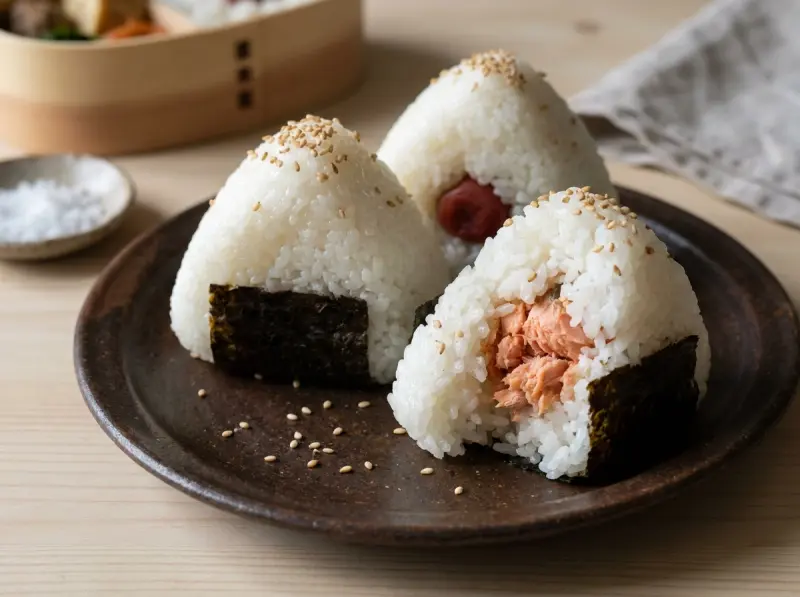
Onigiri (Japanese Rice Balls)
Onigiri, also called omusubi, are Japanese rice balls: warm short-grain rice, lightly salted, pressed by hand around a small filling and wrapped in nori. The rice gets no vinegar, which is what separates onigiri from sushi. The name comes from nigiru, to grasp, and that is the method too: no mould, just wet salted hands and three or four firm turns. This recipe makes three classic fillings from one pot of rice: salted salmon, umeboshi plum and tuna with mayonnaise. Onigiri are made to be carried and eaten at room temperature.
Ingredients
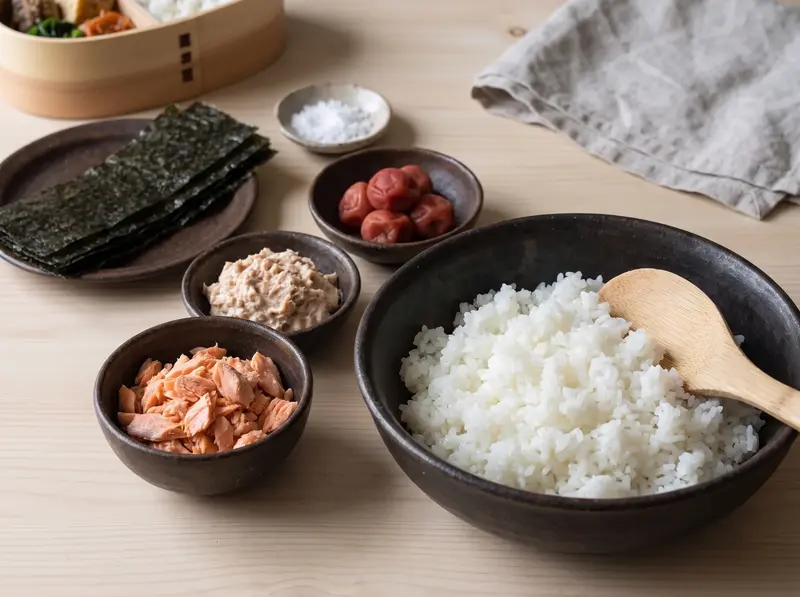
- 400 gjapanese short-grain rice
- 3 sheetsnori
- 150 gsalted salmon
- 4 pcsumeboshi
- 80 gcanned tuna
- 2 tbspmayonnaise
- 1 tspsoy sauce
- 1 tbsptoasted sesame seeds
- 2 tspsea salt
Method
- Rinse the rice in cold water, swirling with your hand and draining, until the water runs clear — usually four or five changes. This removes surface starch that would otherwise turn the rice gummy.
- Cook the rice with 440 ml water, using slightly less water than usual so the grains stay firm enough to press. Once cooked, leave it covered off the heat 10 minutes, then fold it gently with a paddle to release steam.
- Spread the rice in a wide bowl and let it cool to around body temperature, 15 minutes or so. It must be warm but not hot: hot rice falls apart and burns your hands, fully cooled rice will not bind.
- Prepare the fillings. Salted salmon is sold raw, so cook it first: grill it or cook it in a dry frying pan over medium heat, turning once, until the flesh is opaque all the way through and flakes easily. Let it cool a little, then flake it, discarding skin and bones. Drain the tuna and mix it with the mayonnaise and soy sauce. Pit the umeboshi. Cut the nori sheets into wide strips.
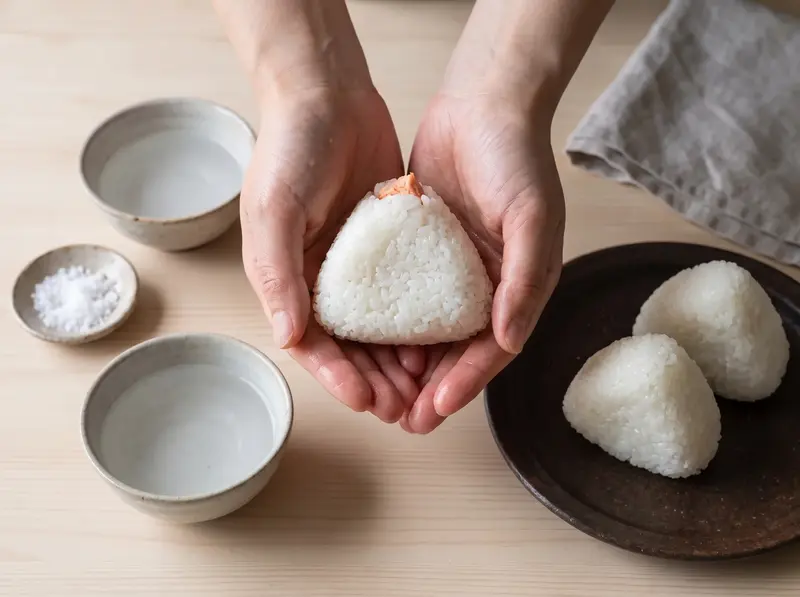
- Set out a bowl of water and a dish of sea salt. Wet both palms, then rub a good pinch of salt between them — this seasons the outside of the rice and stops it sticking.
- Take about 100 g of rice into one palm, press a hollow in the centre with a finger, add a teaspoon of filling, and close the rice over it. Cup your hands into a V, press firmly, rotate the ball 120 degrees, and repeat three or four times until a triangle forms. Don't overwork it or the rice compacts into a dense lump.
- Wrap each onigiri in a strip of nori. For crisp nori, wrap at the moment of eating; for soft nori that clings to the rice, wrap while still warm. Scatter with sesame seeds and serve at room temperature.
FAQ
Onigiri, also called omusubi, is a ball or triangle of plain short-grain rice, salted from your palms, shaped by hand around a small filling and usually wrapped in nori. Sushi rice is seasoned with vinegar, sugar and salt, and that changes both the taste and the texture. Onigiri rice gets only salt. In Japan people pack onigiri for lunch or buy them as a snack and eat them at room temperature, often with a bowl of miso soup.
Almost always it's the rice or its temperature. Use Japanese short-grain rice such as koshihikari, or medium-grain Calrose if that's all you can find; basmati and jasmine stay loose and won't bind. Cook 400 g of rice with 440 ml of water, a little drier than usual, and shape it at about body temperature: hot rice slides apart and cold rice has already set. Take about 100 g per onigiri and give it three or four firm turns in cupped hands.
Salted salmon and umeboshi, the sour salted plum, are the two classics, and this recipe makes both alongside the tuna. Kombu simmered in soy sauce and okaka, dried bonito flakes moistened with a few drops of soy sauce, are also common. You can skip the filling and make shio-musubi, rice with salt only, or mix furikake or toasted sesame into the rice before shaping. About 1 teaspoon of filling per onigiri is enough, and anything wet needs draining or the rice splits and goes soggy. In a bento they usually sit next to tamagoyaki, the rolled Japanese omelette.
Onigiri are best eaten the day you make them, and room temperature is the right temperature to eat them at — but not to store them. Cooked rice left out lets Bacillus cereus multiply, so don't keep onigiri out for more than 2 hours (1 hour on a hot day); for a packed lunch, carry them in a cool bag with an ice pack. To make them the night before, let them cool quickly, wrap each one in cling film without nori and refrigerate. The fridge firms up the rice, so warm them briefly in the microwave before eating. For longer storage, freeze them wrapped the same way for up to a month. Reheat in the microwave until the rice is hot right through, then wrap it in fresh nori.
Rice, salt and nori contain no gluten, so a salt-only shio-musubi or an umeboshi onigiri is gluten-free as it is. Regular soy sauce is made with wheat, so for tuna mayo or okaka use a tamari labelled gluten-free. Read the labels on furikake and ready-made fillings as well, because many of them contain soy sauce. For a vegan version, stick to umeboshi or toasted sesame mixed into the rice.
Keep browsing
More dishes from the Japanese archive — picked by overlap with what you're cooking now.
Recipes by email
One letter a week: a recipe picked for your taste, plus whatever is new on the site. Unsubscribe in one click.
Welcome gift: Sergei's cookbook (e-book).
By subscribing you agree to the privacy policy.
Tell us what you like to cook (30 seconds) →
Join the conversation
Comments
No comments yet — be the first!