
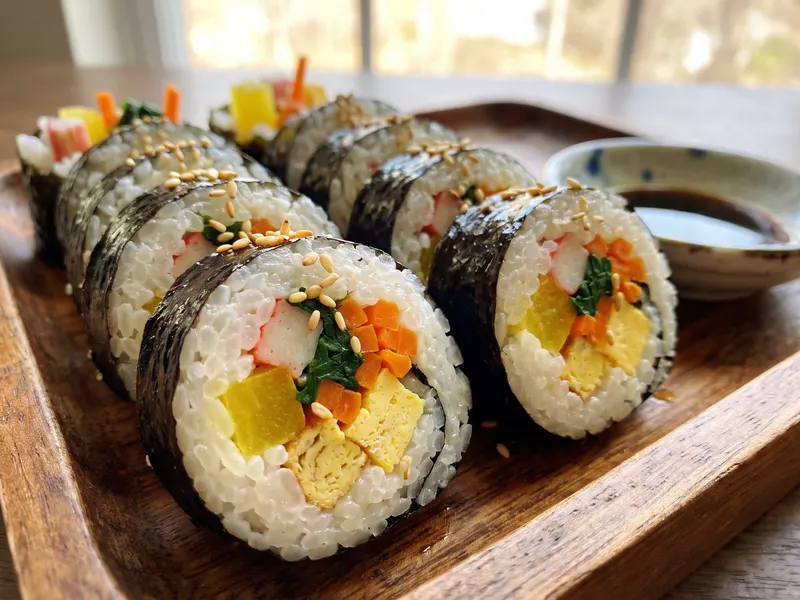
Kimbap
The Korean seaweed rice roll built for lunchboxes and picnics: short-grain rice seasoned with sesame oil, rolled in a sheet of gim with strips of yellow pickled radish, carrot, spinach, egg, and crab, then sliced into rounds. It looks like sushi, but the sesame-oil rice makes it nutty and savoury, and the fillings are cooked, pickled or crisp fresh vegetables, so the roll packs neatly into a lunchbox.
Ingredients
- 300 gshort-grain rice
- 4 pcsnori
- 120 gpickled radish
- 120 gcarrot
- 150 gspinach
- 3 pcsegg
- 120 gimitation crab sticks
- 1 pcscucumber
- 20 mlsesame oil
- 5 gsesame seeds
- 5 gsalt
- 15 mlsoy sauce
- 5 gsugar
Method
- Cook 300 g of short-grain rice and let it cool to just warm. Season it with the sesame oil, a little salt, and the sesame seeds — not vinegar. Sesame oil instead of vinegar is the key difference between kimbap rice and sushi rice.
- Prepare the fillings separately. Julienne the carrot and stir-fry it in a little oil with a pinch of salt for 2 minutes. Blanch the spinach, squeeze it dry, and season with a drop of sesame oil and salt.
- Beat the eggs, fry them into a thin flat omelette, and slice into long strips. Cut the pickled radish, cucumber, and imitation crab into long strips the length of the nori sheet. Put the soy sauce, sugar, and 1 tbsp of water in a small pan, add the crab strips, and toss over medium heat for 1–2 minutes until the liquid has cooked off and they look glazed; let them cool.
- Place a sheet of nori shiny-side down on a bamboo mat. Spread a thin, even layer of rice over the bottom two-thirds, leaving the top third bare so the roll can seal.
- Lay the fillings in a tight row across the rice about a third of the way up: radish, carrot, spinach, egg, crab, and cucumber. Don't overfill, or the roll won't close.
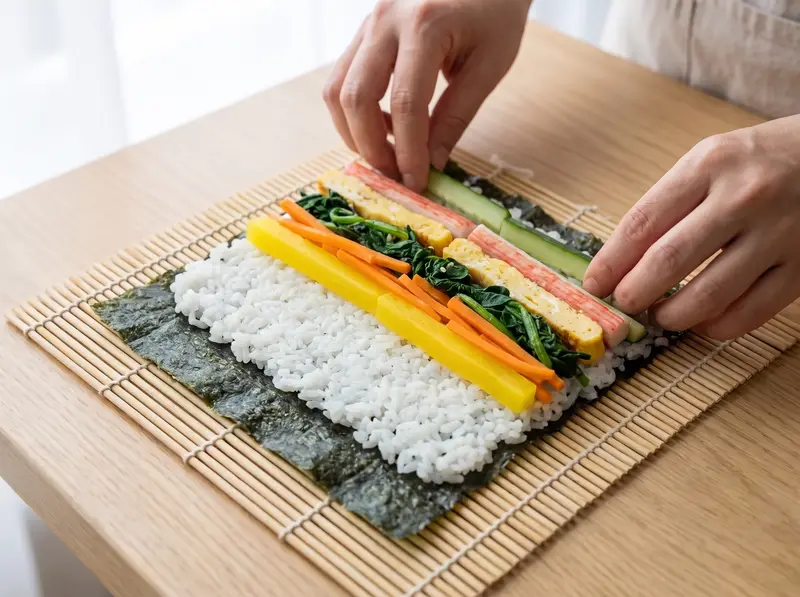
- Lift the mat edge nearest you and roll away from you, tucking the fillings in firmly and pressing as you go, until the bare nori seals the roll. Press the finished roll gently along its length to firm it up.
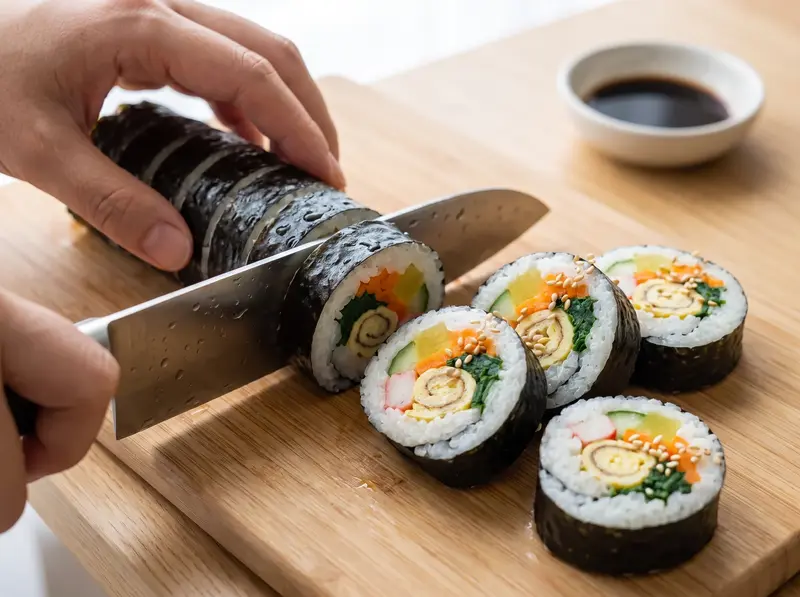
- Brush the outside with a little sesame oil and scatter with sesame seeds. With a sharp, wet knife, slice into rounds about 1.5 cm thick, wiping the blade between cuts. Serve at room temperature.
FAQ
The rice. Kimbap rice is seasoned with sesame oil and salt, giving it a nutty, savoury taste; sushi rice uses vinegar and is tart. Kimbap fillings are usually cooked or pickled rather than raw fish, and it's meant to be eaten at room temperature.
Easily. Drop the crab and egg or swap them for seasoned tofu, extra vegetables, or braised mushrooms. Danmuji, carrot, spinach, and cucumber already carry the roll, so it works well without meat.
Usually too much filling or too much rice. Spread the rice thin, leave the top third of the nori bare, and press firmly through the bamboo mat as you roll. The bare strip is what seals it shut.
Yes, within limits. If it stays at room temperature, eat it within 2 hours of rolling: rice with egg and crab is not something to leave out all day. For longer, wrap the whole rolls tightly as soon as they're made, refrigerate them and eat within a day; for a picnic or a lunchbox carried for hours, pack it in an insulated bag with an ice pack. Cold does firm up the rice, so slice the chilled roll and let the slices stand for 15–20 minutes before eating, or do what Koreans do with leftover kimbap: dip the slices in beaten egg and pan-fry them.
Danmuji gives the sweet-tangy crunch that defines kimbap, so it's worth seeking out. If you can't find it, thin strips of another pickle or quick-pickled radish come closest; a plain cucumber won't give the same tang.
Keep browsing
More dishes from the Korean archive — picked by overlap with what you're cooking now.
Recipes by email
One letter a week: a recipe picked for your taste, plus whatever is new on the site. Unsubscribe in one click.
Welcome gift: Sergei's cookbook (e-book).
By subscribing you agree to the privacy policy.
Tell us what you like to cook (30 seconds) →
Join the conversation
Comments
No comments yet — be the first!