
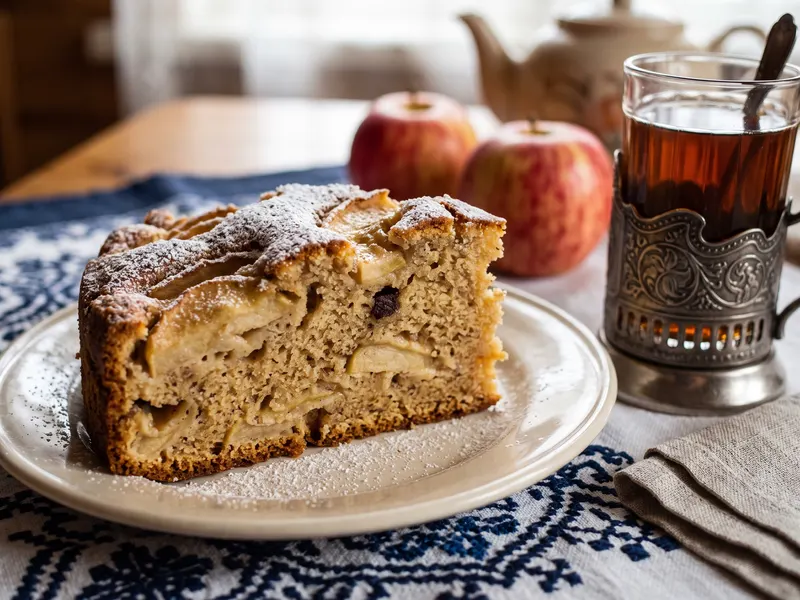
Sharlotka — Russian Apple Sponge Cake
The Russian home cake that appears the moment apples come into season: a whisked sponge poured over sliced apples and baked until golden. There is no butter and no mixer required beyond a whisk, and the lift comes entirely from eggs beaten with sugar. Tart apples keep it from turning cloying. Let it cool in the tin before you dust it with powdered sugar and slice it.
Ingredients
- 4 eggs
- 200 ggranulated sugar
- 160 gplain flour
- 500 gapples
- 1 tspvanilla
- 1 tspbaking powder (optional)
- 1 pinchsalt
- 1 tbsppowdered sugar
Method
- Heat the oven to 180°C. Grease and line a 22–24 cm round tin.
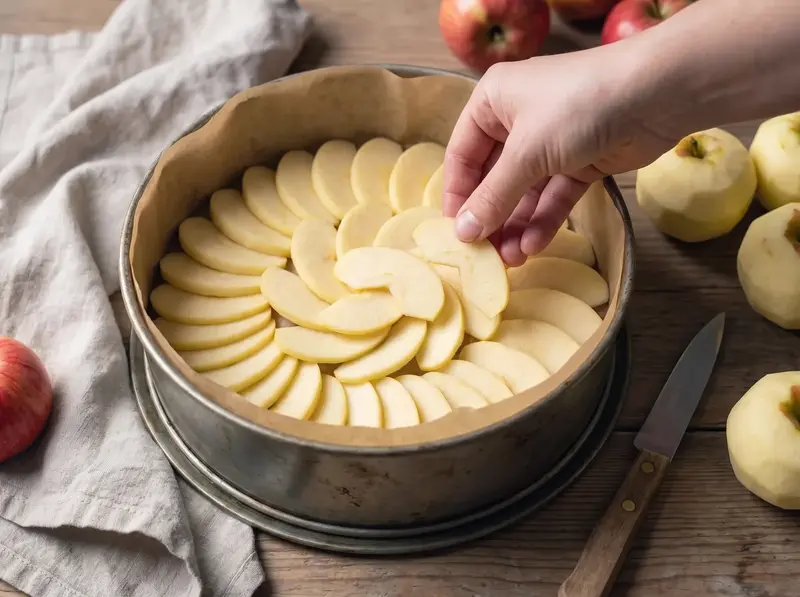
- Peel and core the apples, slice thin, and spread them over the base of the tin.
- Whisk the eggs with the sugar 8–10 minutes until pale, tripled in volume, and thick enough to leave a ribbon. Mix in the vanilla.
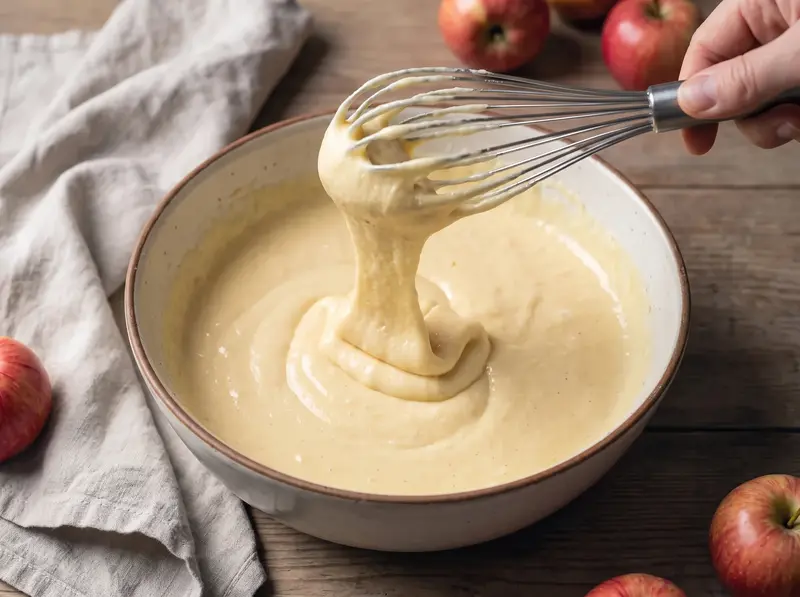
- Sift the flour with the salt (and baking powder if using) and fold in gently, in two or three additions, keeping the air in.
- Pour the batter over the apples and level the top.
- Bake 35–40 minutes until golden and a skewer comes out clean.
- Cool in the tin, then dust with powdered sugar before serving.
FAQ
Classic sharlotka has no leavening beyond the air you beat into the eggs. Whisk eggs and sugar for eight to ten minutes, until the mass pales, triples and falls from the whisk in a ribbon. Fold the flour in with a spatula in two or three additions, lifting from underneath; a mixer drives that air out in half a minute. Keep the oven closed for the first 25 minutes, since a drop in temperature collapses the sponge.
Tart, firm varieties: Antonovka, Granny Smith, Simirenko. They hold their shape in the heat and bring the acidity that balances 200 g of sugar in the batter. Sweet, mealy apples break down and release juice, which soaks the base of the cake. If your apples are juicy anyway, blot the slices with paper towel and dust them with a tablespoon of flour.
In this recipe they belong there: the slices are laid over the base of the tin and the batter is poured on top. If you would rather have them suspended, toss the apples in a tablespoon of flour before folding them through the batter. Bear in mind that the more fruit you fold in, the harder the batter has to work to rise. The layer on the bottom is the more reliable version.
Sugar does more than sweeten here: it is what holds the air in the beaten eggs. You can go down to roughly 150 g, below that the mass stops gaining volume and the sponge bakes low. Honey is a poor swap, since it weights the batter and leaves the middle damp. For a less sweet cake, use sharper apples and increase them to 600 g.
Under a cloth at room temperature it keeps two days, in the fridge up to four, though it dries there unless you cover the tin with film. Dust the powdered sugar on just before serving, as it dissolves into a damp surface within ten minutes. Portions freeze for up to a month, each wrapped in film. Thaw at room temperature and warm for five minutes at 160°C.
Keep browsing
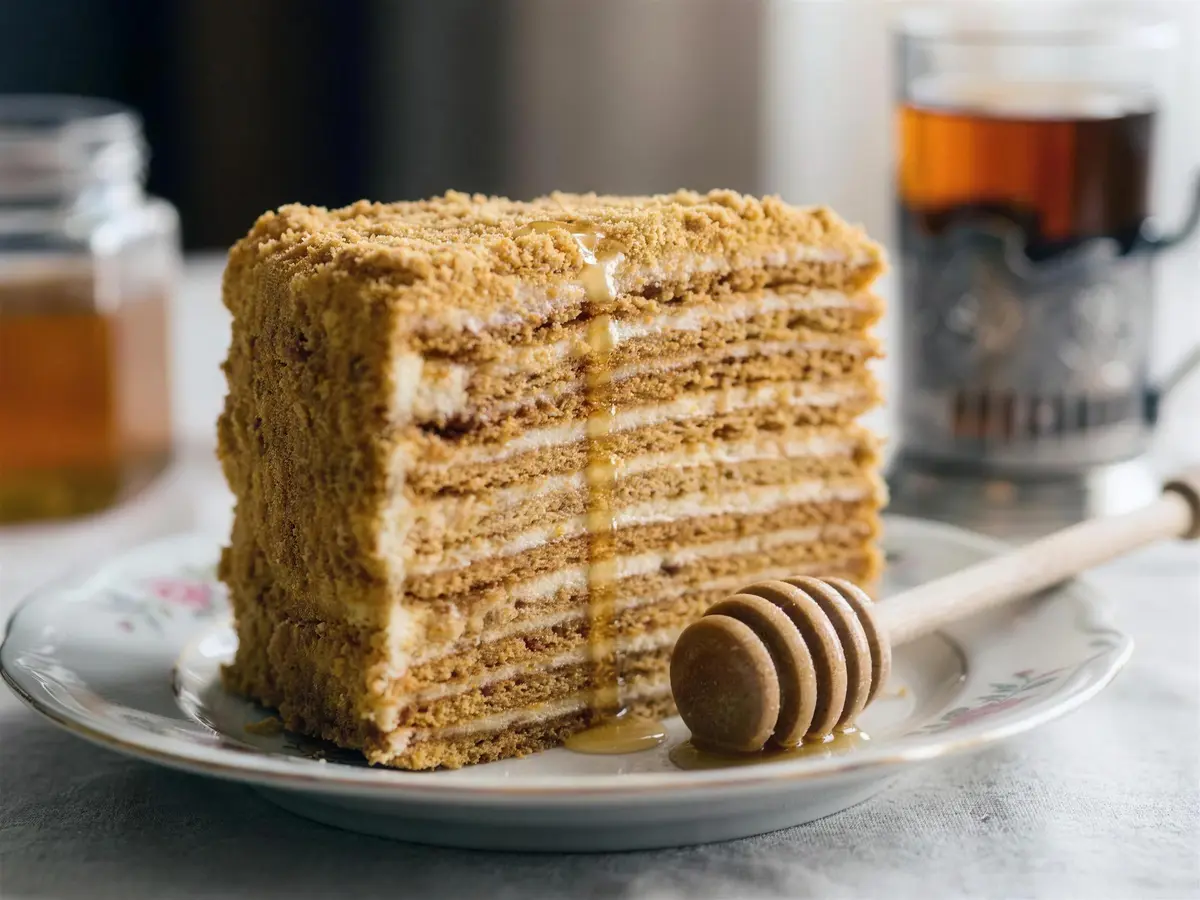
More dishes from the Russian archive — picked by overlap with what you're cooking now.
Recipes by email
One letter a week: a recipe picked for your taste, plus whatever is new on the site. Unsubscribe in one click.
Welcome gift: Sergei's cookbook (e-book).
By subscribing you agree to the privacy policy.
Tell us what you like to cook (30 seconds) →
Join the conversation
Comments
No comments yet — be the first!