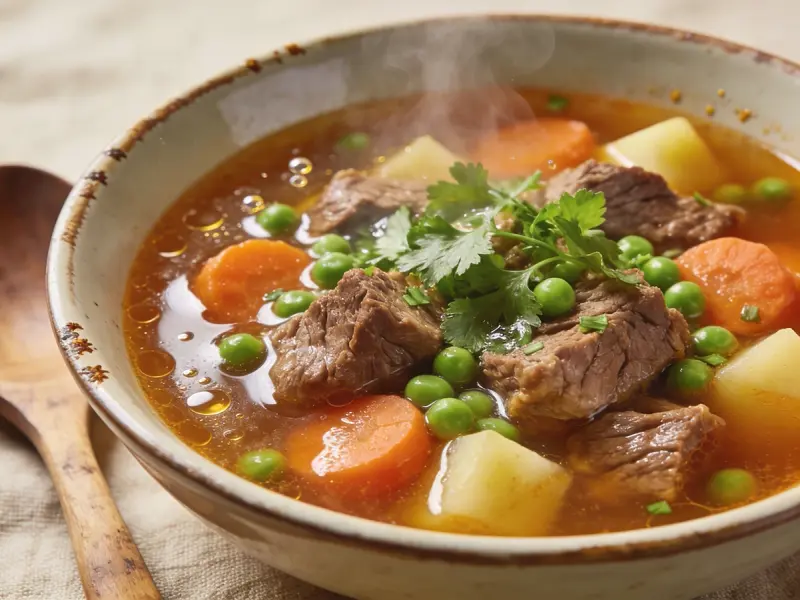
Most soups fail the same way: weak broth, vegetables that went in too early and turned to mush, seasoning added at the end instead of throughout. These six recipes are built around the techniques that prevent those problems. One for each season, two that work year-round. Learn the method behind each one and you'll find yourself adapting it long after you've memorised the recipe.
Gazpacho — the best cold soup recipe for summer
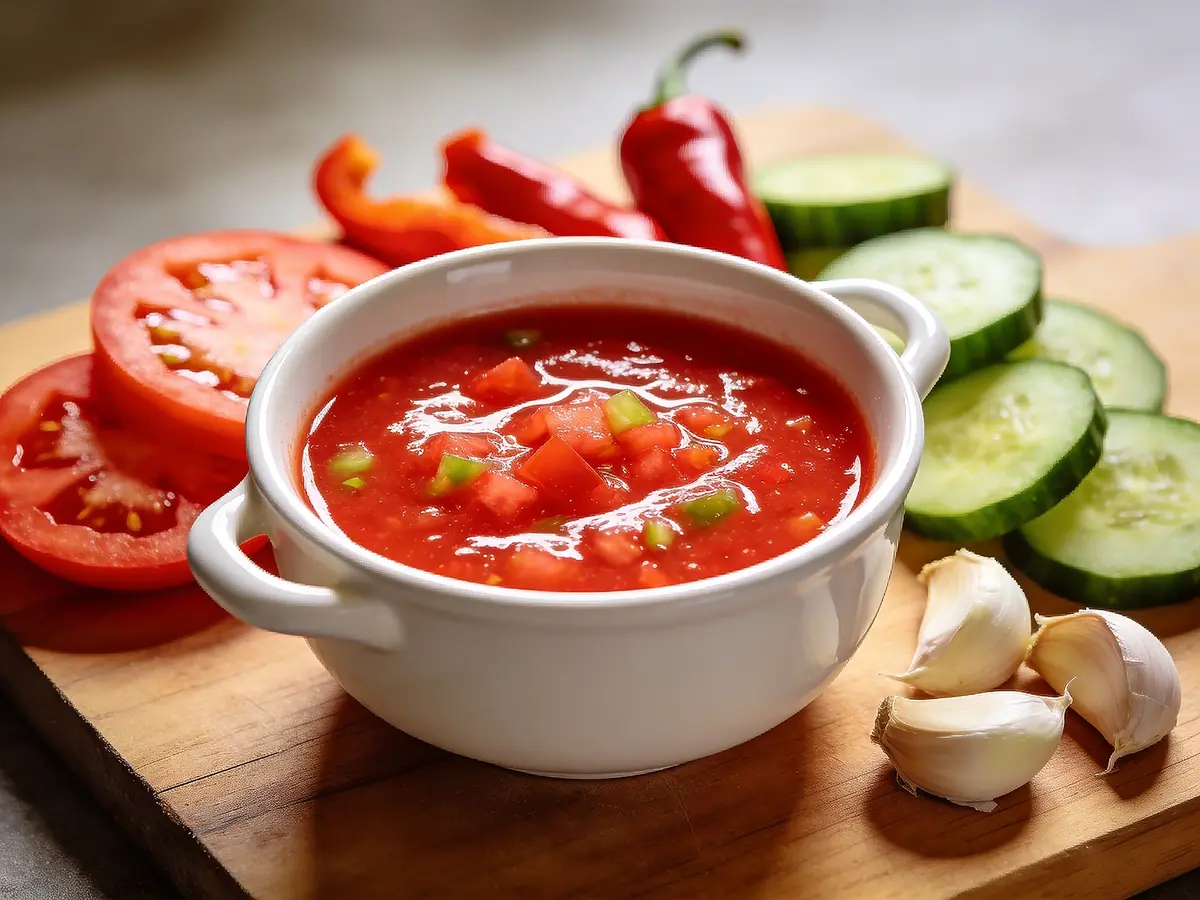
Raw tomatoes, cucumber, pepper, garlic, and bread blended with olive oil and sherry vinegar. No cooking. The finished soup is served cold, ideally after a few hours in the fridge.
The bread is not optional — it's what gives gazpacho its body and slight creaminess. Use day-old white bread, soak it in water, squeeze it out, and blend it in with everything else. The quality of the tomatoes determines everything. In summer, when tomatoes are actually ripe, this is one of the best things you can make. In January, it's not worth attempting.
French onion soup — the classic French onion soup recipe with cheese crouton
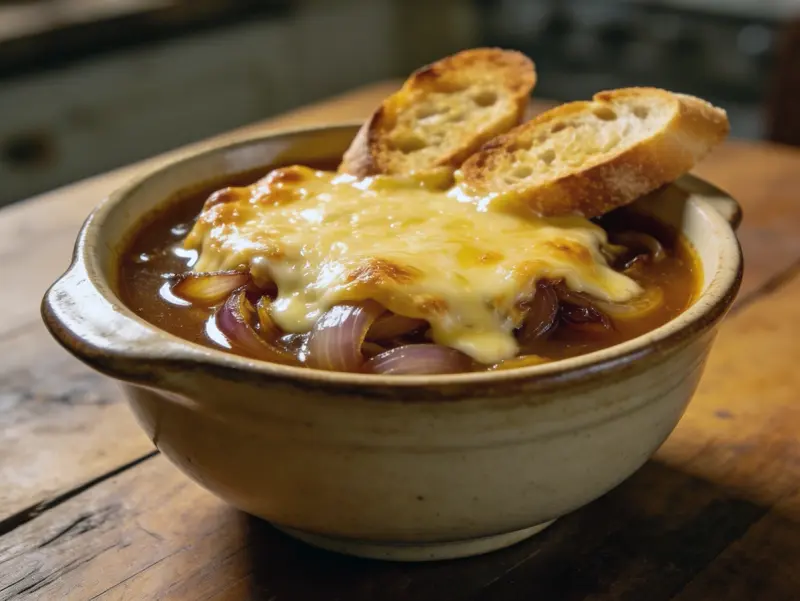
Beef broth under a layer of melted Gruyère on a soaked crouton. The soup itself is built on caramelised onions, which take 45–60 minutes of slow cooking to develop properly. Every shortcut you take here shows up in the bowl.
The onion technique: medium-low heat, covered for the first 20 minutes to soften, then uncovered to let the moisture escape and the sugars brown. A splash of white wine or dry sherry after the onions are ready deglazes the pan and becomes part of the broth. Don't rush the onions. That's the whole recipe.
Chicken noodle soup — the homemade chicken noodle soup recipe for cold and flu season
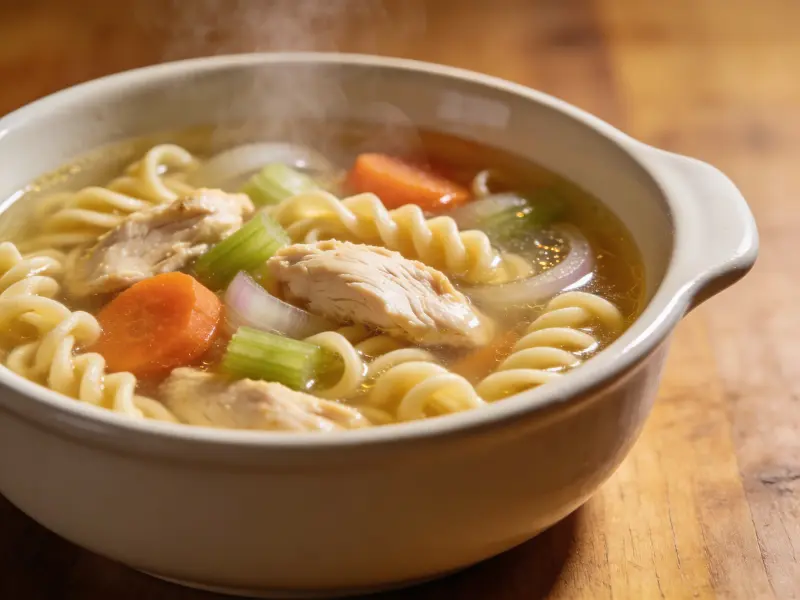
The most searched soup recipe in the world, and with good reason. Whole chicken or bone-in pieces simmered with onion, carrot, celery, and parsley until the broth is yellow and fragrant. Noodles added at the end.
Two things make a chicken noodle soup taste like something: a long simmer (minimum 90 minutes) and seasoning throughout rather than just at the end. Skim the foam off the surface in the first 10 minutes — that's what keeps the broth clear. Cook the noodles separately if you're making soup ahead; noodles left in soup overnight absorb all the broth and turn soft.
Butternut squash soup — the best creamy butternut squash soup recipe for autumn
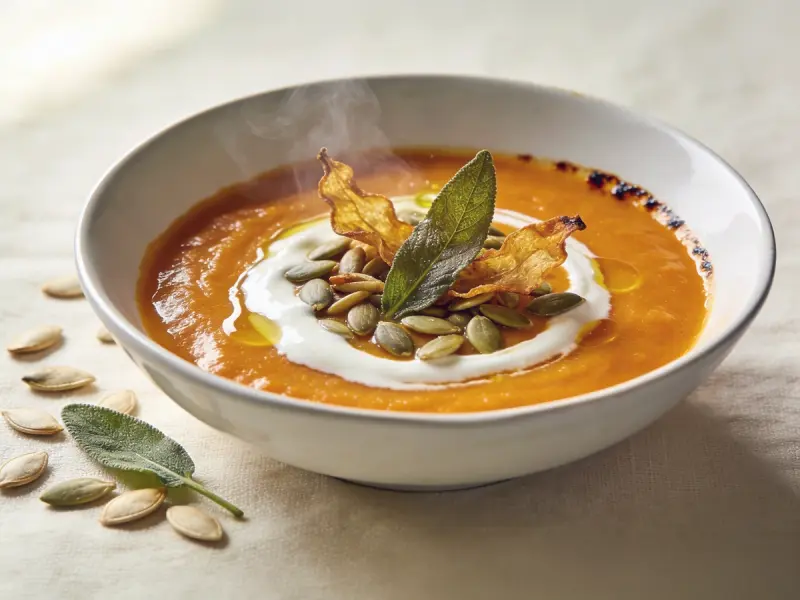
Roasted butternut squash blended with stock, onion, garlic, and a splash of cream. The roasting step is what separates good versions of this soup from bland ones — raw squash boiled in stock produces a flat, slightly starchy result. Roasted squash, caramelised at the edges, produces something with actual depth.
Roast the squash cut-side down at 200°C until the flesh is soft and the cut edges are brown — about 40 minutes. Scoop out the flesh, add to the pan with softened onion and garlic, cover with stock, blend smooth. Adjust with salt, white pepper, and a small amount of cream or coconut milk.
→ Butternut squash soup recipe
Minestrone — the classic Italian minestrone soup recipe with seasonal vegetables
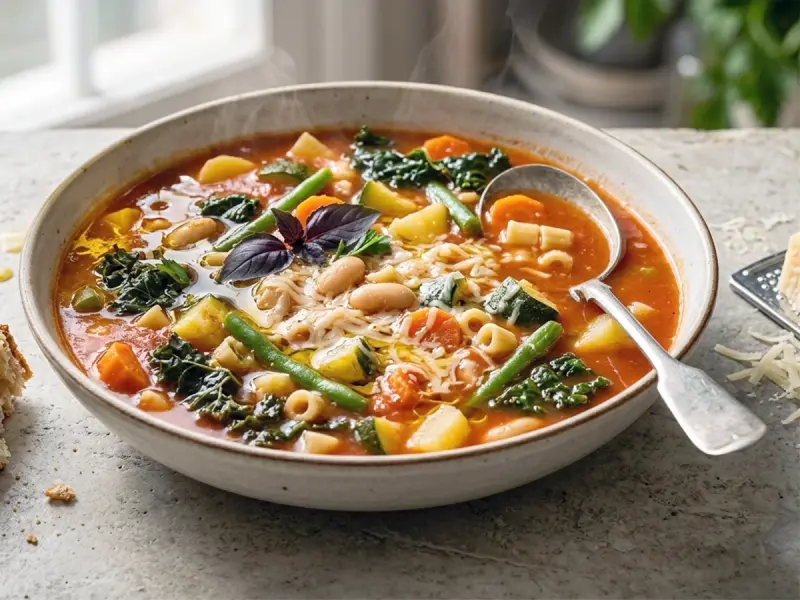
Italian vegetable and bean soup with pasta. The version of minestrone most people know comes from a tin. The real thing is a different dish: vegetables softened in olive oil before any liquid goes in, a Parmesan rind simmered in the broth for the last 20 minutes, and fresh vegetables added in stages based on their cooking time.
The Parmesan rind is the single biggest upgrade available. It dissolves slowly into the broth and adds a savoury depth that no seasoning achieves by itself. Save rind in the freezer every time you finish a block of Parmesan. When you make minestrone, drop one in.
Beef and vegetable soup — the hearty beef soup recipe for winter
Cheap, tough cuts of beef — shin, chuck, short rib — braised low and slow in stock with root vegetables until the meat is soft enough to break with a spoon. The collagen in those cuts dissolves into the broth over time and turns it thick and glossy. Expensive steaks produce thin, bland soup.
Brown the meat in batches before adding any liquid. Don't crowd the pot — steaming instead of browning produces grey meat with no flavour development. One layer at a time, high heat, leave it alone until it releases. That colour on the meat is what makes the broth taste like something.
→ Beef and vegetable soup recipe
What separates a good soup from a great one
Broth quality is where most homemade soups fall short. Store-bought stock varies widely. If you're using cartons, choose the lowest-sodium version available and taste it before using — some are fine, some taste like salt water. A Parmesan rind, a handful of dried mushrooms, or a small piece of kombu added during cooking all improve broth without much effort.
Season in layers, not at the end. Add salt when the aromatics go in, when the liquid goes in, when the vegetables go in, and again at the finish. Soup seasoned only at the end tastes flat — the salt is on the surface, not in the ingredients.
And let it rest. Most soups taste better after 20–30 minutes off the heat, and better still the next day. The exception is anything with fresh herbs or delicate greens — those go in just before serving.