Skip to content
GetCookMatch
⌘K
Article · 🍞

Homemade Bread: Six Loaves Worth Baking, from No-Knead to Bagels

Six homemade bread recipes from easiest to most demanding — no-knead bread, sourdough, challah, pita, soft pretzels and New York bagels — with the time-and-temperature tips that separate a great loaf from a dense one.

By Sergei Martynov

Homemade Bread: Six Loaves Worth Baking, from No-Knead to Bagels

Recipes in this piece

No-Knead Bread
🇺🇸USAAdvanced
Flour and Confectionery Products

No-Knead Bread

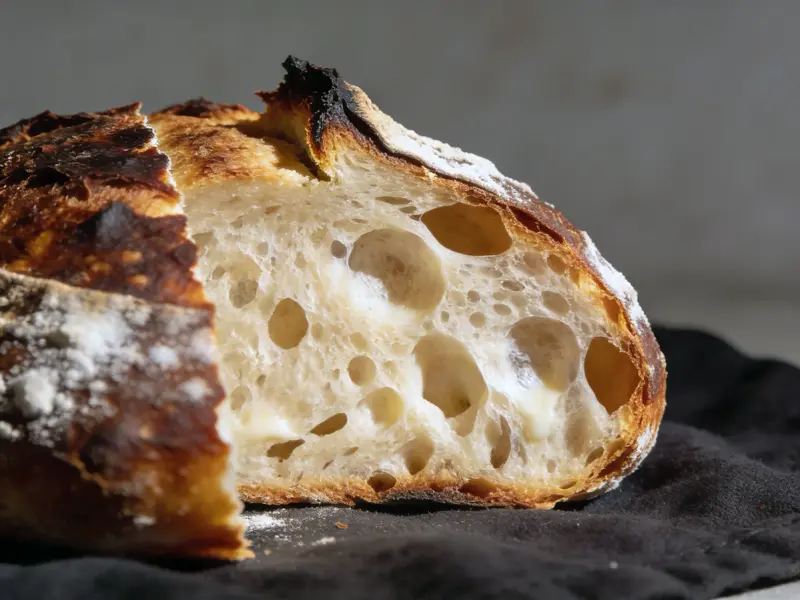
Four ingredients, five minutes of actual work, twelve to eighteen hours of waiting, and a screaming-hot Dutch oven. Jim Lahey published this method in the New York Times in 2006 and it changed home baking permanently. A very wet dough and a long slow fermentation do everything that kneading normally does — they develop the gluten structure and build the flavor. The result is a crackly crust, an open airy crumb, and depth of flavor that shorter methods can't produce.

780 min180 kcal10 serves
🌿Vegetarian
4.6
Sourdough Bread
🇺🇸USAAdvanced
Flour and Confectionery Products

Sourdough Bread

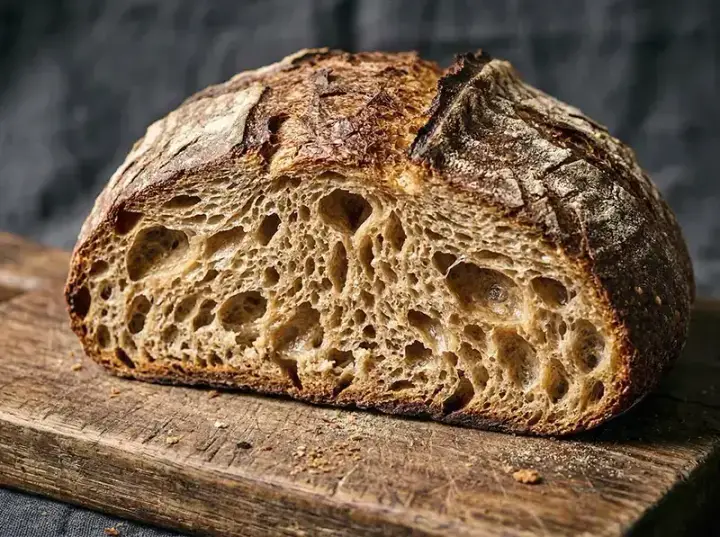
Real sourdough bread: four ingredients — bread flour, water, salt, active starter — and two to three days of patient fermentation. No yeast, no additives. The starter (a living culture of wild yeast and lactic acid bacteria) leavens the dough while simultaneously producing the organic acids that give sourdough its characteristic tang and dense, chewy crumb. The signature is the crust: baked inside a covered Dutch oven, it shatters when you cut it. The open crumb — an irregular network of large and small holes visible when sliced — comes from strong gluten development through stretch-and-folds and a long cold proof that slows fermentation and develops flavor. One of the most technically demanding home bakes; also one of the most rewarding.

1440 min180 kcal12 serves
🌱Vegan🌿Vegetarian
4.9
Challah (Braided Jewish Egg Bread)
🇮🇱IsraelAdvanced
Flour and Confectionery Products

Challah (Braided Jewish Egg Bread)

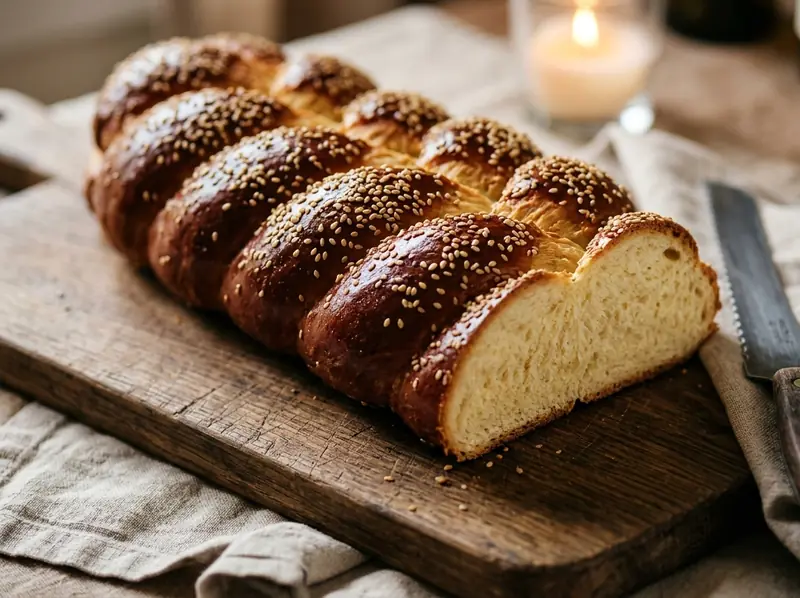
Challah (חַלָּה, pronounced HA-lah) is the braided, egg-enriched bread of Jewish tradition, placed on the Shabbat table every Friday at sundown and baked for the major Jewish holidays. The word originally referred to the portion of dough consecrated as a priestly offering — a ritual still observed by many Jewish bakers before baking. As a bread, challah is remarkable: egg yolks give the crumb a warm golden hue; oil makes it tender and keeps it pareve (neutral — neither meat nor dairy, so it can be served at any Shabbat meal regardless of what is being eaten); honey provides a gentle sweetness. The defining ritual is the braiding — three strands at minimum, six at maximum — which is said to represent love, peace, and truth. For Rosh Hashanah (the Jewish New Year) challah is baked as a round spiral to symbolise the continuity of the annual cycle. The crust, glazed twice with egg wash, bakes to a deep, shining mahogany.

210 min290 kcal12 serves
🌿Vegetarian
4.7
Pita Bread
🇱🇧LebanonAdvanced
Flour and Confectionery Products

Pita Bread

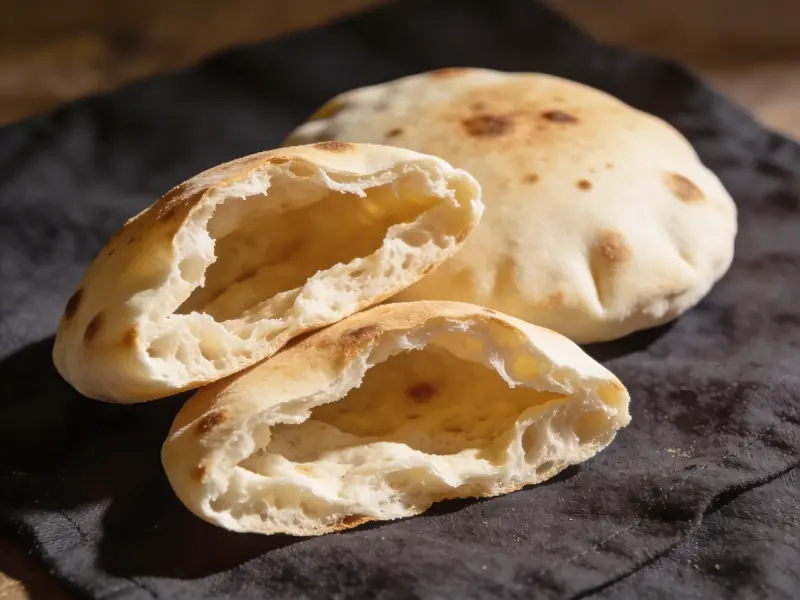
Pita (from the Greek πίτα) is the ancient leavened flatbread of the Middle East and Eastern Mediterranean — one of the oldest breads in recorded history, dating to at least 2500 BCE in the ancient Near East. Its defining characteristic is the hollow pocket that forms during baking: when a thin disc of well-hydrated yeast dough hits an extremely hot baking surface, the water in the dough converts instantly to steam, inflating the two layers of dough apart like a balloon. As the bread cools, the steam escapes and the pocket collapses — but the internal separation remains, creating the pocket that makes pita the ideal vehicle for falafel, shawarma, hummus, and mezze. The technique is simple but precise: the right dough hydration, the correct thickness (4 to 5 mm), and a screaming-hot baking surface are the three variables that determine whether a pita puffs completely or bakes flat.

90 min165 kcal8 serves
🌱Vegan🌿Vegetarian
4.5
Soft Pretzels (Laugenbrezeln)
🇩🇪GermanyAdvanced
Flour and Confectionery Products

Soft Pretzels (Laugenbrezeln)

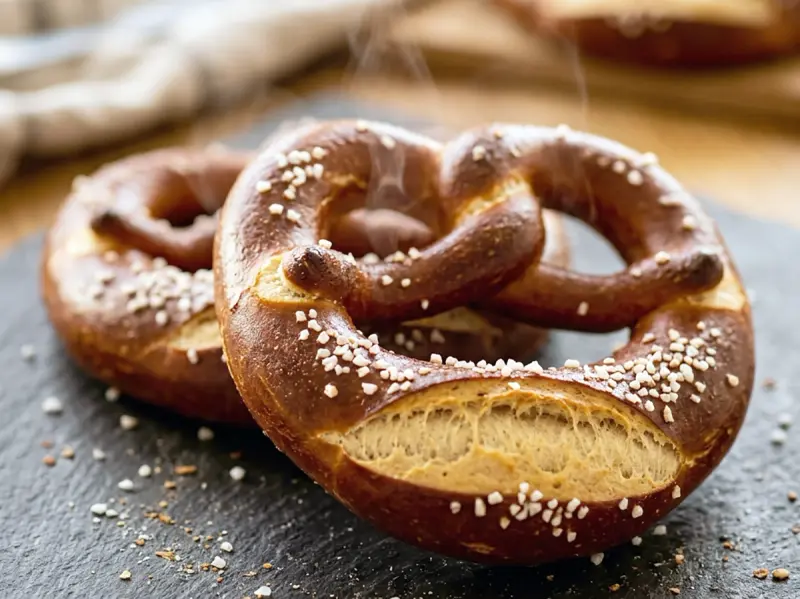
Laugenbrezeln (lye pretzels) are Germany's most iconic baked bread — a yeast dough shaped into the traditional looped knot, dipped in an alkaline bath, and baked at high heat until the crust turns a deep, glossy mahogany with a characteristic chewy outer layer and a soft, slightly dense interior. The word Lauge means lye, referring to the sodium hydroxide solution that bakeries use — it is the alkali bath that produces the distinctive pretzel flavor and color through the Maillard reaction at a lower temperature than bread normally allows. At home, baked baking soda (regular baking soda heated in the oven to convert it to sodium carbonate, which is more alkaline) produces a result close to the bakery original. Served with coarse pretzel salt, they are essential at Oktoberfest, Bavarian beer gardens, and across southern Germany.

120 min280 kcal8 serves
🌿Vegetarian
4.8
New York-Style Bagels
🇺🇸USAAdvanced
Flour and Confectionery Products

New York-Style Bagels

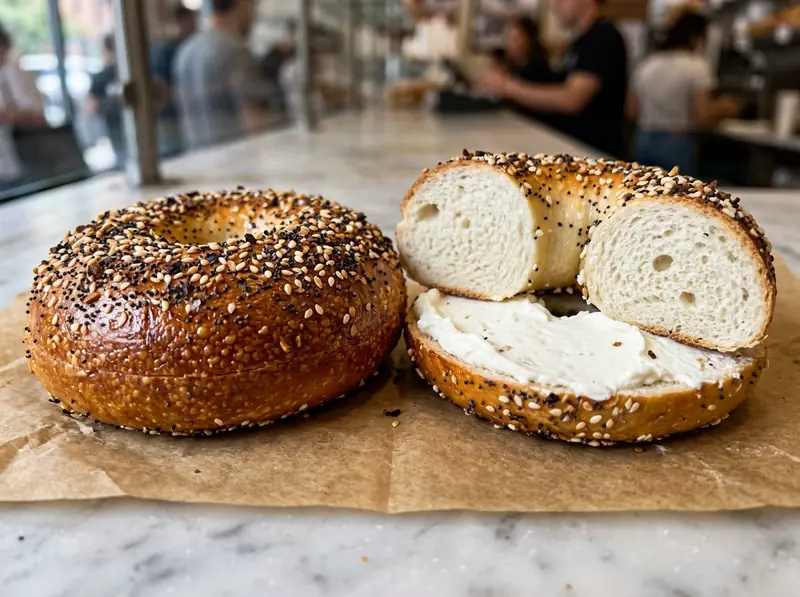
The New York bagel — the definitive version of this Ashkenazi Jewish bread — is one of the most technically precise breads in the home baker's repertoire. It is a lean dough (no fat, no eggs) made exclusively from bread flour, water, yeast, salt, and barley malt syrup. The low hydration (around 55 to 58%) produces an extremely stiff, tight dough that is kneaded until it is smooth and elastic. After an overnight cold fermentation that develops deep flavor, the shaped bagels are boiled briefly in water spiked with barley malt syrup — the boil gelatinises the surface starch, sets the outer crust, and produces the characteristic dense chew that distinguishes a real bagel from any other bread. They are then baked in a hot oven until the crust is a deep, crackled mahogany. Topped with sesame seeds, poppy seeds, or 'everything' seasoning, they are served split with cream cheese and smoked salmon, or eaten warm from the oven with nothing at all.

1440 min280 kcal8 serves
🌱Vegan
4.8

Once you bake your own bread, the supermarket loaf never tastes the same again

There's a moment, the first time you pull a proper loaf out of your own oven, when you realise how little actual work went into it and how much of bread-making is just waiting. Flour, water, salt, yeast, time. That's most of it. The skill is mostly patience and learning to read dough, and both come faster than you'd think.

These six range from a loaf that needs five minutes of work to a bagel that demands real technique, so start wherever your nerve is. I've been honest about which ones are forgiving and which ones punish a rushed step. If you've never baked bread before, start with the no-knead loaf and work down the list.

No-Knead Bread — the loaf that converted a generation

This is the one to start with, full stop. Four ingredients, about five minutes of actual work, and a long slow rise does all the kneading for you while you sleep. Jim Lahey's method ran in the New York Times in 2006 and genuinely changed home baking, because it proved you could get a bakery-quality crust and open crumb with almost no skill.

The two things that matter are time and heat. The dough needs twelve to eighteen hours to ferment, which builds both structure and flavour, so you can't rush it. And it bakes inside a screaming-hot Dutch oven with the lid on, which traps the dough's own steam and gives you that crackling, blistered crust you can't get on an open tray. Don't open the lid early to peek.

No-Knead Bread recipe

Sourdough Bread — the one worth the two-day commitment

Sourdough is flour, water, salt and a living starter, fermented slowly with wild yeast instead of commercial yeast. It takes two to three days, most of it hands-off, and people make it sound far more mystical than it is. What you're really doing is keeping a culture alive and learning to tell when the dough is ready, which is a feel you develop, not a number you hit.

Your starter has to be genuinely active, bubbly and roughly doubling after a feed, or the bread won't rise; a sluggish starter is the single most common reason a first sourdough comes out dense. Don't fight the timing, either, because temperature changes everything and a cold kitchen slows fermentation to a crawl. It's a patient bread. Treat the slowness as the point, not the obstacle.

Sourdough Bread recipe

Challah — the braided, egg-rich loaf for a table

Challah is the enriched, egg-and-oil bread of Jewish tradition, braided and glazed to a deep glossy brown, on the Shabbat table every Friday. It's soft, faintly sweet, and one of the most rewarding breads to make because the braiding turns a simple dough into something that looks like real work even though it isn't.

The dough is enriched, which means the eggs and oil make it slower to rise than a lean loaf, so give it the time it asks for rather than the time you'd like. The braid is easier than it looks; a three-strand plait is just like braiding hair, and you tuck the ends under for a clean finish. An egg wash before baking is what gives it that lacquered shine, so don't skip it.

Challah recipe

Pita Bread — flatbread that puffs into a pocket

Pita is one of the oldest breads there is, a lean leavened flatbread that puffs dramatically in a hot oven and leaves a hollow pocket inside. Watching it balloon up through the oven door is genuinely satisfying, and it's far easier than any loaf because there's no shaping beyond rolling out a disc.

The pocket is all about heat. The oven and the tray or stone have to be properly, fiercely hot, so the outside sets instantly and traps steam inside that forces the two layers apart. A cool oven gives you a flat, dense disc instead of a pocket. Roll them evenly, not too thin, and don't overcrowd; each one needs space and fierce bottom heat to leap.

Pita Bread recipe

Soft Pretzels — the chewy crust comes from the bath

German Laugenbrezeln are a yeasted dough knotted into the classic looped shape, dipped in an alkaline bath, and baked until mahogany brown. That bath is the whole secret: it's what gives a pretzel its dark, glossy, distinctly savoury crust and chewy bite, completely different from any other bread.

Traditionally the bath is food-grade lye, which is the real thing but needs care and gloves; a strong baked-baking-soda solution is the safe home version and gets you most of the way there. Either way, the dip is brief and the difference it makes is huge. Coarse salt on top before baking, a hot oven, and you have something better than most bakery pretzels, eaten warm with mustard.

Soft Pretzels recipe

New York Bagels — the most demanding bread here, and worth it

The New York bagel is a lean dough, no fat or eggs, boiled before it's baked, which is what gives it that shiny, chewy crust and dense interior no oven-only roll can match. It's the most technically precise bread on this list, and the one that rewards you for getting the details right.

The dough is stiff and low in water, which makes it hard to knead and is exactly the point; that tight dough is what gives a bagel its chew. The boil sets the crust and the shape before baking, and a little malt or sugar in the water adds shine and colour. Don't skip the boil and don't let them prove too long, or they puff up soft and lose the dense bite that makes a bagel a bagel.

New York Bagels recipe

What every bread here has in common

Time and temperature do most of the work, and both are easy to get wrong by being impatient. Underproved dough bakes dense; an oven that isn't hot enough gives you pale, sad crusts. Weigh your flour rather than scooping it, because a cup of flour can vary by a third depending on how you pack it, and that single inconsistency ruins more home loaves than any other. Beyond that, bread is forgiving. Bake the no-knead loaf this weekend and you'll see.
Articles

Keep reading