
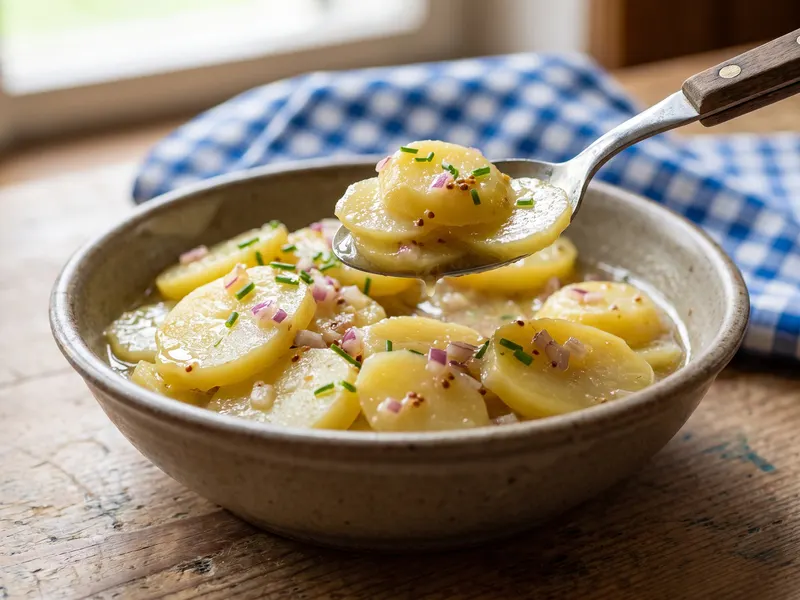
German Potato Salad
Schwäbischer Kartoffelsalat is the potato salad of southern Germany: thin slices of warm waxy potato soaked in hot vegetable stock sharpened with mustard and cider vinegar, without a spoonful of mayonnaise anywhere. Germans judge it by one word, schlotzig, meaning loose and glossy, with starch from the potatoes themselves binding the stock into something between a dressing and a sauce. That takes two things the recipe below insists on: the stock goes on in two pourings, and the bowl needs a full hour standing before the salad stops tasting watery. It sits on every summer table in the south and turns up again on Christmas Eve next to a plate of boiled sausages.
Ingredients
- 1000 gpotatoes, waxy
- 300 mlvegetable stock
- 1 pcsonion
- 15 gmustard, medium-hot
- 40 mlapple cider vinegar
- 60 mlsunflower oil
- 5 gsugar
- 15 gchives
- 2 gblack pepper
- 5 gsalt
Method
- Boil the potatoes whole and unpeeled in salted water until a knife slides in with slight resistance, 20 to 25 minutes. Cooking them in their skins keeps them from soaking up water and falling apart.
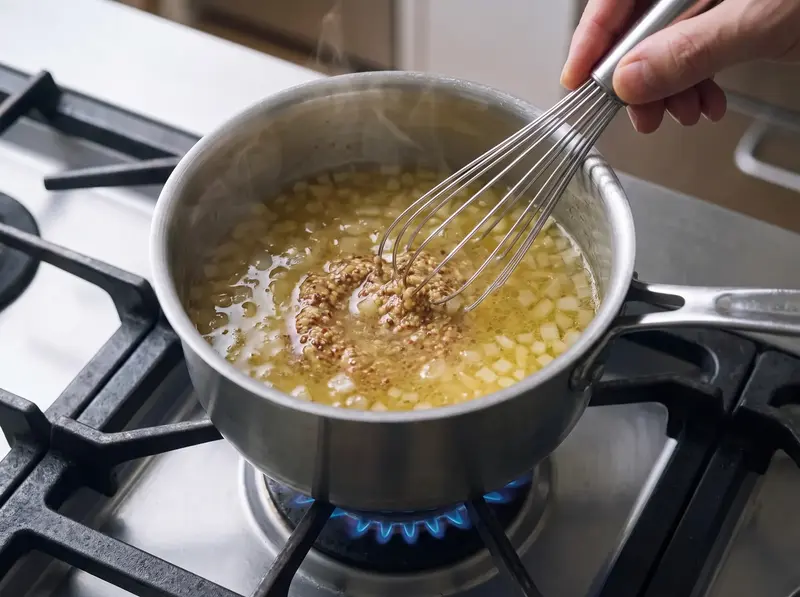
- While they cook, finely dice the onion and bring it to a simmer in the vegetable stock. Let it bubble for 2 to 3 minutes so the onion softens and loses its raw bite. Three hundred millilitres for a kilo of potatoes looks like a lot of liquid at this stage; it is the amount the slices will drink.
- Whisk the mustard, apple cider vinegar, sugar, salt, and black pepper into the hot stock. Cider vinegar is what Swabian cooks reach for, and it earns its place twice over: milder against plain potato than red wine vinegar, and it leaves the slices pale yellow rather than tinting them grey-pink. Taste the dressing on its own — it should be sharp enough to make you wince, because the potatoes will mute it.
- Drain the potatoes and peel them while they are still too hot to hold comfortably, working with a fork and a knife. Slice them into rounds about 4 mm thick on a board, then tip the whole lot into a wide bowl.

- Ladle about half the hot dressing over the warm slices and fold gently, then leave the bowl alone for 15 minutes. Pouring in stages is what separates a schlotzig salad from a wet one: each addition has time to be pulled into the starch instead of collecting under the potatoes.
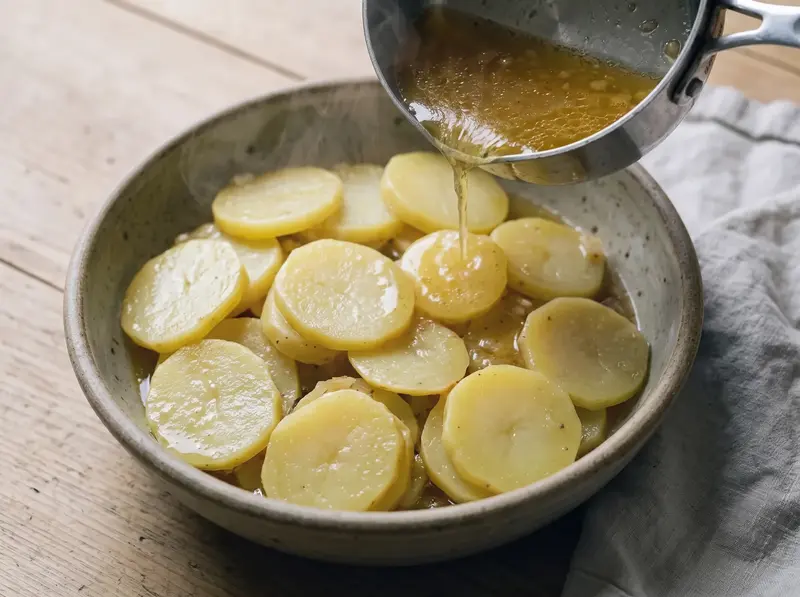
- Add the rest of the dressing, cover the bowl, and let the salad stand at room temperature for at least an hour, folding it over two or three times along the way. In that hour starch migrates out of the cut surfaces and thickens the stock into a loose, glossy sauce. Before it, the salad tastes thin and the liquid sits apart; after it, the two have become one thing.
- Fold in the sunflower oil and most of the chives at the very end. Oil goes last because it coats the slices and stops them taking up anything more — add it early and the salad stays watery. Taste, loosen with a splash of warm stock if it looks dry, and serve lukewarm with the remaining chives scattered over.
FAQ
Schlotzig is the Swabian word for the texture this salad is judged by: loose and glossy, every slice coated in something between stock and sauce, with no puddle underneath. It comes from potato starch rather than fat or mayonnaise, so you get there by slicing the potatoes while they are still hot and then giving the bowl a full hour at room temperature after the second pouring of stock. A watery salad has simply not stood long enough; a dry one wants a little more warm stock folded through before serving. Bavarians and Badeners say schlonzig or schlotzert for the same thing, and they all mean the same failure when it is missing.
Swabian is the version here: waxy potatoes, hot stock, vinegar, mustard, oil, no mayonnaise, served lukewarm. Bavaria builds on the same dressing but adds crisp Speck and sliced pickled cucumber with a splash of the brine, which is why the beer-garden bowl tastes smokier and sweeter beside a wedge of obatzda. North of the Main the salad is cold and bound with mayonnaise, with hard-boiled egg, apple, and pickle stirred through. Each is authentic in its own region, and none is a halfway house between the others.
Swabian recipes call for apple cider vinegar, sometimes a mild white wine vinegar, and both suit the dish better than red wine vinegar. Red is harsher against plain potato, and it stains the slices a dull grey-pink in a salad that should read pale yellow and glossy. Forty millilitres for a kilo of potatoes tastes aggressive in the pan and lands correctly in the bowl, since the potatoes swallow most of the acidity as they stand. If your vinegar is stronger than 5%, hold back a quarter of it and adjust at the end.
Two causes, and both are fixable. Either the potatoes were cold when you dressed them, in which case the starch has set and cannot take up stock, or the whole quantity of dressing went in at once and the slices had no time to absorb the second half. Peel and slice them hot, ladle on half the dressing, wait a quarter of an hour, then add the rest. Use waxy salad potatoes, labelled festkochend on German bags; floury baking potatoes turn to mash the moment the hot stock arrives, and no amount of resting will recover the slices.
Sausage is the everyday partner: bratwurst off the grill in summer, plain boiled Wiener on 24 December, and frikadellen or a schnitzel when the salad plays side dish. Kartoffelsalat mit Würstchen is the most common Christmas Eve meal in the country, named by roughly a quarter to a third of households in the annual surveys, because it can be finished hours ahead and asks nobody to stand at the stove that evening. The salad happens to want the same thing, since it only improves while it stands. Make it in the morning, leave it covered out of the fridge, and fold it once more on the way to the table.
Keep browsing
More dishes from the German archive — picked by overlap with what you're cooking now.
Recipes by email
One letter a week: a recipe picked for your taste, plus whatever is new on the site. Unsubscribe in one click.
Welcome gift: Sergei's cookbook (e-book).
By subscribing you agree to the privacy policy.
Tell us what you like to cook (30 seconds) →
Join the conversation
Comments
No comments yet — be the first!