


Pozole Rojo (Mexican Pork and Hominy Soup)
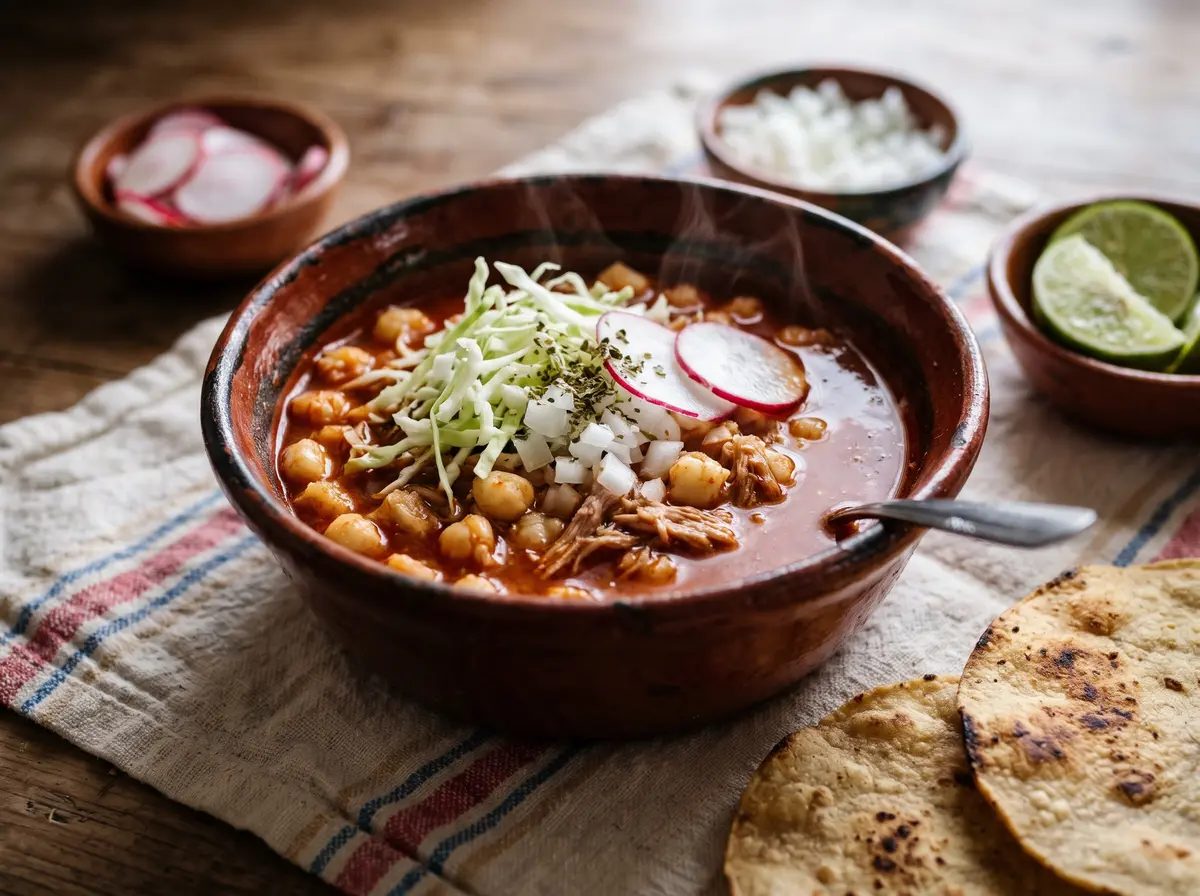
Pozole (also spelled posole) is a Mexican soup of pork and hominy, big kernels of nixtamalized corn that open up like flowers when the corn is cooked. It comes to the table in a deep bowl, and everyone finishes their own with shredded cabbage or lettuce, radishes, onion, oregano, ground chile and a squeeze of lime. This is pozole rojo, red pozole, coloured with dried guajillo and ancho chiles, and the Larousse Cocina calls it probably the best known pozole in Mexico. The name comes from the Nahuatl pozolli, which Mexico's agriculture ministry translates as "foamy" or "boiled". Canned hominy keeps the work to about 2½ hours, most of it simmering.
What pozole is
The Larousse Cocina describes pozole as a hearty soup of pork and generous amounts of cacahuacintle corn, cooked until the kernels burst, served in a special very deep bowl called a plato pozolero. Lime juice, salt, hot sauce or ground piquín chile, lettuce, sliced radishes, chopped onion and oregano are added at the table. The dish is pre-Hispanic in origin. The name comes from the Nahuatl pozolli, "foamy", after the kernels that open like flowers in the boiling pot.
Pozole comes in three colours. Blanco is the plain broth, rojo gets its red from guajillo and ancho chiles, and verde its green from green tomatoes, epazote and pumpkin seeds. Mexico's agriculture ministry says rojo is believed to come from Jalisco and verde is said to come from Guerrero. The Larousse Cocina calls pozole rojo probably the best known of them all.
Pozole in September
In Mexico pozole is the dish of the fiestas patrias. Mexico's agriculture ministry calls it one of the favourite dishes for the Independence celebrations in September, El Grito included, and says people eat more of it that month, though it is never the wrong time for a bowl. Rick Bayless writes that in many places huge pots of it simmer over wood fires all night before a fiesta.
Hominy, chiles and garnishes outside Mexico
Canned hominy is sold in Latin American shops and online. Drained weight varies by brand. The El Mexicano label lists 454 g of drained kernels for a 29 oz (822 g) can, and the US grading standard for canned hominy recommends at least 510 g for a can that size. Two cans give about 900 g to 1.2 kg, which is what you need. Drain and rinse them before they go in. Dried guajillo and ancho chiles come from the same places. Use Mexican oregano if you can find it, though ordinary dried oregano works in a smaller amount.
In Japan, a home recipe on Sekai Gohan suggests thin slices of daikon when there are no radishes and lemon in place of lime, and lettuce works as well as cabbage. What does not work is sweet corn, which makes a different, sweeter soup.
Ingredients
- 1.2 kgpork shoulder
- 2.5 lwater
- 0.5 onion
- 4 clovesgarlic
- 2 bay leaf
- 2 tspsalt
- 6 guajillo chiles
- 2 ancho chiles
- 2 clovesgarlic
- 0.25 onion
- 0.5 tspground cumin
- 0.5 tsporegano
- 1 tbsplard
- 1 tspsalt
- 2 cans (822 g / 29 oz each)hominy
- 300 gcabbage
- 10 radish
- 0.5 onion
- 4 lime
- 2 tbsporegano
- 1 tbspchili flakes
- 16 tostadas
- 1 tspsalt
Method
- Cut the 1.2 kg of pork shoulder into 5 cm chunks and put them in a 6-litre pot with 2.5 l of cold water, the half white onion, 4 garlic cloves, 2 bay leaves and 2 tsp of salt. Bring to the boil over high heat, about 15 minutes, and skim off the grey foam as it rises around the boil so the broth stays clean. Turn the heat to low, set the lid ajar and simmer gently, with small bubbles only at the edge, for 75 minutes. A fork should now go into the meat easily while the chunks still hold together, because the pork finishes cooking later with the hominy.
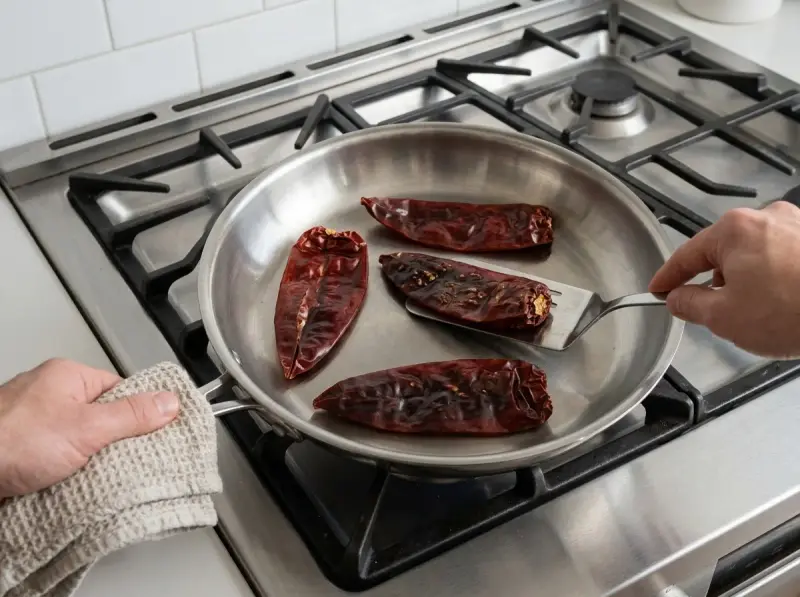
- While the pork simmers, wipe the 6 guajillo and 2 ancho chiles with a damp cloth, cut off the stems, slit them open and pull out the seeds and pale veins. Heat a dry, heavy 26 cm frying pan over medium heat. Many Mexican cooks skip the toasting and only soak the chiles, but a quick toast adds aroma. Toast the chiles a few at a time, pressing each one flat with a metal spatula for 15 to 20 seconds per side, until they smell toasty and turn a shade darker with a few small blisters. Stay at the pan, because a chile with black spots is burnt and will make the whole pot bitter, so throw that one out. Put the 2 peeled garlic cloves and the quarter white onion for the sauce in the same pan and turn them until they have dark spots, about 5 minutes. Put the toasted chiles in a heatproof bowl, pour over 500 ml of hot water, hold them under with a small plate and leave them for 20 minutes, until soft and plump.
- Taste the soaking water. If it is bitter, use 250 ml of fresh water instead. Put the chiles in a blender with 250 ml of the soaking water, the toasted garlic and onion, ½ tsp of ground cumin and ½ tsp of dried oregano, and blend for about 1 minute until smooth. Push the purée through a fine sieve into a bowl, pressing with the back of a spoon, and throw away the bits of skin and seed left behind. The skins stay tough however long they cook, which is why the sauce is strained.
- Wipe out the frying pan, set it over medium heat and melt 1 tbsp of lard. Pour in the chile purée, standing back because it spits, and cook for 6 to 8 minutes, stirring often. It is ready when it has turned a darker red and thickened enough that a spoon drawn across the pan leaves a trail for a moment. Stir in 1 tsp of salt. Frying the purée in lard takes away the raw chile taste and gives the broth more flavour.
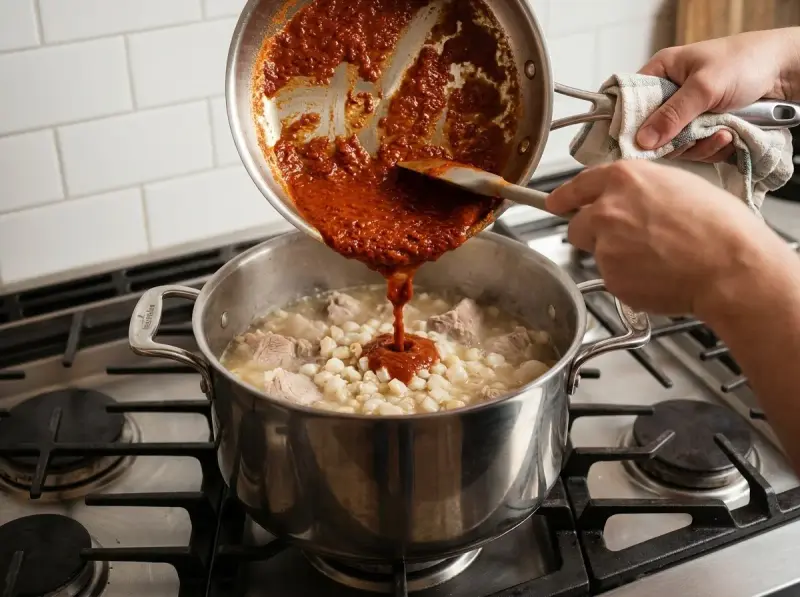
- Tip the 2 cans of hominy (822 g, or 29 oz, each) into a colander, drain and rinse under cold water. You will have about 900 g to 1.2 kg of drained kernels, depending on the brand. Fish the onion, garlic and bay leaves out of the pot. Add the hominy, scrape in all of the red sauce and stir. Bring back to a gentle simmer, set the lid ajar and cook for 30 minutes. The broth turns brick red, the kernels plump up, and a chunk of pork pressed with a fork falls apart.
- While it simmers, prepare the toppings. Slice 300 g of cabbage, or iceberg or romaine lettuce, as thin as you can and cut 10 radishes into thin rounds. Finely chop the half white onion, rinse it in a sieve under cold water to soften its bite and shake it dry. Cut the 4 limes into wedges. Put the toppings, 2 tbsp of dried oregano, 1 tbsp of ground dried chile such as piquín, or chili flakes (optional, for those who want heat) and the 16 tostadas on the table in small bowls and on a plate.
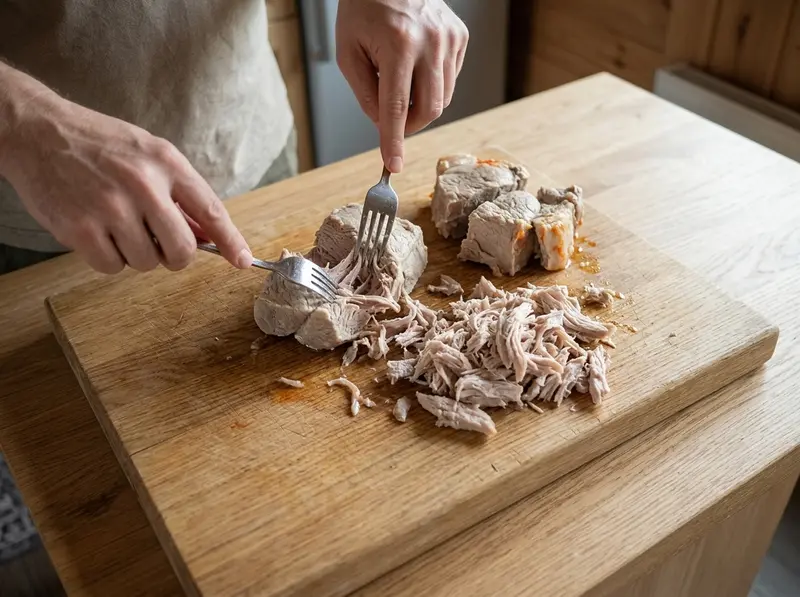
- Lift the pork onto a board and pull it into bite-size shreds with two forks, then return it to the pot and simmer for 5 minutes more. Taste the broth. Hominy soaks up a surprising amount of salt, so add up to 1 tsp more if it needs it. The pozole should be full of hominy and meat but still brothy, so if it has thickened too much, add a little hot water.
- Ladle the pozole into deep bowls, about 500 g each. Everyone adds their own cabbage or lettuce, radishes and onion, squeezes over lime, rubs a pinch of oregano between their palms over the bowl and adds chile if they like, with two tostadas on the side. For leftovers, divide the pozole into shallow containers and refrigerate within 2 hours. It keeps 3 to 4 days in the fridge or 2 to 3 months in the freezer. Reheat it until it boils, well above the safe minimum of 74 °C, and cut the toppings fresh.
Cooked it? Rate the recipe
FAQ
Pozole is a Mexican soup of pork and hominy, the big kernels of cacahuacintle corn that burst open as they cook, served in a very deep bowl and seasoned at the table with lettuce or cabbage, radishes, onion, oregano, chile and lime. The colour comes from what goes into the broth. Pozole blanco is the plain one, made with part of the pork head, and Mexico's agriculture ministry calls it the most popular. Pozole rojo is coloured with guajillo and ancho chiles and is believed to come from Jalisco. Pozole verde gets its green from green tomatoes, epazote and pumpkin seeds and is said to come from Guerrero.
Hominy, maíz pozolero in Mexico, is large white corn treated with cal, slaked lime, so the hull comes off and the kernel swells. Two 822 g (29 oz) cans give about 900 g to 1.2 kg of drained hominy, depending on the brand, which is what this pozole needs. Canned sweet corn is not a substitute: it is sweet, the kernels are small, and the soup turns into something else. Dried hominy works, about 300 g in place of the two cans, but Pati Jinich simmers it for 4 to 5 hours without salt, since salt toughens it, until the kernels open up. Cook it first and then add it in step 5.
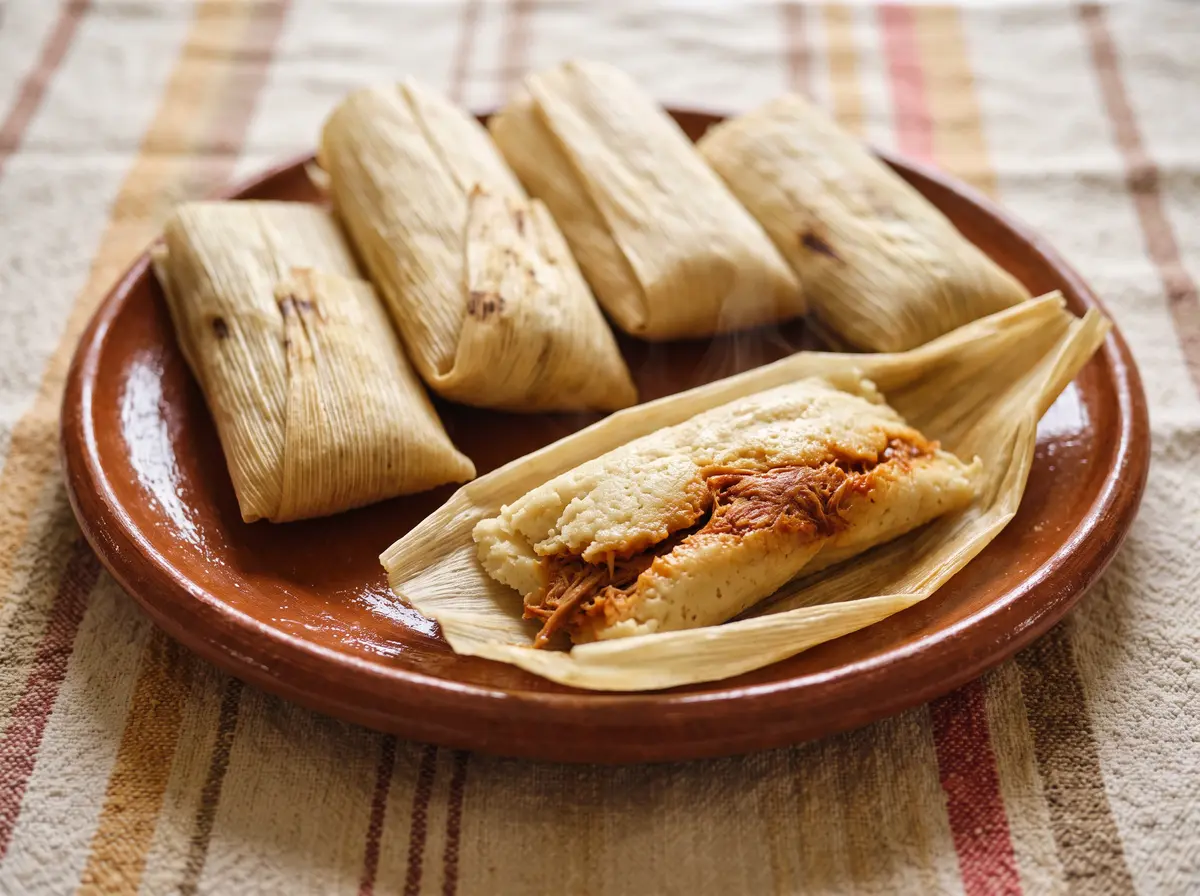
Bitterness usually comes from burnt chiles or from the seeds. Pull out the seeds and veins, then toast the chiles in a dry pan over medium heat for 15 to 20 seconds per side, pressed flat, only until they smell toasty and darken by a shade. Any chile with black spots should go in the bin, not the blender. Taste the soaking water too, and if it is bitter, blend with 250 ml of fresh water instead. The same guajillo and ancho sauce goes into our red pork tamales.
This recipe uses 1.2 kg of boneless pork shoulder, which turns tender in just under 2 hours and is easy to buy anywhere. In Mexico the head is traditional. The Larousse Cocina recipe cooks lean meat with pork head and lets each person choose lean, head or a mix, and Animal Gourmet says the head gives the most flavour, with spine or ribs as other options. Rick Bayless adds pork shanks and trotters to the shoulder for a richer broth. Pozole rojo is also made with chicken or turkey, according to Mexico's agriculture ministry.
Cool the pozole quickly by dividing it into shallow containers, and get it into the fridge within 2 hours of cooking. It keeps 3 to 4 days in the fridge and 2 to 3 months in the freezer. Reheat only what you will eat and bring it to the boil. The safe minimum is 74 °C, and boiling takes it well past that. Keep the toppings out of the soup and cut them fresh each time. Rick Bayless finds that pozole is just as good or even better the next day.
Keep browsing
More dishes from the Mexican archive — picked by overlap with what you're cooking now.




Recipes by email
One letter a week: a recipe picked for your taste, plus whatever is new on the site. You can stop the letters in one click.
Welcome gift: Sergei's cookbook (e-book).
By signing up for the newsletter you agree to the privacy policy.
Tell us what you like to cook (30 seconds) →
Join the conversation
Comments
No comments yet — be the first!