


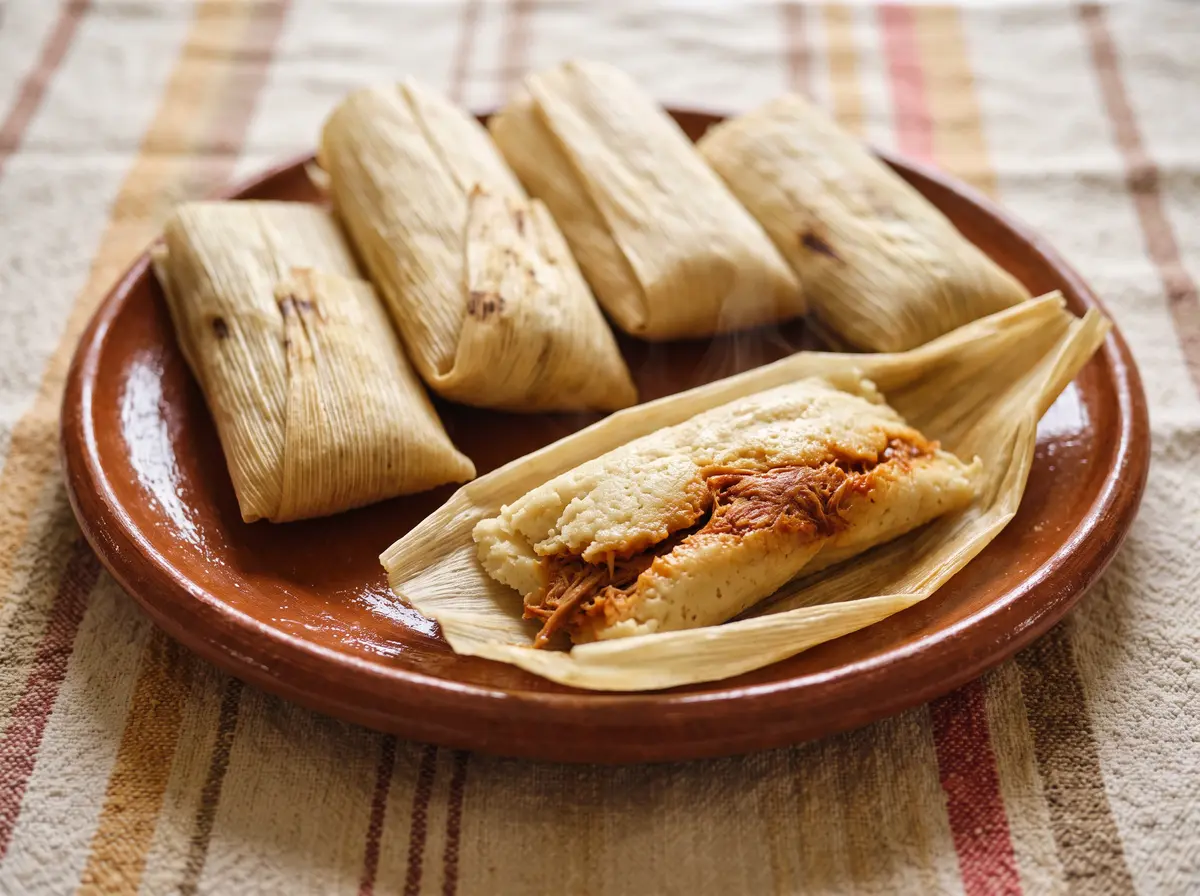
Red Pork Tamales
Tamales (singular tamal, from the Nahuatl tamalli) are a Mexican dish of corn masa beaten with lard, spread on a corn husk around a filling, folded and steamed. These are tamales rojos de puerco: shredded pork shoulder in a red sauce of dried guajillo and ancho chiles, the kind of pork tamal made in the north of Mexico and in Milpa Alta in Mexico City. The masa is made from masa harina, nixtamalized corn flour, beaten with the broth the pork cooked in until a spoonful floats in cold water. Plan on about 4½ hours, most of it simmering and steaming. The husks soak while the pork cooks. The batch makes 24 tamales, three to a plate.
What tamales are
A tamal is corn masa beaten with lard and broth, filled with a sauce, meat or nothing at all, wrapped in a corn husk or a banana leaf and steamed. The Larousse dictionary of Mexican gastronomy traces the dish to before the Spanish conquest. The word comes from the Nahuatl tamalli, which Mexico's National Institute of Indigenous Peoples translates as "carefully wrapped". The masa is nixtamalized corn, the same as for tortillas.
Mexicans often name tamales by colour, and the colour tells you the sauce. Tamales rojos are bathed in red chile sauce. Pork in guajillo sauce is a tamal of the north of Mexico, and the Larousse dictionary also records it in Milpa Alta, in Mexico City.
Tamales on Candelaria and at Christmas
Candelaria on 2 February closes the Christmas season in Mexico. On 6 January families cut the rosca de Reyes, and whoever finds the small figure of the baby Jesus in their slice is the one who makes or buys the tamales and atole for 2 February. That is how both Mexico's agriculture ministry and the National Institute of Indigenous Peoples describe it.
Tamales also come out for the December holidays, the Posadas from 16 to 24 December and Christmas.
Masa harina, husks and lard outside Mexico
Look for masa harina in Latin American shops or online, ideally a bag labelled for tamales. Tortilla masa harina also works. Dried corn husks are sold in packages, and one package of about 225 g gives you the 24 good husks plus enough small ones to line the steamer.
With no husks at all, a Japanese recipe from Delish Kitchen wraps tamales in baking paper instead. Rick Bayless and Pati Jinich both allow vegetable shortening in place of lard, though lard is the traditional fat and gives the masa its flavour.
Ingredients
- 700 gpork shoulder
- 1.8 lwater
- 0.5 onion
- 2 clovesgarlic
- 1 bay leaf
- 1 tspsalt
- 225 gdried corn husks
- 8 guajillo chiles
- 2 ancho chiles
- 3 clovesgarlic
- 0.5 tspground cumin
- 0.5 tsporegano
- 0.5 tspground black pepper
- 1 tbsplard
- 0.5 tspsalt
- 250 glard
- 1.5 tspbaking powder
- 1.5 tspsalt
- 500 gmasa harina
Method
- Cut 700 g pork shoulder into 4 cm pieces and put them in a 4 to 5 litre saucepan with 1.8 l water, half an onion, 2 garlic cloves, 1 bay leaf and 1 tsp salt. Bring to the boil over high heat and skim off the grey foam that rises. Turn the heat down to low-medium, cover the pan partly and simmer for 75 minutes, until a fork pulls a piece apart with no effort. Don't pour anything away: this broth goes into the masa and the sauce.
- While the pork simmers, separate the dried corn husks, put them in a large bowl and pour boiling water over them. Weigh them down with a plate so they stay under the water and leave them for 45 to 60 minutes, until they are soft and bend without cracking. Pull the stems and seeds out of 8 guajillo and 2 ancho chiles, tear them into pieces, cover with hot water in a small bowl and soak for 20 minutes, until soft and plump.
- Lift the pork out of the pan. Strain the broth into a measuring jug and throw away the onion, garlic and bay leaf. You need 1050 ml: 250 ml for the sauce and 800 ml for the masa. If you have less, top it up with hot water. Shred the pork into small pieces with two forks.
- Drain the chiles and put them in a blender with 3 garlic cloves, 0.5 tsp ground cumin, 0.5 tsp dried oregano (Mexican, if you have it), 0.5 tsp black pepper and 250 ml of the broth. Blend until smooth, then push the sauce through a sieve to catch the bits of skin. Heat 1 tbsp lard in a deep 26 to 28 cm frying pan over medium heat and pour in the sauce, standing back because it spits. Stir for 8 minutes, until it turns darker and thicker. Add the shredded pork and 0.5 tsp salt, turn the heat to low and cook for 7 minutes, until the sauce clings to the meat and no liquid pools in the pan. Taste for salt, then spread the filling on a plate to cool while you make the masa.
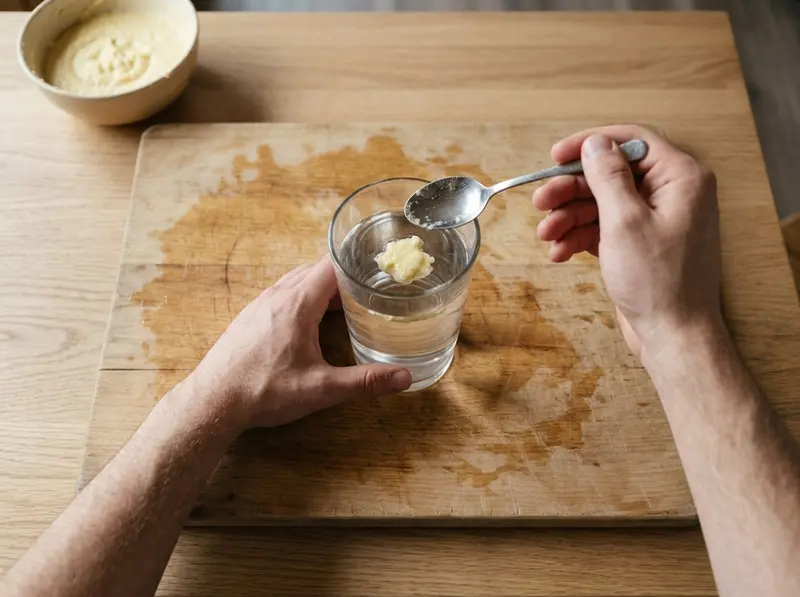
- Beat 250 g soft lard (soft, not melted) with 1.5 tsp baking powder and 1.5 tsp salt for about 3 minutes, with a stand mixer or a hand mixer, until white and fluffy. Add 500 g masa harina and 700 ml of the warm broth in 3 additions, a bit of each in turn, then keep beating at medium speed for about 10 minutes. Test it: drop 0.5 tsp of batter into a glass of cold water. If it floats, the tamales will be light. If it sinks, beat 4 to 5 minutes more and test again. The finished masa looks like soft cake batter and holds its shape on a spoon. If it is stiff, beat in more warm broth or warm water a few tablespoons at a time until it is as soft as cake batter. Taste it: it should be a little saltier than you'd like, because the steam takes some of the salt away.
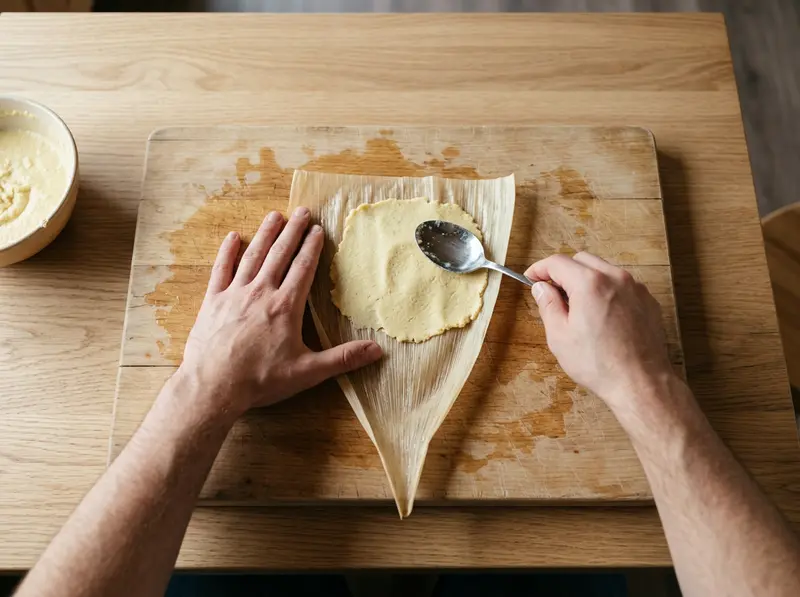
- Pour about 5 cm of water into a steamer pot of at least 10 litres, under the steamer insert or rack. The water must not reach the insert. Line the insert with a few small husks. Pick the 24 widest husks, at least 15 cm across at the wide end, and pat them dry. If you don't have enough wide ones, overlap two smaller husks along their long edges and use them as one. If you want to tie the tamales, tear 24 thin strips from the leftover husks. Lay a husk with the pointed end toward you. Spread about 65 g of masa into a 10 cm square about 6 mm thick, leaving 4 cm bare at the pointed end and 2 cm along the sides. Spoon about 25 g of filling down the middle. Bring the two long sides of the husk together so the masa wraps around the filling, roll them the same way around the tamal, then fold the pointed end up. Tie it loosely with a strip if you like. Repeat with the rest.
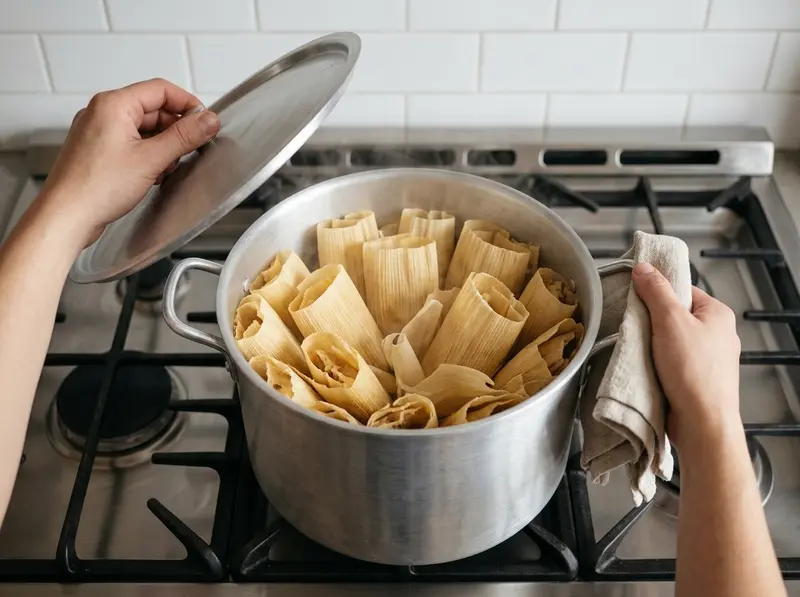
- Stand the tamales upright in the pot, folded end down and open end up. Pack them loosely, because they swell as they cook, and tuck loose husks into any gaps so they don't fall over. Cover with more husks and put the lid on. Heat on high until steam escapes, then turn to medium so the water boils steadily but not hard, and steam for 75 minutes from the moment the steam appears. Check the water every 20 minutes and pour boiling water down the side of the pot when it runs low, never over the tamales. To test, take one out: the husk should peel away cleanly and the masa should be moist but not sticky. If the masa still sticks to the husk, steam for 15 minutes more.
- Turn off the heat and leave the tamales in the closed pot for 15 minutes, so the soft masa firms up and comes out whole. Serve them in their husks and unwrap at the table, because the husk is not eaten. Put leftovers in the fridge within 2 hours and eat within 3 to 4 days, or freeze them in their husks for up to 2 months. Reheat in the steamer, about 20 minutes from the fridge and about 45 minutes from frozen, until the masa is soft and steaming right through when you open one and the middle reaches 74°C.
Cooked it? Rate the recipe
FAQ
Masa harina is corn flour made from nixtamalized corn, the same treated corn that Mexican tortillas are made from. Bags labelled for tamales are the best choice, though tortilla masa harina works too. Cornmeal and polenta are ground from corn that has not been nixtamalized, so they are a different product from masa harina. For this recipe you need 500 g of masa harina, beaten with about 700 ml of warm pork broth, plus a little more if the masa is stiff.
Usually the masa was not beaten long enough to trap air. Start with soft lard that has not melted and beat it for about 3 minutes until it turns white, then add the masa harina and warm broth in 3 additions and beat for about 10 minutes more. Drop 0.5 tsp of the batter into a glass of cold water: it should float. If it sinks, beat 4 to 5 minutes more and test again. Keep to 250 g of lard for 500 g of masa harina.
Take one tamal out after 75 minutes of steaming and unwrap it. When it is done, the husk peels away cleanly and the masa is moist but no longer sticky. If the masa clings to the husk, it needs more time, so put it back and steam for 15 minutes more. Keep about 5 cm of water under the insert the whole time and top it up with boiling water so the steam never stops. After steaming, let them rest for 15 minutes in the closed pot so the masa firms up.
Let the tamales cool and put them in the fridge within 2 hours, still in their husks. They keep for 3 to 4 days in the fridge, or up to 2 months in the freezer in a closed bag. Reheat them standing up in the steamer: about 20 minutes from the fridge and about 45 minutes straight from frozen, with no need to thaw first. They are ready when the masa is soft and steaming right through when you open one, and the middle reaches 74°C.
Tamales belong to the December holidays, the Posadas from 16 to 24 December and Christmas, and to Candelaria on 2 February, when the tamal is the centre of the table. Whoever finds the little figure of the baby Jesus in their slice of the rosca de Reyes on 6 January has to bring tamales and atole for everyone on Candelaria. Mexico's agriculture ministry lists tamales in green salsa with chicken or pork, rajas with chile, epazote and cheese, tamales with mole, and sweet ones with raisins or pineapple among the most common. For a tamal de mole, the sauce from our mole poblano works as the filling.
Keep browsing
More dishes from the Mexican archive — picked by overlap with what you're cooking now.



Recipes by email
One letter a week: a recipe picked for your taste, plus whatever is new on the site. You can stop the letters in one click.
Welcome gift: Sergei's cookbook (e-book).
By signing up for the newsletter you agree to the privacy policy.
Tell us what you like to cook (30 seconds) →
Join the conversation
Comments
No comments yet — be the first!