


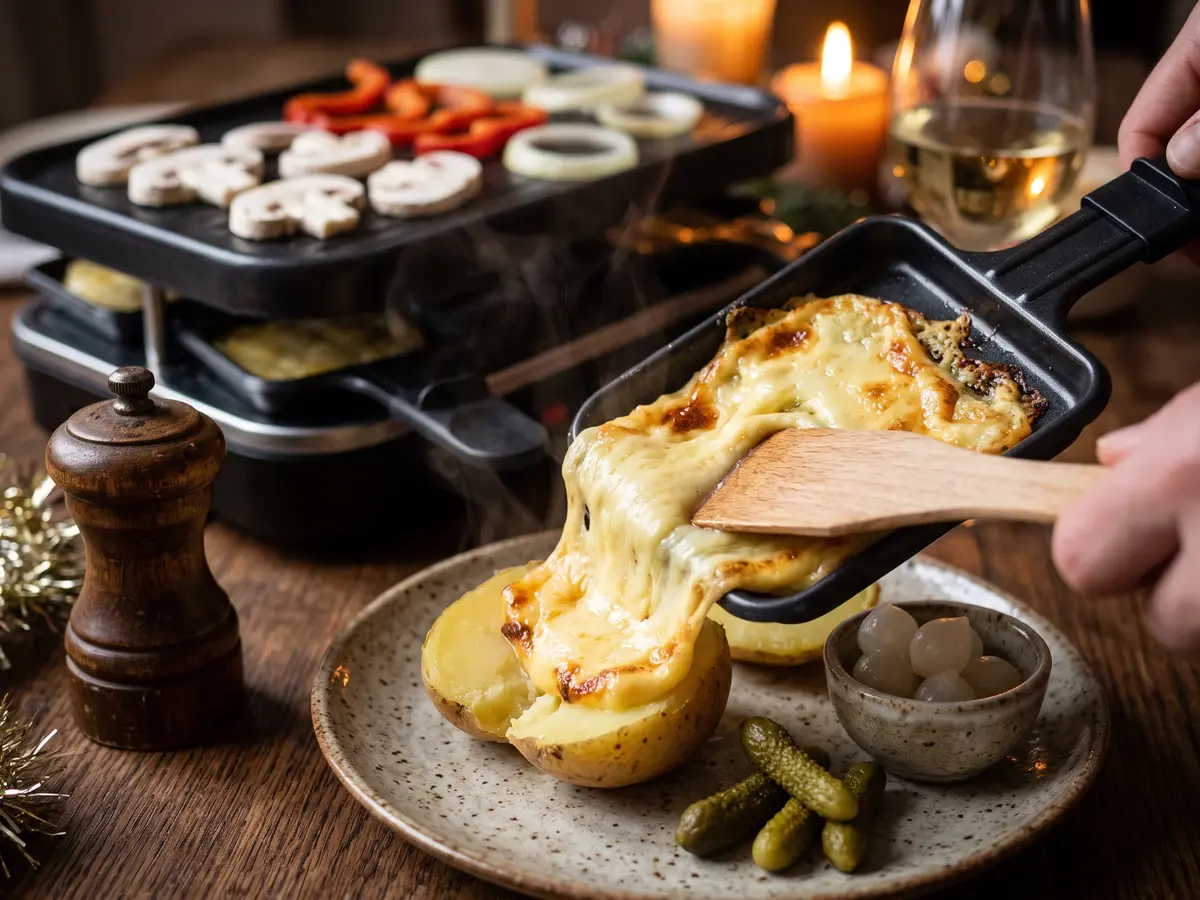
Raclette (Melted Cheese with Jacket Potatoes)
Raclette is Swiss melted cheese: raclette cheese heated until it bubbles and scraped over potatoes boiled in their skins, eaten with gherkins and small pickled silverskin onions. The name comes from the French racler, to scrape, and in Swiss German it used to be called Bratkäse, roasted cheese. Melting cheese this way is recorded in the canton of Valais in 1574. In many German homes the raclette grill comes out for Christmas and New Year's Eve and dinner is cooked at the table: everyone melts their own slice in a little pan (Pfännchen) under the grill, while mushrooms, peppers and onions sizzle on the plate on top. In the classic Swiss raclette only the cheese goes into the pan, while many German households bake potatoes and vegetables under it, ZDF writes. From cold water to the first pan of melted cheese takes about 50 minutes.
What raclette is
Raclette is both a cheese and a meal. The old way is to hold the cut face of a cheese wheel to a fire and scrape the melted layer onto a plate or a piece of bread, and that gave the dish its name: racler is French for to scrape. In Swiss German it used to be called Bratkäse, roasted cheese. The Swiss PDO association dates melting cheese in Valais to 1574, and SRF credits Gaspard Ambuel, a physician and apothecary in Sion, with setting down the recipe that year. Raclette became the official name of the cheese in 1874.
Raclette Suisse dates the tabletop ovens with little pans to 1970. Walliser Raclette AOP is made from raw cow's milk and ripened for at least three months. Raclette cheese on its own is not a protected name, and German supermarkets sell it made from both raw and pasteurised milk.
Raclette in Germany on New Year's Eve
At Christmas and on New Year's Eve the raclette grill comes out of the cupboard in many German homes, ZDF writes. As the health insurer DAK describes it, the grill stands in the middle of the table with the ingredients around it in small bowls, and everyone fills their own pans. In the classic Swiss raclette only the cheese goes into the pan. The same ZDF piece says many German households bake potatoes, vegetables and more under the cheese. Mushrooms, peppers and onions go on the plate on top, and in many families meat as well.
If you add meat, keep it apart. The BfR advises keeping raw meat, especially chicken, away from salad and anything else eaten as it is, and cooking it through until the centre has been at 70 °C for at least two minutes. To check on the grill, cut the thickest piece open: chicken white all the way through with clear juices, pork and beef with no raw middle. Use separate plates, cutlery, boards and knives for the raw pieces or wash them after each use, because germs like Campylobacter can't be seen or smelled. LECKER suggests cooking the meat in the kitchen beforehand, so it is done much faster on the grill.
Ingredients
- 800 gwaxy potatoes
- 2 tspsalt
- 800 graclette cheese
- 250 gmushrooms
- 1 bell pepper
- 1 onion
- 1 tbspvegetable oil
- 0.5 tspsalt
- 150 gpickled cucumbers
- 120 gsilverskin onions
- 1 tspground black pepper
- 1 tspsweet paprika
Method
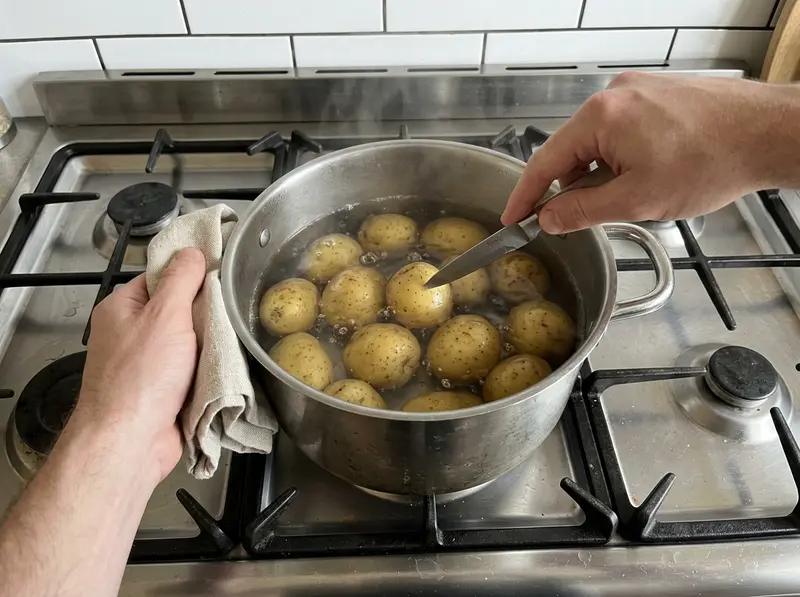
- Scrub 800 g of small waxy potatoes and leave the skins on. Put them in a 3-litre pot with 2 tsp of salt, cover them with cold water and bring to the boil over high heat. Turn the heat down to medium and let them simmer uncovered for about 25 minutes. They are done when a knife slides into the biggest one and the potato slips off the blade without resistance. Waxy potatoes are worth looking for, because they slice cleanly and don't fall apart.
- While the potatoes cook, cut 800 g of raclette cheese into slices 4–5 mm thick and about the size of your pans, or buy it ready sliced. On Swiss raclette, just scrape the rind, since it turns crisp as it melts. If you are cooking for someone pregnant or with a weakened immune system, cut the rind off their slices, as ZDF advises. If the label says the rind is plastic or treated with natamycin (E 235), cut it off generously. Slice 250 g of mushrooms, cut the bell pepper into strips and the onion into rings, all fairly thin, because thick pieces take a long time on the grill. Lay the cheese and the vegetables out on two plates and keep them in the fridge until the table is ready.
- Put the raclette grill in the middle of the table with at least one pan for each guest and a wooden spatula or two. Drain 150 g of pickled cucumbers (small gherkins or cornichons) and 120 g of silverskin onions into small bowls. For seasoning the cheese, set out a pepper mill for coarsely ground black pepper (about 1 tsp over the evening) and 1 tsp of sweet paprika in a little dish.
- About 10 minutes before the potatoes are done, switch the grill on. A metal plate is hot after 5–10 minutes, while a stone plate can need 20–30, so start a stone grill earlier. Once the plate is hot, brush it with 1 tbsp of oil.
- Drain the potatoes and bring them to the table hot, wrapped in a cloth napkin in a basket or bowl so they stay warm. Everyone peels their own. Now bring out the cheese and the vegetables. If the plates are large, put out half and top them up from the fridge later, because food left sitting in the warmth spoils quickly.
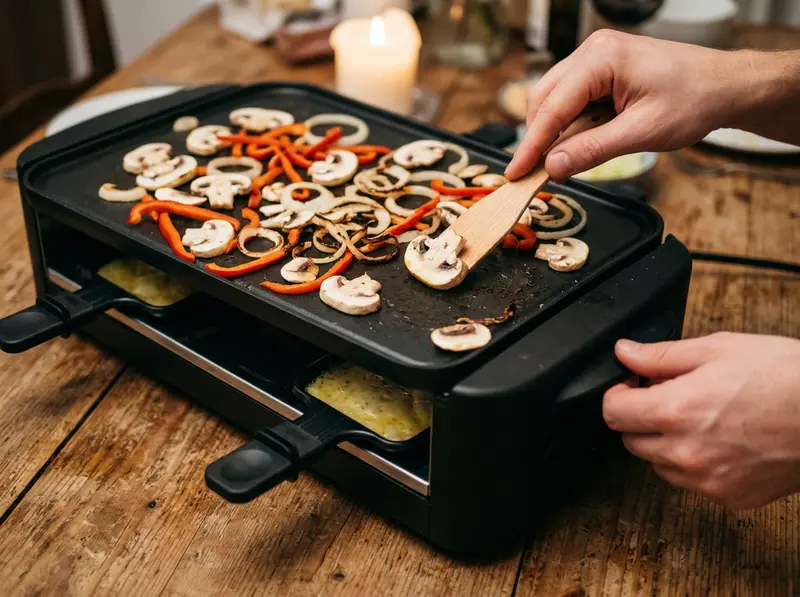
- Put a few mushroom slices, pepper strips and onion rings on the hot plate and sprinkle them with a little of the ½ tsp of salt. Turn them with a spatula until they are soft and browned at the edges. Eat them on the side or tuck them into a pan under the cheese.
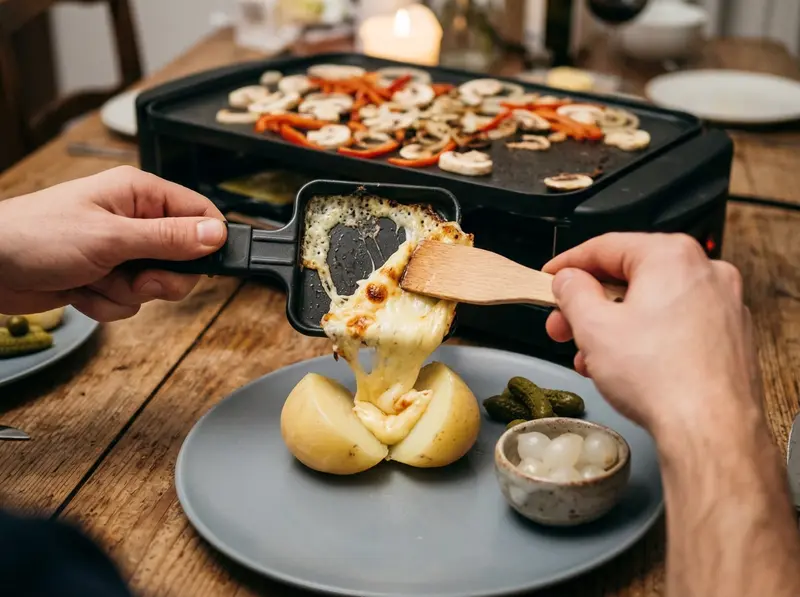
- Lay a slice of cheese in a pan, either on its own, the classic Swiss way, or on a few potato slices and grilled vegetables, the way many German households do it. Slide the pan under the grill for 3–5 minutes, until the cheese bubbles and starts to brown at the edges. Don't leave it much longer, or the fat begins to separate. Scrape the cheese onto a peeled potato with the spatula, season it with pepper and paprika and eat it with the pickled cucumbers and onions, then fill the next pan. Put any leftovers in the fridge within 2 hours.
Cooked it? Rate the recipe
FAQ
German guides count 200–250 g of raclette cheese per person, and Swissmilk and cookbook author Tanja Dusy go with 200 g. With plenty of sides on the table you can plan a little less. For potatoes the guides give 150–250 g, while Swissmilk counts 200 g as a side and 300 g when potatoes are the main dish. This recipe uses 200 g of each per person. If you add meat, LECKER plans 100–150 g per person, and everyone needs at least one pan (most grills take 8–12).
Shops in Germany sell raclette cheese from Switzerland, France and the Allgäu, and a Heidelberg cheese shop owner quoted by dpa says the Swiss kind is made from raw milk and is especially flavourful. The name itself isn't protected. Only Walliser Raclette AOP, the raclette from the canton of Valais, is. Any cheese that melts well will do: the health insurer DAK suggests Appenzeller and Gruyère, which are strong and don't string, and ZDF adds young Gouda, Butterkäse and Bergkäse. Choose one with at least 45 % fat in dry matter and slice it 4–5 mm thick.
On Swiss raclette cheese, yes. Raclette Suisse, the Swiss producers' association, says to scrape the rind but never cut it off, because it turns crisp and full of flavour as it melts. Raclette cheese from other countries may contain the preservative natamycin (E 235), and some rinds are plastic, so if the label says either, cut the rind off generously. ZDF adds that pregnant women and people with a weakened immune system should skip cheese rind altogether, since the untreated outside of a wheel can carry bacteria such as listeria.
This recipe has no meat, fish or wheat in it, but check the cheese label for the type of rennet if that matters to you, and the labels on pickles and spices if you cook for someone with coeliac disease. Many Germans also cook strips of pork, beef or chicken on the top plate, about 100–150 g per person. The BfR says raw meat, chicken above all, has to stay away from anything eaten without further cooking, and the BfR and ZDF advise separate plates, cutlery, boards and knives for raw meat, or washing them after each use. Cook every piece through: the BfR rule is 70 °C in the centre for at least 2 minutes. A thin strip on the grill is hard to check with a thermometer, so cut the thickest piece open. Chicken should be white all the way through with clear juices, and pork and beef should have no raw middle. The RKI linked Campylobacter infections after Christmas and New Year's Eve to fondue and raclette dinners, especially when chicken was served.
LECKER says raclette cheese freezes without trouble, so wrap leftover slices and put them in the freezer. Raclette Suisse suggests using it on sandwiches or for baking on top of dishes, and LECKER turns leftovers into a raclette bake or Käsespätzle. Put leftover potatoes and grilled vegetables in the fridge within 2 hours and eat them within 3–4 days. Reheat them until steaming hot, 74 °C in the middle.
Keep browsing
More dishes from the Swiss archive — picked by overlap with what you're cooking now.
Recipes by email
One letter a week: a recipe picked for your taste, plus whatever is new on the site. You can stop the letters in one click.
Welcome gift: Sergei's cookbook (e-book).
By signing up for the newsletter you agree to the privacy policy.
Tell us what you like to cook (30 seconds) →
Join the conversation
Comments (1)
******