
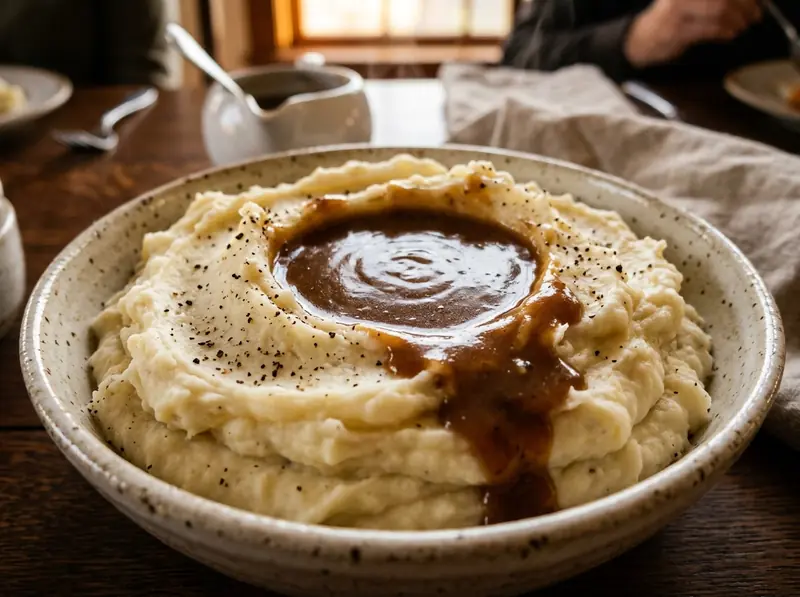
Mashed Potatoes and Gravy
Mashed potatoes and gravy is an American side dish: boiled potatoes mashed with butter and warm milk, served under a brown sauce of butter, flour and chicken broth. It sits next to the roast turkey at Thanksgiving and next to most Sunday roasts the rest of the year. The potatoes start in cold salted water, simmer for 15 to 20 minutes, dry in the hot pot and get mashed by hand while still hot, because a blender turns them to glue. The gravy cooks alongside in about 15 minutes and works on broth alone, though turkey pan juices make it better if you have them.
Ingredients
- 1400 gpotatoes
- 160 gunsalted butter
- 360 mlwhole milk
- 35 gall-purpose flour
- 700 mllow-sodium chicken broth
- 1 tspsoy sauce
- 4 tspsalt
- 0.5 tspground black pepper
Method
- Use starchy or all-purpose potatoes: russets give a light, fluffy mash, Yukon Golds a denser and more buttery one. Peel 1.4 kg and cut them into even chunks of 4 to 5 cm so they all cook at the same speed. Put them in a large pot, cover with cold water by about 2.5 cm and add 3 teaspoons of the salt. Starting in cold water lets the heat reach the centre of each chunk before the outside falls apart.
- Bring the pot to a boil over high heat, then turn it down to a gentle simmer and cook for 15 to 20 minutes. The potatoes are done when a small knife slides into the largest chunk with no resistance and the chunk slips off the blade by itself. A rolling boil knocks the pieces around and breaks up the edges, so keep the water just bubbling.
- While the potatoes simmer, start the gravy. Melt 45 g of the butter in a medium saucepan over medium heat, add the 35 g of flour and whisk without stopping for 3 to 4 minutes. The roux is ready when it turns golden brown, about the colour of peanut butter, and smells toasted. This step cooks out the raw flour taste and gives a gravy made without meat most of its colour.
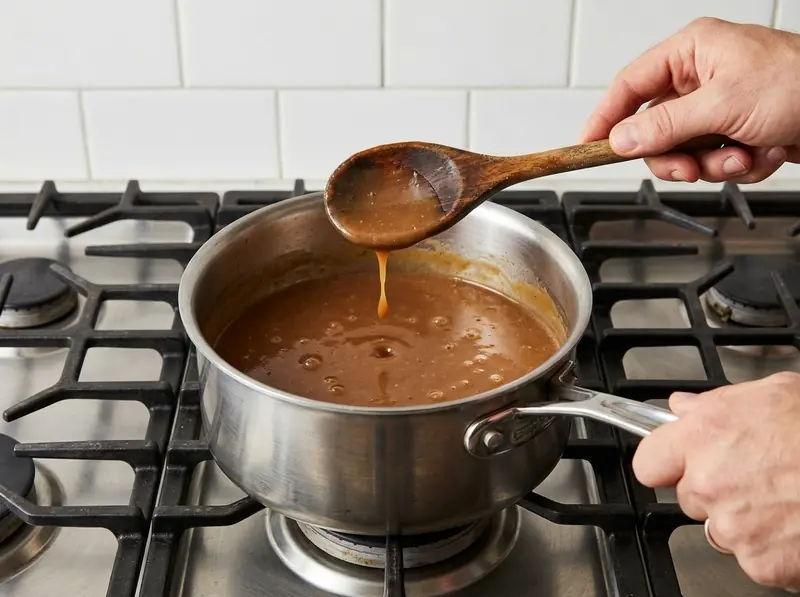
- Pour about 100 ml of the broth into the roux and whisk until you have a smooth, thick paste, then add the rest in a thin stream, whisking all the time. Adding the liquid slowly is what keeps lumps from forming. Bring it to a boil, lower the heat and simmer for 8 to 10 minutes, whisking often, until the gravy has reduced to about 500 ml and coats the back of a spoon. Stir in the soy sauce. If you have pan juices from a roast turkey, skim off the fat and use up to 200 ml of the juices in place of the same amount of broth.
- Drain the potatoes well and tip them back into the hot, empty pot. Leave them off the heat for 1 to 2 minutes until the steam dies down and the surfaces look dry and chalky. Water left on the potatoes thins the mash and dulls its taste. Meanwhile warm the milk in a small pan until it steams but does not boil.
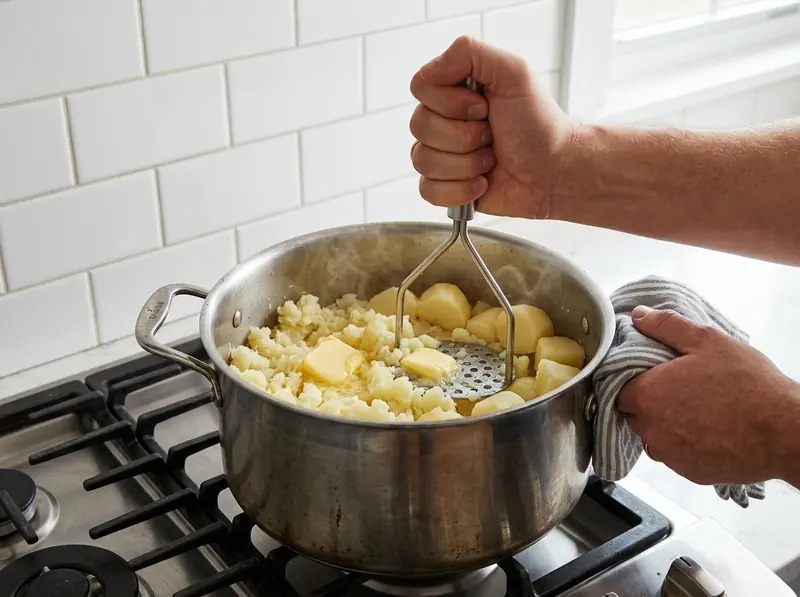
- Mash the potatoes while they are hot, either through a ricer back into the pot or with a hand masher; cold potatoes turn gummy. Add the remaining 115 g of butter in pieces and fold it in until it melts, then add 300 ml of the warm milk in three parts, folding gently with a spatula after each. Season with the last teaspoon of salt. Stop as soon as the mash is smooth: every extra stir releases more starch, and a blender or food processor makes paste out of it in seconds. If the mash is stiffer than you like, loosen it with the remaining 60 ml of milk.
- Taste the gravy only now and season it with pepper and, if it needs it, salt. Reduced broth and turkey juices are already salty, so salting earlier is the easy way to overdo it. If you see lumps, pour the gravy through a sieve. Bring it back to a bubble, spoon the potatoes into a warm bowl, make a well in the middle and pour in some of the gravy. Serve the rest in a jug.
FAQ
Mashed potatoes turn gluey when too much starch is released from the cooked cells, and that happens when they are worked too hard. A food processor or blender is the usual cause; beating for a long time with a spoon or mashing potatoes that have gone cold does the same thing more slowly. Russets break down with less work than waxy potatoes, so they are the safer choice if you want a fluffy mash. Once the mash is gluey nothing reverses it. The best use for it is to spread it in a buttered dish and bake it until the top browns, so the texture reads as a casserole.
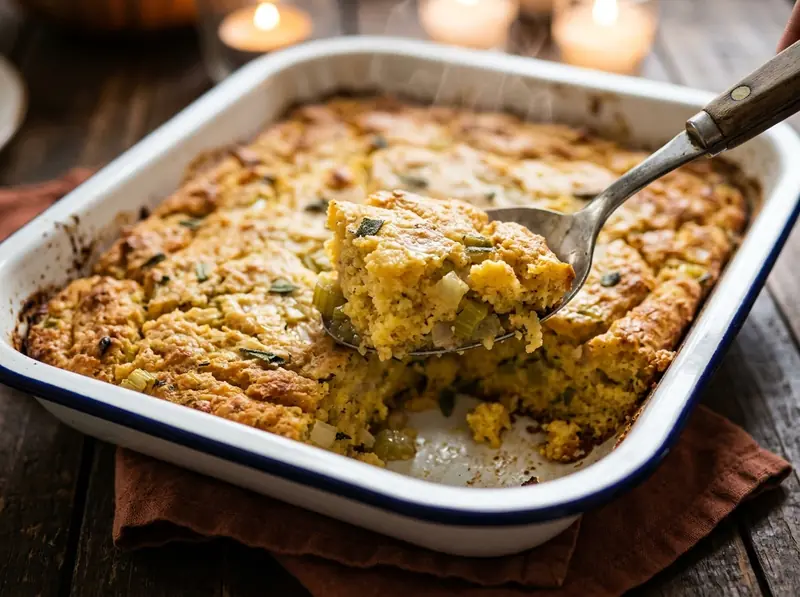
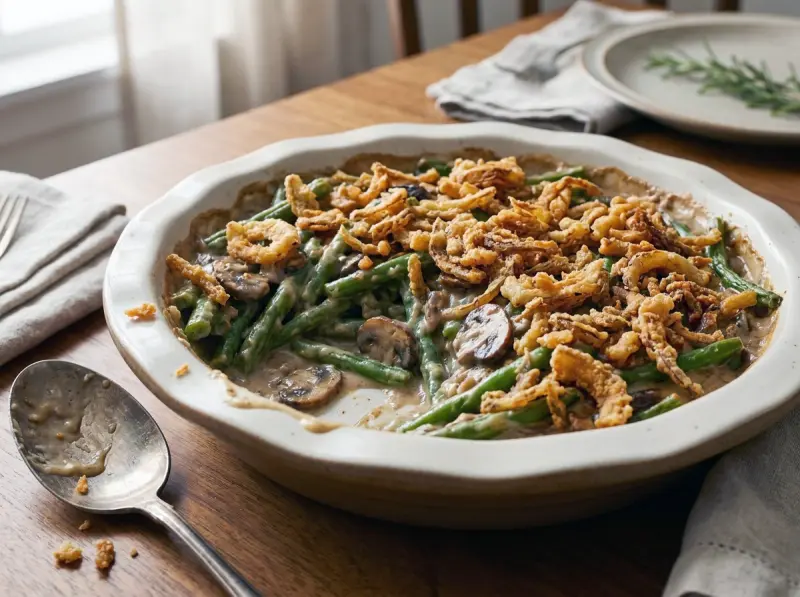
Both can be made ahead. The gravy keeps in the fridge for up to 5 days and reheats over low heat; bring it to a full boil and thin it with a splash of broth if it has set. Mashed potatoes are at their best fresh, but they hold for 1 day covered in the fridge: reheat them in a pan over medium heat, stirring often and adding about 60 ml of milk or broth to loosen them. That leaves the stove and your attention free on the day for the roast turkey, the cornbread stuffing and the green bean casserole.
It depends on the texture you want. Russets are mealy and fall apart easily, so they need little mashing and give a light, fluffy mash that soaks up gravy. Yukon Golds are waxier, take a little longer to cook and have to be worked harder, and the result is denser, creamier and tastes more of butter. A half and half mix is a reasonable compromise. Avoid red and other firm salad potatoes for a smooth mash: they stay lumpy unless you overwork them, and overworking is what makes mash sticky.
Gravy without drippings is a roux plus broth: 45 g of butter, 35 g of flour and 700 ml of chicken broth, simmered down to about 500 ml. Cooking the roux to a golden brown and adding 1 teaspoon of soy sauce make up for the missing roast flavour. For a gluten-free gravy, leave out the flour, bring the broth and butter to a simmer and thicken with cornstarch stirred into cold water, about 4 tablespoons in 120 ml of water for this amount, added a little at a time until the gravy is as thick as you want. Use tamari in place of regular soy sauce, which contains wheat. Cornstarch gravy thins if it boils for long or is reheated, so make it close to serving. The same gravy goes with roast chicken or pot roast.
Lumps form when the liquid goes into the roux too fast. To rescue lumpy gravy, pour it through a fine sieve or blend it for a few seconds with an immersion blender right in the pan. Thin gravy usually just needs more time: simmer it uncovered until it coats the back of a spoon and a finger drawn through the coating leaves a clear line. If it is still thin, whisk 1 tablespoon of flour into 1 tablespoon of cold water, stir that into the simmering gravy and cook it for a few more minutes so the raw flour taste goes. Gravy thickens as it cools on the plate, so stop a little before it looks perfect.
Rate this
Recipes by email
One letter a week: a recipe picked for your taste, plus whatever is new on the site. Unsubscribe in one click.
Welcome gift: Sergei's cookbook (e-book).
By subscribing you agree to the privacy policy.
Tell us what you like to cook (30 seconds) →Keep browsing
More dishes from the American archive — picked by overlap with what you're cooking now.
Join the conversation
Comments
No comments yet — be the first!