Skip to content
GetCookMatch
⌘K
Ingredient

Daikon Recipes

4 recipes with daikon for weeknights, meal prep, and quick ingredient searches. Choose by time, cuisine, and what is in your kitchen.

4 recipes

Mille-Feuille Nabe (Japanese Cabbage and Pork Hot Pot) with napa cabbage, pork belly and dashi — Japan recipe
🇯🇵JapanMedium
Soups

Mille-Feuille Nabe (Japanese Cabbage and Pork Hot Pot)

Mille-feuille nabe borrows its name from the French pastry of a thousand leaves, but here the layers are napa cabbage and paper-thin pork belly, packed upright into a pot so the cut edges spiral outwards like a flower. One small napa cabbage of about 1.2 kg is enough for a pot 24–26 cm across. A clear dashi broth is poured over and everything simmers for twenty minutes until the cabbage collapses into sweetness and the pork melts. It looks like far more work than it is, and the leftover broth makes the best bowl of udon you'll have all winter.

45 min770 kcal4 serves
★★★★★
Oden (Japanese Simmered Hot Pot with Daikon and Fish Cakes) with daikon, eggs and chikuwa — Japan recipe
🇯🇵JapanAdvanced
Soups

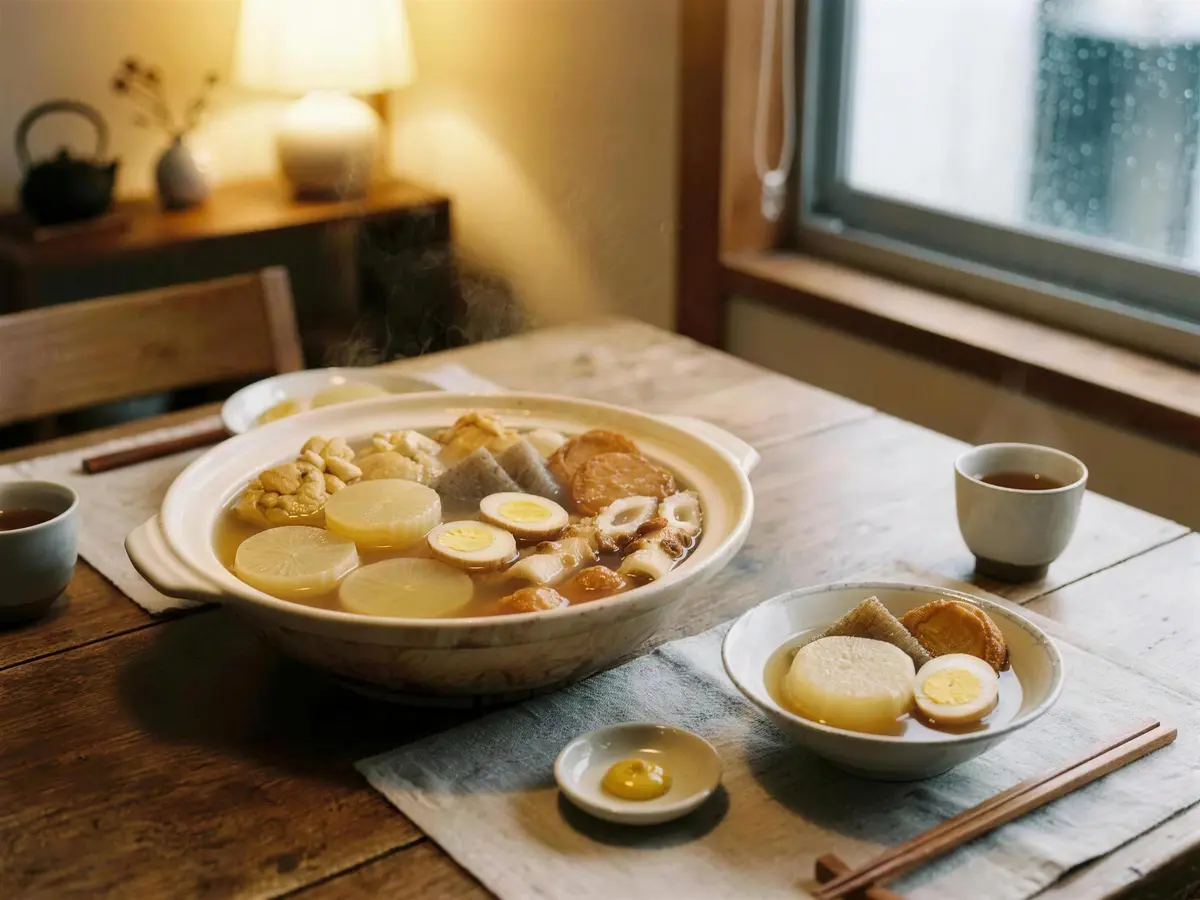
Oden (Japanese Simmered Hot Pot with Daikon and Fish Cakes)

Oden is a Japanese one-pot of daikon, boiled eggs, konnyaku and fish cakes such as chikuwa, satsuma-age and ganmodoki, all simmered slowly in a clear dashi seasoned with light soy sauce, mirin and salt. Written おでん (in parts of Kansai it is also called kantodaki, 関東煮), its broth changes colour from region to region. The pale kombu-and-katsuobushi broth used here, seasoned with light soy sauce, is closer to the Kansai habit: oden broth in Kyoto is made with kombu and light usukuchi soy, while classic Kanto oden is simmered with regular dark koikuchi soy and comes out a deeper brown. Today both versions turn up all over Japan. Convenience stores sell it from simmering vats every autumn, starting in late September or October. Nothing here is quick-cooked. Daikon needs a pre-boil before it ever touches the broth, and the whole pot tastes better the day after it is made, once it has cooled down and been reheated so the flavor has time to soak all the way through. The kombu soaks for 20 to 30 minutes before the dashi is made, and that soaking is not counted in the time.

150 min305 kcal4 serves
Tonjiru (Japanese Pork and Vegetable Miso Soup) with pork belly, daikon and carrot — Japan recipe
🇯🇵JapanMedium
Soups

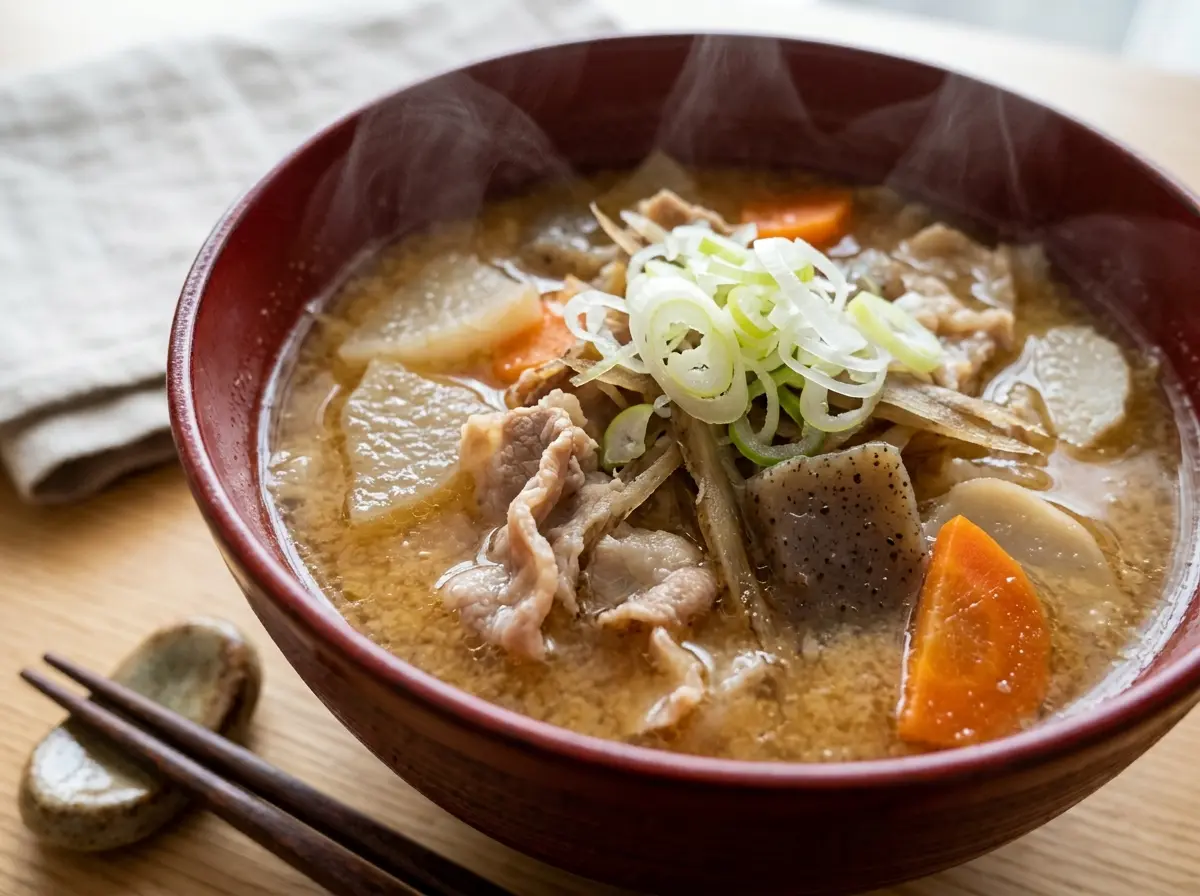
Tonjiru (Japanese Pork and Vegetable Miso Soup)

Tonjiru (豚汁, also read butajiru) is a Japanese miso soup made with pork, usually thin slices of belly, and plenty of root vegetables such as daikon, carrot, burdock root and taro, plus konnyaku and negi. The vegetables go into the pot first with a little sesame oil, the pork is laid on top, and everything simmers in dashi until a skewer slides into the taro. The miso goes in at the very end, and the pot comes off the heat before it boils. It takes about 45 minutes, 15 of them spent cutting vegetables.

45 min270 kcal4 serves
★★★★★
Buri Daikon (Japanese Simmered Yellowtail and Daikon) with daikon and yellowtail — Japan recipe
🇯🇵JapanAdvanced
Fish and Seafood Dishes

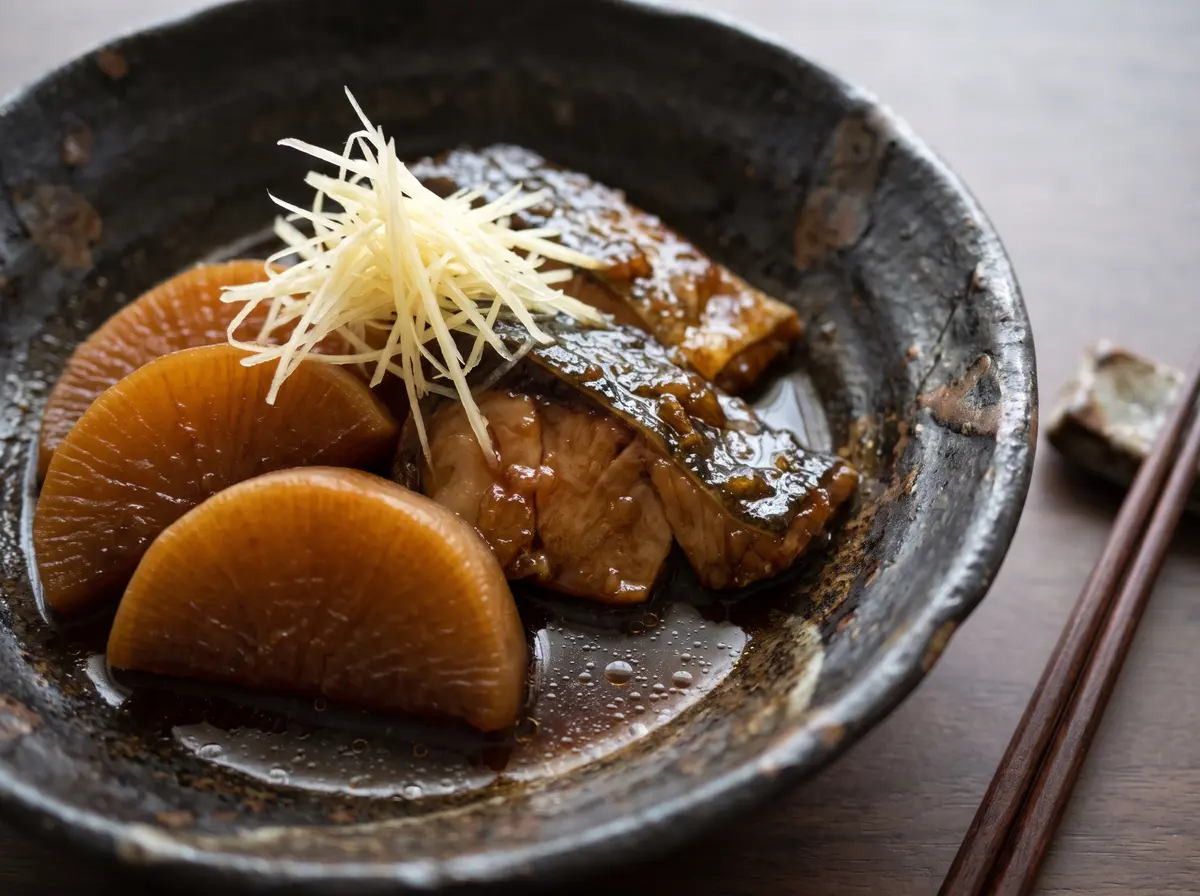
Buri Daikon (Japanese Simmered Yellowtail and Daikon)

Buri daikon (ぶり大根, also written ブリ大根) is a Japanese winter home dish of yellowtail, called buri, simmered with thick pieces of daikon radish in soy sauce, sake, mirin and sugar. It is a traditional dish of Toyama, where cooks make it from buri ara, the head, collar and bones left after cutting sashimi. This version uses skin-on fillets, which are easier to buy outside Japan. The daikon is cooked separately first, so the fish simmers for about 25 minutes. The fish is scalded and rinsed before it goes in the pot, and that step is what keeps the broth clean and free of fishy smell. It takes about 65 minutes, plus a 30-minute rest off the heat while the daikon soaks up the broth.

65 min330 kcal4 serves
★★★★★
Ingredients

Goes well with

Other ingredients that appear most often alongside daikon across the archive. Pick one to drill deeper.