
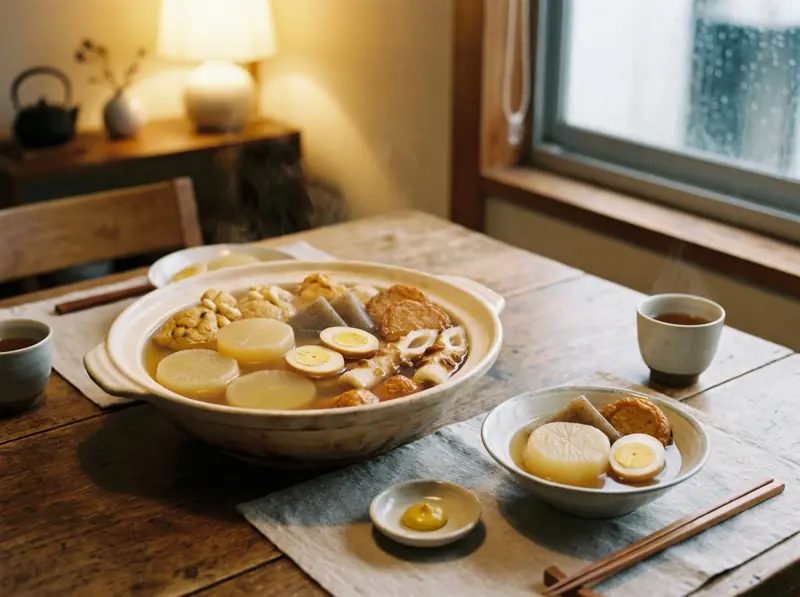
Oden (Japanese Simmered Hot Pot with Daikon and Fish Cakes)
Oden is a Japanese one-pot of daikon, boiled eggs, konnyaku and fish cakes such as chikuwa, satsuma-age and ganmodoki, all simmered slowly in a clear dashi seasoned with light soy sauce, mirin and salt. Written おでん and read the same way in every region, its broth changes colour from region to region. The pale kombu-and-katsuobushi broth used here, seasoned with light soy sauce, is closer to the Kansai habit — light usukuchi soy is the everyday soy of Kyoto and Osaka — while classic Kanto oden is simmered with regular dark koikuchi soy and comes out a deeper brown. Today both versions turn up all over Japan. Convenience stores across Japan start selling it from simmering vats in mid-September, long before real winter arrives, because the smell alone is enough to make people want a bowl. Nothing here is quick-cooked. Daikon needs a pre-boil before it ever touches the broth, and the whole pot tastes better the day after it is made, once it has cooled down and been reheated so the flavor has time to soak all the way through.
Ingredients
- 600 gdaikon
- 4 eggs
- 200 gkonnyaku
- 4 piecechikuwa
- 4 piecesatsuma-age
- 4 pieceganmodoki
- 15 gkombu
- 20 gkatsuobushi
- 2 tbspuncooked short-grain rice
- 1400 mlwater
- 45 mllight soy sauce
- 45 mlmirin
- 30 mlsake
- 1 tspsalt
- karashi mustard for serving
Method
- Wipe the kombu with a dry cloth but do not rinse off the white mineral bloom, it carries flavor. Submerge it in the water and let it sit for 20 to 30 minutes so it starts releasing its glutamate before you add heat. Bring the pot slowly to just below a simmer, about 5 to 6 minutes on medium, then lift the kombu out the moment small bubbles start forming around the edges, since boiling it turns the broth slimy and bitter. Add the katsuobushi, take the pot off the heat entirely, and let the flakes steep for 3 to 4 minutes until they sink, then strain the dashi through a fine sieve without pressing on the solids, which would cloud it.
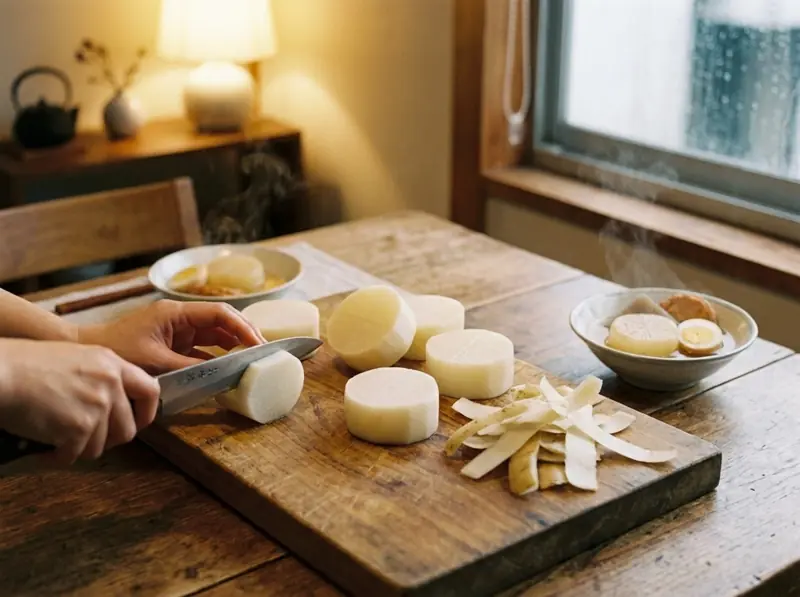
- Peel the daikon thickly, since the skin and the fibrous layer just under it stay tough no matter how long you cook them, and cut it into four 3 cm rounds. Bevel the top edge of each round with a knife so the corners don't crumble in the broth, and score a shallow cross into one cut face so the seasoning reaches the center faster. Put the rounds in a separate pot with the uncooked rice and enough fresh water to cover; the starch pulls out daikon's natural bitterness. Simmer for 20 to 25 minutes until a skewer slides in with almost no resistance, then drain and rinse off the rice starch; skipping this pre-boil is the single biggest reason home oden tastes sharp and unfinished.
- Score the konnyaku block in a shallow crosshatch on both sides, which lets the broth penetrate a dense ingredient that would otherwise stay bland, then cut it into 4 triangles. Rub the pieces with a pinch of salt for a minute to help draw out their raw, faintly alkaline smell, then drop them into boiling water for 2 to 3 minutes and drain in a colander without rinsing again; rinsing would wash away the salt and dilute the broth later. If you have extra kombu beyond what the dashi needs, soften a strip in warm water and tie it loosely into 4 knots.
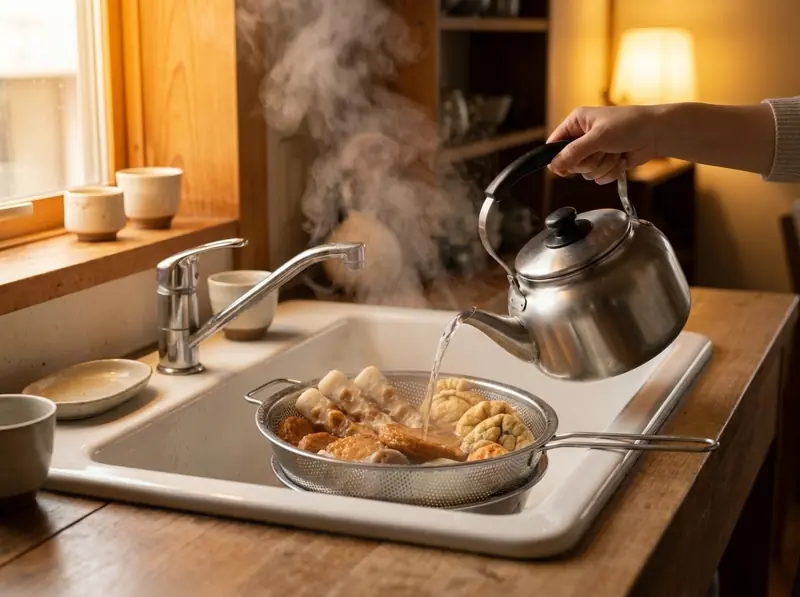
- Pour boiling water over the chikuwa, satsuma-age and ganmodoki, or drop them into boiling water for 20 to 30 seconds; this washes off the surface oil the fried ones were cooked in and keeps the broth from turning greasy. Lower the eggs into simmering water and cook for 10 to 11 minutes for a fully set yolk that won't crumble during hours of gentle cooking, then transfer straight to iced water. Crack the shells lightly and peel under cold running water so the whites come away clean.
- Return the strained dashi to the pot and add the light soy sauce, mirin, sake and salt. Bring it to a bare simmer over medium-low heat and taste it; it should read as gently salty with a clean mirin sweetness underneath, not sweet on its own. The daikon and eggs will pull a good amount of that salt out of the broth as they cook for the next hour, so it is fine, even necessary, to season it a little stronger than a soup you would drink on its own.
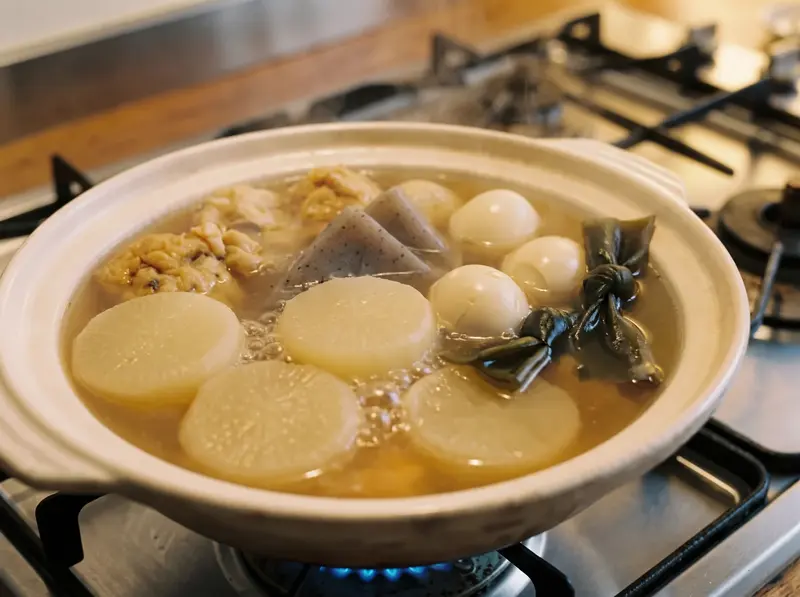
- Add the daikon, konnyaku, kombu knots and peeled eggs to the seasoned broth. Bring it back to a bare simmer, then drop the heat right down until the surface just trembles without breaking into bubbles, 80 to 90°C is the target, since a rolling boil toughens the eggs and breaks the daikon apart. Cover loosely and hold at that temperature for 40 minutes; this is where the daikon turns from raw white to translucent amber and the eggs start to color at the edges.
- Slide in the chikuwa, satsuma-age and ganmodoki and simmer for another 15 to 20 minutes. They are already cooked through, so this step is only about warming them and letting the surface soak up broth; any longer and the more delicate ones start breaking apart in the pot.
- Turn off the heat and let the whole pot cool to room temperature, then refrigerate it for at least a few hours or overnight if you have the time. As it cools, every ingredient pulls broth into itself the way a cooling piece of meat draws in a marinade, and reheating it gently the next day tastes noticeably deeper than serving it fresh. Warm it back up over low heat until steaming, ladle into bowls with a little broth, and serve with a dab of karashi mustard on the side, not stirred in, so each person controls the heat.
FAQ
Cloudy oden broth almost always comes from boiling instead of simmering. Once the dashi hits a rolling boil, the proteins in the katsuobushi and any fat from the fried fish cakes emulsify into the liquid instead of staying separate, and the same happens if you press the katsuobushi through the strainer to squeeze out every drop. Keep the pot at a bare tremble, 80 to 90°C, once the ingredients go in, and strain the dashi gently the first time around. A cloudy pot still tastes fine, it just won't look like the clean broth you get at a Tokyo oden stand.
The broth and vegetables keep for 3 to 4 days in the fridge in a sealed container, and the flavor actually improves for the first two of those days as everything keeps absorbing the dashi. Pull the eggs out after day one though, they turn rubbery and the yolk edges go a dull grey-green if they sit in hot broth too many times. Daikon, konnyaku and kombu freeze well for up to a month, but the fish cakes lose their springy texture once thawed, so add fresh ones when you reheat a frozen batch rather than freezing them in the pot.
The main traditional difference is the soy sauce. Kanto (Tokyo) oden is seasoned with regular dark koikuchi soy, so the broth is a deeper brown. Around Kyoto and Osaka, light usukuchi soy is the everyday soy and the dashi leans on kombu, so Kansai oden stays pale gold — the light-soy broth in this recipe is closer to that. Kansai oden also often includes beef sinew (gyusuji). These are tendencies rather than rules: home cooks and convenience-store chains mix the two freely. Nagoya has its own version again, a miso-based oden closer to the region's red miso cooking than to either Kanto or Kansai style.
Japanese, Korean and Chinese grocery stores almost always stock a frozen 'oden set', a mixed bag of nerimono fish cakes that usually already includes chikuwa, satsuma-age and sometimes ganmodoki in one package, which is the easiest way to start. Kombu, katsuobushi and konnyaku sit in the same stores' dry goods aisle, often next to instant dashi packets, which work as a fair shortcut if you don't have time to make dashi from scratch, use about 1000 ml water with 2 sachets of dashi powder in place of the kombu and katsuobushi steps. If fish cakes are not available at all, thick planks of firm tofu fried until the surface is golden and slightly crisp will soak up the broth in a similar way, even if the texture is not identical.
Raw daikon carries a sharp, slightly bitter edge, mostly from compounds concentrated just under the skin, and it releases that bitterness straight into the broth if you add it uncooked. A short pre-boil in plain water, ideally with a splash of rice-washing water or a spoonful of raw rice added, both draws that bitterness out and starts softening the fiber, so the daikon needs less time in the seasoned broth to turn tender. Skipping this step is the most common reason a first attempt at oden tastes muddy and the daikon stays a little too firm even after an hour of simmering.
Rate this
Recipes by email
One letter a week: a recipe picked for your taste, plus whatever is new on the site. Unsubscribe in one click.
Welcome gift: Sergei's cookbook (e-book).
By subscribing you agree to the privacy policy.
Tell us what you like to cook (30 seconds) →Keep browsing
More dishes from the Japanese archive — picked by overlap with what you're cooking now.
Join the conversation
Comments
No comments yet — be the first!