Brazilian food has a reputation problem outside Brazil: people know the steakhouse chains and maybe açaí bowls, and that's roughly it. Which is a shame, because the home cooking is some of the most generous on the planet, and most of it is built on cheap cuts, beans, starch and patience. I've been cooking my way through it for the past month, and the six recipes below just went live on the site.
A pattern I didn't expect: half of Brazil's greatest hits are naturally gluten free. Cassava starch instead of wheat, beans instead of bread. Nobody planned that, it's just what grows there.
Feijoada
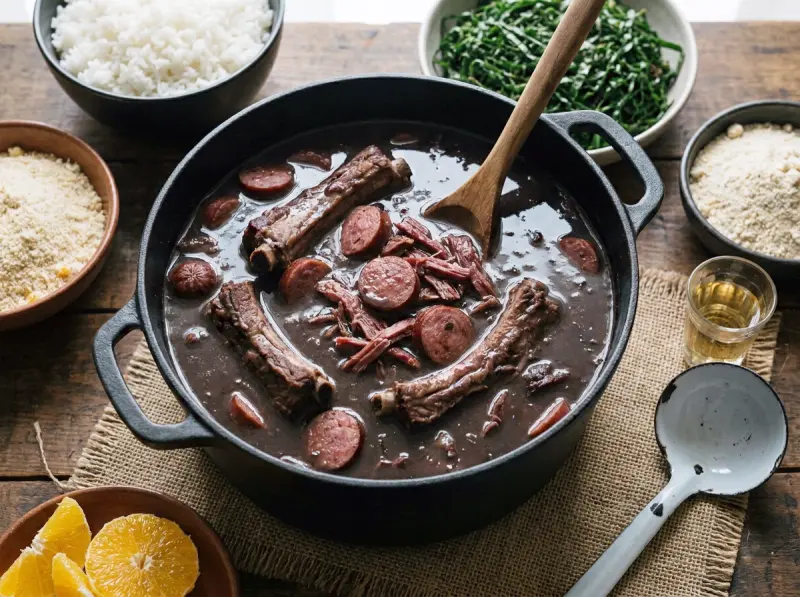
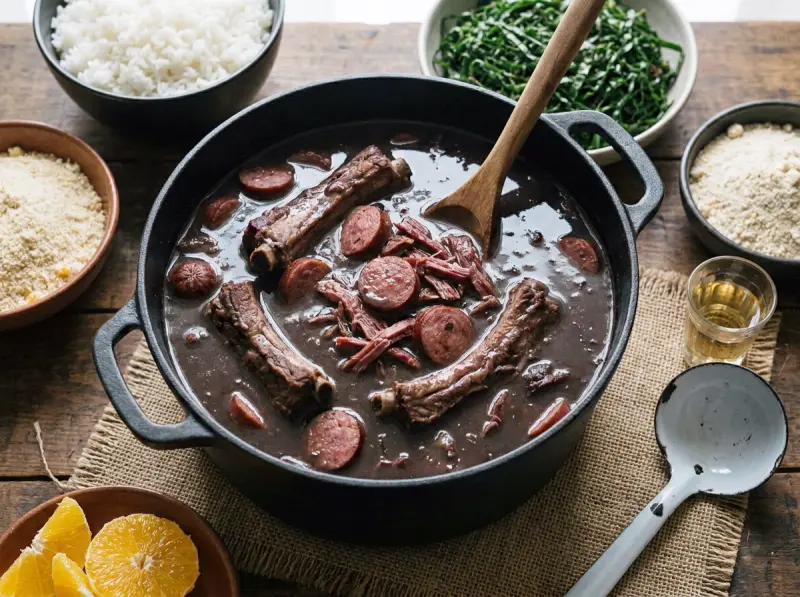
The national dish, eaten on Wednesdays and Saturdays because it's a commitment: black beans and five kinds of salted and smoked pork, cooked until the broth turns glossy and almost black. There is no flour in a proper feijoada. The body comes from scooping out a ladle of beans, frying them into the garlic refogado and mashing them back in. Skip that step and you have bean soup with meat in it.
What to serve with it is half the recipe: white rice, collard greens sliced into threads and fried hard, farofa, and orange segments. The orange is not decoration. After the third spoonful of pork fat you will understand what it's for.
Make it a day ahead if you can. The flavor improves overnight, and lifting the solidified fat off cold is easy; skimming it hot is a losing game.
Coxinha
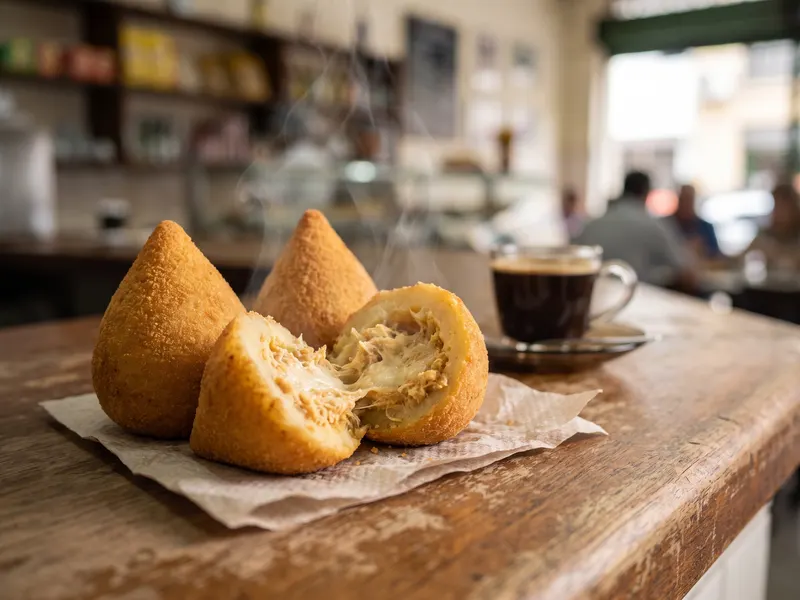
A teardrop-shaped croquette named after the drumstick it imitates, and the best argument I know for cooking dough in broth. The shell is flour scalded in the same stock the chicken cooked in, kneaded while it's still almost too hot to touch. That's the part people get wrong: let the dough cool and it cracks open in the fryer. Work fast, burn your fingertips a little, and the shell comes out smooth as a pebble.
Inside: shredded chicken thigh bound with requeijão, the Brazilian cream cheese. The classic street version costs about two reais. The homemade one is better, mostly because you can put three times more filling in it.
They freeze beautifully once breaded, and fry straight from frozen. I keep a bag in the freezer the way other people keep dumplings.
Pão de queijo
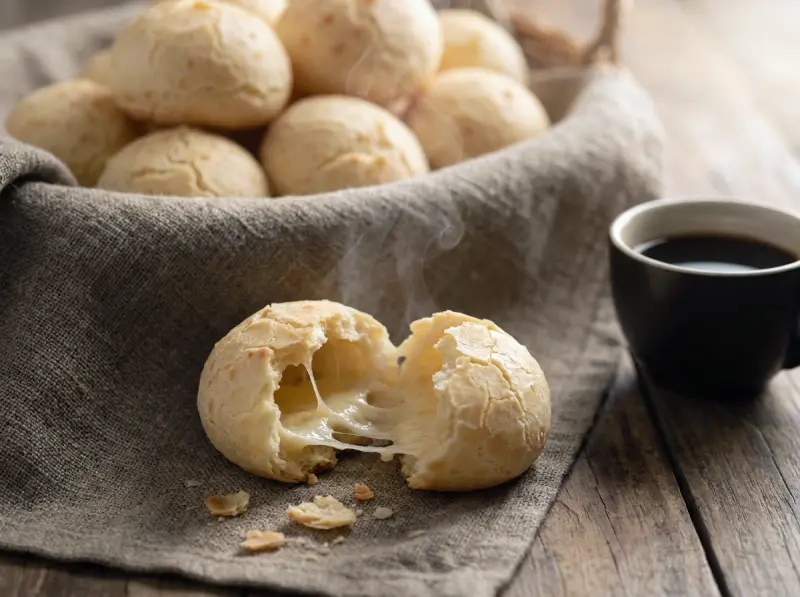
The cheese rolls from Minas Gerais, and the recipe that generates the most confused questions from first-timers. The middle is supposed to be chewy, almost gummy. That's not underbaking, that's the dish. It's made entirely from cassava starch, which behaves nothing like wheat flour, and no, you can't substitute cornstarch or regular flour. The texture lives in the tapioca.
The whole recipe is one move: the escaldo, boiling milk and oil poured straight onto the starch. That bursts the granules into a gel that traps steam in the oven, and the trapped steam is what makes the rolls hollow and stretchy instead of dense. Cold liquid, dense rolls. Boiling liquid, magic.
Roll the dough into balls, freeze them solid, and bake from frozen whenever someone shows up. Brazilians drink coffee with these; I've started to see their point.
Fraldinha
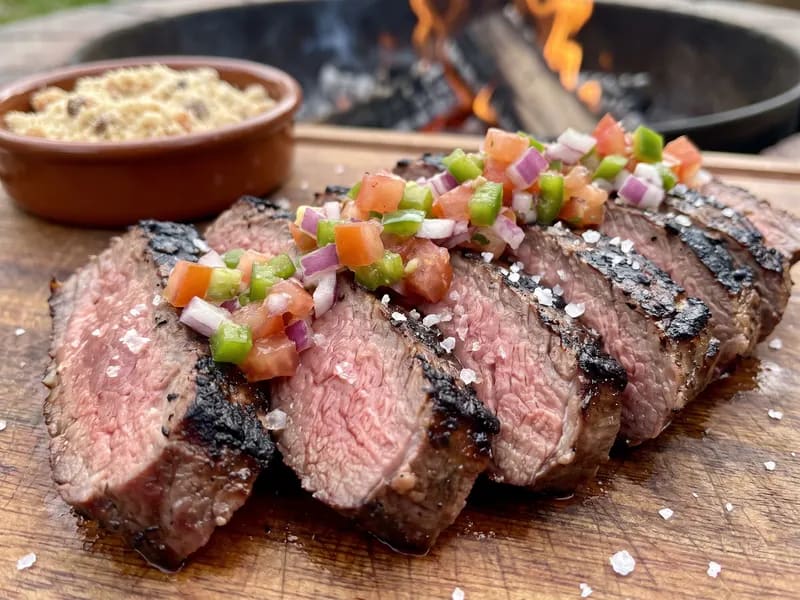
The churrasco cut nobody outside Brazil orders because nobody can pronounce it: bottom sirloin flap, coarse-grained, loose, cheap, and better over charcoal than most steaks twice the price. The coarse grain is the whole story. It forgives you on the fire, taking smoke and char without drying out, and then punishes you on the cutting board if you slice it wrong. Across the grain, always, or every bite chews like rope.
Coarse salt just before grilling gives you crust. Salting 40 minutes ahead seasons deeper. Both work; the dead zone is in between, when the salt has pulled moisture out but hasn't drawn it back in. Serve with farofa and vinagrete, the tomato and onion salsa that cuts through the fat.
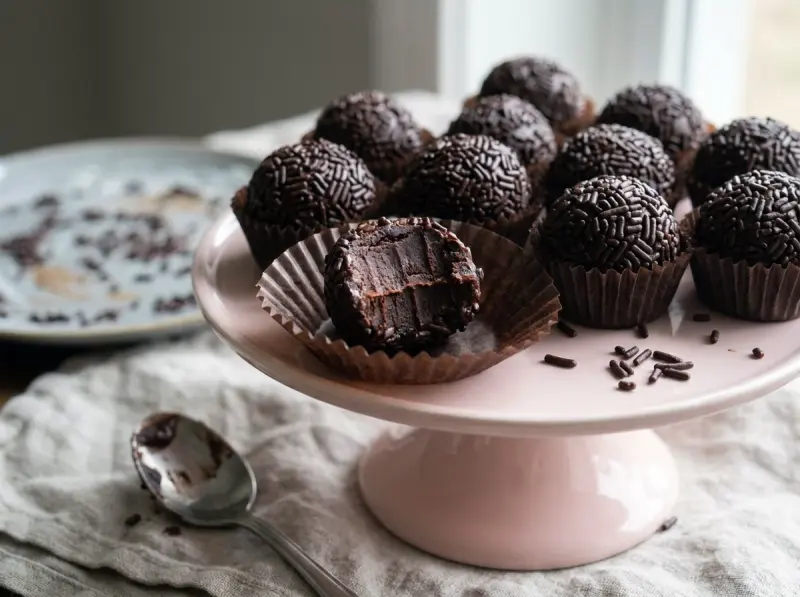
Brigadeiro
Three ingredients, one pan, and the sweet that shows up at every Brazilian birthday without exception: condensed milk, cocoa and butter, stirred over medium heat until the mixture thickens enough to show the bottom of the pan, then rolled in chocolate sprinkles. It is fudge's easygoing cousin, and it's very hard to ruin unless you stop stirring.
The endpoint matters more than the clock. Drag your spatula across the pan bottom: if the track holds for a second or two before closing, it's done. Undercook it and the balls slump; overcook and they turn to toffee. And use actual cocoa powder, not drinking chocolate, which is mostly sugar and refuses to thicken.
A pinch of salt doesn't make them salty. It makes the chocolate taste like more chocolate.
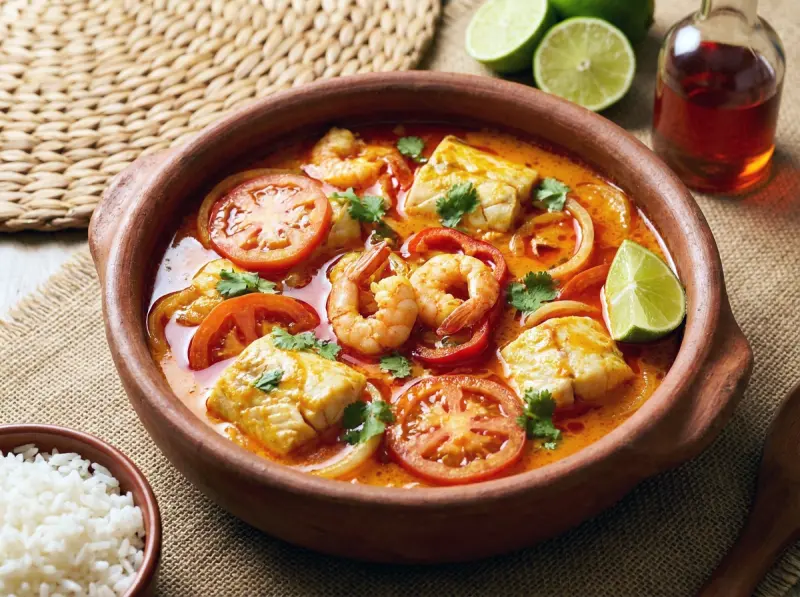
Moqueca baiana
The one that was already on the site, and the dish I'd serve to convince someone Brazilian food belongs in the same sentence as Thai or Mexican. Fish and shrimp simmered gently in coconut milk with peppers, tomato and lime, finished with dendê, the red palm oil that turns the broth orange and gives moqueca its entire personality. There's no real substitute, though paprika warmed in neutral oil gets you the color if you're stuck.
The verb is simmer, never boil. Hard heat toughens the fish and splits the coconut milk. Twenty gentle minutes, rice on the side, and the pot goes straight to the table.
Six recipes in, my main takeaway is that Brazilian cooking rewards planning more than skill. The feijoada wants to be made yesterday, the coxinhas want to be frozen last week, the fraldinha wants salting on a schedule. Cook like a Brazilian grandmother: do everything ahead, then look relaxed when people arrive.