Every August the same conversation happens. Someone hands you a bag of zucchini because they planted too many, and you take it, because refusing feels rude. Around the same time the eggplants get cheap and glossy, so you buy three. A week later there is a drawer in the fridge you would rather not open.
I used to treat them as the same problem, which is why for years my zucchini came out grey and my eggplant came out greasy. They fail in completely different ways. Zucchini is about 95 percent water, and if you don't get that water out first, it releases it into the pan and steams itself into a pale heap. Eggplant is the opposite: full of air pockets that drink oil like a sponge. Rush it and you get something oily and faintly bitter.
The fix in both cases is salt, doing two different jobs. That, and patience, is most of what the seven dishes below have in common.
Zucchini fritters
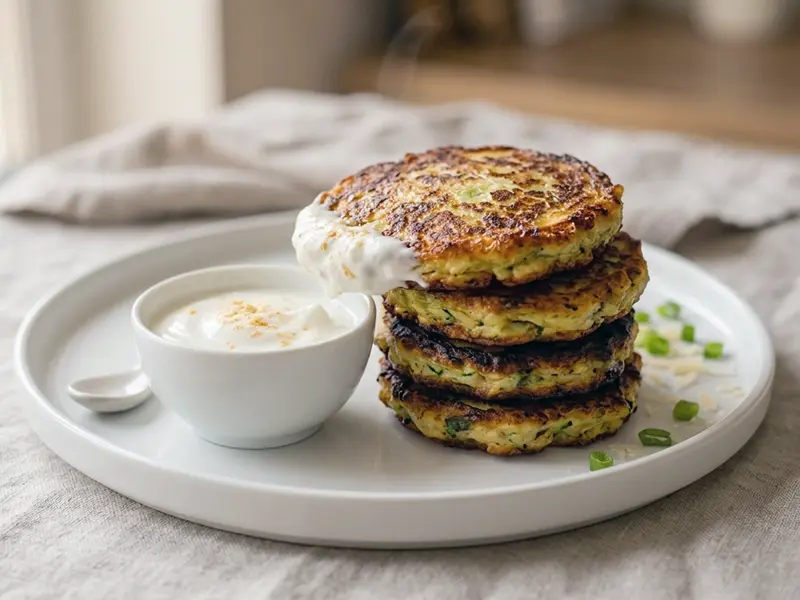
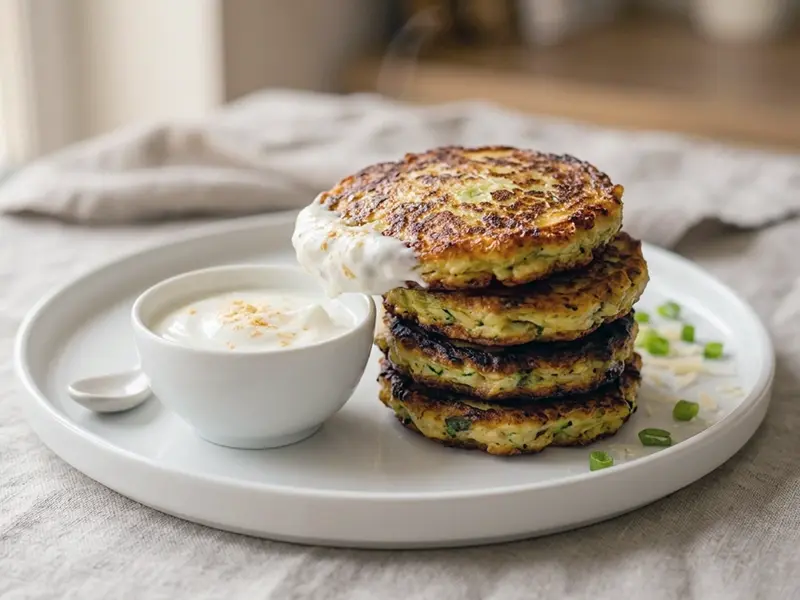
Start here, because this recipe eats more zucchini per hour of effort than anything else on the list. Grated zucchini, egg, flour, parmesan, scallions, fried until the edges go lacy and brown.
The whole thing lives or dies on one step. Salt the grated zucchini, leave it in a colander for ten or fifteen minutes, then pile it into a kitchen towel and twist both ends over the sink until you have wrung close to a cup of liquid out of 500 grams. It feels like too much. It isn't. Skip it and the batter goes loose, the oil spits, and the fritters steam instead of crisping.
Keep the parmesan in, too. It reads like a garnish, but it is the thing that browns.
Baked zucchini fries
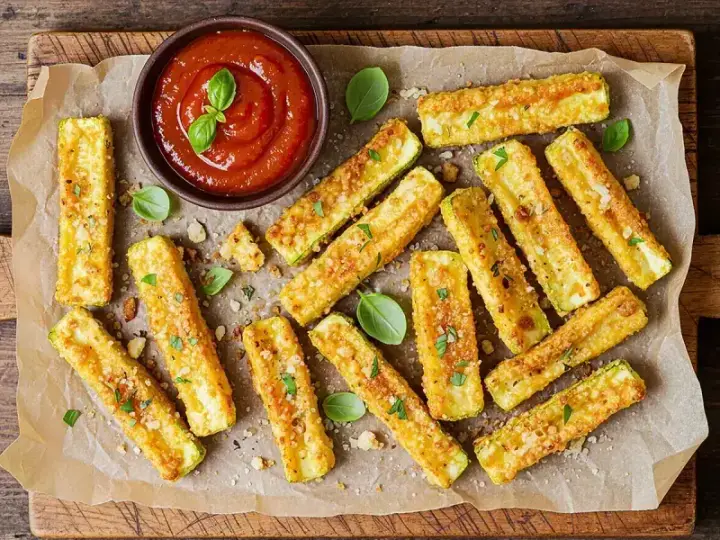
Same vegetable, opposite technique. This is the one that works on people who insist they don't like zucchini, mostly because by the time it reaches the table it is shaped like a chip and tastes like breading. Batons about a finger thick, floured, dipped in egg, rolled in panko and parmesan, baked at 220°C for twenty minutes.
Panko matters more than it has any right to. Ordinary breadcrumbs pack flat and turn leathery; panko flakes are jagged, they trap air, and they shatter. The other detail is the wire rack. Set it on the tray so hot air reaches the undersides, or those sit in their own steam and go soft while the tops brown.
Ajapsandal
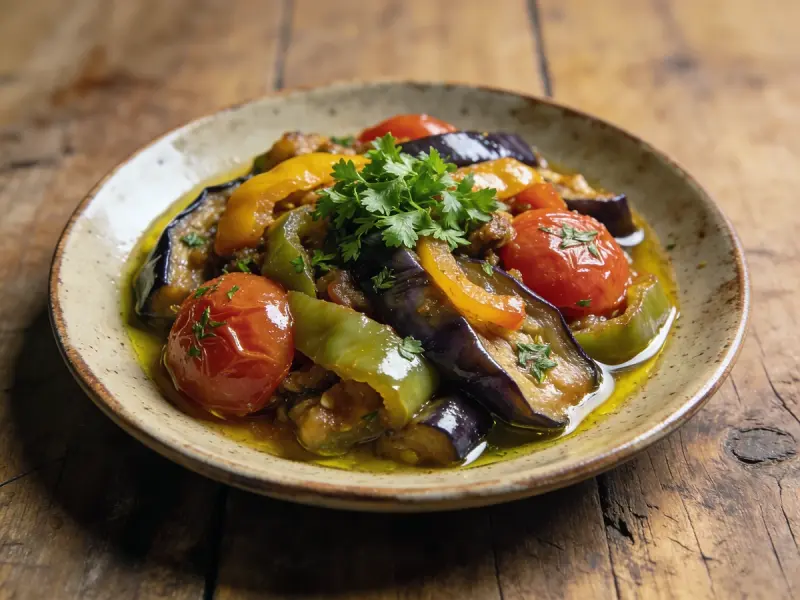
The Georgian answer to the same problem, and the only dish here that clears out both vegetables at once. Eggplant, peppers, tomatoes, onion, a couple of potatoes, then a lot of cilantro and basil stirred in off the heat.
Fry the eggplant separately first, in batches, until it is genuinely golden. Drop it in raw with everything else and it collapses into grey mush that tastes of nothing in particular. When the stew is done, put the lid back on and walk away for twenty minutes. Georgians eat this cold about as often as hot, and a night in the fridge does it no harm at all.
Caponata
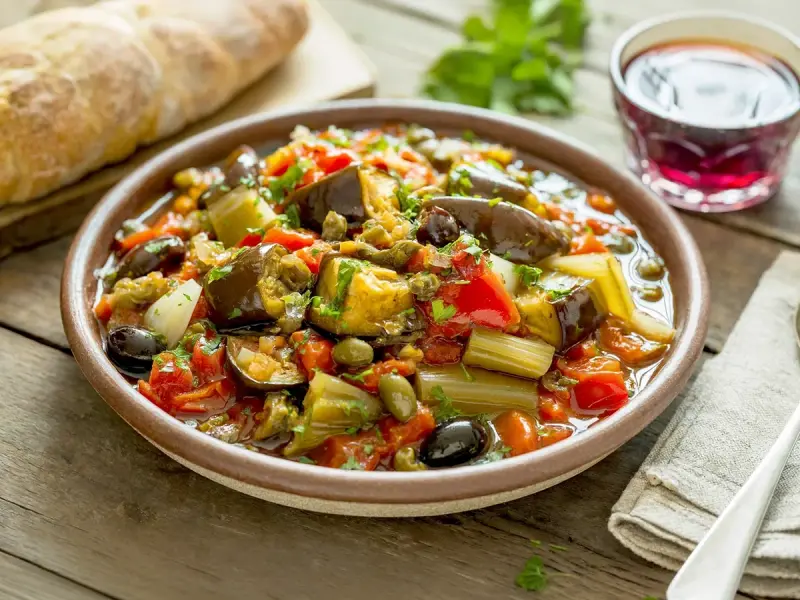
Sicily's version, and what I would make if I wanted the eggplant to last the week. Roasted cubes go into a sweet-sour agrodolce of tomato, celery, capers, olives, raisins and red wine vinegar. Ninety calories a portion, which surprises everyone who tastes it first.
Roast the eggplant on a tray instead of frying it: 200°C, half an hour, tossed in a few spoons of oil. It browns without absorbing half a bottle. The capers and olives are not decoration either. They are the salt that stops the vinegar and honey from tipping the whole thing toward dessert.
Make it a day ahead if you can. Caponata on day two is a different dish, and a better one.
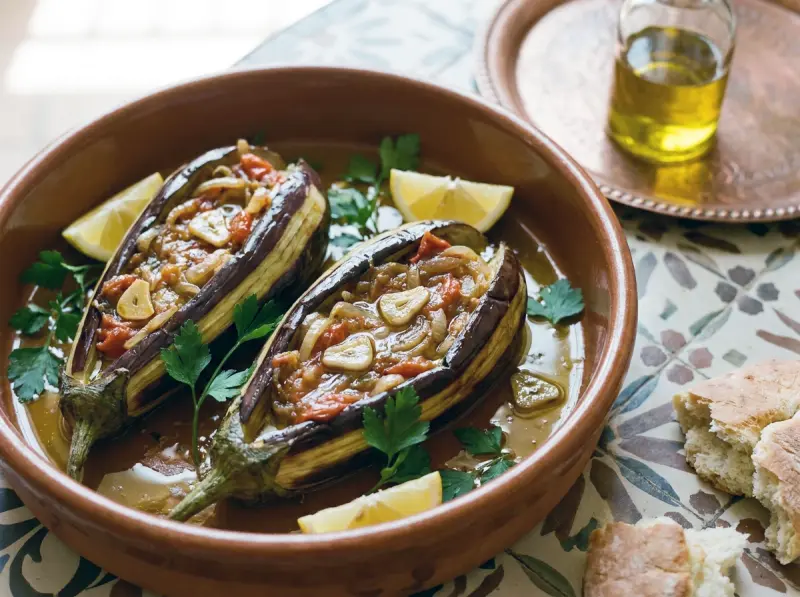
Imam bayildi
The name means "the imam fainted", either from delight or from watching how much olive oil went into the pan, depending on which version you were told. Whole eggplants, softened until collapsing, split open and packed with slow-cooked onion, tomato and an alarming quantity of garlic, then braised in oil at 180°C until everything melts together.
Do not ration the oil. It is the cooking medium and the sauce at the same time, and holding back gives you something dry and dull. The onions are the other half: sliced thin, cooked low for a good fifteen minutes until sweet and collapsing, never browned hard.
And do not serve it hot. This belongs to the zeytinyagli family, the Turkish dishes cooked in olive oil and eaten at room temperature. It is better cold, and better still tomorrow.
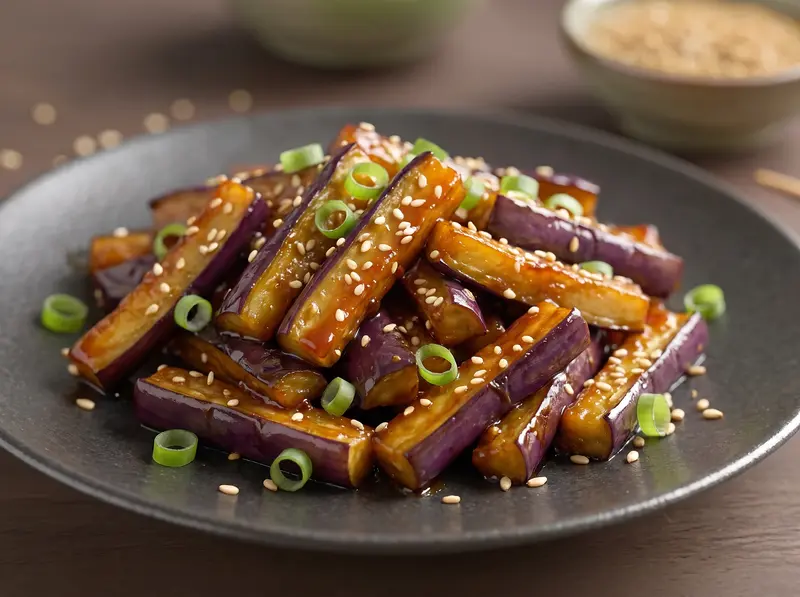
Chinese braised eggplant
Fifteen minutes, and the fastest way I know to make eggplant taste like a treat rather than a chore. Batons tossed in cornstarch, fried until crisp, then coated in a glossy sauce of soy, rice vinegar, sugar, tomato paste, garlic and ginger.
The cornstarch is doing two jobs. It gives the eggplant a thin shell that holds up in the sauce, and it stops the flesh drinking oil the moment it hits the pan. Salt it for ten minutes and pat it dry first, as usual.
Fry in batches, even though it doubles the standing-around time. A crowded pan loses heat, and soft oily pieces are what you get instead of crisp ones.
→ Chinese braised eggplant recipe
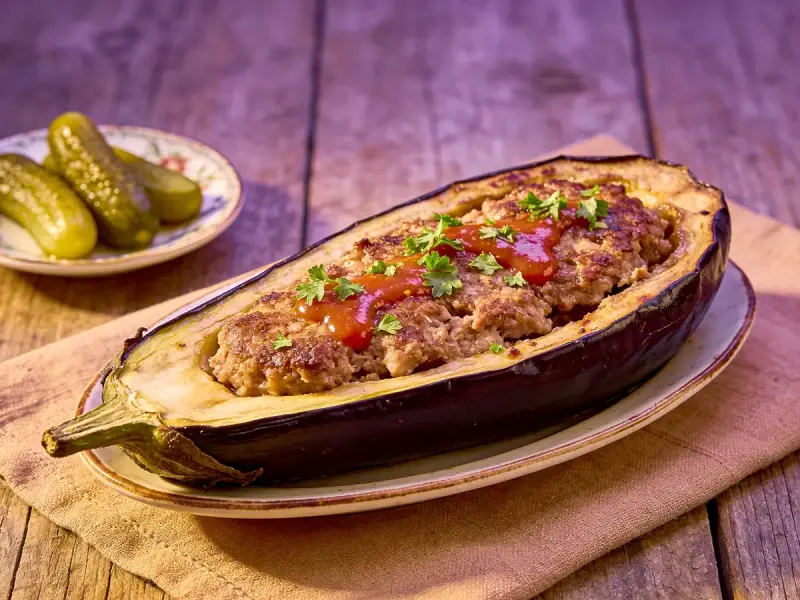
Baked eggplant with meat and cheese
For when the vegetable problem has to double as dinner. Eggplant halves hollowed out and refilled with lamb, rice, onion, tomato and the chopped flesh you scooped out, topped with grated cheese and baked.
Salt the hollowed halves and let them sit half an hour, then rinse and dry. Wet eggplant releases water into the filling and you end up spooning stuffing out of a puddle.
The rice is doing quiet work here. It soaks up the meat juices that would otherwise pool under everything, and it stretches 200 grams of lamb across four people without anyone feeling cheated.
→ Baked eggplant with meat and cheese recipe
One thing worth knowing if you are buying rather than harvesting: small eggplants are the better deal. The big glossy ones look impressive and carry more seeds, which is where the bitterness sits. Pick them up before you commit. A good eggplant feels heavier than it looks and springs back when you press the skin. If your thumb leaves a dent, it has been sitting somewhere too long, and no amount of salting will bring it back.