Vietnamese food arrives unfinished on purpose. A bowl of phở comes with a plate of herbs, bean sprouts, lime and chilli beside it, and what you do with those is the seasoning step. Cơm tấm comes with a small bowl of sauce you spoon over the rice yourself. Gỏi cuốn are barely cooked at all, assembled cold and dipped. The kitchen gets you most of the way and hands over the last part.
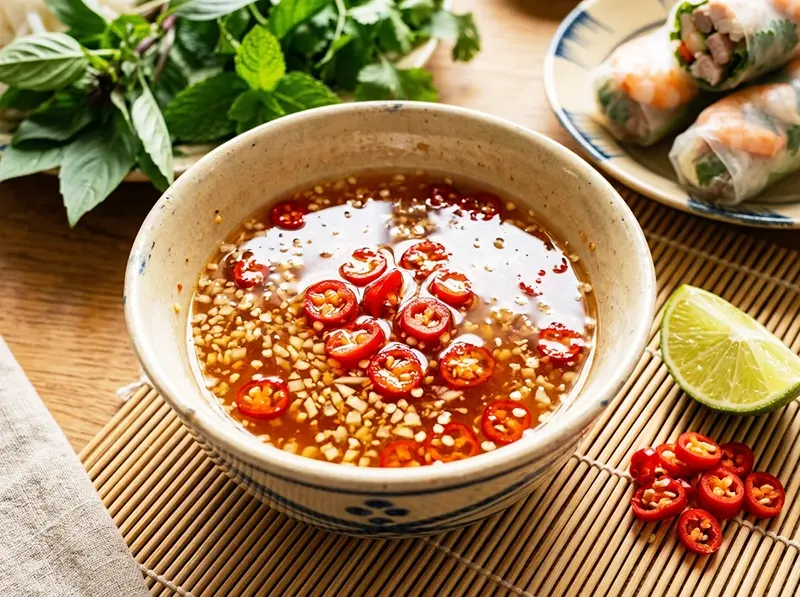
The sauce doing most of that work is nước chấm, which is the sensible place to start. The other five are built to be eaten with it.
Four ingredients and a ratio
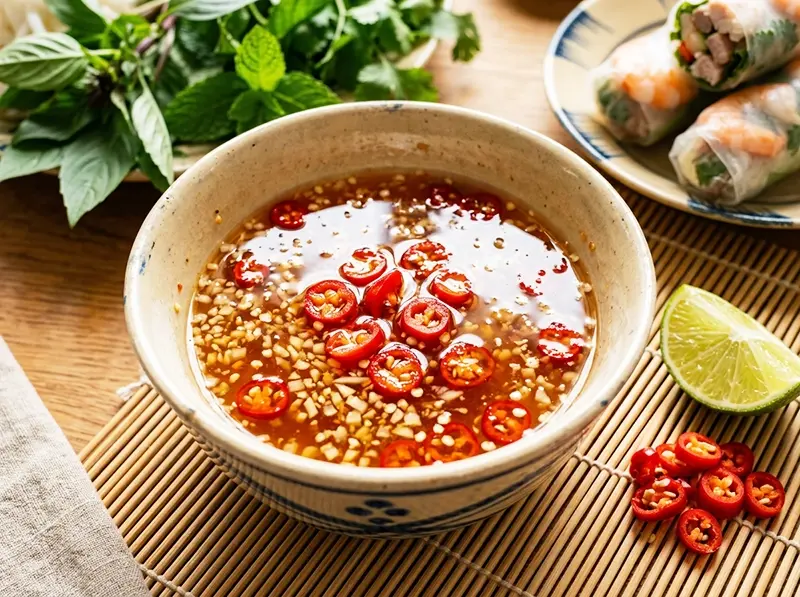
Nước chấm is fish sauce, lime juice, sugar, water, garlic and chilli. That is all of it, and it takes five minutes.
Dissolve the sugar in warm water before anything else goes in. Sugar will not dissolve properly in cold lime juice, and the grains that settle at the bottom are why a homemade version tastes sharp at first and cloying at the end. Ours runs three tablespoons each of fish sauce and lime, two of sugar, three of warm water, then garlic and chilli. Give it five minutes standing so the garlic gets into the liquid. Every proportion in it is meant to be argued with at the table.
A broth that must never boil
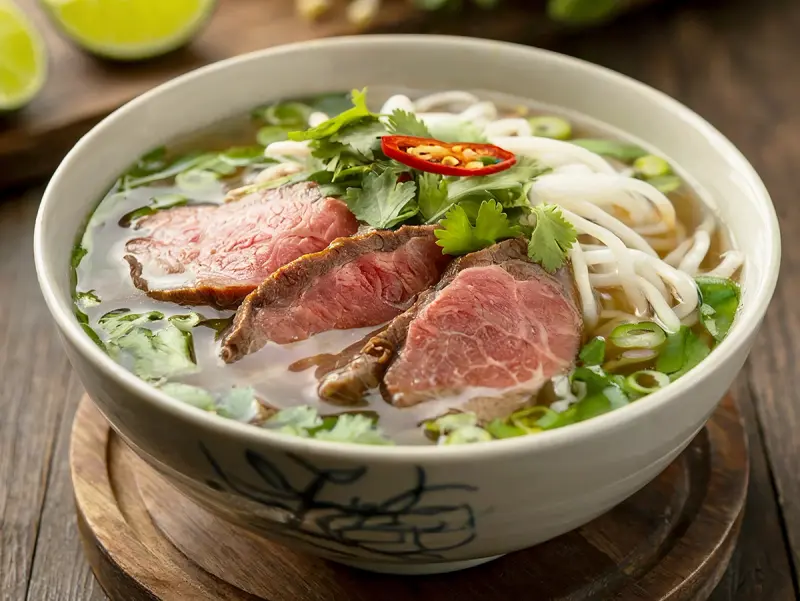
Phở bò is beef bones simmered for two and a half to three hours with onion and ginger charred black over a flame, plus star anise, cloves, cinnamon, coriander seed and peppercorns. Rice noodles, beef sliced paper-thin, and boiling broth ladled over so the raw meat cooks in the bowl.
The broth is judged on clarity, and clarity is a matter of heat. Blanch the bones first and throw that water away. Then hold the pot at a bare shiver for three hours, skimming the foam as it rises. A proper boil emulsifies the fat into the liquid and turns it cloudy, and nothing brings it back afterwards. Freeze the beef for fifteen minutes before slicing: half-frozen meat cuts almost transparent, which is what lets it cook in the time it takes to carry the bowl to the table.
→ Phở bò
A French loaf doing a Vietnamese job
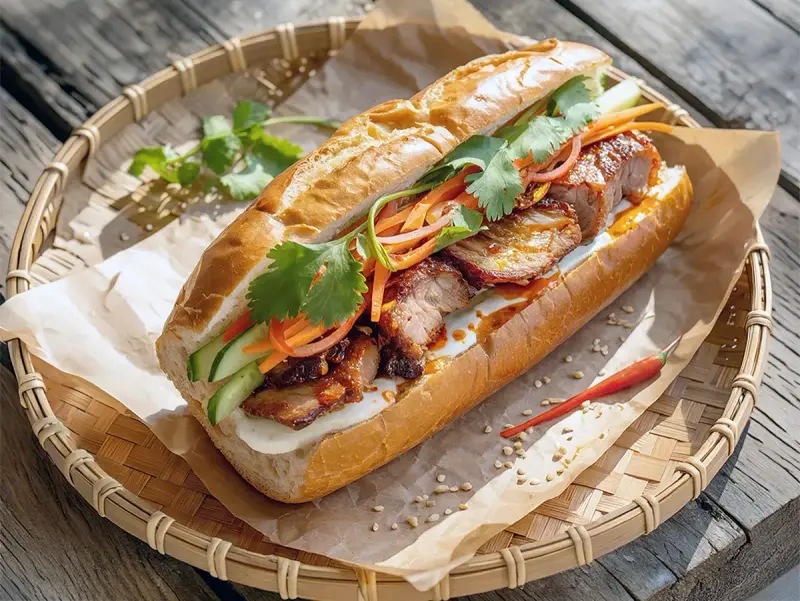
Bánh mì is a baguette left behind by colonial France, filled the way Saigon fills things: marinated pork, pickled carrot and daikon, cucumber, coriander, mayonnaise, chilli. Twenty-five minutes once the pickles are ready.
Start the pickles before anything else. They want fifteen to thirty minutes in vinegar, sugar and salt, and their acidity is what holds the sandwich together. Then deal with the bread. If the loaf has gone soft, dry the cut faces in a hot pan or the oven for a minute. Bánh mì on soft bread is a different sandwich and a much worse one; the crack when you bite through the crust is the dish.
→ Bánh mì
Salad rolls, not spring rolls
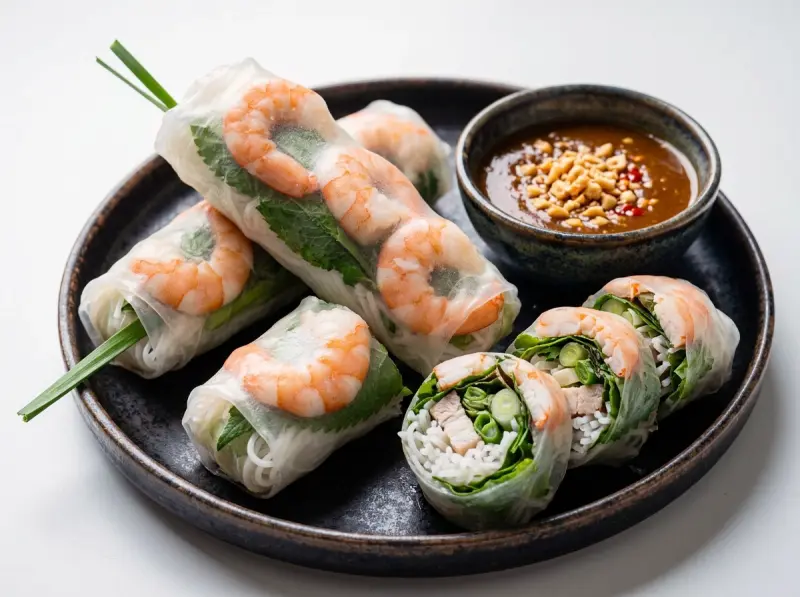
Gỏi cuốn translates as salad rolls. Gỏi is salad, cuốn means to roll, and nothing here is fried. Poached pork belly, boiled shrimp split lengthwise, rice vermicelli and a lot of herbs go into softened rice paper, dipped in peanut and hoisin sauce.
The rice paper is the whole skill. Five to eight seconds in warm water and no longer. It should still feel slightly stiff as you lift it out, because it goes on softening for another minute while you fill it. Leave it in the bowl until it feels ready and it will tear the moment you roll. Lay the shrimp halves cut-side down across the top third so they show through pink. Serve within twenty minutes, because rice paper hardens as it sits.
→ Gỏi cuốn
Broken rice, and why anyone would want it
Cơm tấm is Saigon's plate, and it is built on the grains that fracture during milling. Those were the cheap remainder once. They cook faster than whole rice, hold a firmer bite, and take up dipping sauce better, which is why the dish never quietly upgraded itself when it could have.
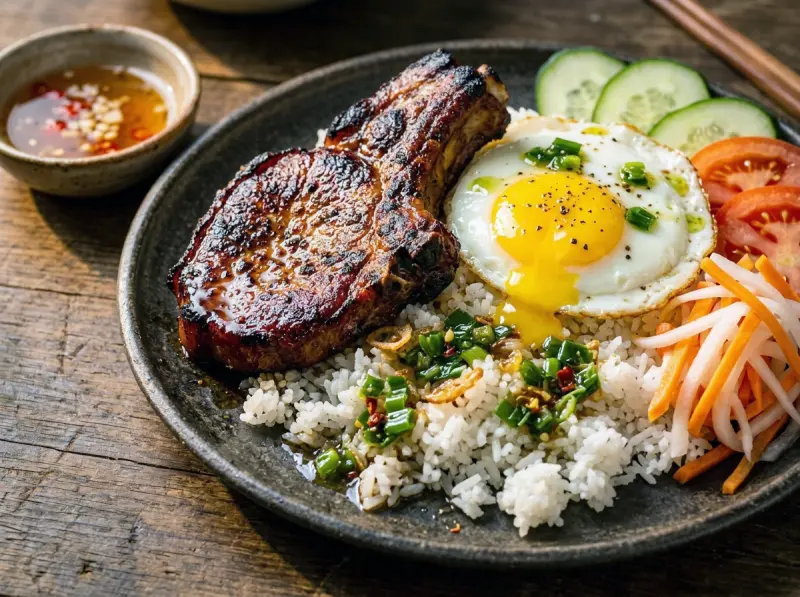
On top goes a pork chop marinated in fish sauce and finely minced lemongrass and grilled until the sugars catch at the edges, a fried egg, cucumber, tomato, and the same pickled carrot and daikon as the bánh mì. Then scallion oil: spring onion greens in a bowl, smoking oil poured straight over them. Treat that as a component rather than a garnish, and make more than seems reasonable.
→ Cơm tấm
The name is the sound it makes
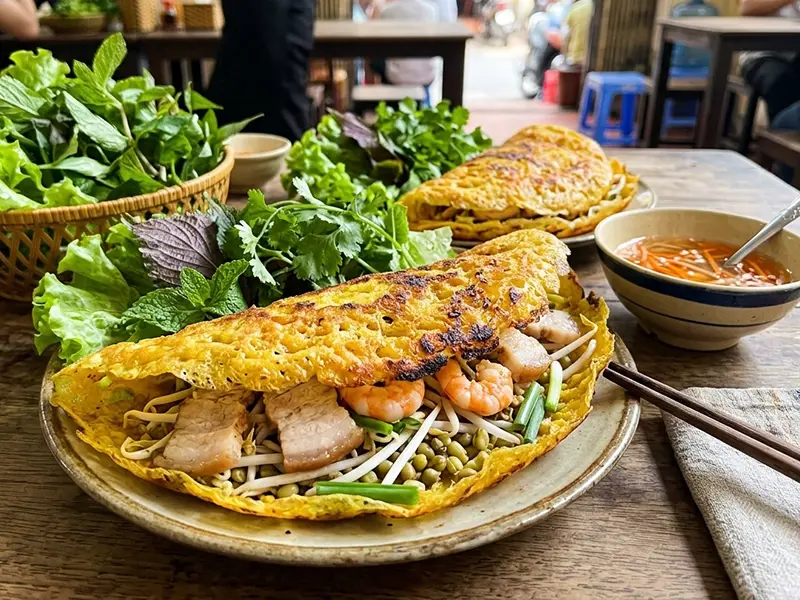
Bánh xèo means sizzling cake. Xèo is the noise a thin turmeric batter makes when it hits oil that is hot enough. If the pan is quiet, stop and heat it further, because there is no rescuing a crêpe that started in silence.
The batter is rice flour, cornstarch, turmeric, coconut milk and beer, thinner than milk and rested at least half an hour. Pour, swirl, add bean sprouts, cover for two minutes to steam the filling through, then four minutes uncovered on high heat without touching it. It is ready when it slides freely in the pan. Fold it, and eat it immediately wrapped in lettuce with mint. They soften within minutes, so cook them one at a time while people are eating.
→ Bánh xèo
Where to start
Make nước chấm first whatever else you plan, because it keeps for days and improves the other five. After that, bánh mì is the quickest way in and needs no equipment you do not have. Phở is a weekend project and mostly unattended once the pot settles. Gỏi cuốn work best handed over to the table: put the fillings on a board, give everyone a bowl of warm water, and let people roll their own. That is how they are eaten in the Mekong anyway, and it solves the problem of rice paper stiffening while you work.