
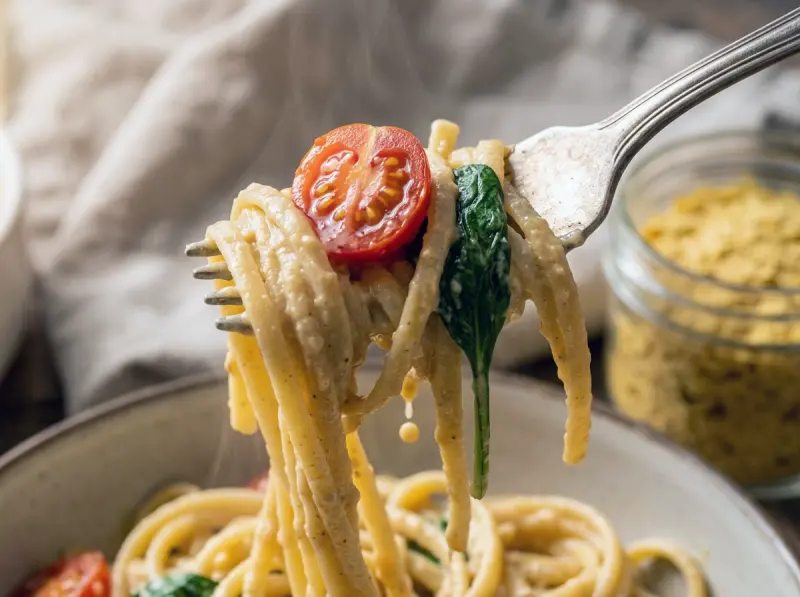
Pasta alla Crema di Anacardi
Anacardi crudi ammollati e frullati con aglio, limone e lievito alimentare fino a formare una crema densa e setosa che ricopre la pasta come un alfredo senza latticini. La salsa richiede circa 5 minuti una volta ammollati gli anacardi e ha davvero il sapore di qualcosa preparato con panna e Parmigiano, senza nessuno dei due.
Ingredienti
- 150 ganacardi crudi
- 400 gpasta
- 4 cucchiaiolievito alimentare
- 3 aglio
- 2 cucchiaiosucco di limone fresco
- 1 cucchiainoscorza di limone
- 120 mlacqua o latte vegetale non zuccherato
- 2 cucchiaioolio d'oliva
- 150 gpomodorini, tagliati a metà
- 80 gspinaci freschi o kale
- 0.5 cucchiainosale fino
- 0.5 cucchiainoscaglie di peperoncino secco
Preparazione
- Ammollare gli anacardi. Se non li hai ammollati la notte prima, versare acqua bollente sugli anacardi e lasciarli riposare 15-20 minuti. Devono schiacciarsi facilmente tra le dita prima di scolarli. Scolare e gettare l'acqua di ammollo.
- Frullare la crema di anacardi. Aggiungere gli anacardi scolati nel frullatore con 2 spicchi d'aglio, succo e scorza di limone, lievito alimentare, sale e acqua o latte vegetale. Frullare ad alta velocità 60-90 secondi. La salsa deve essere completamente liscia. Se troppo densa, aggiungere acqua un cucchiaio alla volta.
- Cuocere la pasta. Portare a ebollizione abbondante acqua salata. Cuocere la pasta quasi al dente — 1 minuto in meno del pacchetto. Prima di scolare, riservare almeno 300 ml d'acqua di cottura.
- Saltare e costruire. Mentre cuoce la pasta, scaldare l'olio in una grande padella a fuoco medio. Affettare lo spicchio d'aglio rimasto e cuocere 60 secondi. Aggiungere i pomodorini, sale e peperoncino. Cuocere 3-4 minuti.
- Combinare e servire. Aggiungere la pasta scolata nella padella con i pomodorini. Versare la crema di anacardi e mescolare a fuoco medio-basso. Aggiungere acqua di cottura poco alla volta. Unire gli spinaci e mescolare fino a che si appassiscono. Servire subito con lievito alimentare e pepe.
Domande
L'ammollo è importante con un frullatore standard. Due metodi: ammollo lungo in acqua fredda 4-8 ore; ammollo rapido in acqua bollente 15-20 minuti. L'anacardo deve schiacciarsi facilmente prima di scolarsi. Con un frullatore potente (900+ W tipo Vitamix) si può saltare. Scolare sempre l'acqua di ammollo e usare acqua fresca per frullare.
Il lievito alimentare è lievito disattivato in fiocchi con un sapore naturalmente formaggioso e umami senza latticini. Trovarlo nei negozi di alimenti naturali. Se non disponibile: 1-2 cucchiaini di miso bianco aggiungono umami simile; succo di limone extra aggiunge acidità. Non esiste sostituto perfetto. Dura fino a un anno.
Diluire sempre con l'acqua di cottura della pasta — il suo amido aiuta la salsa ad attaccarsi ai noodles. Aggiungere 2-3 cucchiai alla volta. La salsa dal frigorifero è sempre molto densa; al riscaldamento aggiungere acqua o latte vegetale a fuoco basso.
Un frullatore ad alta potenza dà il risultato più liscio. Un robot da cucina funziona ma con texture meno setosa. Senza frullatore: burro di anacardi o tahini (3-4 cucchiai) diluiti con acqua tiepida, aglio, limone e lievito danno una salsa cremosa simile.
Frulla 150 g di tofu vellutato con la salsa di anacardi: aumenta le proteine mantenendo la consistenza liscia e senza latticini. Puoi anche aggiungere 150–200 g di lenticchie, ceci o edamame cotti. La pasta di legumi offre un ulteriore apporto. Dopo il tofu, diluisci con acqua di cottura perché la salsa diventa più densa.
Vota
Ricette via email
Una lettera a settimana: una ricetta scelta per i tuoi gusti e le novità del sito. Puoi disattivarla con un clic.
In regalo: il libro di ricette di Sergei (e-book).
Premendo il pulsante accetti l’informativa sulla privacy.
Dicci cosa ti piace cucinare (30 secondi) →Continua a sfogliare
Altri piatti dall’archivio — scelti per sovrapposizione con quello che stai cucinando ora.


Partecipa alla discussione
Commenti (1)
The first time I made this for non-vegan friends, someone genuinely asked what kind of cheese was in the sauce. The nutritional yeast is doing the heavy lifting — it adds that savoury umami quality that you miss when there is no Parmesan. My tip: soak the cashews in boiling water for 30 minutes if you do not have time for overnight soaking, then blend on the highest speed for a full two minutes. Any graininess in the sauce means you did not blend long enough. A high-powered blender makes this effortless, but even a regular one works with extra time.