
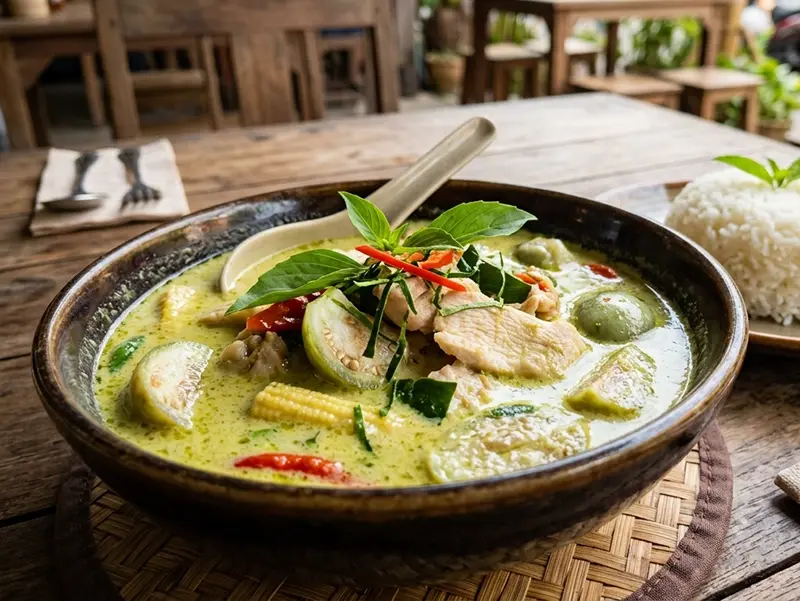
Curry Verde Tailandese (Gaeng Keow Wan)
Gaeng keow wan (แกงเขียวหวาน) — 'curry verde dolce' — è il curry più popolare in Thailandia. Il colore verde proviene dai peperoncini verdi freschi nella pasta. La pasta soffritto nella crema di cocco crea una base ricca. L'equilibrio è fondamentale: piccante dalla pasta, cremosità dal cocco, salinità dalla salsa di pesce, dolcezza dallo zucchero di palma.
Ingredienti
- 500 gcosce di pollo disossate a pezzi da 3 cm
- 400 mllatte di cocco intero
- 150 mlbrodo di pollo o acqua
- 3 cucchiaiopasta di curry verde
- 2 cucchiaiosalsa di pesce
- 1 cucchiaiozucchero di palma o zucchero di canna
- 6 foglie di lime kaffir, gambo centrale rimosso
- 1 stelo di citronella, pestato e tagliato a pezzi da 5 cm
- 2 melanzane tailandesi, tagliate in quarti
- 100 gpiselli mangiatutto o fagiolini
- 1 grande manciata di foglie di basilico tailandese
- 1 peperoncino rosso a fette
- 1 cucchiaioolio vegetale (solo se la crema di cocco non si separa)
- 1 lime
Preparazione
- Attivare la pasta di curry. Aprire il latte di cocco senza agitare e prelevare la crema densa in cima (4-5 cucchiai) in un wok. Scaldare finché non bolle e l'olio inizia a separarsi. Se dopo 3-4 minuti la crema bolle ma l'olio non si separa (succede con il latte di cocco con stabilizzanti), aggiungere il cucchiaio di olio vegetale e soffriggere la pasta in quello. Aggiungere la pasta di curry verde e soffriggere mescolando 2-3 min fino a fragrante.

- Aggiungere il pollo e costruire la salsa. Aggiungere il pollo e mescolare con la pasta. Cuocere 1-2 min. Versare il latte di cocco rimasto e il brodo. Aggiungere la citronella e le foglie di kaffir. Aggiungere salsa di pesce e zucchero. Portare a ebollizione.
- Cuocere a fuoco lento fino a quando il pollo è cotto. Cuocere a fuoco medio-basso 8-10 min. Non bollire vigorosamente.
- Aggiungere le verdure. Aggiungere la melanzana e cuocere 3-4 min. Aggiungere i piselli nell'ultimo minuto. Aggiustare con salsa di pesce e zucchero.
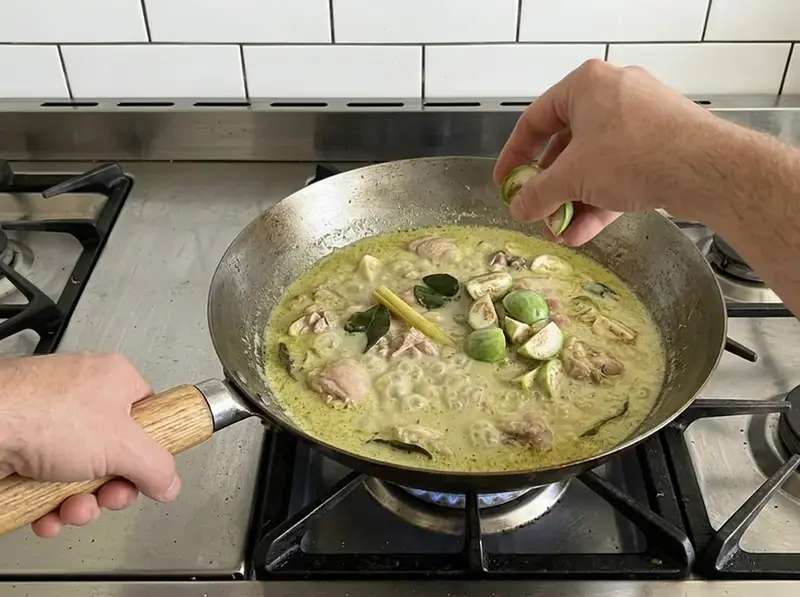
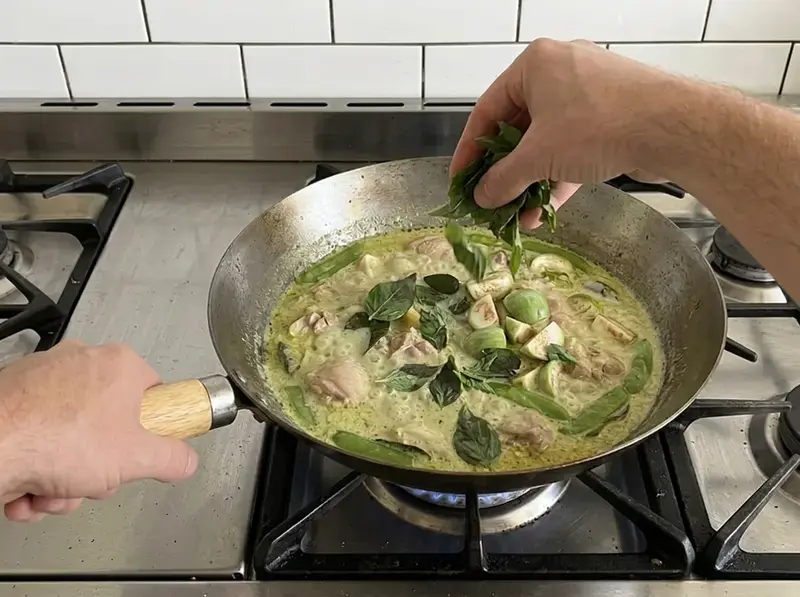
- Finire e servire. Togliere dal fuoco. Aggiungere il basilico tailandese. Sprizzare lime se si desidera. Decorare con peperoncino rosso. Servire subito con riso al gelsomino.
Domande
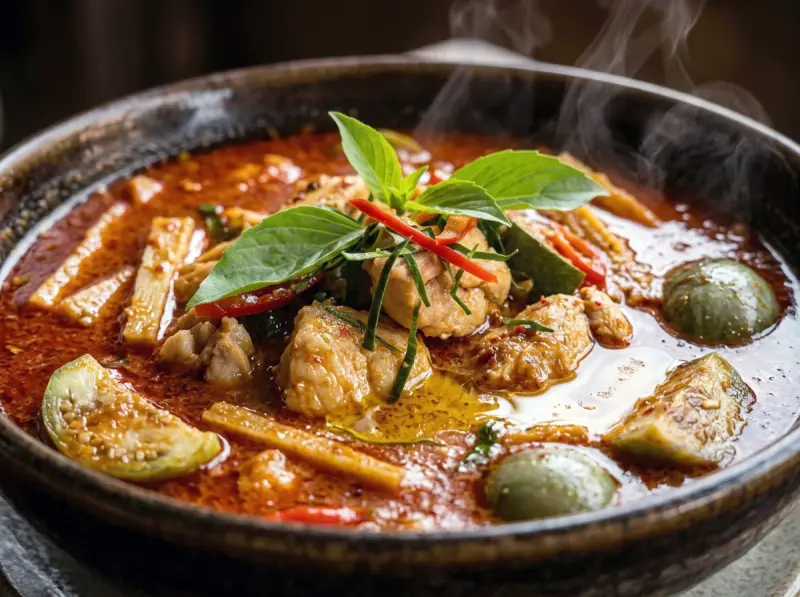
Verde: peperoncini verdi freschi, molto aromatico. Rosso: peperoncini rossi secchi, più profondo. Giallo: peperoncini secchi e curcuma, il più delicato. Il verde è più agrumato; il rosso più ricco e terroso.
Cause più comuni: pasta non soffritto abbastanza nella crema; poca salsa di pesce; senza zucchero di palma. Regolare con salsa di pesce e zucchero poco alla volta.
Sì. Sostituire pollo con tofu fermo dorato o verdure miste. Soia al posto della salsa di pesce. Assicurarsi che la pasta sia vegana.
Foglie di albero di makrut con intenso aroma agrumato e floreale. Infondono il curry ma non si mangiano. Sostituti: foglie secche di kaffir; strisce di scorza di lime.
In frigorifero fino a 3 giorni. Migliora il giorno dopo. Riscaldare a fuoco basso senza bollire. Aggiungere basilico fresco quando si riscalda.
Vota
Ricette via email
Una lettera a settimana: una ricetta scelta per i tuoi gusti e le novità del sito. Puoi disattivarla con un clic.
In regalo: il libro di ricette di Sergei (e-book).
Premendo il pulsante accetti l’informativa sulla privacy.
Dicci cosa ti piace cucinare (30 secondi) →Continua a sfogliare
Altri piatti dall’archivio — scelti per sovrapposizione con quello che stai cucinando ora.
Partecipa alla discussione
Commenti (2)
Green curry paste varies wildly between brands. Some are mild, some are volcanic. Taste a tiny bit before deciding how much to use. I fry the paste in the thick coconut cream (the solid part from the top of the can) until oil separates and pools around the edges — that is when you know the paste is properly bloomed. The Thai basil goes in at the very end and wilts in the residual heat. If you cook it, it turns black and bitter.
I have been making green curry for years and this recipe gets the technique right. Frying the paste in the coconut cream first is essential — it blooms the spices and changes the whole flavor profile. One thing I would add: fish sauce at the very end, taste and adjust. Every brand of curry paste has different salt levels so you cant just follow the measurement blindly.