

A fermented pickle is a vegetable kept in salt, or in salt brine, until bacteria that live on it turn its sugars into lactic acid. Nobody adds the acid: the vegetable makes it. This is what the labels "fermented pickles", "brined", "lacto-fermented" and "sour pickles" mean, and it is what Russians call solenya (соленья), made by salting, zasol, or by kvashenie, souring.
A vinegar pickle, or marinade, gets its acid ready-made. Vinegar goes into the jar, often in a hot brine, and no fermentation happens at all. "Vinegar pickles", "quick pickles" and "fresh-pack pickles" are names for this, and the Russian word is marinovanie (маринование). The two taste different because the acids differ: lactic acid in a ferment is milder, and the acetic acid of vinegar is sharper. A ferment needs days or weeks to turn sour, and a marinade is sour as soon as the vinegar goes in.
How to tell a fermented pickle from a vinegar pickle
Read the ingredients first. If the label lists vinegar or acetic acid, it is a marinade. A fermented jar lists vegetables, water, salt and seasonings.
Then look at the liquid and at where the shop keeps the jar. Fermentation clouds the brine, and the old Soviet standard for salted cucumbers describes the brine of a good product as slightly cloudy. A fermented pickle that has not been heated has to stay cold, so it sits in the chilled section. A jar on an unrefrigerated shelf has been heat-processed, which the label may call pasteurised, and that softens the flesh.
How much salt, how much acid
Fermenting runs on salt, and the recipes on this site weigh it. Cabbage is salted dry at about 24 g per kilo of vegetables, roughly 2.4 %. Cucumbers and tomatoes go into a brine of 70 g of salt per litre of water. The salt holds back the wrong bacteria while the lactic ones work, and the US National Center for Home Food Preservation calls it vital to safety as well as texture.
The bacteria that cause botulism can grow in a sealed jar at room temperature when the pH is above 4.6, the same centre says. The three Russian recipes below tell you to check the brine with a pH strip before the jar goes into the cold: it should read 4.6 or lower. For vinegar pickles it recommends vinegar of 5 % acidity and says not to change the proportions of vinegar, food and water in a recipe.
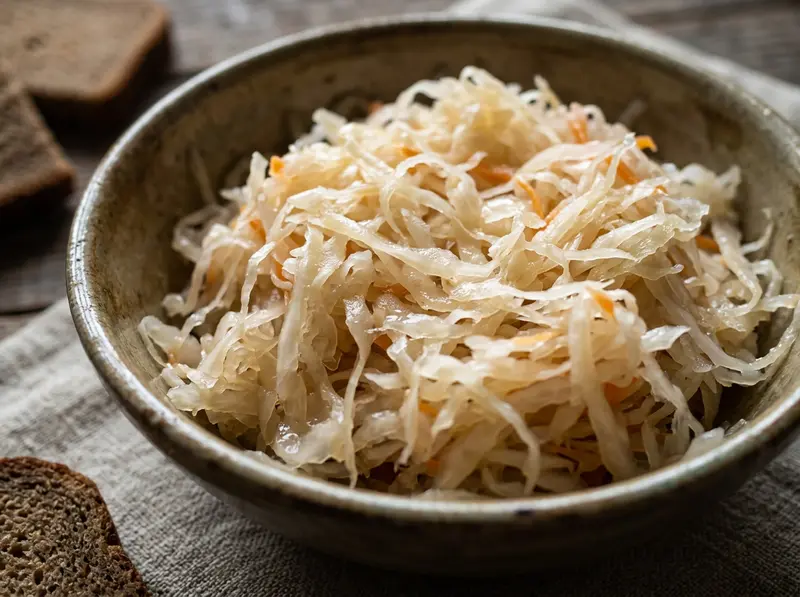
Kvashenaya kapusta: cabbage salted dry
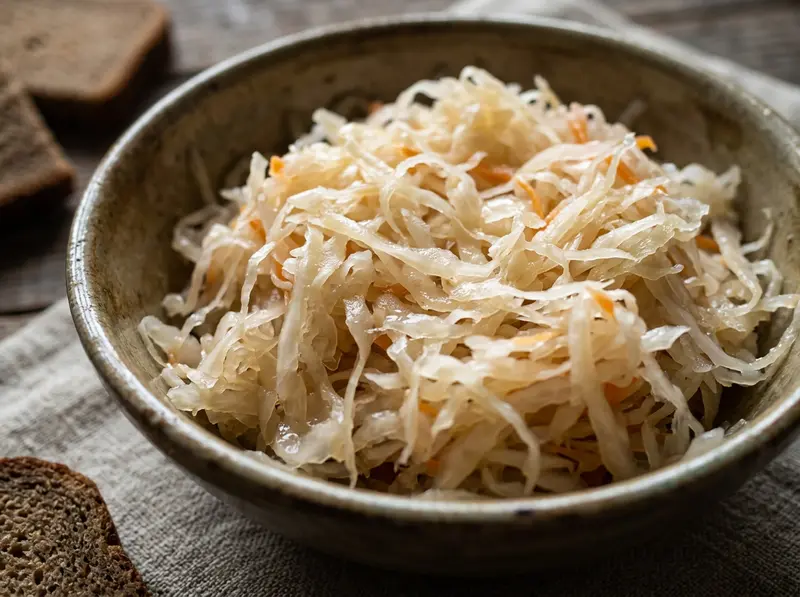
Kvashenaya kapusta is Russian sauerkraut: 2.5 kg of shredded white cabbage, 250 g of grated carrot and 65 g of salt, with no water and no vinegar. You knead the salt in until the cabbage gives up its juice, then it sours in that juice under a weight. The pot stands at 18 to 22 °C for 5 days. Then it goes into jars and into the fridge, where it is at its best within a month.
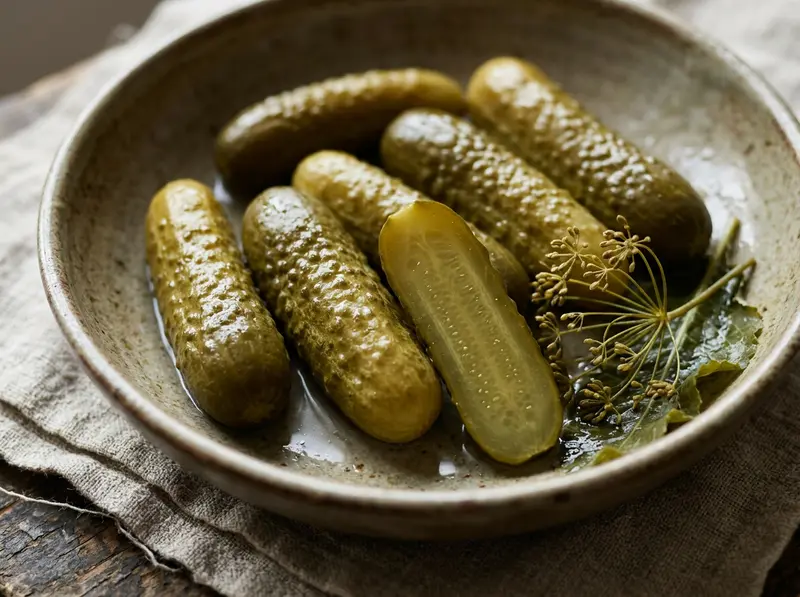
Solyonye ogurtsy: cucumbers in cold brine
Solyonye ogurtsy are whole small cucumbers fermented in a 3-litre jar with dill, garlic and horseradish, blackcurrant and cherry leaves. They need a brine poured over them: 105 g of salt in 1.5 litres of cold water. They spend 5 to 7 days at 20 to 24 °C and then 4 weeks in the fridge before anyone tastes them. Russian has three words here. Malosolnye are the same cucumbers eaten after hours or days, still green. Solyonye are fully fermented. Marinovannye are made with vinegar.
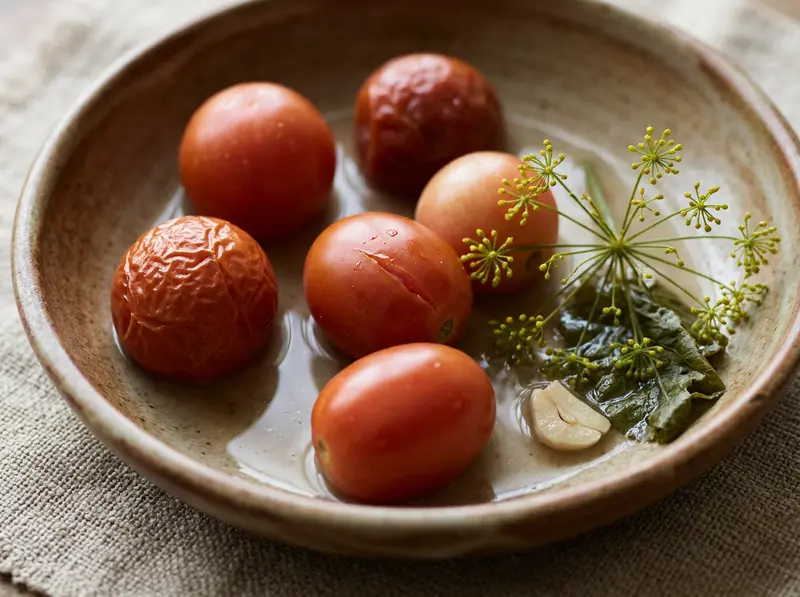
Solyonye pomidory: fermented tomatoes
Solyonye pomidory use the same brine and the same schedule as the cucumbers, with 1.6 kg of small firm tomatoes in the jar. Red ones come out soft but whole, half-ripe ones stay firm. The jar is closed with a plastic lid, never a metal canning lid, and lives in the fridge.
Kimchi: a ferment with a paste
Kimchi is also a salt ferment with no vinegar, built differently. Napa cabbage is salted for 2 hours and rinsed three times, then rubbed with a paste of gochugaru, garlic, ginger, fish sauce and salted shrimp. It ferments at room temperature for 1 to 5 days and then moves to the fridge. Late autumn is kimjang season in Korea, when households make the winter supply together. Which ferments still carry live cultures by the time you eat them is a separate question, covered in the article on fermented foods.
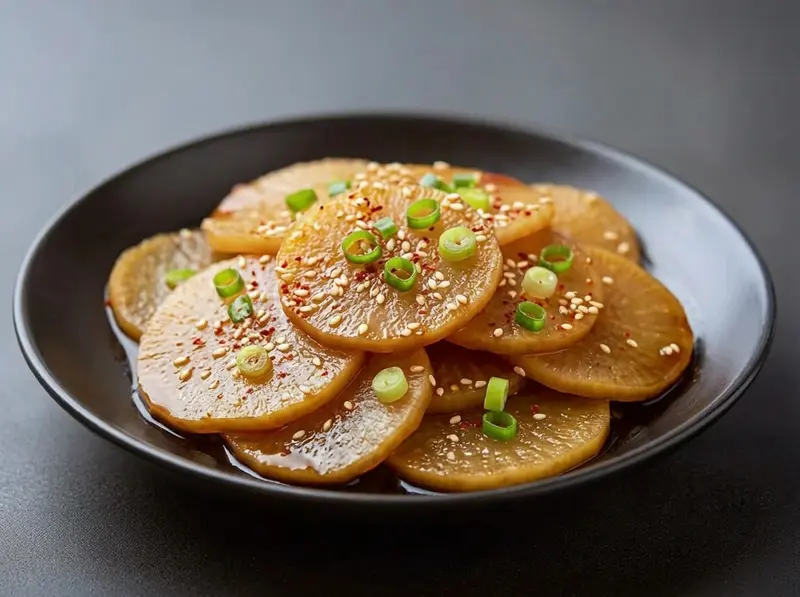
Two marinades: daikon and khe
Korean marinated daikon shows how fast a marinade is. Sliced radish is salted for 15 minutes to draw out water, then dressed with soy sauce, a tablespoon of rice vinegar, garlic and chilli, and it is ready after an hour in the fridge. Nothing ferments, and it keeps for up to 5 days.
Khe applies the same idea to fish. Thin strips of salmon sit in 9 % vinegar for 20 to 30 minutes until they turn opaque, then marinate with vegetables and spices for at least 4 hours. The vinegar firms the fish, but it does not kill every parasite, so the recipe uses only salmon that was frozen at −20 °C for at least 24 hours. Khe is eaten within 2 to 3 days. Marinades like these two are made for flavour and eaten within days. They are not a way to keep food.
What to cook with pickles and their brine
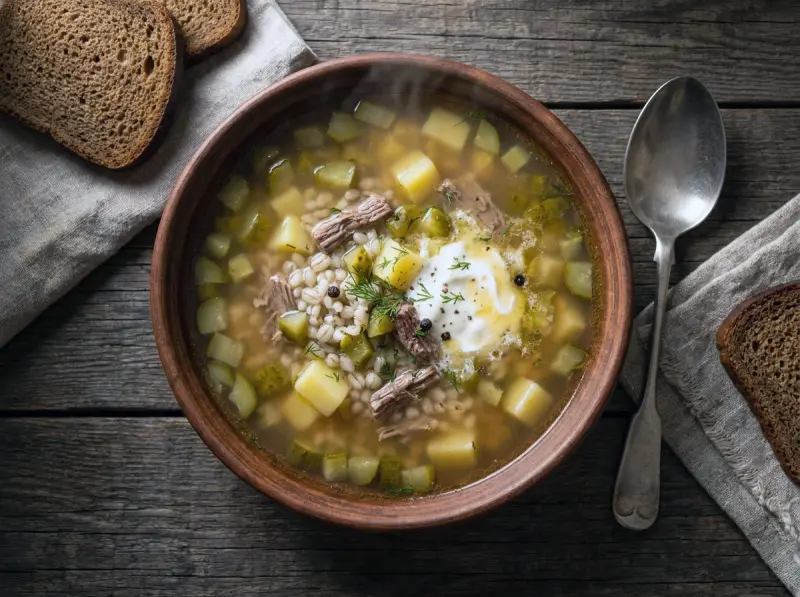
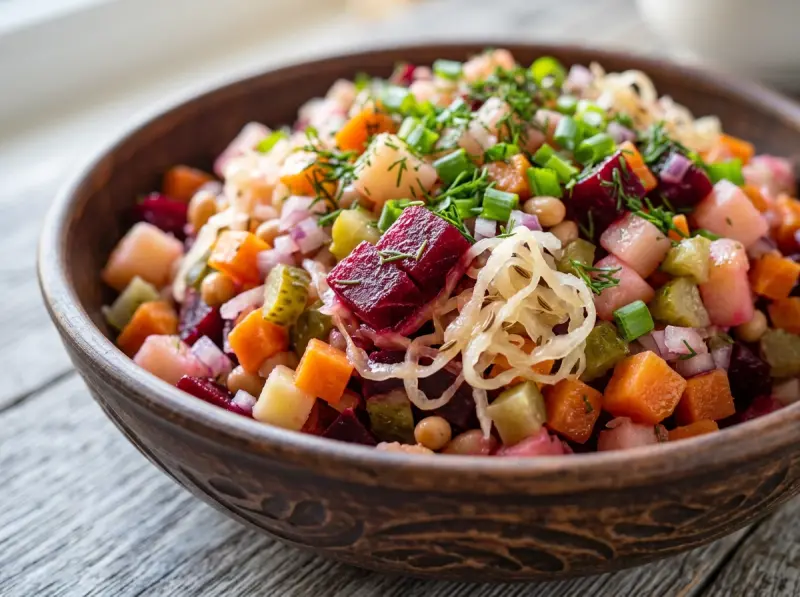
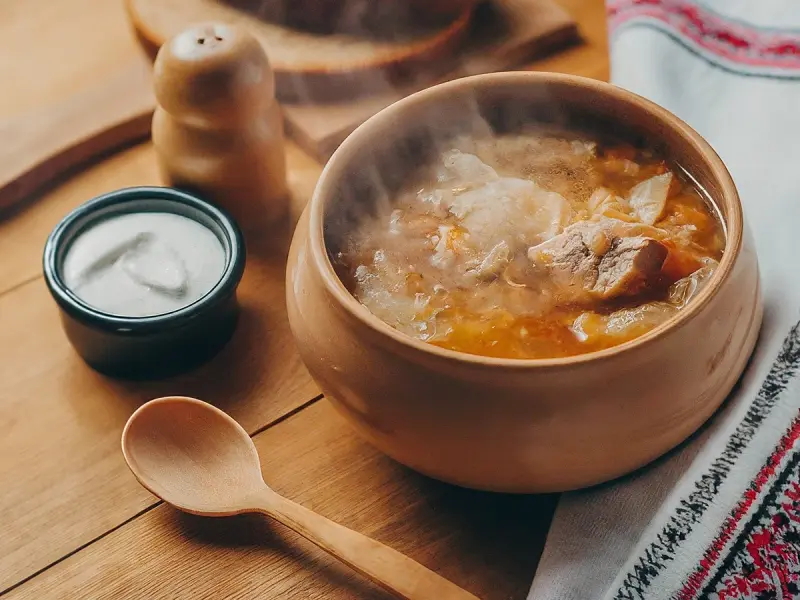
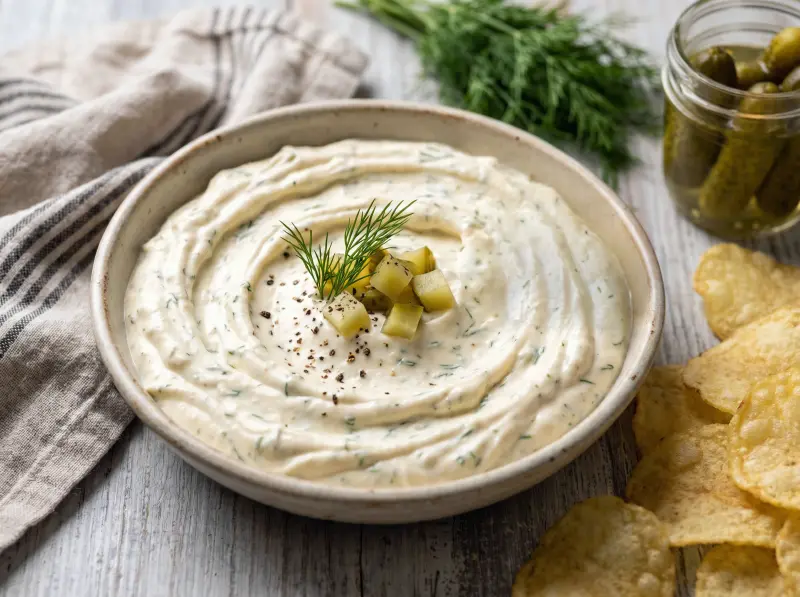
Rassolnik is a beef and barley soup soured with 250 g of diced pickles and 150 ml of their brine, and it wants fermented cucumbers, since a vinegar brine tastes sharp and one-note in the soup. Russian vinegret salad mixes boiled beets, potatoes and carrots with 200 g of pickles and 150 g of sauerkraut. Sauerkraut shchi braises 600 to 700 g of sauerkraut for 1 to 1.5 hours before it joins the beef broth. The American pickle dip asks for 200 g of refrigerator dill pickles, because the softer shelf-jar ones leak water into the cream cheese.
Is fermenting without vinegar safe?
The US National Center for Home Food Preservation ferments cucumbers and cabbage for 3 to 4 weeks at 21 to 24 °C. The Russian home method is shorter: about a week in the warm, then the cold. The centre studied that shorter pattern on cucumbers and concluded that it should not be recommended for home use. Listeria placed on the cucumbers survived the warm week and was no longer found inside the pickles only after 4 weeks in the fridge, and on their surface only after 8. Nobody has run the same test on tomatoes.
The recipes here say this openly. The jars stay at 0 to 4 °C from the day the bubbling stops and never go into a cupboard. The cucumbers and tomatoes are not eaten before 4 weeks in the cold, and they should not be served to anyone very young, very old, pregnant or chronically ill. A jar that turns slimy, smells rotten or grows fuzzy mould goes in the bin untasted.
A jar meant for a shelf is a different job. It needs a tested vinegar recipe and heat processing in jar sizes the test covered, which in the US guidance means pints and quarts, not a 3-litre jar. There is no such recipe on this site yet.
Where to start in October
Start with the cabbage. It needs three ingredients, one pot and a room at 18 to 22 °C, which is easier to hold in October than in summer: above 24 °C the cabbage turns soft. Buy a kitchen scale before anything else, because all three Russian recipes depend on weighing the salt.