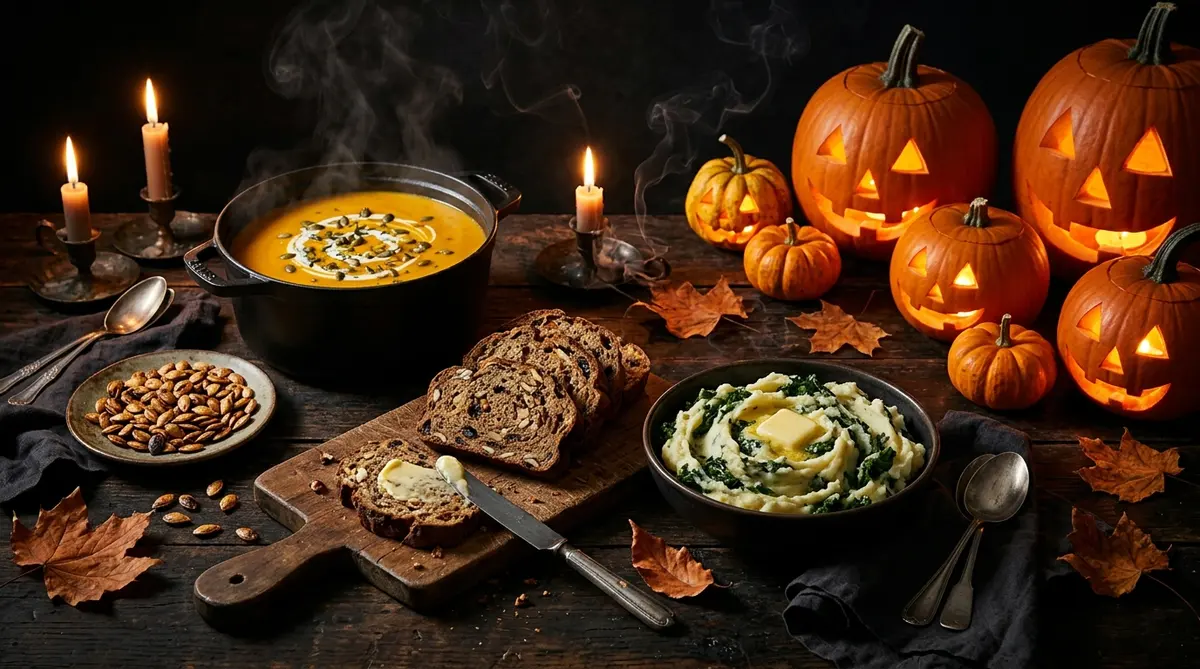
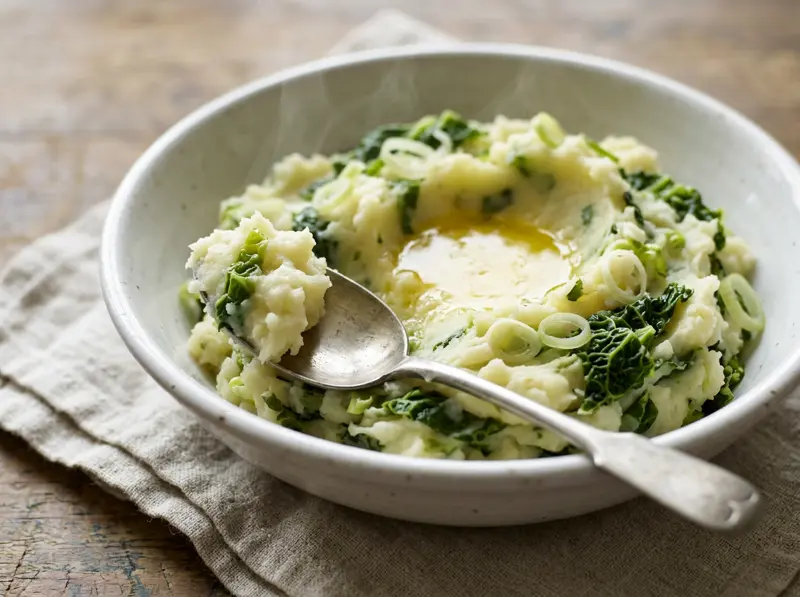
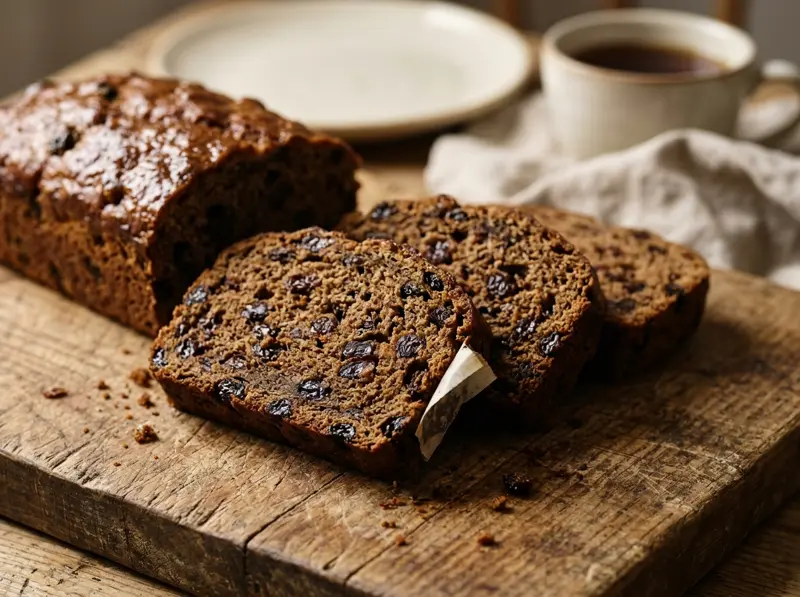


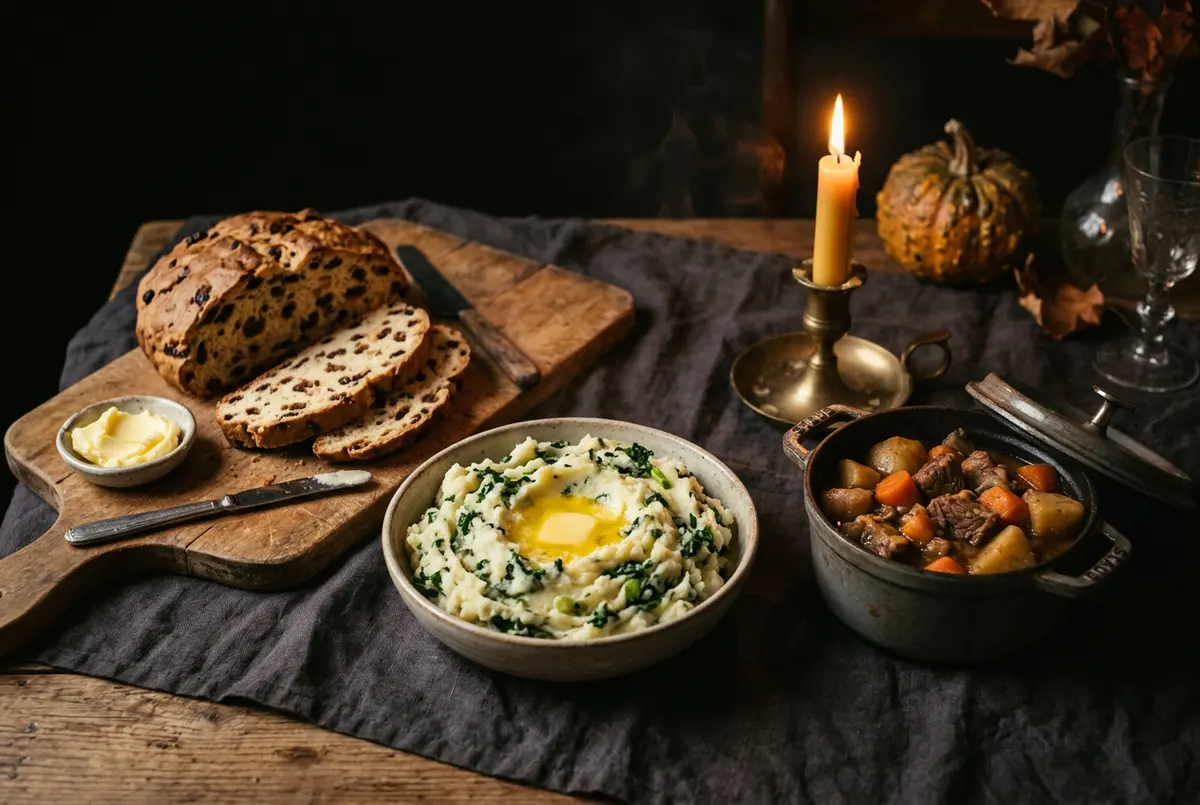
On Halloween, the evening of 31 October, the Irish table has colcannon, a mash of potatoes and cabbage, and barmbrack, a fruit loaf with a ring baked inside to tell the future. In North America the night belongs to the carved pumpkin and to the sweets handed out at the door to children who go trick-or-treating, which means calling house to house in costume and asking for a treat. The name is a contraction of All Hallows' Eve, the night before All Saints' Day, and in 2026 it falls on a Saturday. Around both traditions sits the food of the season: pumpkin soup and pie, apples, and something hot to drink.
Where Halloween food comes from
The holiday is usually traced to Samhain, a Celtic festival on the evening of 31 October into 1 November. Britannica translates the word as "Summer's End", and Ireland's government website calls it the Irish word for autumn. It marked the start of winter, when the crops were in and the livestock came back from the fields. How much of modern Halloween goes back to Samhain is less certain than it sounds. Britannica's entry on Samhain says it is unclear what survived into later Irish and British customs, and that feasting and divination were possible practices, nothing firmer. Its entry on Halloween says the holiday grew partly out of Samhain but largely out of the Christian feasts of the dead in the Middle Ages, such as All Saints' Day.
Asking for food at the door is older than the candy. Trick or treat is thought to come from "soul cakes", pastries that poor people in England were given in return for praying for a family's dead. In Ireland there was mumming, where people dressed as spirits did silly acts in exchange for food and drink. Irish immigrants took their customs to the United States from the middle of the 19th century. By the turn of the 20th century, according to HISTORY.com, American Halloween parties were built around games and seasonal food: apples, nuts, corn and pumpkins. Trick-or-treating for candy took its modern shape between the 1920s and the 1950s.
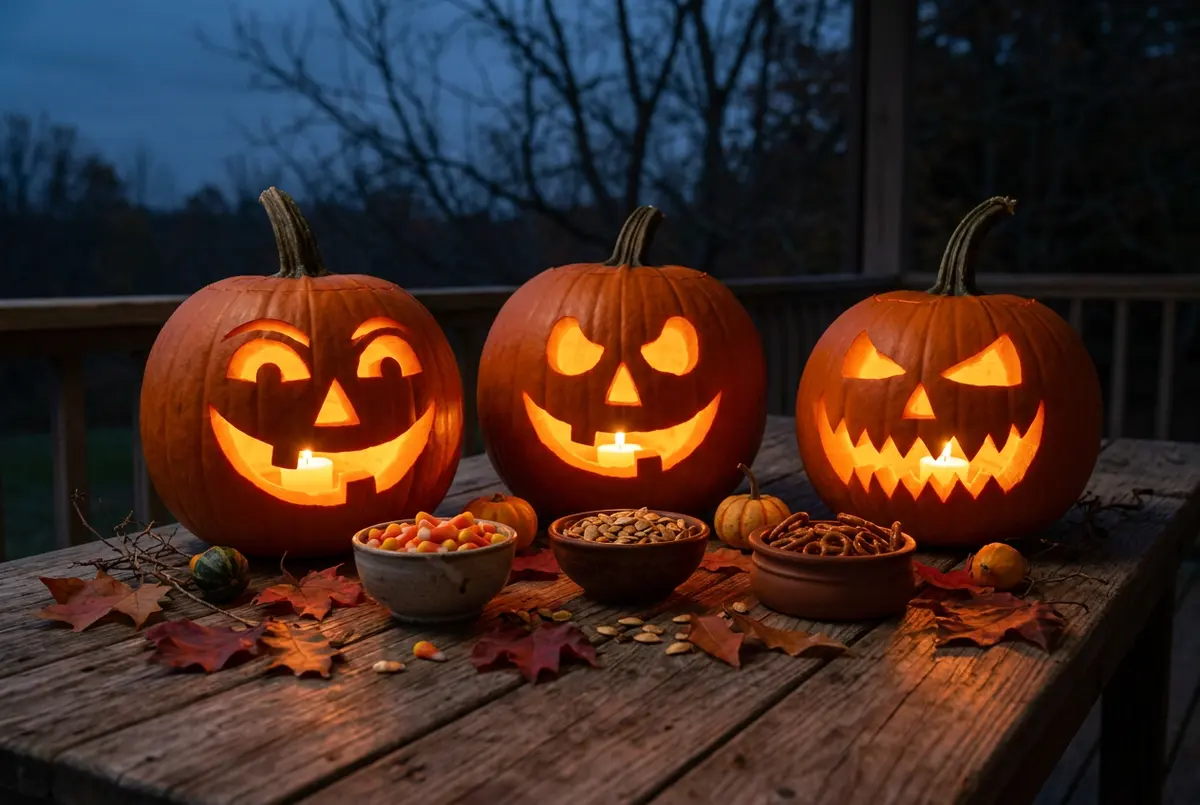
The first lanterns were not pumpkins either. In the 19th and early 20th centuries, Smithsonian Magazine reports, people in Ireland and other Celtic countries more often carved turnips, sometimes potatoes or beets, and set a candle inside. A curator at EPIC The Irish Migration Museum told National Geographic that metal lanterns were expensive, so people hollowed out root vegetables. In North America the Irish found the pumpkin, which carved far more easily. The National Museum of Ireland keeps a cast of a turnip lantern from Donegal. The original was given to the museum in 1943 by a teacher who said nobody made them any more.
The Irish table: colcannon, barmbrack and the ring
Folklorist Michael Fortune, writing for RTÉ, says colcannon is one of the dishes most closely tied to Irish Halloween, and that in Wexford the night itself was also called Colcannon Night. Colcannon is mashed potato with cooked cabbage or kale, spring onions, milk and butter. Ours uses 1200 g of peeled potatoes and 300 g of Savoy cabbage boiled for 3 to 5 minutes, then pressed dry so the mash does not go watery. It serves 6, with 25 g of butter melting in a hollow on top.
Barmbrack, in Irish bairín breac or "speckled loaf", is a lightly spiced fruit bread. The government site says Irish people have baked it on the Eve of Samhain "for centuries" to tell the future. Ours is a tea brack, and you need to start it two days ahead. The 375 g of raisins soak overnight in 250 ml of strong tea and 50 ml of whiskey, the loaf bakes at 170°C for about 60 minutes, then it cools and rests, wrapped, for a day before slicing. It cuts into 12 slices and keeps for up to 3 days.
Both dishes also carry a fortune-telling game. The government site lists six objects that used to go into the brack: a pea (no wedding that year), a stick (an unhappy marriage or quarrels), a rag (bad luck or poverty), a coin (wealth), a ring (married within the year) and a bean (a future without money). Today most bracks hold only a ring or a coin, and Fortune writes that older people in Wexford put a ring in the colcannon as well.
A hidden ring or coin is a choking hazard. Clemson Cooperative Extension advises against putting foreign objects in food at all, because people who do not know they are there can choke on them, and Ireland's health service lists coins and small jewellery among non-food choking risks for babies and children. If you keep the custom, wash the ring and wrap it in a small square of greaseproof paper so it is easy to spot. Tell everyone before you cut the loaf or serve the mash, so they bite carefully. When small children are at the table, leave it out.
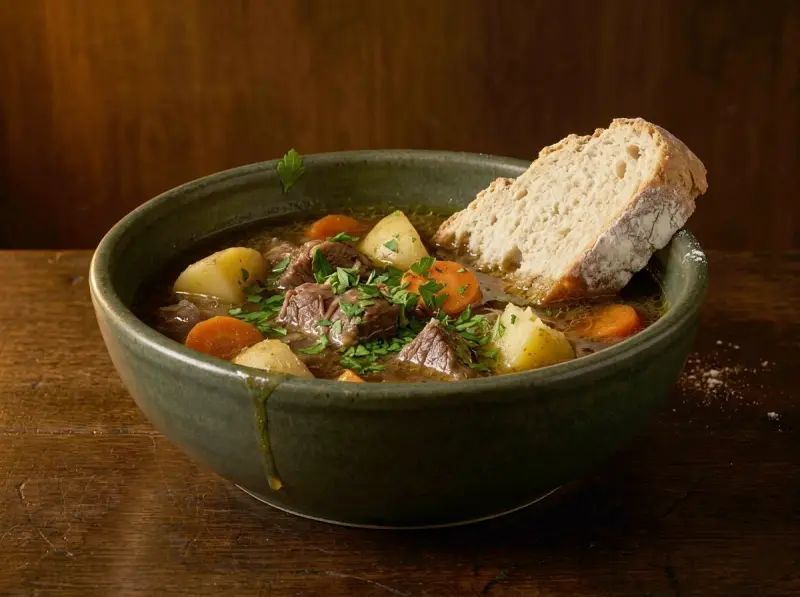
For something more filling, an Irish stew of lamb shoulder in 4 cm chunks, potatoes and carrots braised with Guinness can share the table.
Can you eat a carved pumpkin?
Not once it has been standing. Michigan State University Extension says that a carved pumpkin counts as a perishable food, and after more than two hours at room temperature it can be dangerous to eat. Texas A&M AgriLife Extension says the same of the pulp: once it has been left out for more than a couple of hours, treat it as not safe to eat. If you want to cook what you scoop out, put it in the fridge straight away. Lantern pumpkins are a different variety, though, stringy and coarse in MSU's words, so a separate pie pumpkin or squash makes better soup and pie.
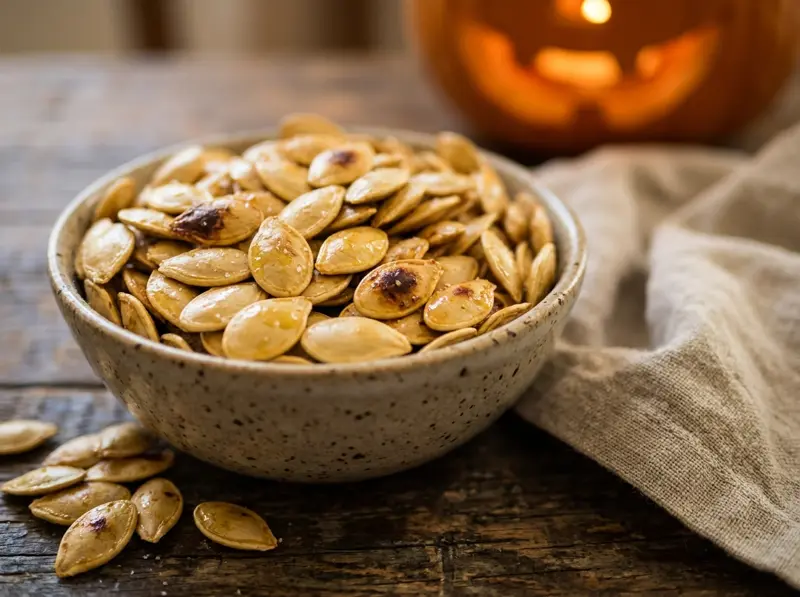
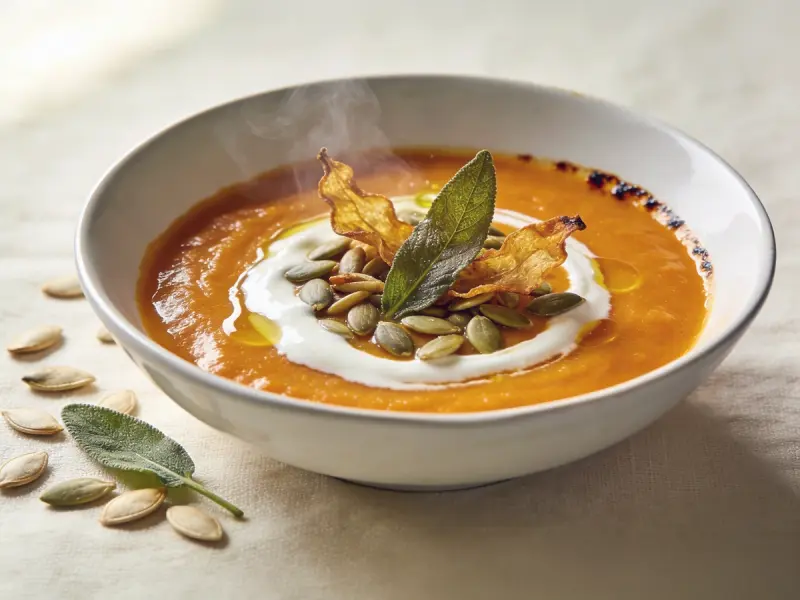
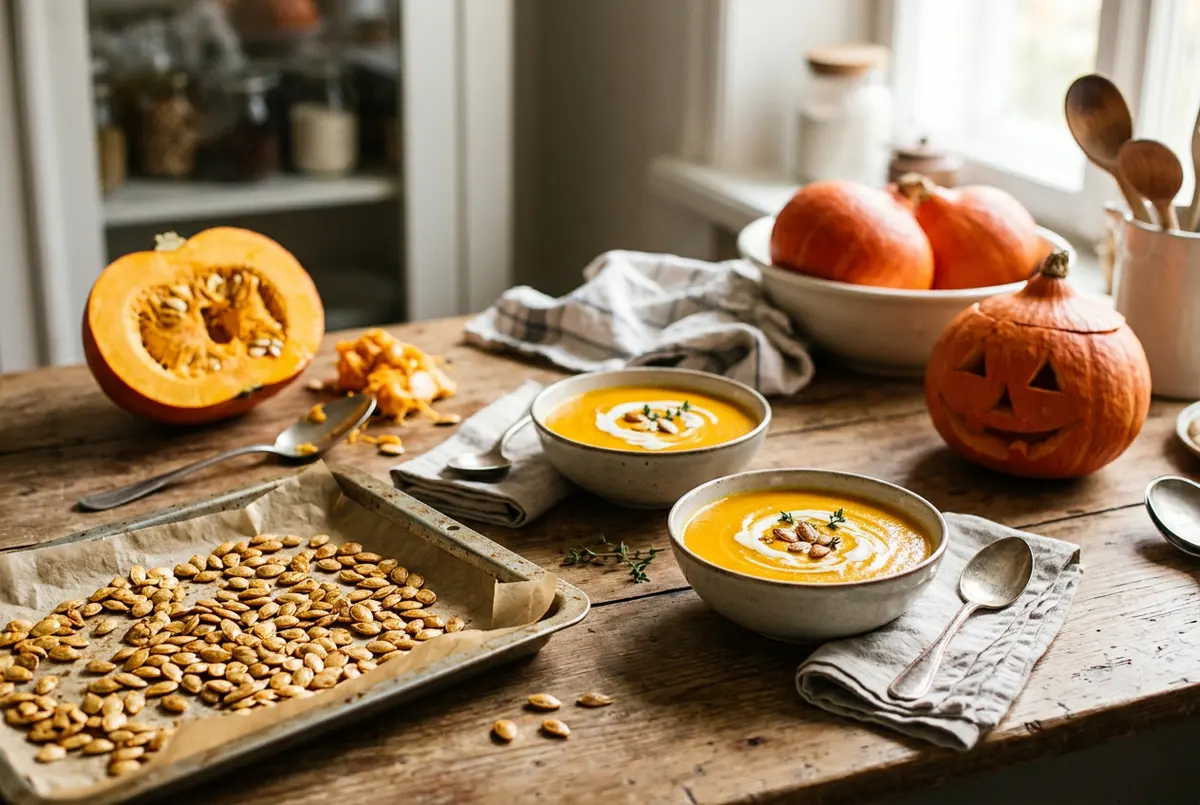
The seeds are the part of the lantern pumpkin worth keeping. MSU Extension says the seeds of any pumpkin can be roasted. Ornamental gourds are not food: Germany's federal nutrition centre, BZfE, says they are inedible because of toxic bitter substances, that a pumpkin whose raw flesh tastes bitter is inedible as a whole, and that cooking does not destroy those substances. So taste a small raw piece first and, if it is bitter, throw the seeds out with the rest. Texas A&M says seeds should go into the fridge or be cooked as soon as they come out, so roast them the day you carve and make roasted pumpkin seeds for a snack or to scatter over soup.
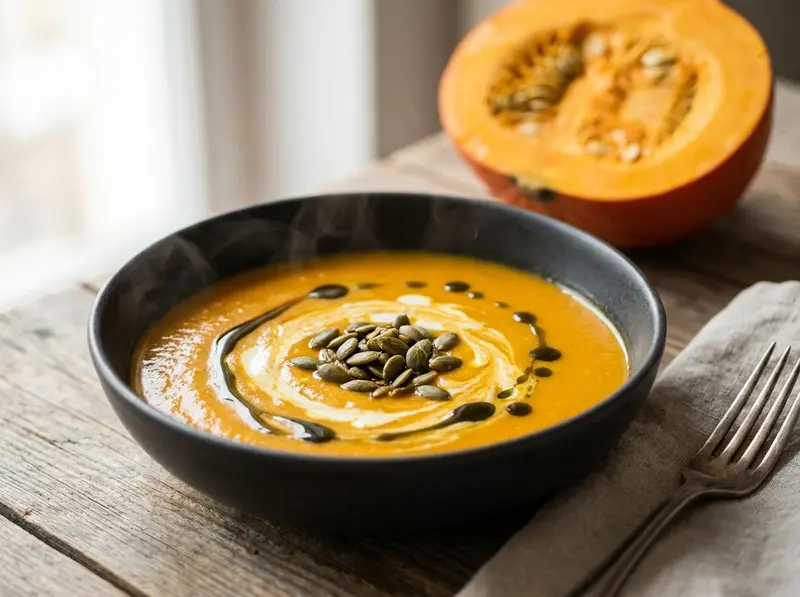
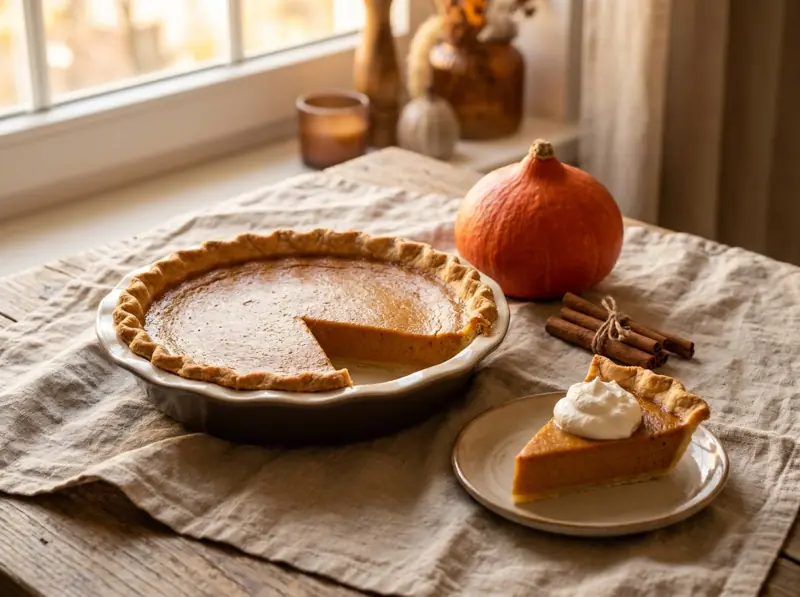
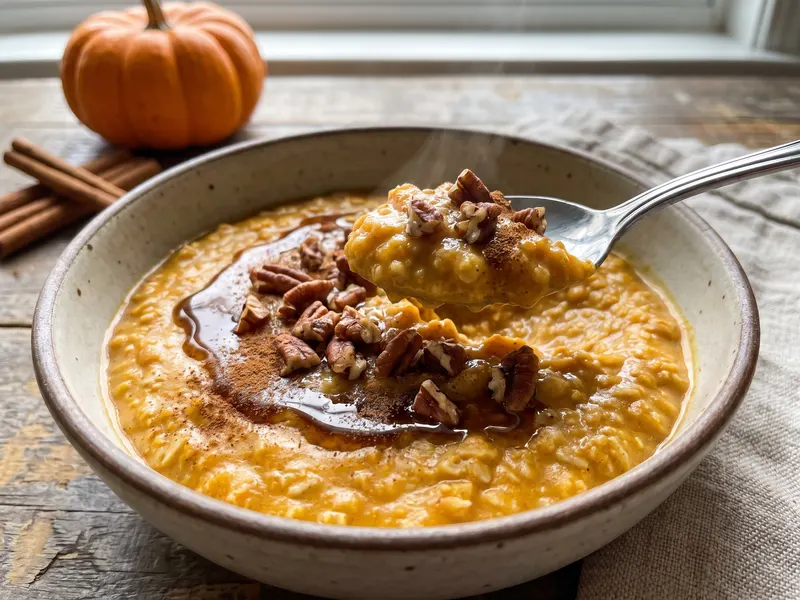
For the cooking pumpkin, start with soup. German Kürbissuppe uses Hokkaido squash with the skin on, cut into 3 cm cubes and simmered for 20 minutes. Butternut squash soup gets its depth from roasting the squash at 200°C for 40 to 50 minutes first. Pumpkin pie bakes at 220°C for 15 minutes, then at 175°C, and needs at least 2 hours at room temperature and another hour in the fridge before it slices cleanly, so bake it in the morning. For breakfast the next day, pumpkin oatmeal uses up leftover purée. For which pumpkin suits which dish, see our pumpkin guide.
How to carve a pumpkin into a jack-o'-lantern, step by step
To carve a jack-o'-lantern you cut a lid around the stem, scoop out the seeds, draw a face and cut it out, then put a light inside. You need a carving pumpkin, a boning knife or another firm kitchen knife for the lid, a small saw from a carving kit or a small paring knife for the face, a sturdy spoon, a washable marker and a battery tealight. Pick one with a solid stem, no soft spots on the sides or bottom, and a shell your fingernail can't dent. Rinse it under cool water and dry it, along with your hands, before the first cut.
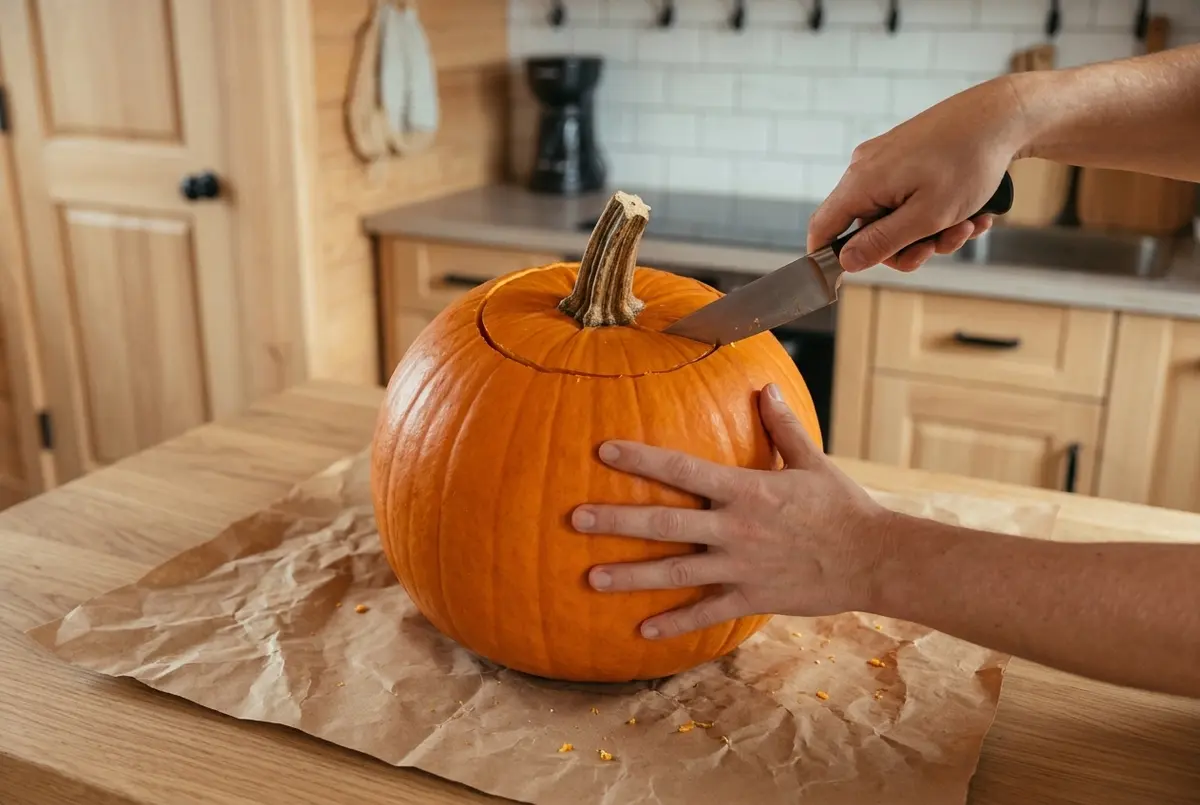
Step 1. Cut the lid. Cut a circle around the stem with the blade tilted toward the centre. The tilt leaves a ledge, so the lid sits on the opening and doesn't fall inside.
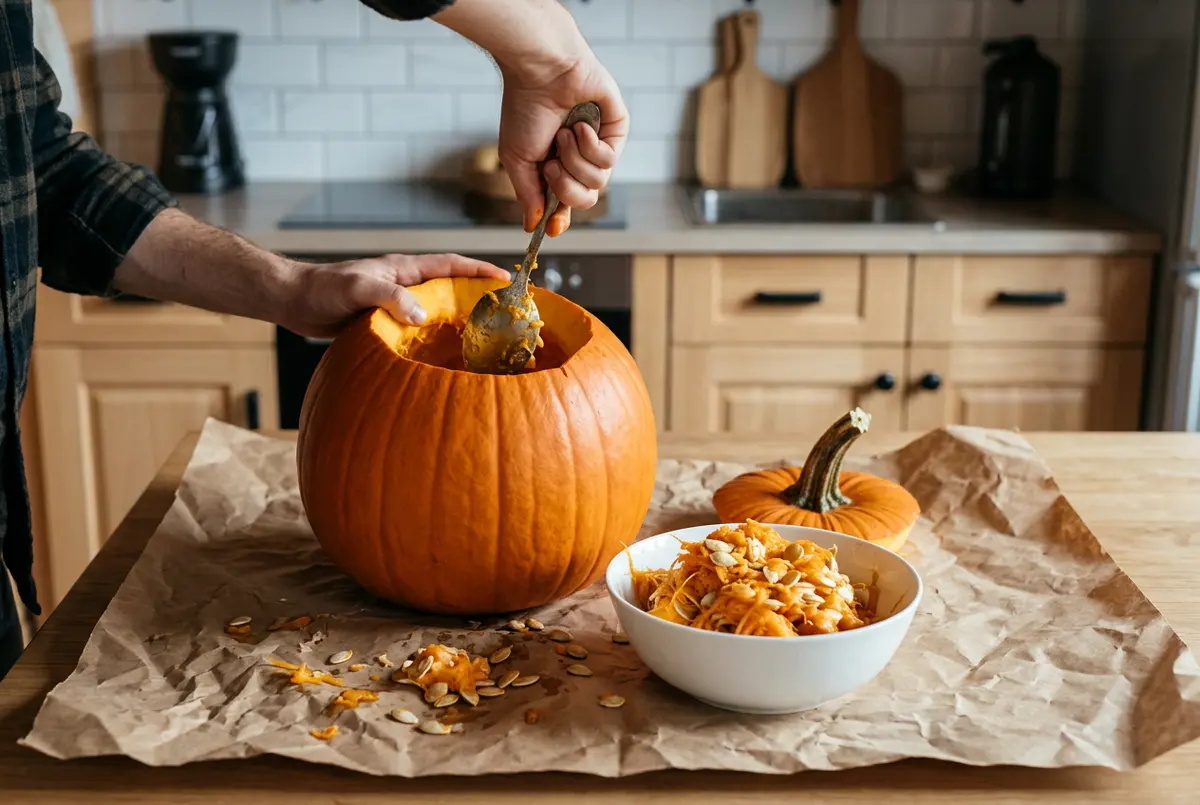
Step 2. Scoop out the seeds. Scrape the seeds and stringy pulp into a bowl, then keep scraping the wall where the face will go. University of Arizona Extension says to thin the walls to no more than 2.5 cm (one inch). The seeds can go straight into the fridge or the oven for roasted pumpkin seeds.
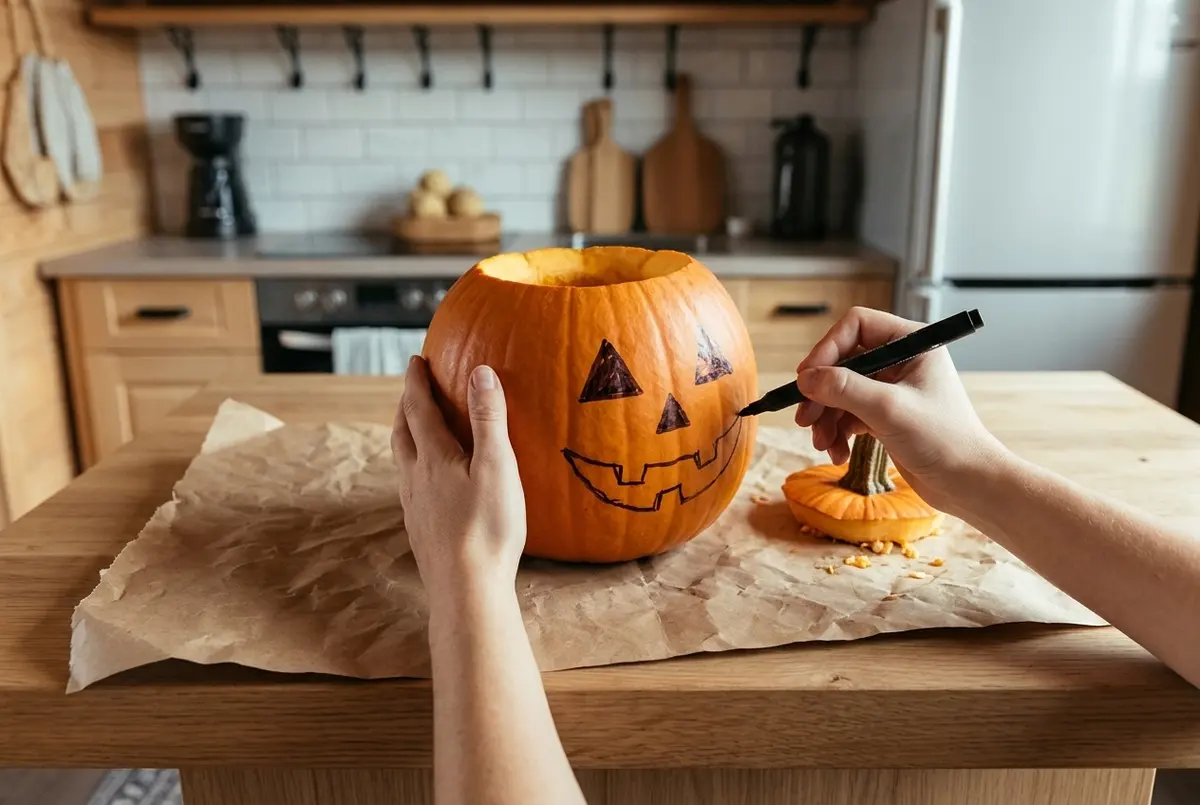
Step 3. Draw the face. Triangle eyes, a triangle nose and a jagged grin are all you need, and a marker or crayon is enough for that. Keep the face toward the top half so the light sits below it. For a printed pattern, tape the paper on and prick along the lines with a nail about 3 mm apart, through the paper and just into the skin.
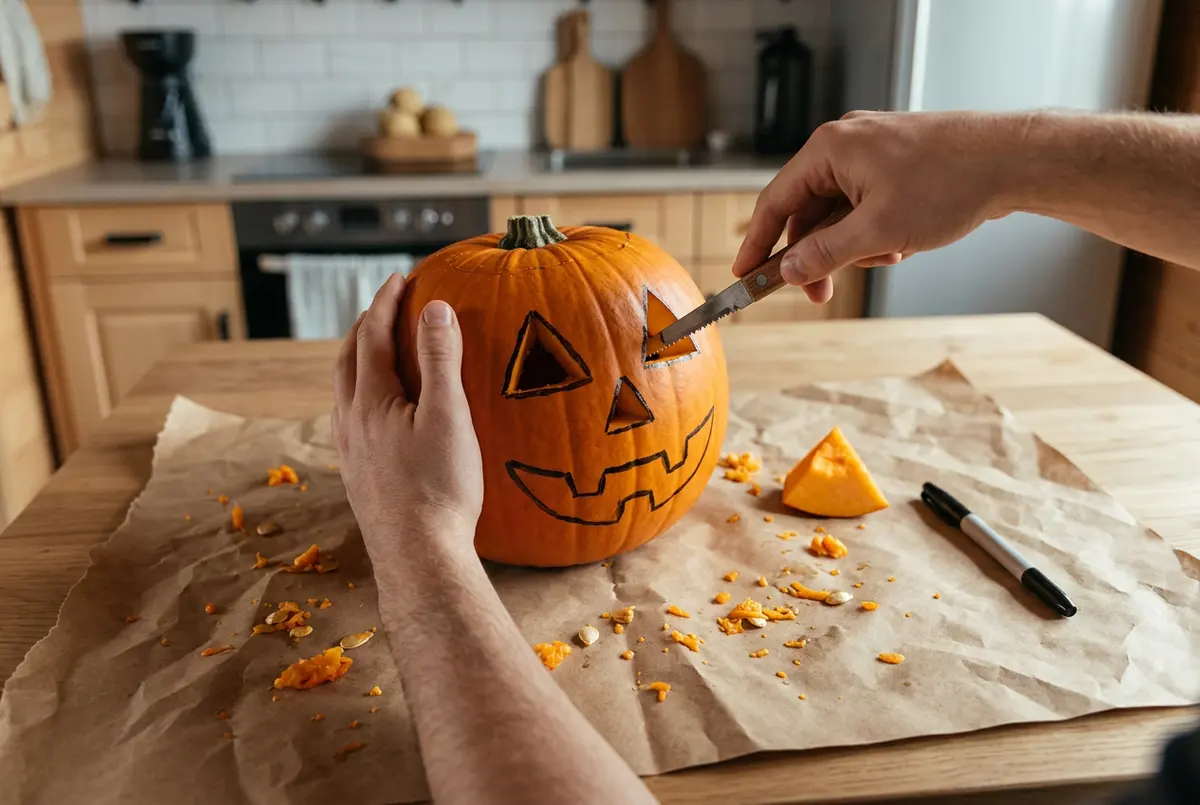
Step 4. Carve. Hold the pumpkin with one hand and saw slowly and gently along the line. Don't stab with the saw like a knife. Arizona Extension says to start at the centre of the design and work outward. Cut right through the wall each time, as NC State Extension advises. Every piece you take out weakens the pumpkin, so leave plenty of wall between the holes. If a piece of the grin snaps off, pin it back with toothpicks.
Step 5. Light it up. The NFPA, the US fire protection association, says a flashlight or battery candle is the safest light for a jack-o'-lantern. It counts an average of 835 home fires a year started by decorations of all kinds in 2020 to 2024, about a third of them started by candles. If you do use a real candle, light it with a long match or a utility lighter, watch children the whole time it burns and teach them to stay away from the flame. Stand the pumpkin well away from anything that can catch fire and away from doorsteps and paths where costumes brush past. NC State Extension adds that a flame dries the pumpkin out faster than artificial light does.
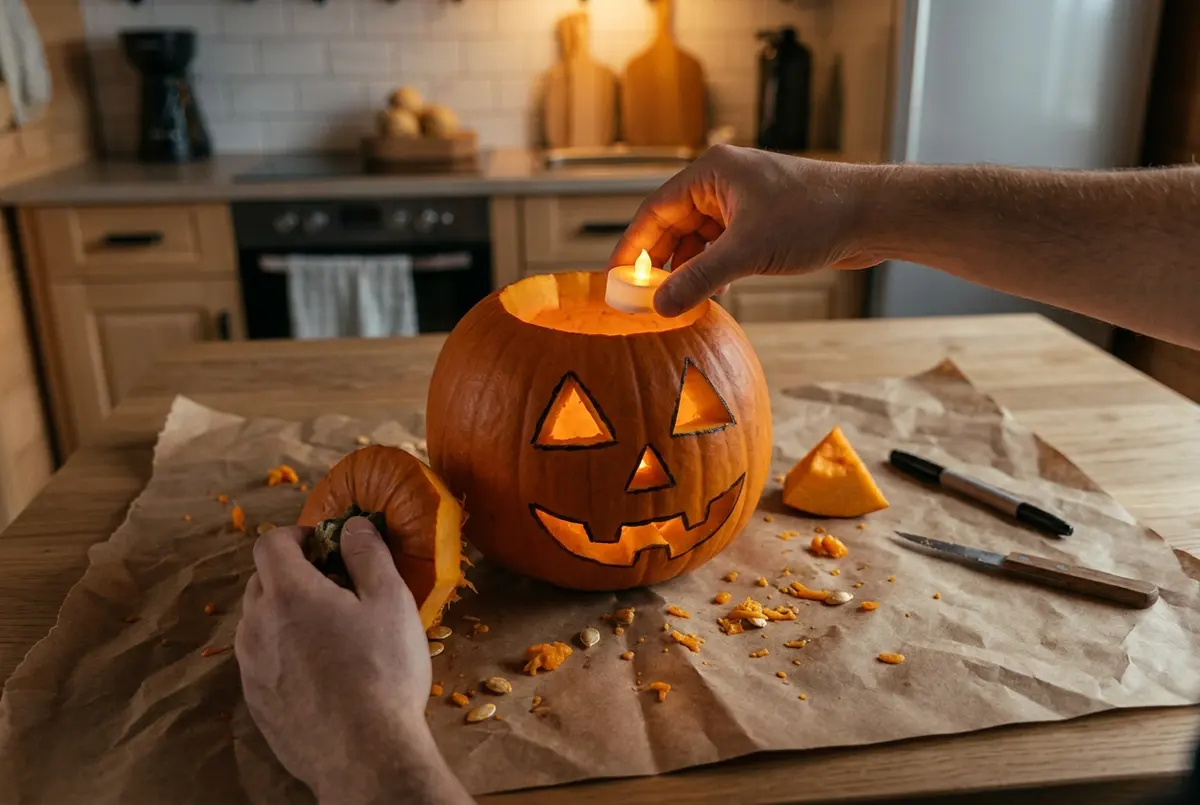
Adults do the cutting. Ohio State University Extension says children 14 and under shouldn't use the carving tools, but they can draw the face and scoop out the inside.
A carved pumpkin doesn't keep long. The Old Farmer's Almanac gives it three to five days, and less in warm weather. Petroleum jelly on the cut edges slows drying, though not with a real candle, because it burns. NC State Extension says to keep it out of direct sun, rain and frost, and in the fridge when it isn't on show.
What to eat before trick-or-treating
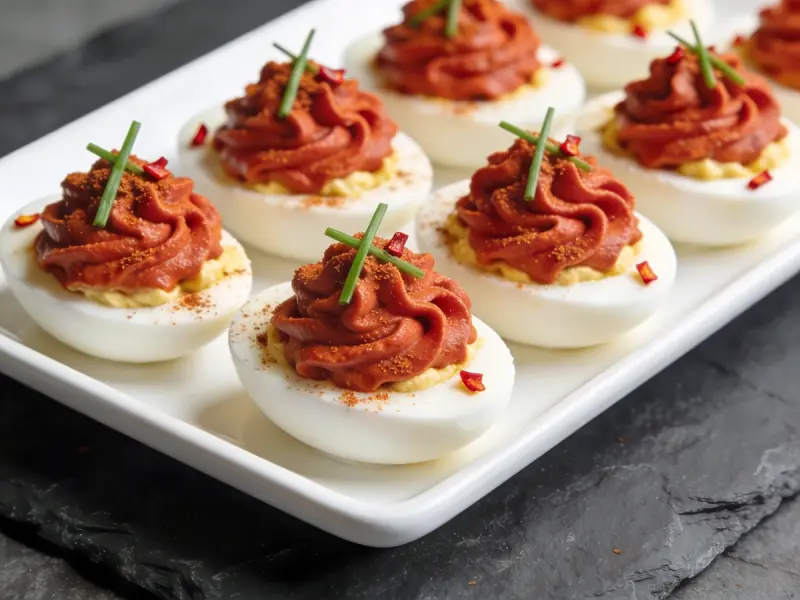
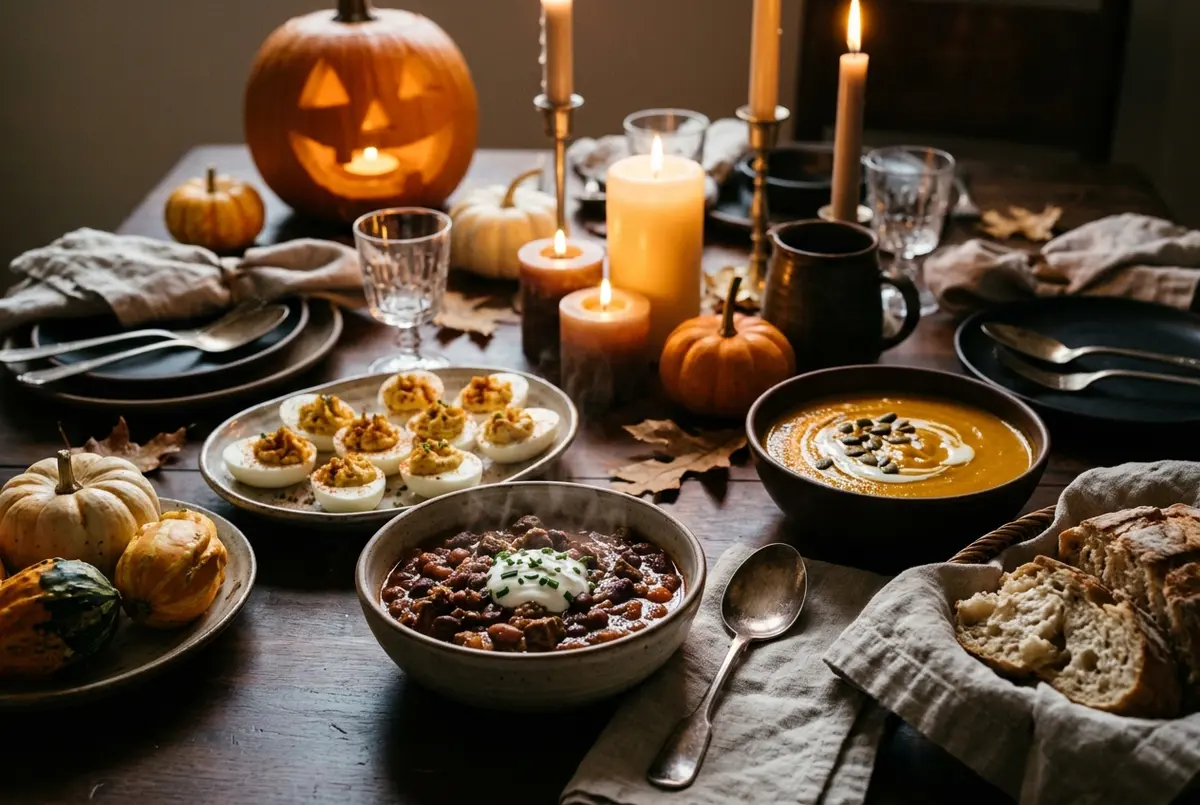
The FDA tells parents to give children a light meal before they go out and not to let them snack from the bag on the way. Ask them to wait until they get home and you have looked through their sweets, and to eat nothing that is not commercially wrapped. Chili con carne simmers for 35 to 40 minutes, so start it before the costumes go on. Deviled eggs with chipotle can be made ahead and kept covered in the fridge for up to 2 days. The eggs boil for 12 minutes, and one batch makes 12 servings. Keep them and any other perishable food in the fridge until serving, because the FDA says such food should not sit out for more than two hours, or one hour when it is above 32°C.
Apples on Halloween: bobbing and apple pie
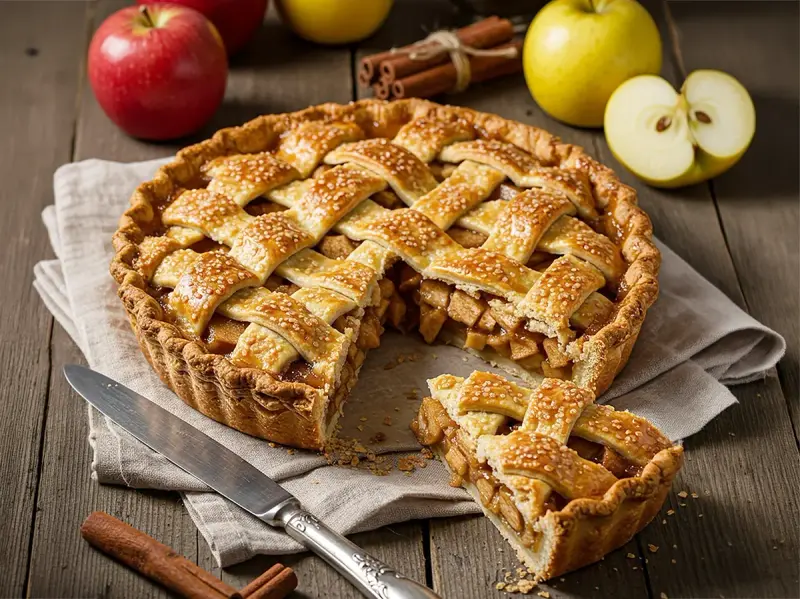
Apples were on the party table before candy was in the bag. Bobbing for apples means catching them with your teeth from a tub of water, a game Britannica says may go back to Roman customs for Pomona, the goddess of orchards, and Fortune lists Snap Apple Night among the Wexford names for the night. An apple pie bakes at 220°C for 15 minutes and then at 175°C for 45 to 50.
Hot drinks for Halloween night
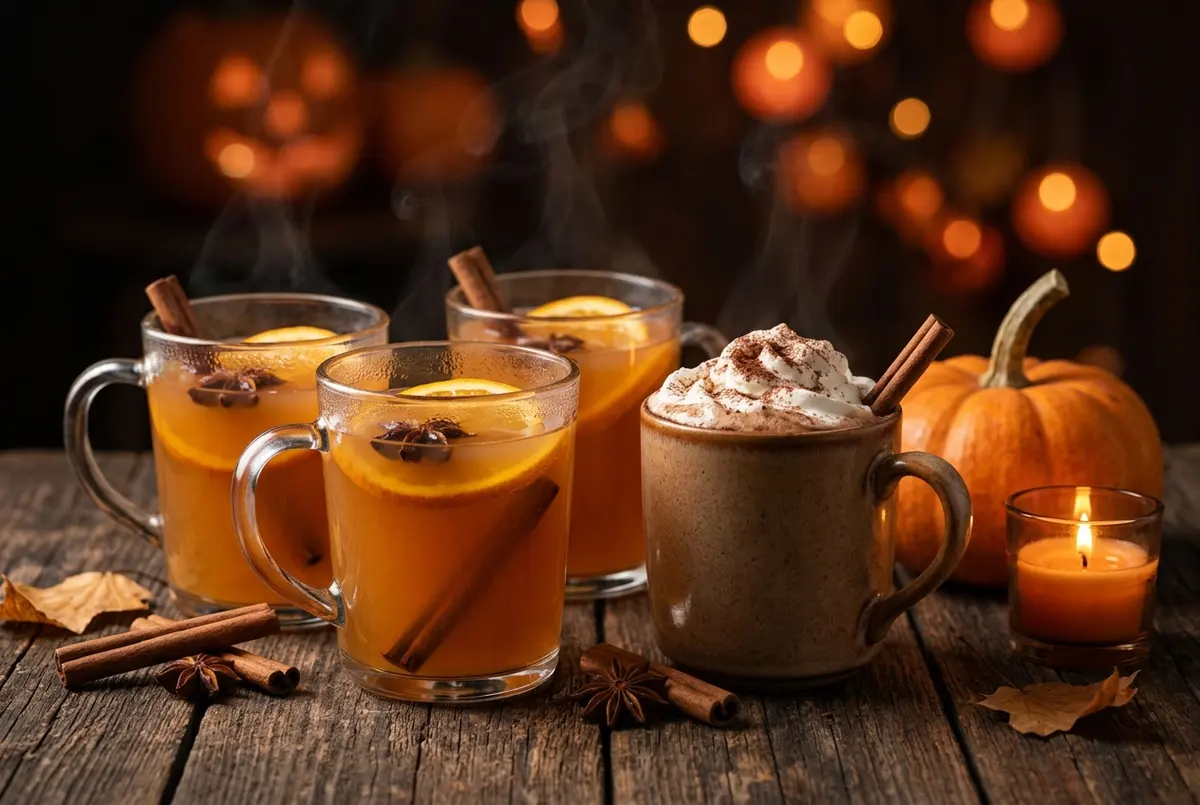
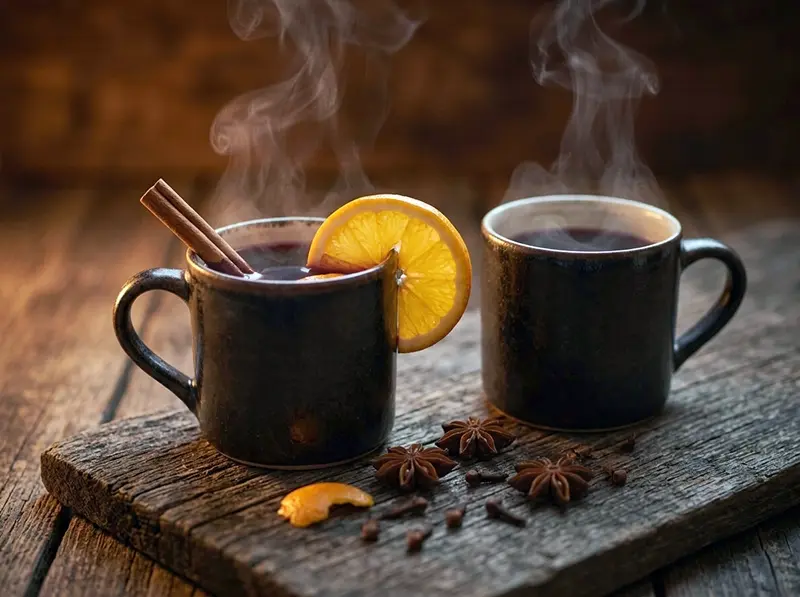
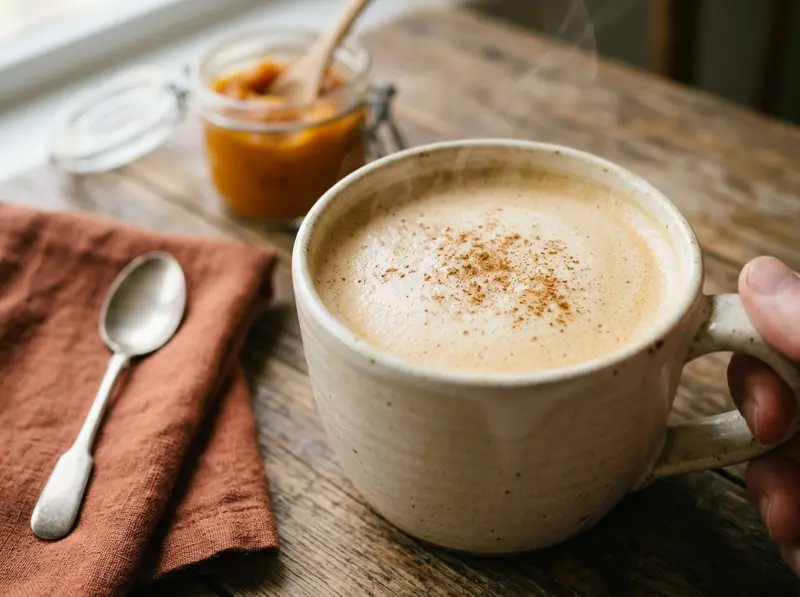
Hot chocolate is the one for children, ready in about 15 minutes, made with dark chocolate chopped into 2 to 3 mm pieces so it melts evenly. The rest are for adults. Mulled wine is held near 70°C and never boiled. A pumpkin spice latte is coffee with hot milk and pumpkin pie spices. More in warm autumn drinks.