"Pumpkin" in a recipe can mean very different vegetables. The small orange Hokkaido, the pale bell-shaped butternut and the big ribbed Muscat pumpkin are all winter squash, but they differ in water content, sweetness and whether the skin can stay on. Pick the wrong one and a soup turns watery or a pie filling will not set. Here is what each variety is good for, and six recipes that use them.
Hokkaido: the one you do not peel
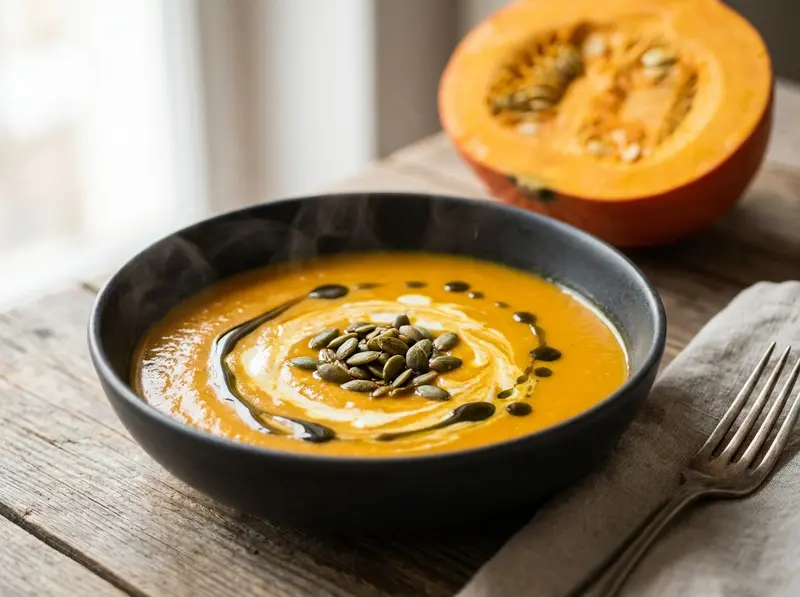
Hokkaido, also sold as red kuri squash, is the small, round, deep-orange pumpkin that fills German markets from September. Its skin is thin and softens completely in cooking, so you only halve it, scoop out the seeds and cut it up. The flesh is dry, dense and slightly chestnut-like, which gives a thick soup without much cream.
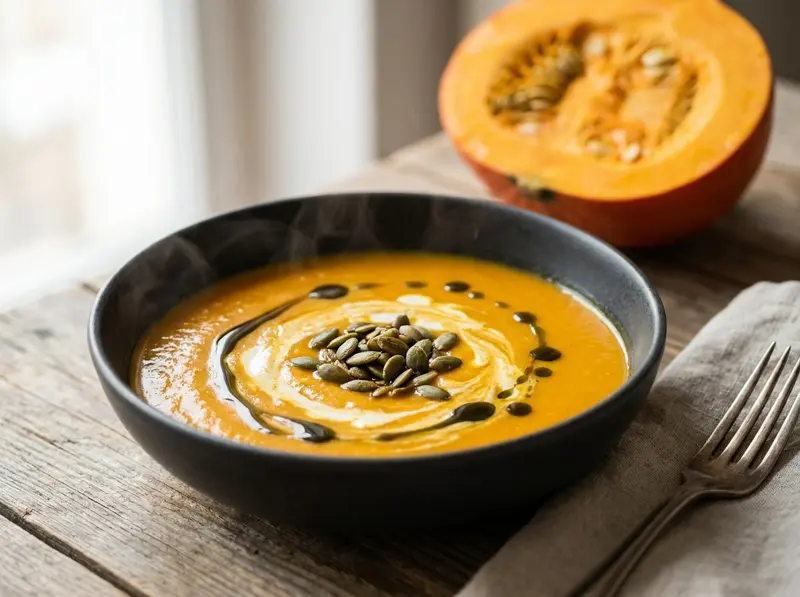
That is why it is the pumpkin behind German Kürbissuppe: Hokkaido, onion, ginger, broth and a little cream, blended smooth. The unpeeled skin disappears in the blender and adds colour. It is also the best choice in Europe for homemade purée for pumpkin pie, where canned purée is hard to find: roast it cut side down until soft, scoop out the flesh and let it drain so the filling sets.
Butternut: sweet and smooth
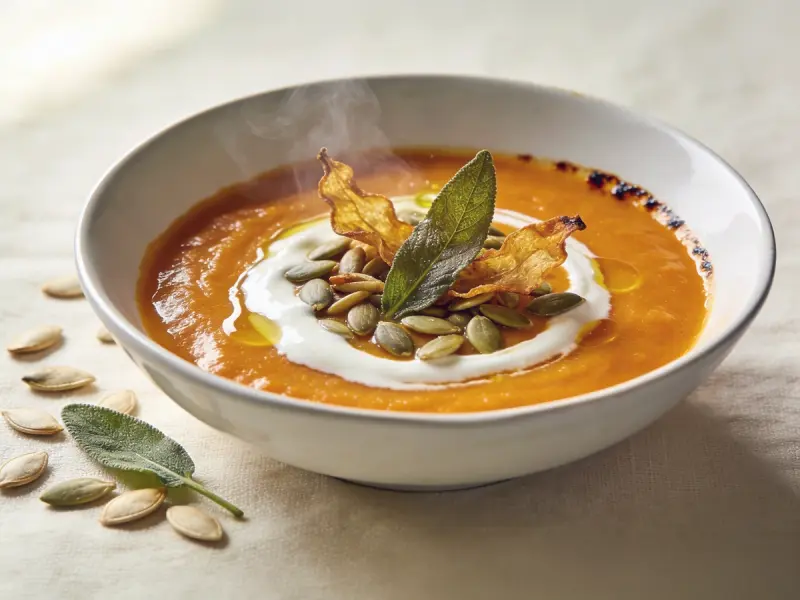
Butternut squash is the long, beige, bell-shaped one. It has a hard skin that you do peel, very few seeds in the round end, and sweet, smooth, almost fibreless flesh. Roasting brings out the sugar and gives caramelised edges, which is the whole point of a roasted butternut squash soup: roast the squash with garlic first, then blend, and the soup tastes deep instead of flat.
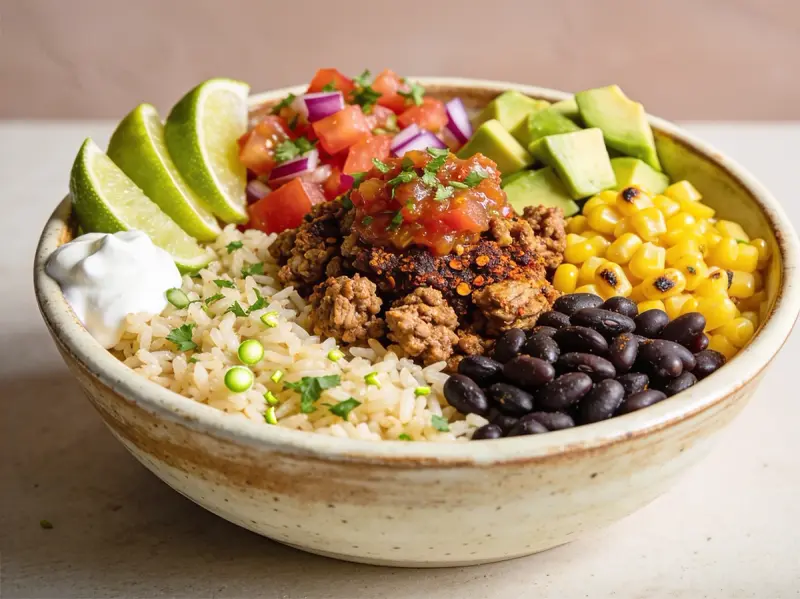
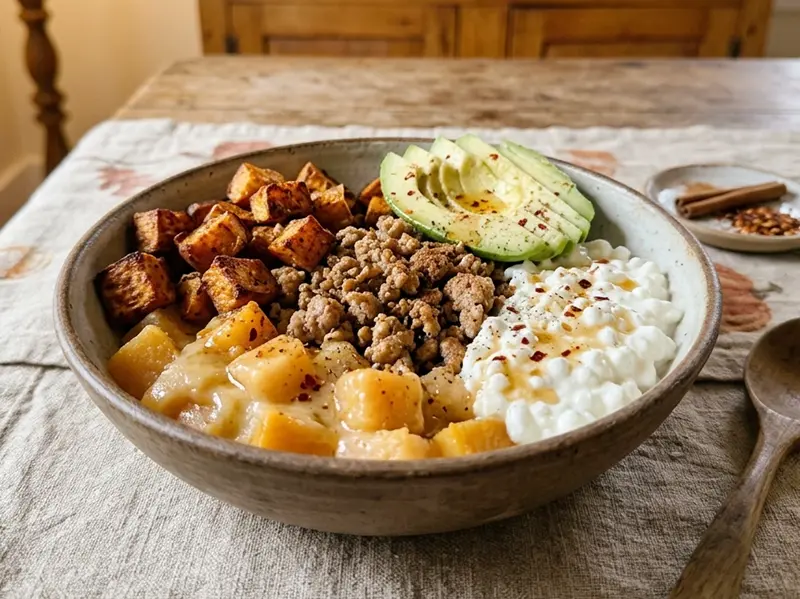
It holds its shape well in the oven, so it also works in cubes. In a spiced butternut and sweet potato bowl it roasts on the same tray as sweet potato and goes into a bowl with turkey, cottage cheese and hot honey.
Muscat pumpkin: the big one for purée
The Muscat pumpkin, sold in France as musquée de Provence, is the large, flattened, deeply ribbed variety that is usually sold by the slice. It is sweet and very moist, peeled before cooking, and it breaks down easily. That makes it good for purée, jam and porridge, and less good for anything that should keep its shape.
What not to cook
The bright orange carving pumpkins sold for Halloween are grown for size and thin walls, not flavour. The flesh is watery and stringy. They will make soup if you have to, but a Hokkaido or butternut does the same job far better.
Pumpkin for breakfast
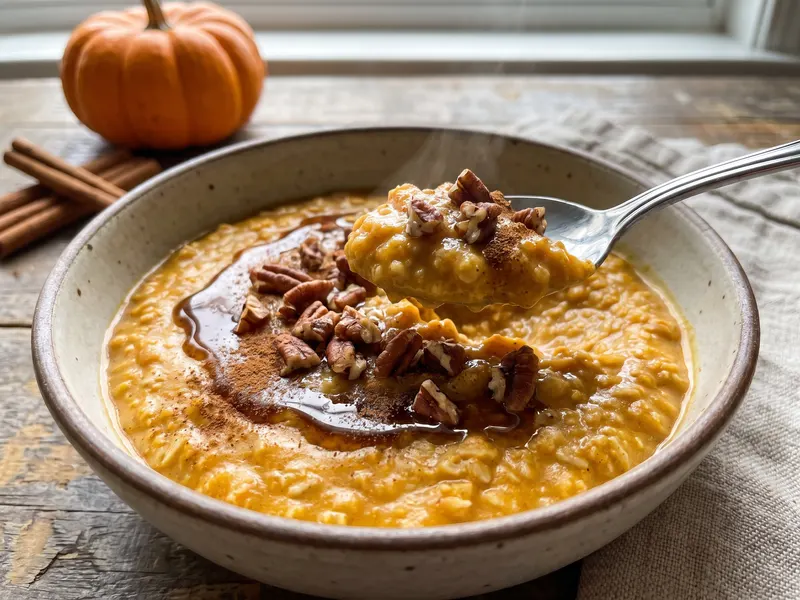
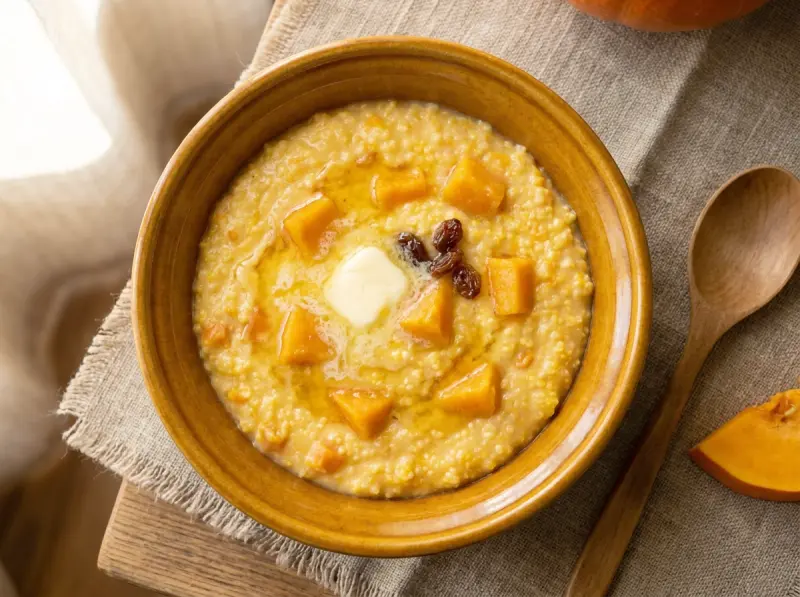
Two breakfasts use pumpkin in the simplest way. Pumpkin oatmeal stirs purée into rolled oats with cinnamon, ginger and nutmeg; the pumpkin makes the porridge thicker and gives it colour. Russian millet porridge with pumpkin cooks millet in milk with diced sweet pumpkin until both are soft. It is an autumn and winter dish in Russian homes, and any sweet, soft pumpkin works in it, including Muscat.
Pumpkin pie
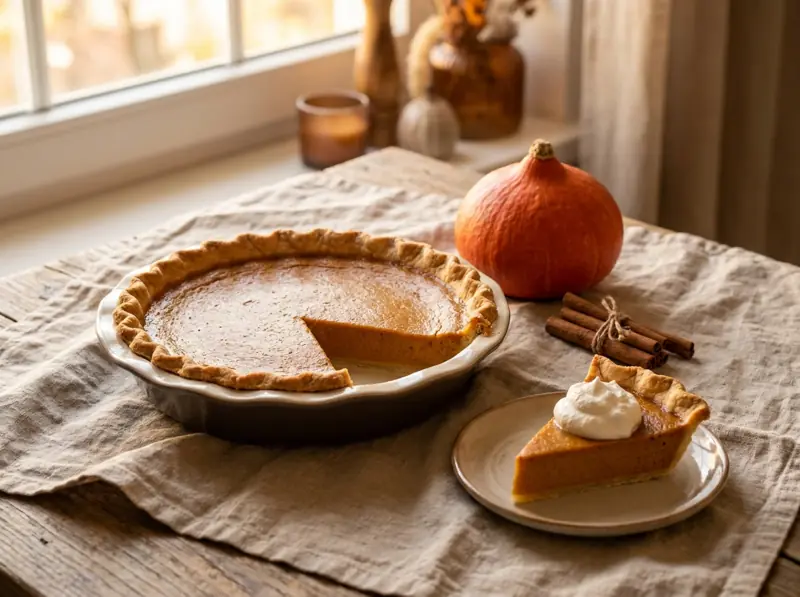
Pumpkin pie is the American Thanksgiving dessert: a spiced pumpkin custard in a blind-baked shortcrust. The filling is purée, eggs and evaporated milk with cinnamon, ginger, nutmeg and clove, baked hot for 15 minutes and then gently until only the centre still wobbles. Canadian Thanksgiving is on 12 October this year and the American one on 26 November, so there is time to bake it twice.
Buying and storing
A good pumpkin feels heavy for its size and sounds hollow when you tap it. Keep the stalk on. Whole Hokkaido and butternut keep for weeks in a cool, dry place away from the fridge. Once cut, wrap the pieces and use them within four or five days, or roast and freeze them as purée.