
Kürbissuppe (German Pumpkin Soup)
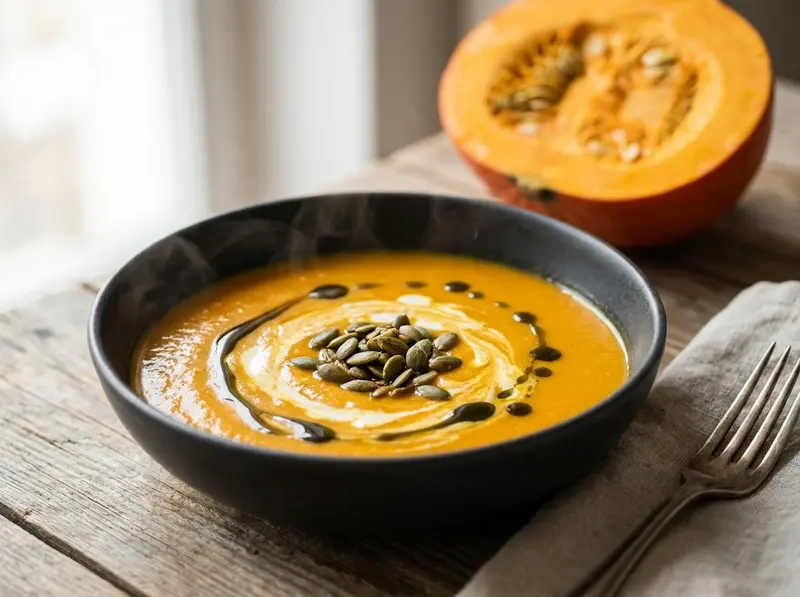
Kürbissuppe is the pumpkin soup Germans cook from late September through November, built on Hokkaido squash, onion, ginger and a little cream. The Hokkaido goes into the pot unpeeled: its skin is thin, cooks away completely in twenty minutes and carries a good share of the colour and of the chestnut taste that separates this from a soup made with peeled butternut. The cubes are browned in butter first, otherwise the sweetness has nothing underneath it. It gets finished at the table with toasted seeds and a spoonful of dark green pumpkin seed oil.
Ingredients
- 1 kgpumpkin, Hokkaido variety
- 1 onion
- 2 clovesgarlic
- 20 gginger
- 30 gbutter
- 700 mlvegetable broth
- 150 mlheavy cream
- 2 tsplemon juice
- 1 pinchnutmeg
- 1 tspsalt
- ½ tspblack pepper
- 2 tbsppumpkin seeds
- 2 tsppumpkin seed oil
Method
- Toast the pumpkin seeds first, in a dry pot over medium heat, three or four minutes until they swell and start popping. Tip them onto a plate. Do this now, because once the soup is going you will not want to stand over a second pan, and seeds burn in about the time it takes to answer the door.
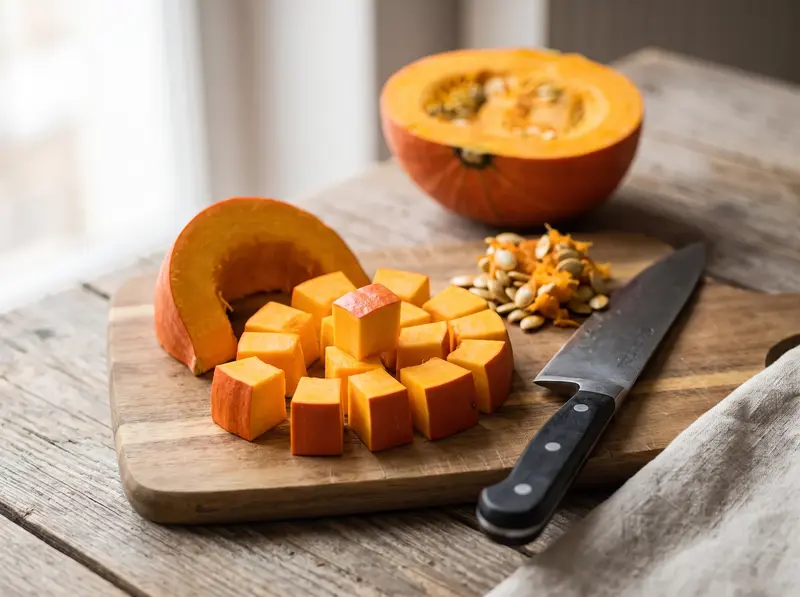
- Scrub the Hokkaido under running water, cut out the stem, halve it and scrape out the seeds and the stringy centre with a spoon. Do not peel it. Hokkaido skin is thin and goes completely soft in twenty minutes of simmering, and it carries a good share of the colour and the chestnut flavour. Cut the flesh into cubes of about 3 cm. You should end up with roughly 900 g.
- Dice the onion, chop the garlic, grate the ginger on the fine side of a box grater. Melt the butter in a wide pot over medium heat and cook the onion for five minutes, until soft and glassy but not coloured. Add the garlic and ginger for one more minute, no longer, or the garlic turns bitter.
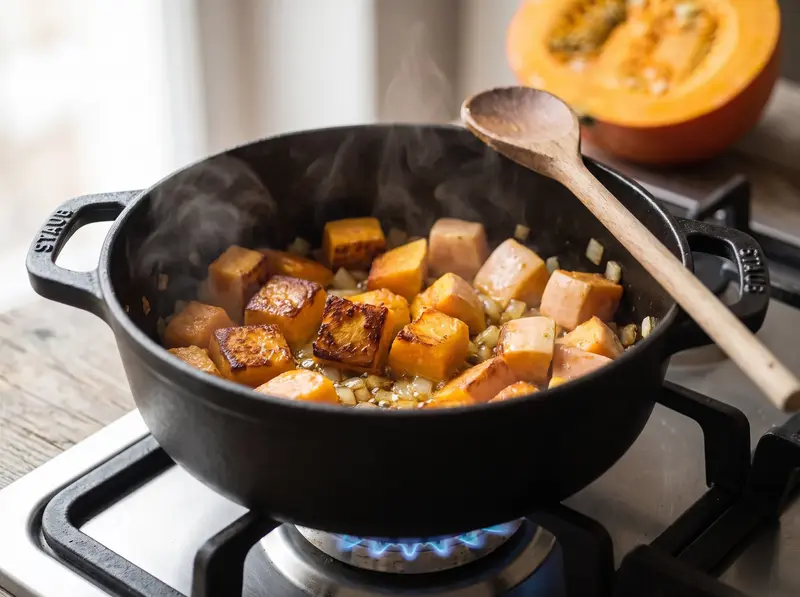
- Turn the heat up, add the pumpkin cubes and leave them alone for two minutes, then stir and leave them again. You want brown patches on at least some of the cut faces. Boiled pumpkin on its own tastes flat and sweet; the browning is what puts a savoury floor under it.
- Pour in enough broth to come just under the top of the pumpkin, roughly 600 ml, and keep the rest back. Add the salt. Cover and simmer for 20 minutes. It is done when a knife slides through a cube skin and all with no resistance at all. If the skin still grips the blade, give it five more minutes: underdone skin blends into orange specks you cannot get rid of.
- Blend for a full two minutes with a stick blender, moving it around the pot. Skin takes much longer to break down than flesh, and thirty seconds gets you something that looks smooth in the pot and feels grainy in the mouth. Keep the blender head under the surface unless you want an orange ceiling.
- Stir in the cream over low heat, then the nutmeg, pepper and lemon juice. The lemon is not there to taste of lemon; without acid the soup reads as dessert. Check the consistency: it should run off a spoon in a ribbon, not fall off in a lump. Loosen it with the reserved broth if it does.
- Ladle into bowls, scatter the toasted seeds over and drizzle on the pumpkin seed oil, about half a teaspoon per bowl, in a thin spiral so the green shows against the orange. The oil goes on off the heat and never into the pot: heated, it loses the roasted note and turns a murky grey.
FAQ
No, and you are better off not doing it. Hokkaido skin is under two millimetres thick and cooks away to nothing in about twenty minutes, and a good part of the deep orange colour sits directly under it. Peeling costs you twenty minutes of work and gives you a paler, blander soup. This is the real difference from a soup built on butternut or a Muskat pumpkin, whose skin is hard and has to come off with a peeler before anything else happens, the way it goes in butternut squash soup. Hokkaido only needs a scrub, because it goes into the pot exactly as it came off the field.
Almost always too much stock at the start. A kilo of Hokkaido gives up a lot of its own water once it is covered and heated, so a pot that looks half empty at minute one is full at minute fifteen. Pour broth to just below the level of the pumpkin, around 600 ml per kilo, and keep the rest in the jug. The second cause is under-blending: a soup that was not properly broken down separates in the bowl and looks thin even when it is not. Two minutes with the stick blender, not twenty seconds.
Yes. Rapeseed oil in place of the butter, and 150 ml of full-fat canned coconut milk in place of the cream, stirred in at the same point and kept off the boil. The soup gets a little sweeter and picks up a coconut note that sits badly next to nutmeg, so drop the nutmeg and swap the lemon for lime. Oat cream stays closer to the German original; it is thinner, so use 180 ml and let the soup bubble for a minute to pull it together.
Styrian pumpkin seed oil is pressed in southern Austria and has held protected origin status since 1996, so outside German-speaking Europe it is scarce and expensive. Toasted sesame oil is the closest thing in an ordinary kitchen: the same roasted, faintly bitter register, though use less of it because it is louder. Walnut oil works too and speaks more softly. With none of those, brown 20 g of butter until it smells of hazelnut, let it cool for a minute and spoon that over. Olive oil is the one that does not work; against sweet pumpkin it turns peppery and hard.
Bread, nearly always, and preferably with a crust worth tearing: a Brötchen, dark rye, or a warm pretzel pulled apart and dipped. In Bavaria the soup often comes out alongside Obatzda and radishes as a first course before a roast. On an October weeknight it is the whole dinner, soup and bread and nothing else. Some households add fried bacon bits or a spoon of crème fraîche, though with the seed oil already on top I find both of them one thing too many.
Rate this
Keep browsing
More dishes from the German archive — picked by overlap with what you're cooking now.


Join the conversation
Comments
No comments yet — be the first!