Aki no mikaku (秋の味覚, "the tastes of autumn") is the Japanese name for foods that are at their peak in autumn: chestnuts, sweet potatoes, kabocha squash, mushrooms, saury and the new season's rice. Japanese dictionaries define it exactly that way, as foods in season in autumn, and list chestnuts, mushrooms and saury among the standard examples. It is a shopping list and a mood at the same time. Here is what the phrase covers and eight home dishes that cook it.
Chestnuts and new rice
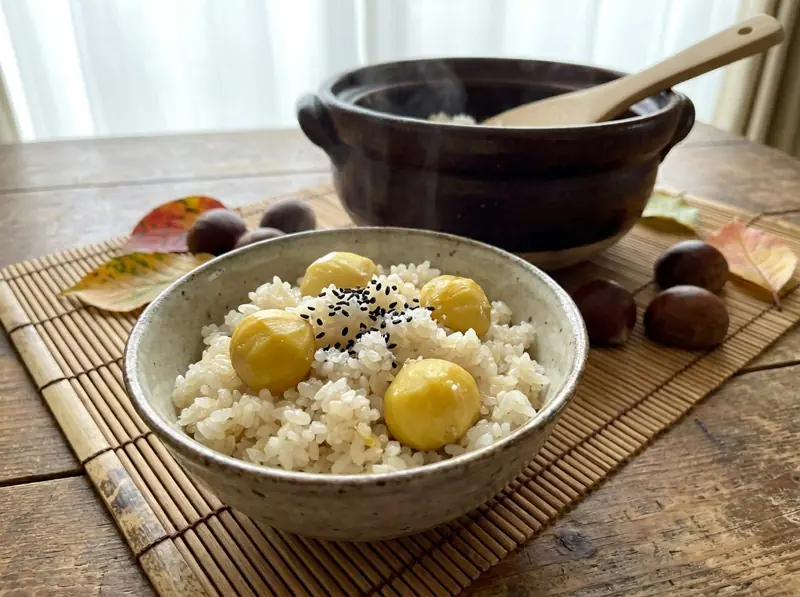
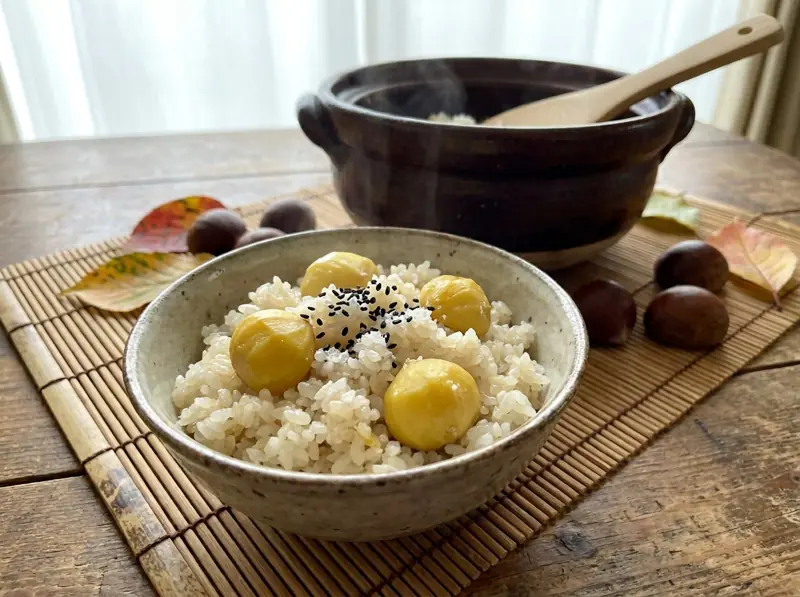
The simplest way to eat a chestnut in Japan is inside rice. Kuri gohan (栗ご飯, chestnut plus cooked rice) is short-grain rice steamed with whole peeled chestnuts, seasoned with sake and salt rather than soy sauce so the chestnut stays sweet and pale. A little glutinous rice in the pot keeps the grains glossy. The chestnuts come out as soft as a baked sweet potato. It takes patience, since peeling is slow, but you make it once a year, in September and October, and that is the point.
Mushrooms
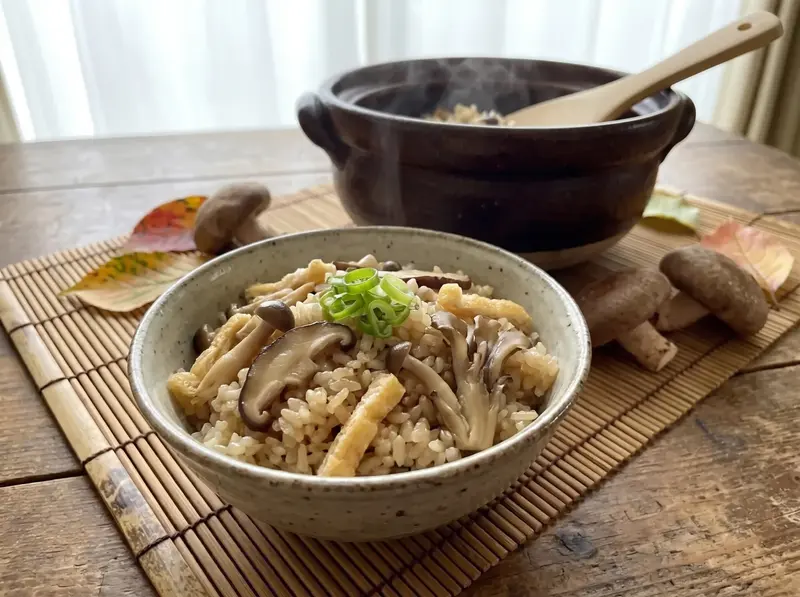
Kinoko takikomi gohan (きのこの炊き込みご飯) is the mushroom counterpart. Takikomi gohan is the general word for rice cooked together with other ingredients, so the dashi, soy sauce and mirin go into the grains instead of onto them. Shimeji, maitake and shiitake sit on top with fried tofu and are not stirred in until the pot is done. Leftovers make good onigiri the next day.
Kabocha
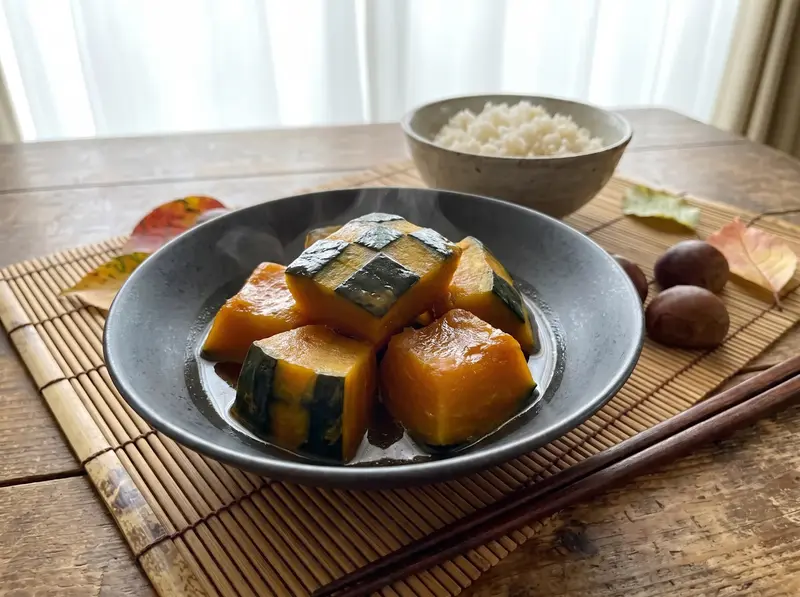
Kabocha is the squat, dark-green winter squash with sweet, floury flesh. Kabocha no nimono (かぼちゃの煮物) is the everyday way to cook it: chunks packed skin-side down in one layer, simmered under a drop lid in dashi, sugar, mirin, sake and soy sauce. Part of the skin stays on, so the pieces hold their shape. The real seasoning happens after you turn off the heat, while the pan sits for 15 to 20 minutes. If you want a Western take on pumpkin, our pumpkin guide covers the varieties.
Sweet potatoes
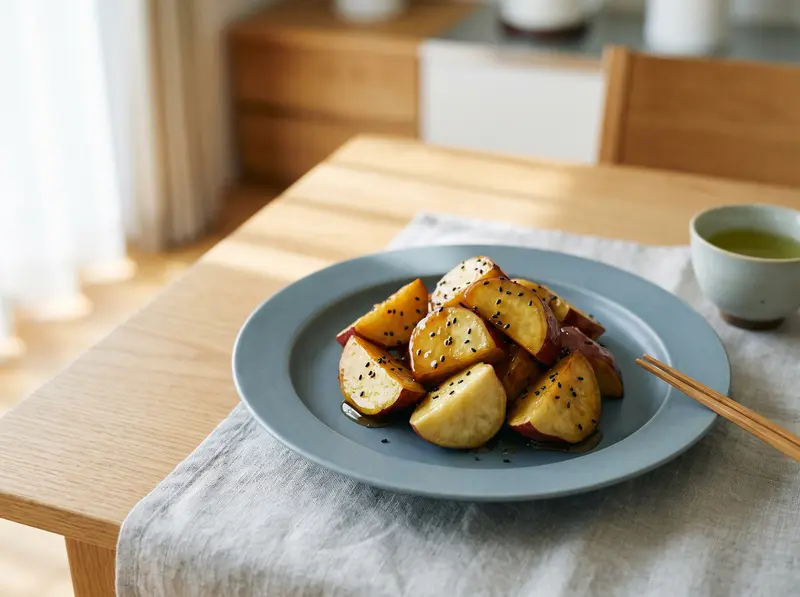
Daigaku imo (大学芋, "university potato") is sweet potato fried in about a centimetre of oil, then coated in a thin syrup of sugar, mirin and soy sauce and finished with black sesame. Nobody has proved where the name comes from. Several stories involve students, and none is settled. It works as a snack or a bento side, and the syrup sets into a light shell as it cools.
Warm dishes for cooler evenings
Once the evenings turn cold, the aki no mikaku table moves to pots.
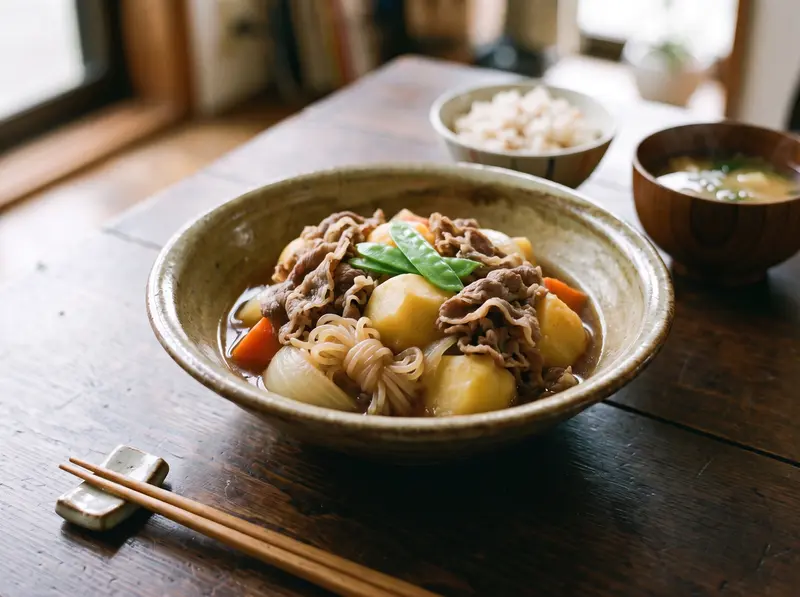
Nikujaga (肉じゃが, "meat and potatoes") is beef or pork, potatoes, onion and carrot simmered in sweet-salty dashi. In western Japan it is usually beef, in eastern Japan more often pork. The trick is to stop stirring and let it stand off the heat so the potatoes drink the broth.
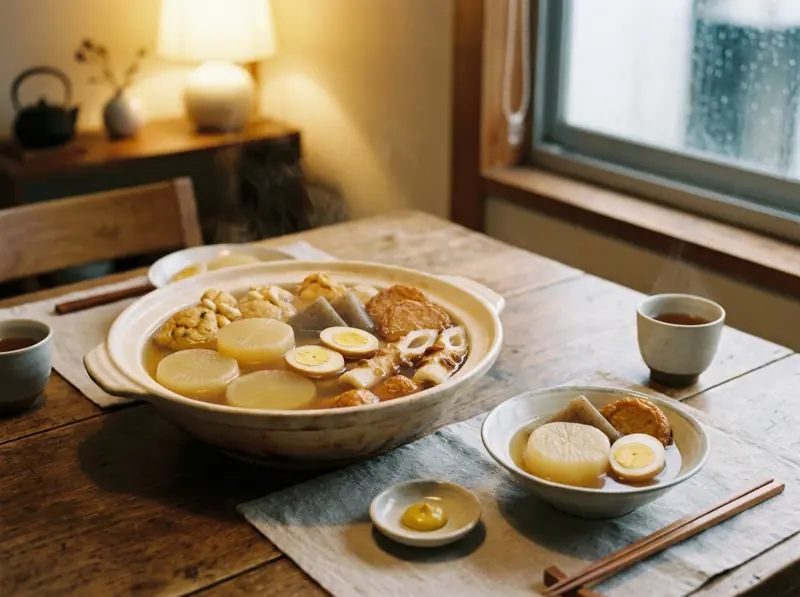
Oden is a slow pot of daikon, eggs, konnyaku and fish cakes in a clear Kanto-style dashi. Keep the broth at a bare tremble, 80 to 90°C. It needs about two and a half hours and tastes better the next day.
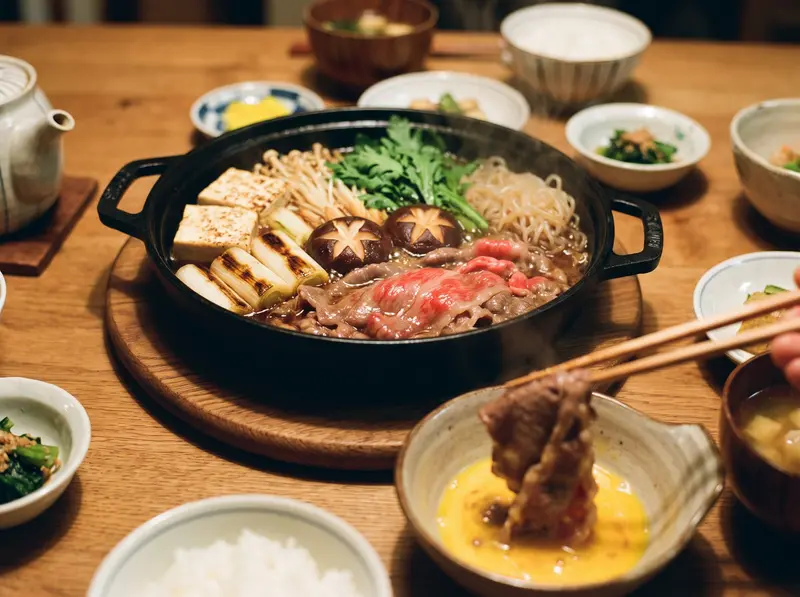
Sukiyaki (すき焼き) is thin marbled beef, tofu, negi, mushrooms and shungiku simmered in a sauce of soy sauce, mirin, sake and sugar, with each bite dipped in beaten raw egg. The recipe uses the Kanto style, where the sauce is mixed in advance, and a wide skillet works if you have no tabletop burner.
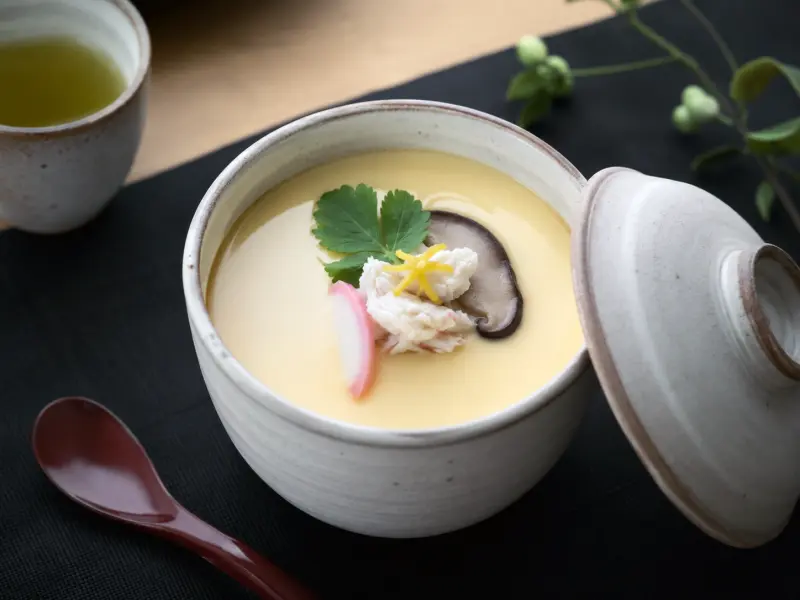
Chawanmushi (茶碗蒸し) is the quiet one: dashi-flavoured egg custard, steamed gently until it just sets, with crab, shiitake, kamaboko and ginkgo nuts hidden underneath. Cut the eggs rather than whisking them, strain, and keep the steam low.
The harvest moon in October
Autumn eating has a calendar marker too. Jūsan'ya (十三夜), the moon-viewing on the 13th night of the ninth lunar month, falls on 23 October in 2026. It is described as a Japanese custom, unlike the older 15th-night moon viewing that came from China. Jūsan'ya is also called "chestnut moon" (栗名月) and "bean moon" (豆名月), after the chestnuts and beans offered to the moon. If you cook only one dish from this list that week, kuri gohan is the obvious choice.
Putting a menu together
A good autumn meal in Japan is one rice dish, one simmered dish and a soup. Kuri gohan with nikujaga and a bowl of miso soup is complete. For a weekend, make oden a day ahead and the rice fresh. Daigaku imo goes in the bento box.