

Kinoko Takikomi Gohan (Japanese Mushroom Rice)
Kinoko takikomi gohan (きのこの炊き込みご飯), also written kinoko gohan and simply called Japanese mushroom rice, is short-grain rice cooked together with mushrooms and fried tofu in dashi, soy sauce, mirin and sake, so the seasoned broth goes into the grains instead of being poured on top. Takikomi gohan is the general name for rice cooked with other ingredients, and this is the mushroom version, usually made with shimeji, maitake and shiitake. The mushrooms sit on top of the rice and are not stirred in until the pot is done, which keeps the grains evenly tender. Active time covers prep and cooking; add 30 minutes for soaking the rice and 10 minutes of steaming off the heat. It feeds four as a main with miso soup and pickles, and what is left makes good onigiri the next day.
Ingredients
- 300 gshort-grain rice
- 100 gshimeji mushrooms
- 100 gmaitake mushrooms
- 3 piecesshiitake mushrooms
- 1 sheetaburaage
- 2 tbspsoy sauce
- 2 tbspmirin
- 1 tbspsake
- 305 mldashi stock
- 2 stalksscallions
Method
- Measure 300 g of short-grain rice (2 gō) into a bowl and rinse it: add water, stir with your hand a few times, tip out the cloudy water, and repeat three or four times until it runs nearly clear. Cover the rice with fresh water and leave it for 30 minutes, then drain in a sieve and let it rest for 10 minutes. Soaking lets the grains take up water all the way to the centre, and skipping it is the most common reason this rice comes out chalky.
- Cut the hard base off the shimeji and maitake and pull them apart by hand into pieces about the size of a thumb tip. Cut the stems off the 3 shiitake and slice the caps 5 mm thick. Wipe the mushrooms with a damp paper towel instead of washing them, because they soak up water like sponges and would dilute the broth. Put the aburaage in a heatproof bowl, pour boiling water over it, wait 30 seconds, drain, blot dry and cut into strips 5 mm wide; this removes the film of frying oil that would make the rice greasy. Slice the scallions thinly and set them aside for serving.

- Pour 2 tbsp (30 ml) of soy sauce, 2 tbsp (30 ml) of mirin and 1 tbsp (15 ml) of sake into a measuring jug and top up with dashi to 360 ml. That takes about 285 ml of dashi; keep the rest for the pot method in the next steps. Measuring this way, instead of pouring the seasoning on top of a full measure of water, holds the total liquid at what 2 gō of rice needs, and too much liquid is what turns mushroom rice soft and sticky. The mushrooms release some water of their own, so do not add more.
- Put the drained rice into the inner pot of a rice cooker, or into a heavy pot with a tight lid about 20–22 cm across, and pour in the liquid. In the rice cooker it should reach the 2 gō line; in the pot use all 305 ml of dashi plus the seasonings, about 380 ml in total. Stir once so the soy sauce spreads evenly, then level the rice with a spoon. Lay the aburaage and mushrooms on top in an even layer and do not stir them in: toppings left on top steam without getting between the grains, so the rice cooks evenly.

- In a rice cooker, close the lid and start the normal white-rice program (or the mixed-rice program if yours has one) and do not open it during the cycle. In a pot, cover it, set it over medium heat and wait until steam comes out under the lid, 5 to 7 minutes, then turn the heat to the lowest setting and cook for 12 minutes without lifting the lid. Turn the heat off after 12 minutes, 13 at most, because a thin pot can scorch the bottom quickly.
- Leave the lid shut and let the rice steam for 10 minutes: in the rice cooker once the cycle ends, in the pot off the heat. The steam finishes the centre of the grains and lets the moisture spread evenly. Lifting the lid early lets that steam escape and leaves the top wet and the bottom firm.
- Open the lid and scatter the scallions on top. Slide a rice paddle straight down to the bottom and fold the rice up and over, working around the pot until the mushrooms and aburaage are spread through the rice. Fold rather than stir, or the grains smash. Serve right away in small bowls; any thin crust from the bottom of the pot is a bonus for whoever wants it.

FAQ
Almost always the rice was not soaked, or the liquid was short. Soak rinsed rice in plain water for a full 30 minutes, drain it for 10, and keep the total liquid at 360 ml for 300 g of rice in a rice cooker, 380 ml in a pot. Do not stir the mushrooms into the dry rice, and do not open the lid during the 10-minute steaming. To rescue a batch that is already done, sprinkle 2–3 tablespoons of hot water over the rice, close the lid and steam on the lowest heat for 5 minutes.
Yes, and it is a normal way to make it. Use a heavy pot with a tight lid, about 20–22 cm wide, and put the same rice, 380 ml of liquid and the toppings in it. Cover, heat on medium until steam escapes under the lid (5 to 7 minutes), then lowest heat for 12 minutes and 10 minutes off the heat with the lid still on. A glass lid helps you see the steam, but do not lift it. Serve it with miso soup and some pickles for a full meal.
For 300 g of rice, about 250–300 g of mushrooms in total is a good amount; this recipe uses 100 g shimeji, 100 g maitake and 3 shiitake (about 60 g). Use at least three kinds, because each gives a different texture and flavour: shiitake for depth, maitake for aroma, shimeji for bite. Enoki, king oyster, oyster and cremini mushrooms also work, cut into pieces of about 3 cm. Frozen mixed mushrooms can go straight on the rice without thawing, as Shirogohan.com notes.
Yes to all three. Leave out the aburaage and nothing else needs to change; the rice will be lighter and a bit less rich. Instead of dashi use 1 teaspoon of instant dashi granules in 300 ml of hot water, or for a vegetarian version a 10 cm piece of kombu soaked in 300 ml of water for 30 minutes. Dashi made with bonito is not vegetarian, so choose the kombu one if that matters. Keep the soy sauce at 2 tablespoons, since it carries most of the seasoning.
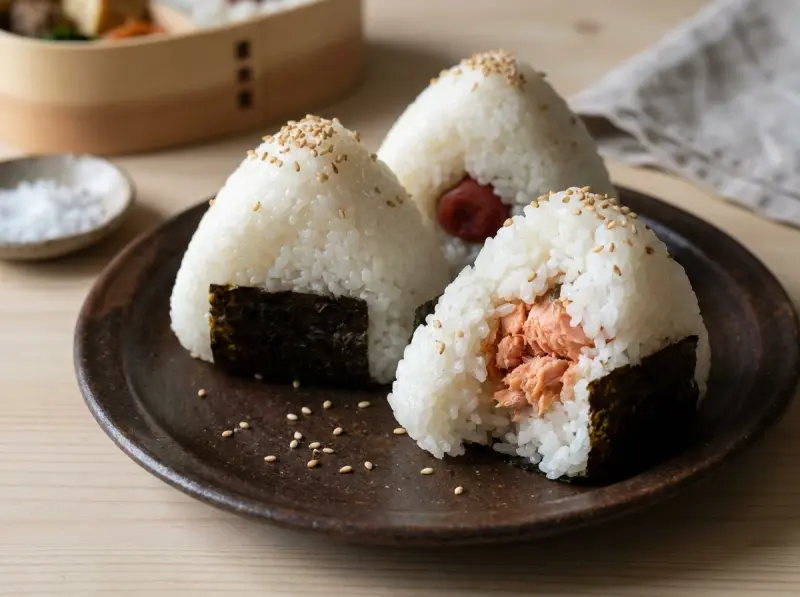
Cool the rice quickly and put it in the fridge within an hour or two, and eat it within 1 day. For longer, pack portions of about 150 g tightly in cling film and freeze for up to 1 month, then reheat in the microwave until steaming hot. Leftover rice makes good onigiri: shape it while it is still just warm, with hands wet in lightly salted water, and wrap in nori. Keep the mushroom and aburaage pieces whole in the middle for a filling that is already seasoned.
Rate this
Recipes by email
One letter a week: a recipe picked for your taste, plus whatever is new on the site. Unsubscribe in one click.
Welcome gift: Sergei's cookbook (e-book).
By subscribing you agree to the privacy policy.
Tell us what you like to cook (30 seconds) →Keep browsing
More dishes from the Japanese archive — picked by overlap with what you're cooking now.
Join the conversation
Comments
No comments yet — be the first!