


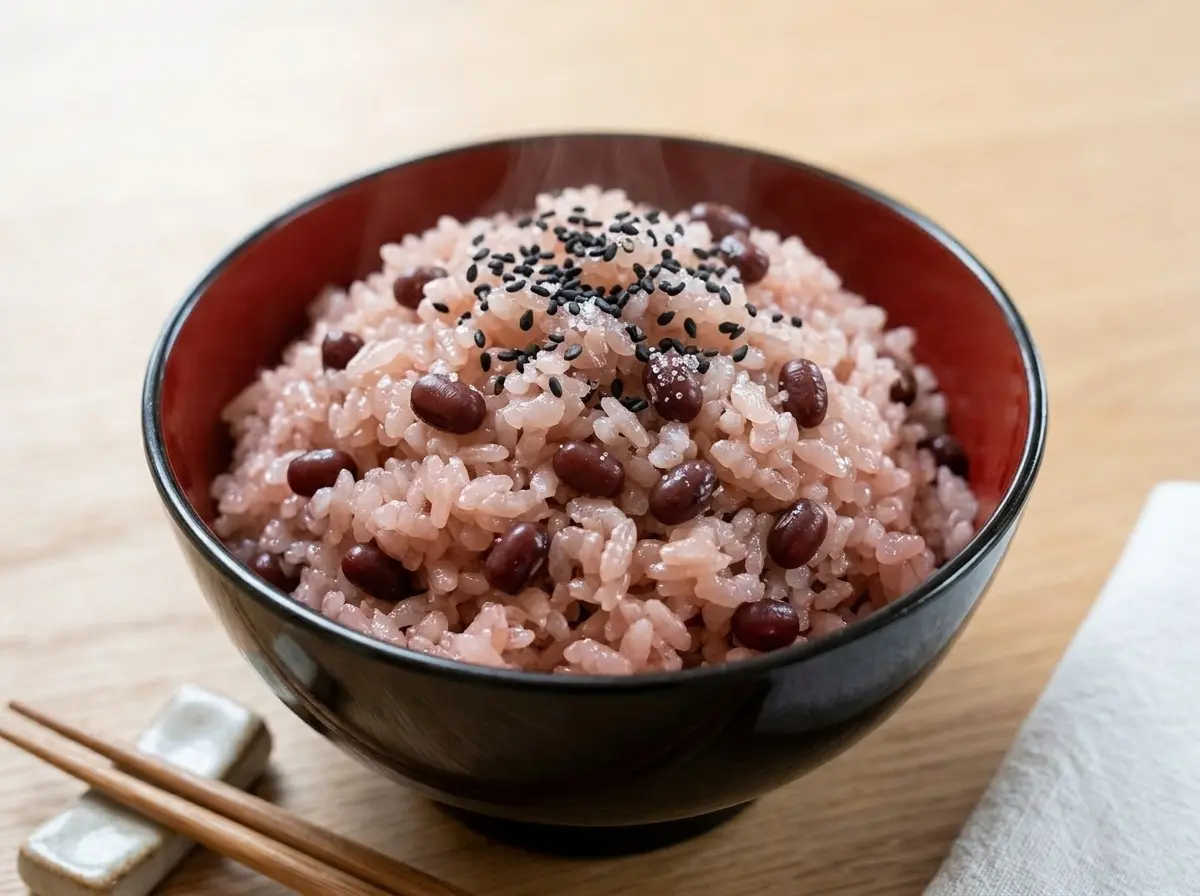
Sekihan (Japanese Red Bean Rice)
Sekihan (赤飯, せきはん, also called osekihan or okowa) is Japanese glutinous rice cooked with azuki beans and their cooking liquid, which turns the rice pink-red. Japanese families make it for celebrations, including children's milestones such as Shichi-Go-San on 15 November, and eat it sprinkled with gomashio, a mix of toasted black sesame and salt. The classic sekihan is steamed: the rice soaks overnight in the bean liquid, then steams for 40 to 60 minutes while the cook sprinkles it with more liquid every 10 to 15 minutes. This is the home rice-cooker version, which the Japanese encyclopedia Nipponica calls takiokowa. It needs no overnight soak and comes out a little softer and deeper in colour than the steamed kind. It takes about 1 hour 50 minutes, most of it while the beans cool and the rice cooker works.
What sekihan is and when it is made
Japanese dictionaries describe sekihan as glutinous rice steamed with boiled azuki beans or sasage and their red cooking liquid, eaten at celebrations. Plain white steamed glutinous rice is the dish for Buddhist rites, and the red one for happy occasions. Red was once believed to ward off evil and bad luck; another explanation is that the first rice grown in Japan was red.
Japan's Ministry of Agriculture lists sekihan among the dishes of the rites that mark a child's growing up: the first-meal ceremony at about 100 days after birth, and Shichi-Go-San on 15 November, when girls of 3 and 7 and boys of 3 and 5 are taken to a shrine. In Hokkaido sekihan is sweet, made with candied amanatto beans and food colouring. For another seasonal Japanese rice that also uses glutinous rice, try kuri gohan.
Rice cooker or steamer
The original method is steaming. The rice soaks overnight in the bean liquid and steams for 40 to 60 minutes, and every 10 to 15 minutes the cook sprinkles it with more liquid. This sprinkling is called uchimizu: it colours the rice and softens grains that are still hard. Steamed sekihan is a little paler, with grains that stay more separate.
Japanese food companies such as Kikkoman and Ajinomoto and the rice-cooker maker Tiger give a rice-cooker method. The rice takes up water as it cooks, so it needs no soaking. Glutinous rice always gets less water than ordinary rice, and in a rice cooker it gets even less, because very little evaporates. Kikkoman's cooks advise no more than 3 rice-cooker cups at a time, so the soft grains at the bottom aren't crushed. The result is softer and a deeper pink.
Ingredients
- 60 gazuki beans
- 900 mlwater, plus a little extra for topping up
- 450 gglutinous rice
- 1 tbspsake, optional
- 1 tspsalt
- 1 tbspblack sesame seeds
Method
- Pick over the 60 g of azuki beans, throw out any that are split or discoloured, and rinse them. Don't soak them: unlike most dried beans, azuki need no soaking, and soaked beans split more easily. Put them in an 18 cm saucepan with 400 ml of the cold water and bring to the boil on medium heat. Boil for 2 minutes, then drain the beans in a sieve and pour this first water away. It turns brownish and carries the beans' bitter, astringent taste.
- Put the beans back in the rinsed saucepan with 500 ml of fresh water and bring to the boil on medium-high heat. Cover, turn the heat to the lowest setting so the surface barely moves, and cook for 20 minutes. A hard boil splits the skins. Taste a bean: it should be cooked through but still slightly firm, with the skin whole, because it finishes cooking with the rice. If the centre is still hard, give it a few more minutes. Old beans take longer.
- While the beans cook, put the 450 g of glutinous rice in a large bowl, cover it with water and wash it gently with your fingertips. Change the water 2 or 3 times, until it is almost clear. Glutinous rice breaks easily, so don't scrub it. Tip it into a colander and leave it to drain for 20 to 30 minutes.
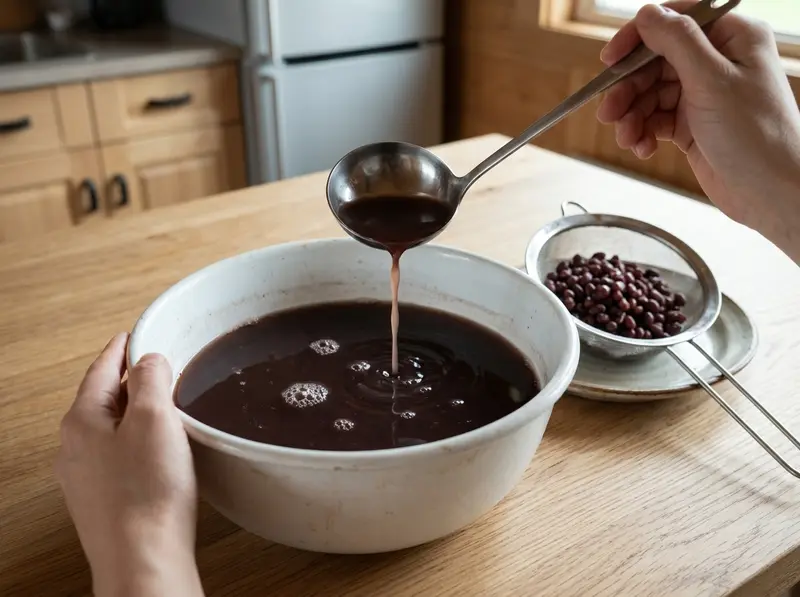
- Set the sieve over a heatproof bowl and pour in the beans, catching all of the dark red liquid. Don't shake the sieve, or the soft beans may split. Scoop up the liquid with a ladle and let it fall back into the bowl, 4 or 5 times: air makes the colour brighter. Stand the bowl in a larger bowl of cold water and stir now and then until the liquid is at room temperature, about 15 minutes. Warm liquid makes the rice cook unevenly. Cover the beans with a damp cloth while you wait.
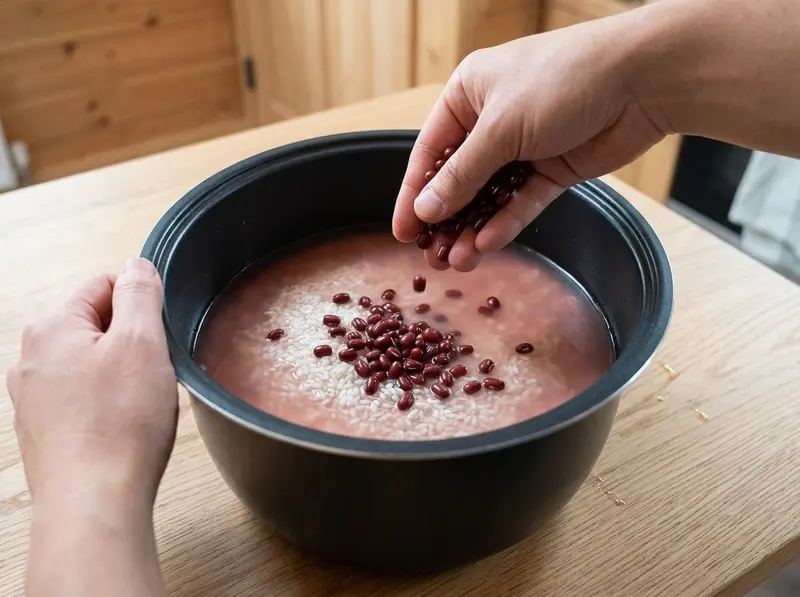
- Put the drained rice in the rice cooker pot and add 1 tbsp of sake. Pour in the bean liquid up to the okowa (sweet rice) line marked 3. If your cooker has no okowa line, use 405 ml of liquid, which makes 420 ml with the sake, and top it up with water if you are short. More water than that makes glutinous rice mushy. Add ½ tsp of the salt, stir gently with your fingertips and level the surface. Scatter the beans evenly over the top without mixing them in, so the rice cooks evenly. Cook on the okowa or sweet-rice setting, or on the white-rice setting if your cooker has neither. The cycle takes about 45 minutes. Some pressure rice cookers must not be used with beans, so check the manual first.
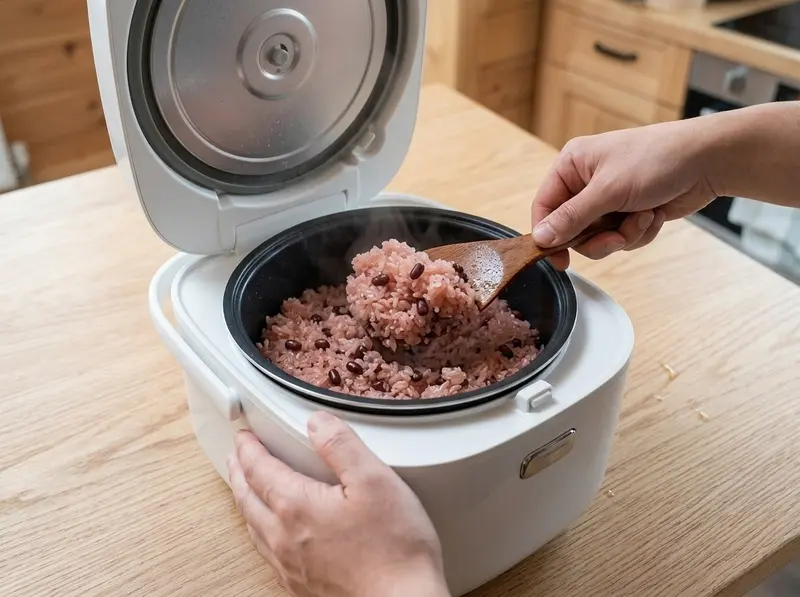
- As soon as the cooker finishes, fold the rice over from the bottom with a wet rice paddle, so the weight of the rice above doesn't squash the bottom layer. Close the lid and leave it for 10 minutes. The grains should be evenly pink and glossy, and the beans whole.
- For the gomashio, mix 1 tbsp of toasted black sesame seeds with the remaining ½ tsp of salt. Keep the seeds whole: sesame for sekihan is traditionally left whole rather than chopped or ground, because the words for cutting and grinding, kiru and suru, were avoided at celebrations. If your sesame is raw, toast it in a dry frying pan on medium heat until the seeds start to pop. Spoon the sekihan into bowls and sprinkle it with gomashio. It is good warm or at room temperature.
Cooked it? Rate the recipe
FAQ
The two are related beans, sasage a little darker, and both colour the rice. Azuki have thin skins that can split as they cook, and at a celebration a split bean was linked to seppuku, ritual belly cutting, and thought unlucky. So in some regions cooks use sasage, a kind of cowpea whose skin holds together when cooked. Kikkoman's Japanese recipe site cooks sekihan with sasage and says to use azuki if you can't find them, in the same amount. Outside Japan azuki are far easier to buy, and they stay whole if you keep the boil gentle and stop at 20 minutes, while the beans are still slightly firm.
The colour comes only from the bean cooking liquid, so first make sure you kept all of it from the second boil and didn't swap in plain water. Scooping the liquid with a ladle and letting it fall back 4 or 5 times brightens it, because the colour turns redder in the air. Too much water dilutes it, so stick to the okowa line, or 420 ml for 450 g of rice. Steamed sekihan is naturally paler than the rice-cooker kind. Food colouring belongs to the sweet Hokkaido version made with candied beans, not to this one.
Use a heavy pot with a tight lid. Put in the drained rice, the sake, ½ tsp of salt and 540 ml of bean liquid topped up with water, the amount Just One Cookbook uses for its pot and rice-cooker versions alike, and scatter the beans on top. Bring it to the boil on medium-high heat, 8 to 10 minutes, turn the heat to low and cook for 10 to 12 minutes, then take the pot off the heat and leave it covered for 20 minutes. If you own a steamer, you can make the classic version instead: soak the rice overnight in half the bean liquid, keep the other half, then steam the rice for 40 to 60 minutes, sprinkling it with that kept liquid every 10 to 15 minutes.
Not with ordinary rice alone. Sekihan is made with glutinous rice (mochigome), which gives it its sticky, chewy bite, and ordinary rice cooked with azuki has a different Japanese name, azuki gohan. You can mix the two, though. Ajinomoto's Japanese recipe uses 2 rice-cooker cups of glutinous rice with ⅓ rice-cooker cup of ordinary rice, 460 ml of water and bean liquid in all, cooked on the normal setting. Heibonsha's encyclopedia also describes a pot-cooked version with 30 to 50 percent ordinary rice.
Put it in the fridge within 2 hours of cooking, in an airtight container, but only until the next day: in the fridge the starch in glutinous rice hardens and the sekihan turns firm and dry. For longer, wrap it while still warm in portions of about 150 g and freeze for up to a month. Reheat it until it is steaming hot all the way through, 74 °C. On the day it is made, sekihan is often eaten at room temperature, and in Japan it is also shaped into rice balls like onigiri, which convenience stores sell.
Keep browsing
More dishes from the Japanese archive — picked by overlap with what you're cooking now.




Recipes by email
One letter a week: a recipe picked for your taste, plus whatever is new on the site. You can stop the letters in one click.
Welcome gift: Sergei's cookbook (e-book).
By signing up for the newsletter you agree to the privacy policy.
Tell us what you like to cook (30 seconds) →
Join the conversation
Comments
No comments yet — be the first!