


Katsudon (Japanese Pork Cutlet Rice Bowl)
Katsudon is a Japanese rice bowl (donburi) topped with tonkatsu, a breaded fried pork cutlet that's simmered briefly in sweet dashi broth with onion and set with egg. The name joins katsu, the cutlet, and donburi, the bowl. You slice the cutlet, give it about a minute in a small pan of broth, pour the egg over and slide the lot onto rice. Part of the crust stays crunchy and part goes silky where the broth reaches it, and that contrast is the whole appeal. Japanese students eat it before exams and athletes before a match, because katsu sounds like the verb "to win."
Ingredients
- 300 gpork, loin cutlets
- 400 gshort-grain rice, cooked
- 3 pcseggs
- 1 pcsonion
- 60 gpanko
- 150 mldashi
- 30 mlsoy sauce
- 30 mlmirin
- 20 mlsake
- 10 gsugar
- 300 mlvegetable oil
- 2 tbspflour
- 0.5 tspsalt
- 1 pinchblack pepper
Method
- Make the tonkatsu first. Pound the pork loin to an even thickness, season both sides with the salt and pepper, then coat each piece in flour, then beaten egg (use one of the eggs for this), then panko. Press the panko on firmly so it holds.
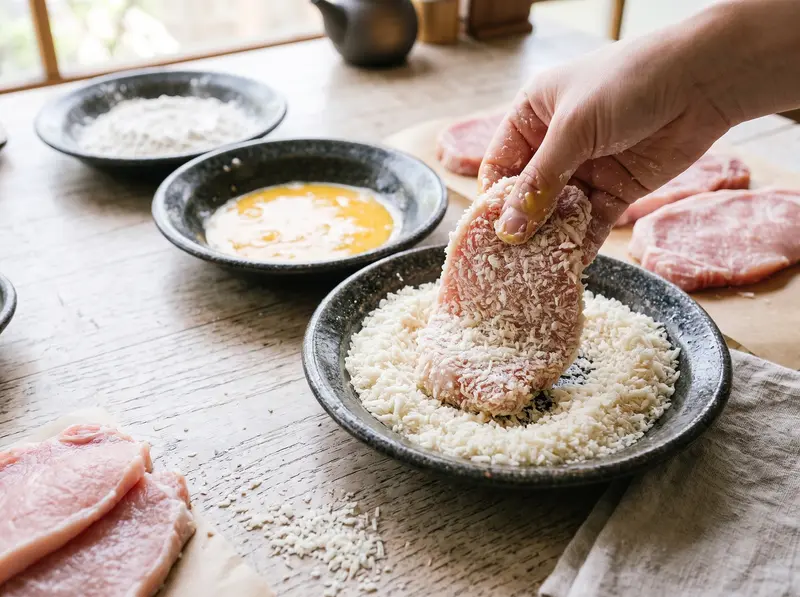
- Pour the oil into a heavy frying pan about 20 cm wide; it should be about 1 cm deep. Heat it to 170°C (340°F) and fry the cutlets until deep golden, 4–5 minutes, turning once. Stay at the stove the whole time and keep water away from the oil. If the oil catches fire, cover the pan with a lid and turn off the heat; never use water. The pork is done when the centre reads 63°C (145°F), or when a cut into the thickest part shows white meat with clear juices. Drain the cutlets on a rack, not paper, so the underside stays crisp, and let them rest for 3 minutes while you build the broth.
- Slice the cutlets into strips about 2 cm wide. Cutting them now, before they hit the broth, means every strip picks up sauce along its edges while the middle of the crust stays crunchy.
- Make one bowl at a time in a small frying pan, using half the broth, onion, cutlet and egg for each, or cook both portions together in a 26 cm pan. Simmer the dashi, soy sauce, mirin, sake, and sugar with the thinly sliced onion until the onion softens, about 3 minutes.
- Lay the sliced cutlet into the broth, crust side up, and let it simmer for a minute so the bottom drinks up the sauce while the top stays above the waterline.
- Beat the remaining eggs loosely, keeping streaks of white, and pour them over in a slow circle. Cover the pan and cook for under a minute, until the egg is set at the edges but still soft and glossy in the middle.
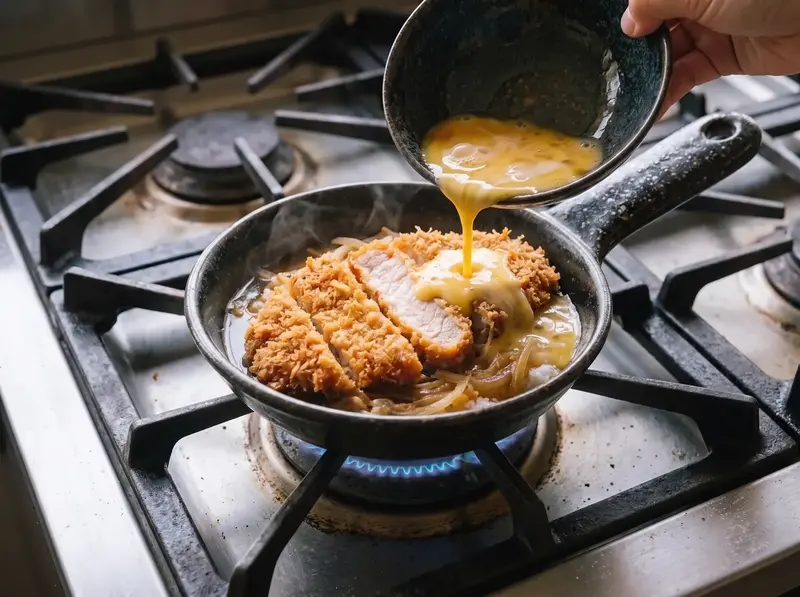
- Slide the whole thing over a bowl of hot rice, broth and all. Eat it right away, while there's still a crunch left in the crust — katsudon waits for no one, and a cutlet that sits too long in the broth goes uniformly soft.
Cooked it? Rate the recipe
FAQ
Katsudon is a Japanese rice bowl (donburi) topped with tonkatsu, a breaded fried pork cutlet that's simmered briefly in dashi broth with onion and set with egg. The name joins "tonkatsu" and "donburi". You need pork loin, panko, eggs, onion, dashi, soy sauce, mirin, sake and short-grain rice. It's filling and hearty, and in Japan people eat it at home as often as at any soba shop.
Yes, and it's the traditional shortcut: in Japanese homes, yesterday's tonkatsu very often ends up as katsudon. Warm a cold cutlet in the oven or a dry pan for 3–4 minutes first so the breading crisps up again. Then slice it into strips and go straight to the broth. That way you skip the deep-frying entirely.
It simmered too long. The cutlet should sit in the sauce for a minute at most, crust side up, so only the bottom soaks. Slice it before it goes into the broth, keep the top above the liquid and serve right away: even five minutes on the rice noticeably softens the breading.
Loin is the classic: a lean cutlet with a neat strip of fat along the edge, and that fat is where the flavour comes from. Tenderloin makes a leaner, more tender katsudon if you prefer that. Whichever you use, pound it to an even thickness of about 1.5 cm so the meat cooks through before the panko burns.
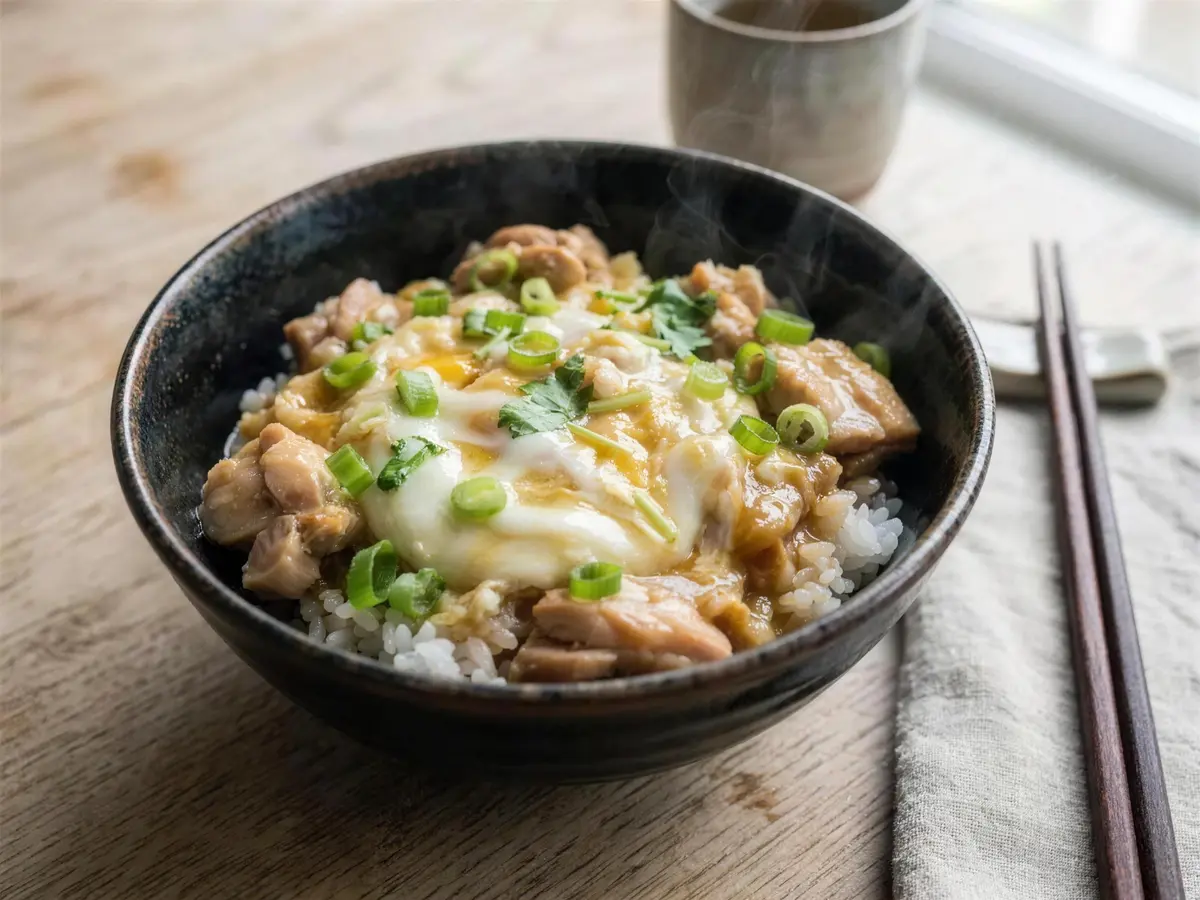
Both are egg-topped donburi simmered in dashi broth. In oyakodon the chicken simply simmers in the broth, while katsudon has a breaded, deep-fried pork cutlet. Oyakodon is lighter and quicker and involves no deep-frying, so it's the easier one to start with. Katsudon is more filling and lives on the contrast between crunchy and soft.
Keep browsing
More dishes from the Japanese archive — picked by overlap with what you're cooking now.


Recipes by email
One letter a week: a recipe picked for your taste, plus whatever is new on the site. You can stop the letters in one click.
Welcome gift: Sergei's cookbook (e-book).
By signing up for the newsletter you agree to the privacy policy.
Tell us what you like to cook (30 seconds) →
Join the conversation
Comments
No comments yet — be the first!