

Daigaku Imo (Japanese Candied Sweet Potatoes)
Daigaku imo (大学芋, literally "university potato") is a Japanese snack and bento side of bite-size sweet potato pieces fried until crisp at the edges, then coated in a thin, glossy syrup of sugar, mirin and soy sauce and finished with black sesame. Where the name comes from is not settled: there are several stories, most of them about students, and none is proven. The potatoes are fried in a shallow layer of oil rather than deep-fried, slowly at first so the middle turns soft and sweet, then hotter for a crisp skin. The syrup takes about three minutes and sets into a thin shell as it cools. Active time is about 35 minutes including a 10-minute soak, and the pieces rest another 5 minutes on parchment. Serves four as a snack or a bento side.
Ingredients
- 500 gsweet potatoes
- 1 lcold water
- 150 mlneutral oil
- 45 gsugar
- 30 mlwater
- 15 mlmirin
- 10 mlsoy sauce
- 1 tbspblack sesame seeds
Method
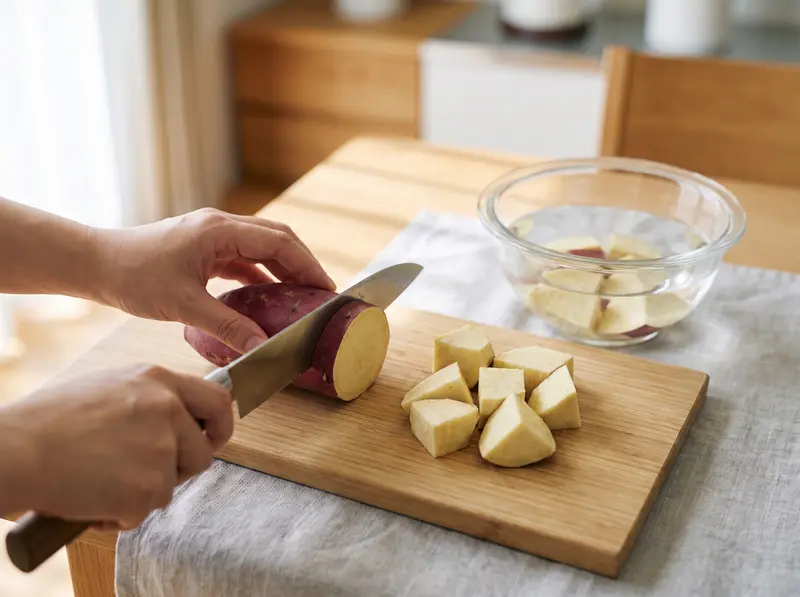
- Scrub the sweet potatoes under running water, leave the skin on, and cut them into irregular chunks about 3 cm across (ran-giri): cut off a piece at a slant, roll the potato a quarter turn, cut again. The angled faces give you more surface to brown and to hold the syrup. Drop the pieces into a bowl of cold water as you cut and leave them 10 minutes, which pulls out surface starch and some of the bitterness.
- Drain the pieces in a colander, then pat each one dry with a clean kitchen towel. Water left on the surface makes the oil spit and keeps the potato from browning, so this step matters more than it looks.
- Pour the oil into a 24 cm frying pan. That is only a few millimetres of oil (150 ml spread over a 24 cm circle is about 0.3 cm), and it is enough, because the pieces are turned every 2 minutes and every face gets its time in the oil. Warm it over medium-low heat until a dry wooden chopstick dipped in it releases small, steady bubbles (around 160°C). Lay the pieces in one layer with space between them and cook 8 to 10 minutes, turning every 2 minutes. Low heat is the point: on a hotter flame the outside burns long before the middle softens. They are done when a skewer slides in with no resistance and the cut faces are pale gold.
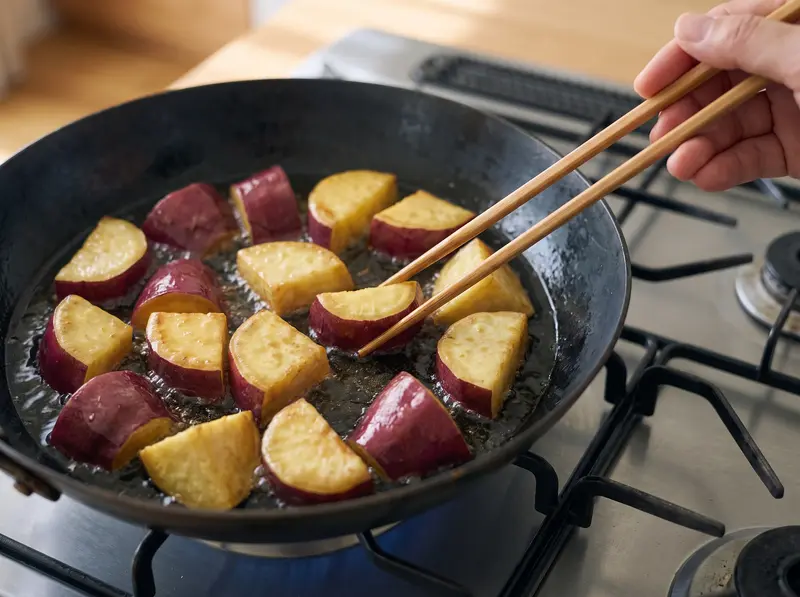
- Turn the heat to medium-high and fry another 1 to 2 minutes, turning, until the skin is crisp and a deeper golden. Lift the pieces onto a plate lined with paper towel and let the excess oil drain while you make the syrup. Do not leave them long, because the syrup clings best to hot potato.
- Put the sugar, water, mirin and soy sauce into a small, clean pan and heat over medium without stirring, only swirling the pan now and then. After 2 to 3 minutes it boils in large, slow bubbles and drips off a spoon in a thick string. Stop there. Stirring invites white sugar crystals, and a few minutes more turns the syrup into hard candy that glues the pieces together.
- Switch off the heat, tip the hot potato pieces into the syrup and toss with a spatula for about 30 seconds until every side is glossy. Sprinkle over the sesame seeds and toss once more. Cold potato does not take the syrup evenly, so do this straight away.
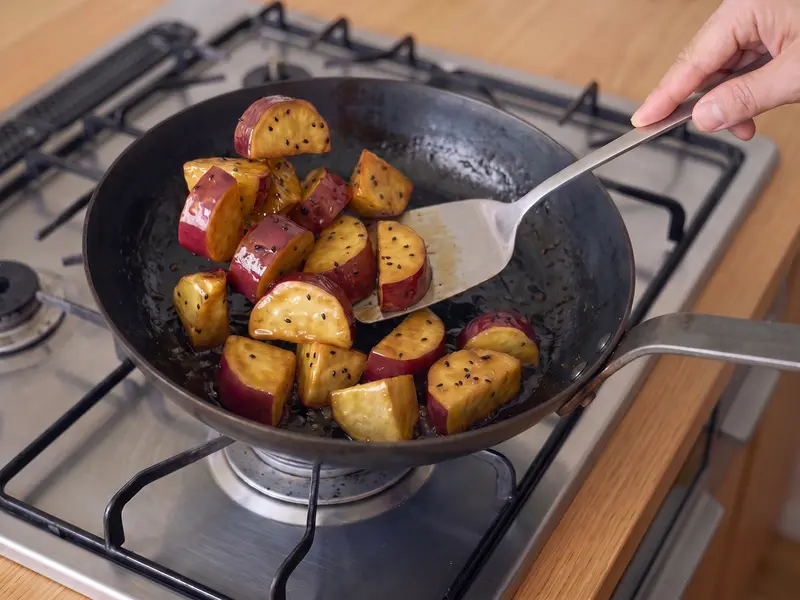
- Spread the pieces on a tray lined with parchment paper, apart from each other, and leave them 5 minutes. The syrup cools into a thin, slightly crackly shell. Serve warm or at room temperature; pieces piled hot on a plate stick together into one lump.
FAQ
Almost always the heat was too high. In shallow oil the surface browns within a few minutes, while a 3 cm chunk needs 8 to 10 minutes at around 160°C to soften all the way through. Keep the flame at medium-low, turn the pieces every 2 minutes and test with a skewer: it should slide in with no resistance before you raise the heat for the last 1 to 2 minutes. If the outside is already dark and the middle is still firm, cover the pan and cook 3 minutes on low heat. Chunks wider than about 4 cm cause the same problem, so cut them smaller next time.
The syrup went past the right point. Sugar, water, mirin and soy sauce need only 2 to 3 minutes over medium heat; when the bubbles are large and slow and the syrup drips off a spoon in a thick string, switch the heat off. Boil it longer and it sets into candy; stir it while it boils and white sugar crystals appear. If it has already gone hard on the pieces, add 1 tablespoon of water to the pan, warm it for 20 seconds and toss again. If the pieces stay wet and sticky and never set, the syrup came off too early: boil it another minute next time.
Yes. The Kagome and Kurashiru recipes microwave the soaked pieces under cling film at 600 W for 3 to 5 minutes, then brown them in a pan with only 1 to 2 tablespoons of oil. Dry the pieces well after the microwave, or the steam makes the oil spit, and turn them often over low heat for about 4 minutes before switching to medium for the crust. Then make the syrup and coat as in steps 5 and 6. The result is a little less crisp than the shallow-fried version, but close, and it uses a fraction of the oil.
Daigaku imo is best the same day, while the shell is thin and crisp. Kept in an airtight container in the fridge it stays good until the next day, which is the guide Kurashiru gives; the shell softens and the syrup turns firm and a little sticky. Warm the pieces for about 20 seconds in the microwave to loosen the syrup, or eat them cold, as many people do from a bento box. Put in a slice of tamagoyaki and a small portion of rice and you have a lunch box. Do not cover them while still warm, or the steam softens the shell.
Japanese varieties with pale yellow flesh and a dry, floury texture are the usual choice: Beniazuma and Naruto Kintoki hold their shape and spit less in the pan. Sweeter, stickier Beniharuka also works if you start it in cold or low-heat oil. Orange-fleshed American sweet potatoes (Garnet, Jewel) are wetter and softer, so they break more easily; cut them thicker, about 4 cm, turn them gently and expect a softer middle. They are better kept for sweet potato casserole if you want a firm, crisp-edged result.
Rate this
Recipes by email
One letter a week: a recipe picked for your taste, plus whatever is new on the site. Unsubscribe in one click.
Welcome gift: Sergei's cookbook (e-book).
By subscribing you agree to the privacy policy.
Tell us what you like to cook (30 seconds) →Keep browsing
More dishes from the Japanese archive — picked by overlap with what you're cooking now.

Join the conversation
Comments
No comments yet — be the first!