
Russian Fermented Tomatoes (Solyonye Pomidory)
Solyonye pomidory (солёные помидоры) are Russian fermented tomatoes: small whole tomatoes soured in a cold salt brine with dill, garlic and horseradish leaves, and no vinegar. Russians call this the cold method, kholodny zasol, and the same tomatoes are also called kvashenye pomidory. They are not marinovannye pomidory, marinated tomatoes, which get their sourness from vinegar or citric acid. Here the acid is made by the ferment itself. This version fits one 3-litre jar. This is the Russian home method: about a week in the warm, then the cold. It is not a process tested by a food safety service, and US food safety services advise against cucumber pickles made on the same schedule. The note below explains what that means and who should not eat these tomatoes. The hands-on work is about 40 minutes. The rest is waiting: 5 to 7 days of fermenting at room temperature and 4 weeks in the fridge, about 5 weeks in all. The jar is kept cold from the day the bubbling stops. It is never sealed airtight with a metal canning lid and never stored in a cupboard.
What are solyonye pomidory?
Solyonye pomidory are tomatoes preserved by salt and fermentation and nothing else. The Soviet state standard for them, GOST 7181-73, defined the product as fresh tomatoes with seasonings, covered with a salt solution and put through lactic fermentation. The same standard listed what goes in: garlic, fresh dill, horseradish leaves and root and hot pepper, with blackcurrant, cherry and oak leaves to improve the taste and smell.
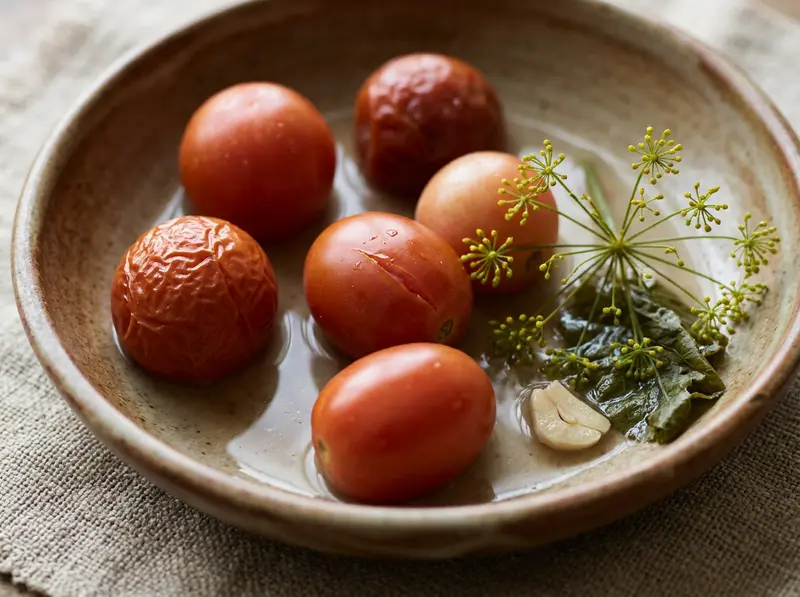
They used to be salted in barrels. A 3-litre glass jar does the job at home. A finished tomato is whole, sour and salty at once, and it sits in a lightly cloudy brine that tastes a little sharper than the tomato itself.
Solyonye and marinovannye pomidory: salted and marinated tomatoes are different preserves
Russian keeps the two apart. Solyonye pomidory go into cold salt brine and ferment, 5 to 7 days in the warm and then 4 weeks in the cold in this recipe. Marinovannye pomidory get vinegar or citric acid and are not fermented at all.
The difference shows in the jar. A salted jar has lightly cloudy brine and has to live in the fridge or a cold cellar. The same goes for the other Russian ferments on this site, solyonye ogurtsy and kvashenaya kapusta.
How to serve solyonye pomidory
Serve them cold and whole, about 2 tomatoes per person, in a shallow dish with a spoonful of their brine. In Russia they are a zakuska, a cold appetizer, and they are eaten with meat and vegetable dishes, in soup or next to a sandwich.
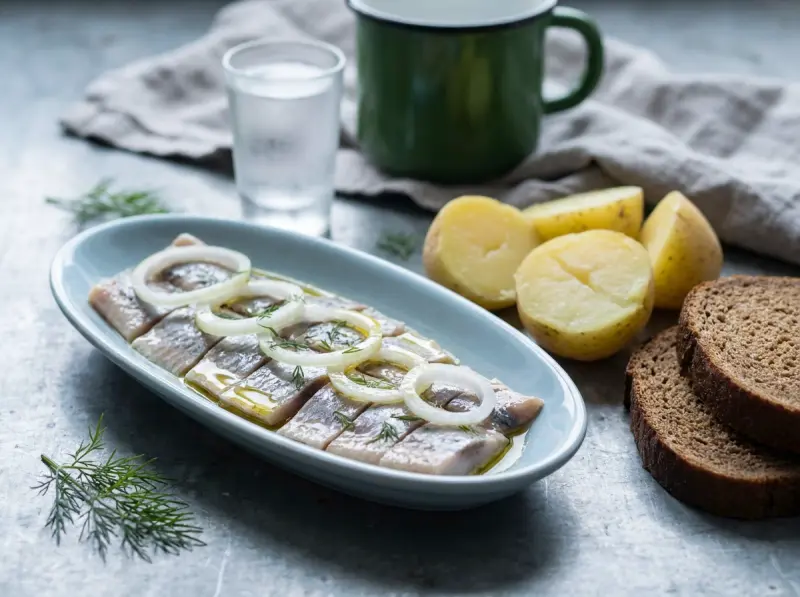
On this site they go well with zharkoe and with herring with onions and potatoes.
Ingredients
- 1.6 kgtomatoes
- 1.5 lwater
- 105 gsalt
- 3 headdill
- 4 clovegarlic
- 2 horseradish leaves
Method
- Sort and prick the tomatoes. You need 1.6 kg of small, firm tomatoes of 60 to 80 g each, at least 4 cm across, which is 20 to 26 tomatoes. They can be red but still hard, or half-ripe, anywhere from pink to brownish. Pick tomatoes that are all at the same stage of ripeness and about the same size, so they are ready together. Throw out any that are soft, overripe, cracked, bruised or mouldy, because soft tomatoes fall apart in the brine. Twist off the stems and wash the tomatoes under cool running water without scrubbing them. Prick each one once or twice at the stem scar with a toothpick, which lets the brine reach the middle sooner. Every tomato that goes into the jar should feel hard when you squeeze it.
- Wash the jar and get the seasonings ready. Wash a 3-litre glass jar and its plastic lid in hot soapy water and rinse them well with very hot water, until the glass squeaks and no soap film is left. Dip the lid in boiling water for 30 seconds. Nothing in this recipe is heated, so the jar has to start clean. Rinse the 3 heads of dill and the 2 horseradish leaves in cold water and shake them dry. Peel the 4 cloves of garlic and cut each one in half. Use only fresh, clean garlic and leaves, with no mould on them.
- Pack the jar. Put 2 heads of dill, 1 horseradish leaf torn into pieces and half the garlic on the bottom. Fit the tomatoes in tightly without squashing them, up to the shoulder of the jar, and push the rest of the garlic into the gaps. Lay the third head of dill on top and fold the second horseradish leaf over everything like a cap. The jar is packed well when nothing shifts as you tilt it and the cap sits 3 to 4 cm below the rim. Tomatoes float in brine, and the tight packing and the leaf are what hold them down.
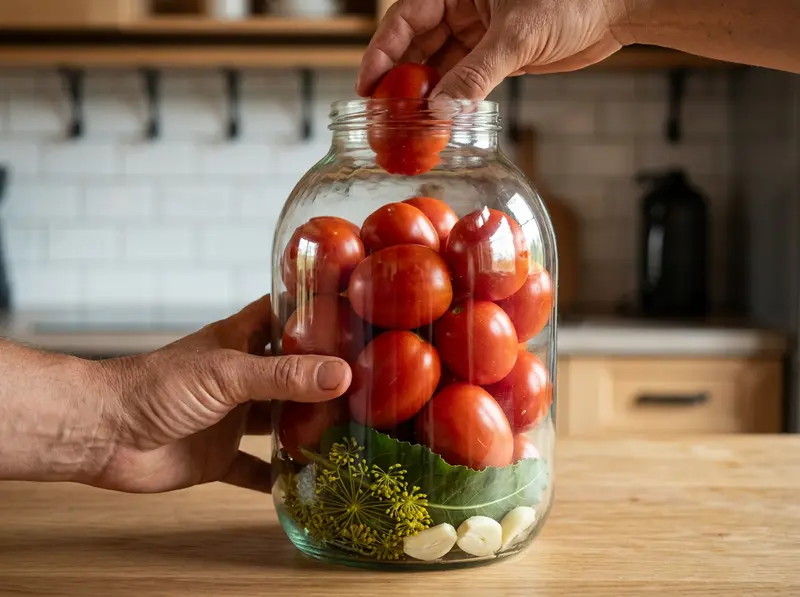
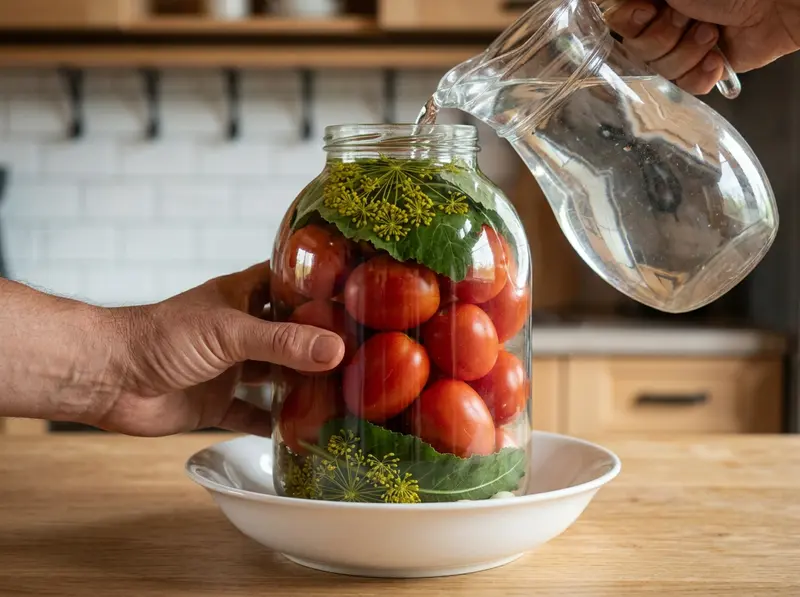
- Make the cold brine and fill the jar. Weigh 105 g of coarse salt with no iodine in it and stir it into 1.5 l of cold drinking water, filtered or bottled and not boiled, until the water is clear again. That is 70 g of salt per litre. Weigh it, because spoonfuls of coarse salt vary too much, and do not use less: the salt is what keeps the wrong bacteria out while the tomatoes ferment. Stand the jar on a deep plate and pour the brine in right up to the brim. About 1.3 l goes in. Every tomato and leaf should be under the liquid. If one still shows, pour 2 to 3 tablespoons of the leftover brine into a small clean food-grade zip bag, seal it and lay it on top as a weight. Keep the remaining 200 ml or so of brine in a small covered jar in the fridge for topping up.
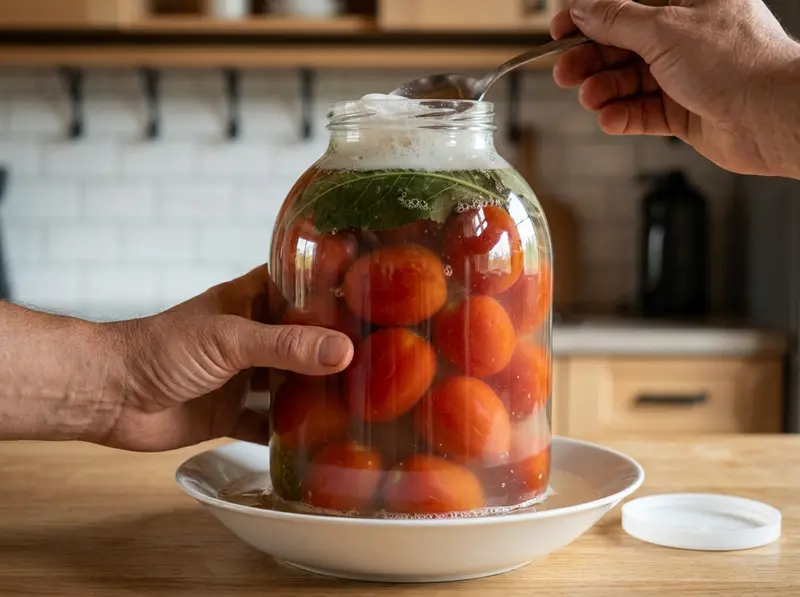
- Ferment at room temperature for 5 to 7 days. Rest the lid on the jar without pressing it down, so gas can get out, and leave the jar on its plate at 20 to 24 °C, away from direct sun. Never let it sit above 27 °C. Below 16 °C the fermentation hardly starts. Within two or three days the brine turns slightly cloudy, small bubbles rise, foam gathers at the neck and some brine spills onto the plate. It smells sour and garlicky. All of that is normal. Once a day, skim off the foam and any thin white film with a clean spoon, top up with the spare brine so nothing sticks out of the liquid, and empty the plate. If a tomato works loose and floats up, push it back under the horseradish leaf with the clean spoon, or lay the bag of brine from step 4 on top. The warm stage is over when no new foam forms and no bubbles rise. If bubbles are still rising on day 7, leave the jar in the warm, keep skimming and topping up, and look again every 1 to 2 days. If you have pH test strips, dip one into the brine: it should read 4.6 or lower before the jar goes into the cold. If it reads higher, wait and test again every 1 to 2 days. The acid made by the fermentation is what protects the tomatoes, so do not cut this stage short.
- Check the jar and move it to the cold. The brine should be lightly cloudy and smell sour and salty, and the tomatoes should be whole. If the tomatoes are slimy or falling apart, if the smell is rotten, or if you see fuzzy or coloured mould, throw the whole jar out without tasting anything. If all is well, top the jar up to the brim, press the lid on, wipe the glass and put the jar in the fridge, or in a cellar that stays at 0 to 4 °C. The cold slows the fermentation down. Left in the warm the tomatoes would go on fermenting and spoil. Use the same plastic lid, never a metal canning lid, and never keep the jar in a cupboard: these tomatoes are not heat-treated and keep only in the cold.
- Wait 4 weeks before you taste them. The salt and the acid need that long to reach the middle of each tomato. A finished tomato is whole and tastes sour and salty right through. Red ones come out soft but hold their shape, and the skin may wrinkle a little. Half-ripe ones stay firm. The brine should taste a little sharper than the tomatoes. Lift tomatoes out with a clean spoon, keep the rest under the brine with the lid on, and keep the jar at 0 to 4 °C the whole time. Look at the jar each time you open it. Skim off any thin white film. If the tomatoes turn slimy or fall apart, smell rotten, or fuzzy or coloured mould appears, throw the jar out without tasting. Eat them within 4 to 6 months. This is a traditional method and not a tested one, so do not serve these tomatoes to anyone very young, very old, pregnant or chronically ill.
FAQ
Most often the tomatoes were too ripe when they went in: soft and overripe tomatoes break down in brine, so every one should feel hard when you squeeze it. Fully red tomatoes soften during the fermentation even when everything goes right. The Soviet standard GOST 7181-73 describes them as soft but not falling apart, and half-ripe ones as firm, so use half-ripe tomatoes if you want a firmer result. The other causes are the same ones that soften fermented cucumbers: brine weaker than 70 g of salt per litre, a room warmer than 24 °C, or tomatoes that sat above the brine. Soft is acceptable, but a slimy jar should be thrown out.
Lightly cloudy brine is normal: the Soviet standard GOST 7181-73 describes the brine of a good product that way. Small bubbles, foam at the neck and a thin white film during the 5 to 7 warm days are normal too, as long as you skim the film off every day. Throw the whole jar out, without tasting, if the tomatoes are slimy or falling apart, if the smell is rotten and not sour, or if fuzzy or coloured mould grows on top. If you own pH strips, the brine should read 4.6 or lower before the jar goes into the cold. If it reads higher, keep it in the warm and test again every 1 to 2 days.
Kept at 0 to 4 °C, under their brine and with the lid on, they are good for 4 to 6 months, as long as you skim off any white film and nothing has turned slimy or mouldy. Do not store them in a cupboard: the Soviet standard GOST 7181-73 allowed 8 months at −1 to 4 °C, and only one day at up to 18 °C once the tomatoes were packed in plastic bags for sale. Do not seal the jar with a metal lid either: Russia's consumer safety agency links botulism to home preserves and pickles in airtight jars and tells people to keep them only in the fridge or a cellar. On safety, the plain answer is that this is a traditional method and not a tested one: I have found no tested recipe for fermenting tomatoes and no tested way to make them shelf-stable at home, and US extension services advise against cucumber pickles that spend only a week in the warm before the fridge. Do not serve these tomatoes to anyone very young, very old, pregnant or chronically ill.
Solyonye pomidory ferment in salt brine and make their own acid, like solyonye ogurtsy, while marinovannye pomidory are not fermented: vinegar or citric acid goes into a hot marinade and the jar is sealed. That is a separate recipe with its own safety rules: tomatoes can have a pH above 4.6, at least up to 4.8, so a sealed jar of them needs added acid and heat as well. The tested US process for whole tomatoes adds 4 tablespoons of 5% vinegar per quart jar, heats the filled jar in boiling water for 45 minutes at altitudes up to 1,000 feet, and covers pint and quart jars only. I know of no tested process for a 3-litre jar, so a jar of that size belongs in the fridge whether the tomatoes are salted or marinated. Leave vinegar out of this recipe: the sourness of solyonye pomidory comes from the ferment, and with vinegar they would be a different preserve.
Any firm tomato with thick skin and dense flesh works, and Russian sources name plum tomatoes and firm round ones. The Soviet standard GOST 7181-73 sorted tomatoes for salting into red, pink, brownish half-ripe, pale "milky" and green ones and kept each kind apart, so do not mix ripe and unripe tomatoes in one jar. Red tomatoes give the softest result, half-ripe ones stay firm, and green ones were classed as second grade. Russian recipes salt cherry tomatoes too, though they are smaller than the 4 cm the standard asked of round tomatoes, and this recipe's quantities are written for tomatoes of 60 to 80 g. Plum tomatoes had no size limit.
Rate this
Recipes by email
One letter a week: a recipe picked for your taste, plus whatever is new on the site. Unsubscribe in one click.
Welcome gift: Sergei's cookbook (e-book).
By subscribing you agree to the privacy policy.
Tell us what you like to cook (30 seconds) →Keep browsing
More dishes from the Russian archive — picked by overlap with what you're cooking now.

Join the conversation
Comments
No comments yet — be the first!