
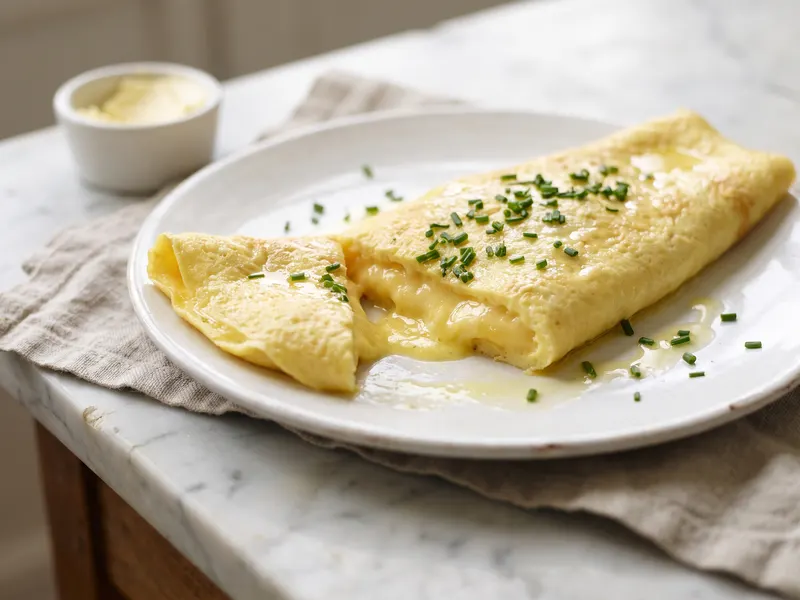
Klassisches Französisches Omelett (Omelette Nature)
Drei Eier bis zur vollständigen Homogenität geschlagen, in schaumender Butter bei mittelhoher Hitze mit ständigem Rühren und Schwenken unter 60 Sekunden gekocht, dann zu einem blassen, glatten Zylinder mit weichem, fast cremigem Inneren aufgerollt. Keine Bäunung. Keine Farbe außen. Dies ist die Referenztechnik die Jacques Pépin berühmt verwendet um das technische Können eines Kochs zu beurteilen.
Zutaten
- 3 große Eier
- 15 gungesalzene Butter
- 1 Prisefeines Salz
- 1 Prisefrisch gemahlener weißer Pfeffer
- 1 ELfrischer Schnittlauch, fein
- 30 gGruyère oder Comté, fein
Zubereitung
- Eier richtig aufschlagen. Eier in eine Schüssel aufschlagen. Salz, Pfeffer und Kräuter hinzufügen. 30-45 Sekunden kräftig mit einer Gabel schlagen bis die Mischung vollständig gleichmäßig ist — keine weißen Streifen, keine Dotterklumpen, nur eine glatte blasse Flüssigkeit die als dünner Faden von der Gabel fällt.
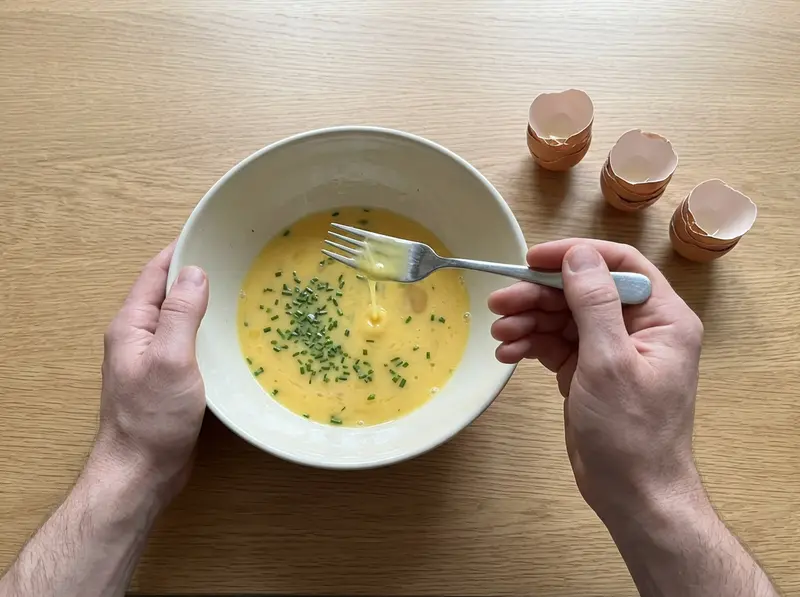
- Pfanne und Butter vorbereiten. Eine 20-cm Antihaft-Pfanne verwenden. Auf mittelhohe Hitze stellen. Butter hinzufügen und schmelzen lassen dabei die Pfanne neigen um den Boden gleichmäßig zu bedecken. Die Butter soll aktiv schäumen und brutzeln ohne zu bräunen. In dem Moment wenn der Schaum beginnt nachzulassen, die Eier sofort hinzufügen. Wenn die Butter bräunt, ist die Pfanne zu heiß.
- Gleichzeitig rühren und schwenken. Sobald die Eier die Pfanne berühren, kräftig mit der flachen Seite der Gabel rühren während die Pfanne gleichzeitig mit der anderen Hand vor und zurück geschwenkt wird. Beide Bewegungen zusammen schaffen sehr kleine gleichmäßige Klümpchen.
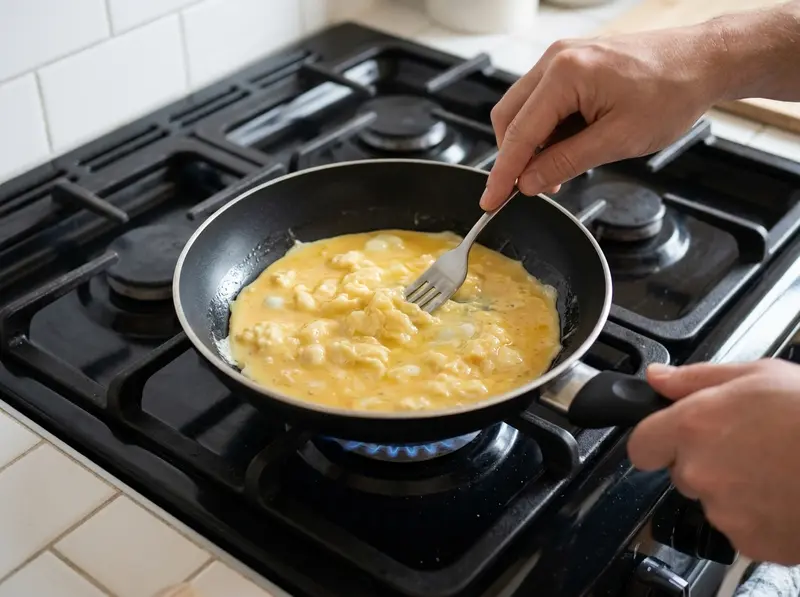
- Zum richtigen Zeitpunkt aufhören. Nach 20-30 Sekunden ständiger Bewegung gehen die Eier von flüssig zu kaum gestockt. Aufhören zu rühren wenn das Omelett oberflächlich noch leicht feucht ist. Vom Herd nehmen. Wenn Käse hinzugefügt wird, jetzt in der Mitte verteilen.
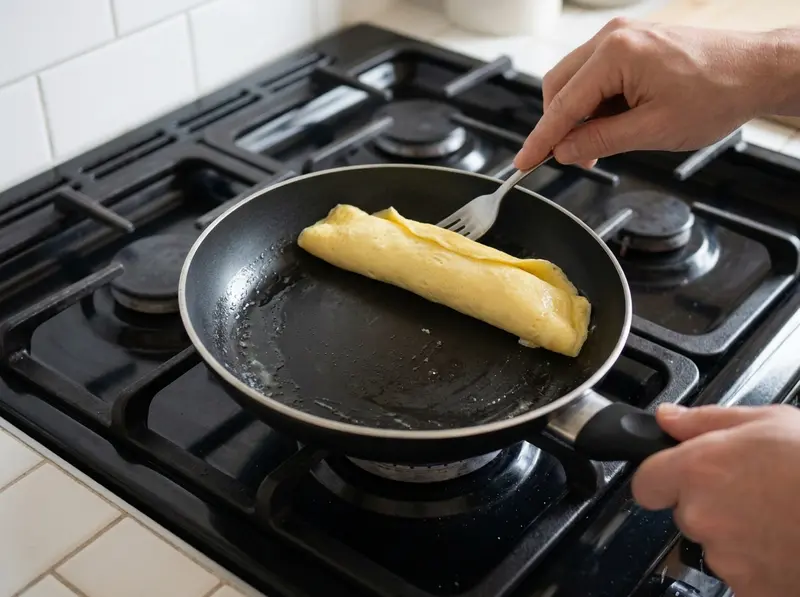
- Aufrollen und sofort servieren. Pfanne um 45 Grad von sich weg neigen. Mit der Gabel beginnen den näheren Rand aufzurollen bis ein Zylinder entsteht. Zur fernen Kante gleiten lassen, dann nahtseits-unten auf einen vorbereiteten Teller kippen. Außen soll es blassgelb ohne jede Bäunung sein. Innerhalb von 60 Sekunden servieren.
Fragen
Das französische Omelett ist blass, glatt und eng gerollt — keine Bäunung außen, weiches, leicht cremiges Inneres, minimale oder keine Füllung. Die Technik priorisiert Textur über Farbe. Das amerikanische wird zur Hälfte gefaltet, hat leicht gebräunte Ränder, große Klümpchen und ist gewöhnlich mit Käse, Gemüse und Fleisch gefüllt.
Braune Farbe bedeutet die Pfanne war zu heiß, die Eier wurden nicht schnell genug bewegt, oder beides. Das französische Omelett erfordert ständige Bewegung ab dem Moment die Eier die Pfanne berühren. In dem Moment wenn man aufhört und lässt das Ei gegen die heiße Oberfläche liegen, beginnt die Bäunung.
Zwei Ursachen. Erste: die Pfanne ist nicht genügend antihaftend oder hat Schäden an der Beschichtung. Zweite: die Butter hat den Boden nicht gleichmäßig bedeckt. Wenn das Omelett während des Rollens klebt, ein kleines Stück kalte Butter in den Spalt geben.
Minimal. Die klassische Version ist einfach mit Kräutern in den Eiern vor dem Kochen. Wenn eine Füllung hinzugefügt wird: nur eine Zutat. Der französische Stil mit mehreren Füllungen ist bereits ein amerikanisches Omelett.
Die Oberfläche soll glänzend und leicht zitternd sein — nicht flüssig, nicht vollständig gestockt. Der französische Begriff ist baveuse: ein richtig gemachtes französisches Omelett hat ein weicheres Inneres als die Außenseite.
Bewerten
Rezepte per E-Mail
Ein Brief pro Woche: ein Rezept nach Ihrem Geschmack und alles Neue auf der Seite. Abmelden mit einem Klick.
Als Geschenk: Sergeis Kochbuch (E-Book).
Mit der Anmeldung akzeptieren Sie die Datenschutzerklärung.
Verraten Sie uns, was Sie gern kochen (30 Sekunden) →Weiter stöbern
Weitere Gerichte aus dem Archiv — ausgewählt nach Überschneidung mit dem, was du gerade kochst.
An der Diskussion teilnehmen
Kommentare (1)
I practiced this technique probably 40 times before I could do it consistently without any browning. The breakthrough was realizing that the fork needs to stay flat against the pan — if you angle it upward, you stop scraping the bottom and the egg sits against the hot surface long enough to colour. Flat fork, constant contact, fast circles.