
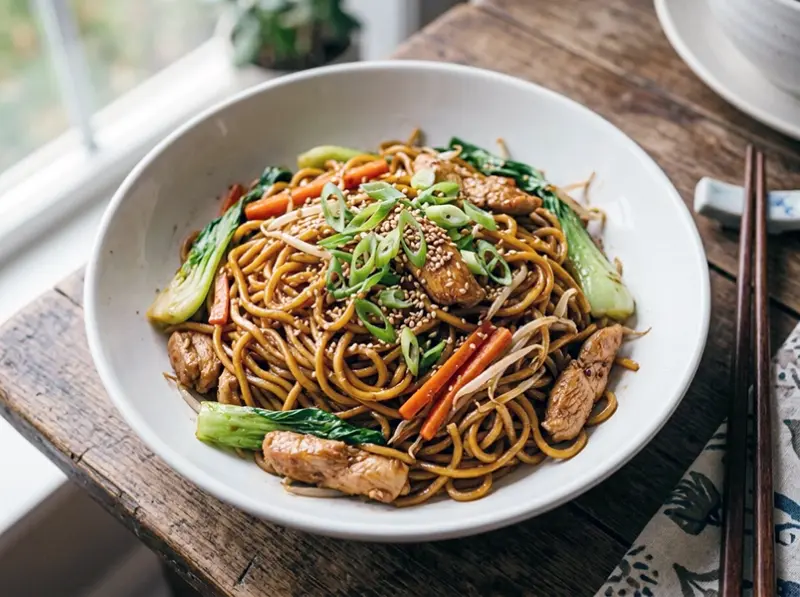
Lo Mein
Weiche Eiernudeln, mit Gemüse und Protein in einer glänzenden, herzhaften Sauce aus Austernsauce, heller und dunkler Sojasoße, Shaoxing-Reiswein und Sesamöl gebraten. Lo Mein (捞面) bedeutet auf Kantonesisch „gerührte Nudeln“ — der Name beschreibt die Garmethode: eine schöpfende, wendende Bewegung, die jeden Strang überzieht. Anders als beim Chow Mein, bei dem die Nudeln knusprig gebraten werden, bleiben Lo-Mein-Nudeln weich und glitschig in einer dicken, glänzenden Sauce. Die dunkle Sojasoße ist das Detail, das dem Gericht seine charakteristische tiefe Mahagonifarbe gibt; ohne sie sieht es blass aus. Die Sauce wird gemischt, bevor der Wok aufs Feuer kommt — Lo Mein geht schnell.
Zutaten
- 300 gfrische Lo Mein oder Eiernudeln
- 200 gProtein: dünn geschnittene Hähnchenbrust, Garnelen, oder fester Tofu
- 2 ELAusternsauce
- 2 ELhelle Sojasoße
- 2 TLdunkle Sojasoße
- 1 ELShaoxing Reiswein
- 2 TLSesamöl
- 1 TLZucker
- 2 TLMaizena: 1 TL für das Hähnchen, 1 TL in 2 EL Wasser aufgelöst für die Sauce
- 2 ELneutrales Öl
- 3 Knoblauchzehen, fein
- 1 TLfrischer Ingwer
- 150 gGemüse: Kohl, Karotte julienniert, Bok Choy, Paprika, Sojasprossen
- 3 Frühlingszwiebeln, Weißes und Grünes getrennt, in 3 cm Stücke
Zubereitung
- Protein vorbereiten und Sauce mischen. Für Hähnchen: quer zur Faser dünn schneiden und mit 1 TL der hellen Sojasoße, 1 TL Maizena und 1 TL Wasser vermengen. 10–15 Minuten ziehen lassen — dieses Velveting hält das Fleisch im Wok zart und saftig. Garnelen und Tofu werden nicht mariniert: Garnelen trocken tupfen, Tofu pressen und würfeln. Knoblauch und Ingwer fein hacken. Die ganze Sauce in einer Schüssel mischen: Austernsauce, die restliche helle Sojasoße, dunkle Sojasoße, Shaoxing, 1 TL Sesamöl, Zucker und eine Mischung aus 1 TL Maizena in 2 EL Wasser. Glatt rühren. Probieren — die Sauce soll kräftig herzhaft und leicht süß schmecken. Alles wird vorgemischt, weil im heißen Wok keine Zeit zum Abmessen bleibt.
- Nudeln vorbereiten. Frische Nudeln in ungesalzenem kochenden Wasser nach Packungsangabe garen und herausnehmen, solange sie in der Mitte noch leicht fest sind: Im Wok garen sie fertig. Bei getrockneten Nudeln 150 g statt der 300 g frischen nehmen und 1 Minute kürzer kochen, als die Packung angibt. Gut abtropfen lassen. Die heißen Nudeln sofort mit 1 TL Sesamöl vermengen — so wird jeder Strang überzogen und klebt nicht zusammen, während Sie den Rest fertig garen. Nicht mit kaltem Wasser abspülen; sie verlieren sonst die Stärke an der Oberfläche, an der die Sauce haftet. Wenn sie abkühlen und verkleben, bevor Sie so weit sind, lockert kurzes Abspülen unter warmem Wasser sie wieder.
- Protein anbraten. 1,5 EL neutrales Öl im Wok bei hoher Hitze erhitzen, bis es gerade raucht. Das Protein in einer Schicht hineingeben. Die ersten 30–45 Sekunden nicht bewegen — es soll auf der ersten Seite Farbe annehmen. Wenden und bei hoher Hitze weitere 2–3 Minuten garen, bis das Hähnchen durch und durch weiß ist und die dickste Scheibe beim Anschneiden nicht mehr rosa ist (74 °C). Garnelen brauchen etwa 1 Minute pro Seite, bis sie außen rosa und innen matt weiß sind; Tofu 2–3 Minuten, bis er goldbraun ist. Aus dem Wok nehmen und beiseitestellen. Den Wok heiß halten, das restliche Öl zugeben, das Weiße der Frühlingszwiebeln, Knoblauch und Ingwer hinzufügen und 20 Sekunden rühren, bis es duftet.
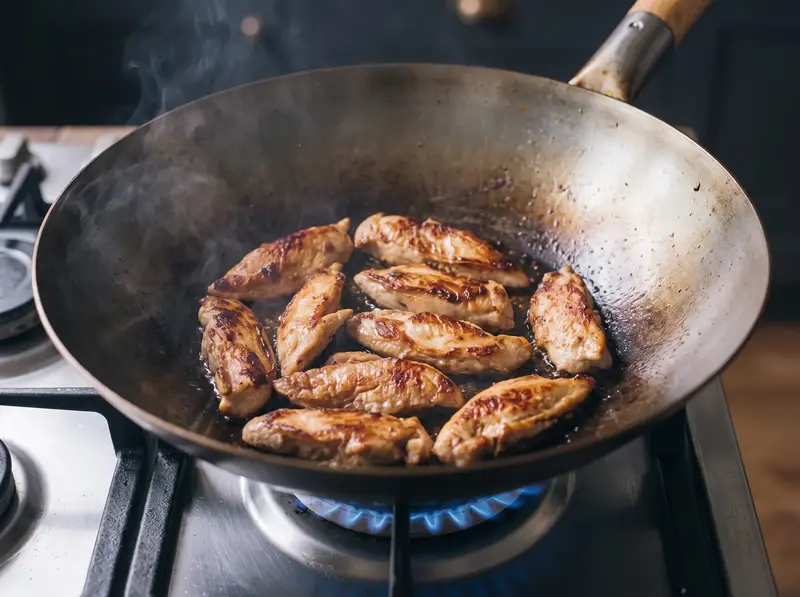
- Gemüse anbraten und Nudeln hinzufügen. Zuerst das härtere Gemüse (Karotte, Paprika, Bok-Choy-Stiele) zugeben und 2 Minuten rühren. Dann das weichere Gemüse (Kohl, Bok-Choy-Blätter und, falls verwendet, Sojasprossen) zugeben und 1 Minute weiterrühren. Die Nudeln in den Wok geben. Die Sauce gleichmäßig darübergießen. Mit einer schöpfenden Bewegung — von unten anheben und wenden — 1–2 Minuten bei hoher Hitze mischen, bis sich die Sauce gleichmäßig verteilt hat und die Nudeln glänzen und überzogen sind. Den Wokboden häufig abkratzen, damit nichts ansetzt.
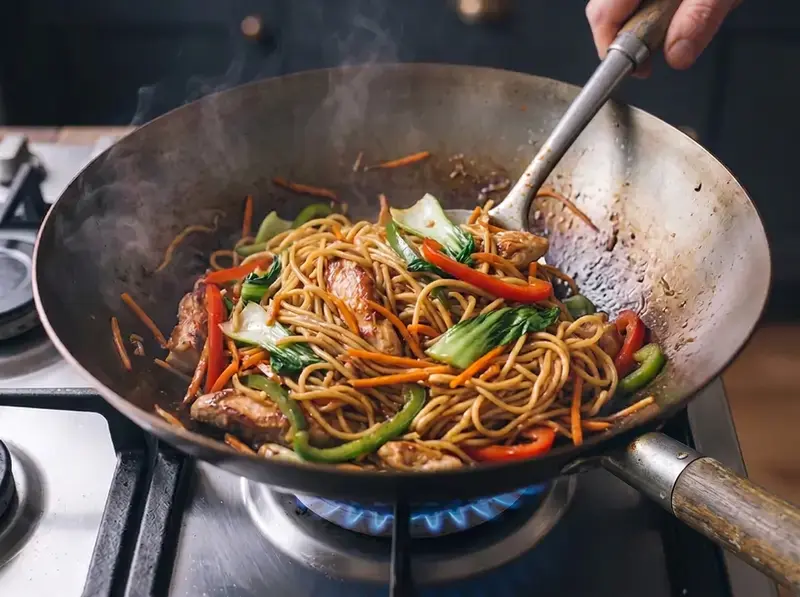
- Fertigstellen und servieren. Das Protein zurück in den Wok geben. Das Grüne der Frühlingszwiebeln zufügen. Ein letztes Mal 30 Sekunden schwenken, bis alles gemischt und durch und durch heiß ist. Abschmecken und anpassen: mehr Austernsauce für Tiefe, Sojasoße für Salz, Zucker für Süße. Sofort in Schalen servieren. Lo Mein schmeckt am besten heiß direkt aus dem Wok; beim Stehen saugen die Nudeln weiter Sauce auf.
Fragen
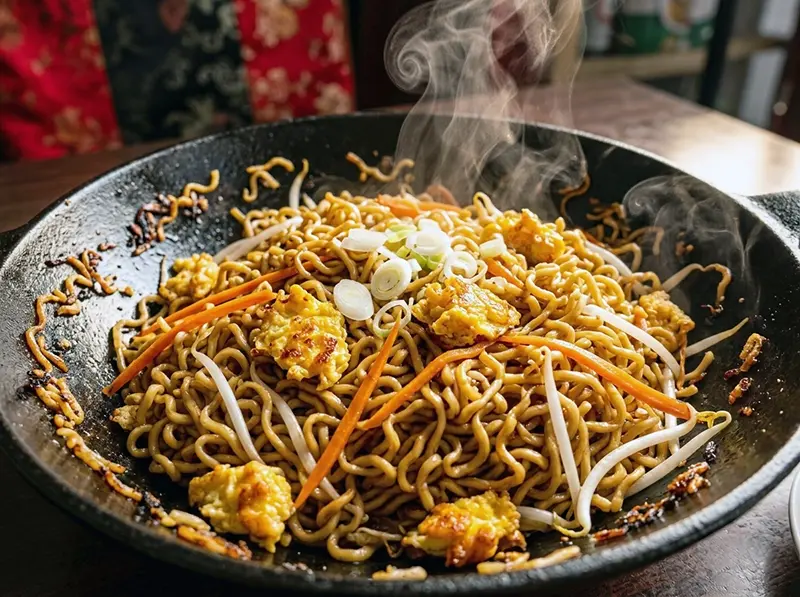
Lo Mein (gerührte Nudeln) und Chow Mein (gebratene Nudeln) verwenden denselben Typ Eiernudeln, aber unterschiedlich gegart. Bei Lo Mein werden die Nudeln nur gar gekocht und dann im Wok in der Sauce geschwenkt — sie bleiben weich und glitschig. Bei Chow Mein werden die Nudeln in der Pfanne gebraten, bis einige knusprig sind, und erst dann mit Sauce vermengt — sie haben einen Kontrast aus knusprig und zäh. Das Chow Mein amerikanisch-chinesischer Restaurants wird manchmal mit frittierten, knusprigen Nudeln obenauf serviert, eine weitere amerikanische Abwandlung. Ein weiteres Alltagsgericht mit Nudeln aus dem Wok: gebratene Eiernudeln.
Ja, Spaghetti funktionieren überraschend gut. Nehmen Sie 150 g getrocknete Spaghetti statt der 300 g frischen Nudeln. 1–2 Minuten kürzer kochen, als die Packung angibt, kurz kalt abspülen, um das Garen zu stoppen, gut abtropfen lassen und vor dem Anbraten mit etwas Öl vermengen. Abspülen ist bei Spaghetti in Ordnung, die mehrere Minuten kochen und sonst weiter weich würden, aber nicht bei frischen Eiernudeln, die sehr schnell garen und ihre Oberflächenstärke brauchen, damit die Sauce haftet. Der Geschmack ist etwas anders, weil Eiernudeln mehr Eiergeschmack haben, aber das Ergebnis ist sehr gut. Auch geeignet: Yakisoba (japanische, ähnliche Ei-Weizen-Nudeln), Udon (dicker, kauiger) oder getrocknete chinesische Eiernudeln.
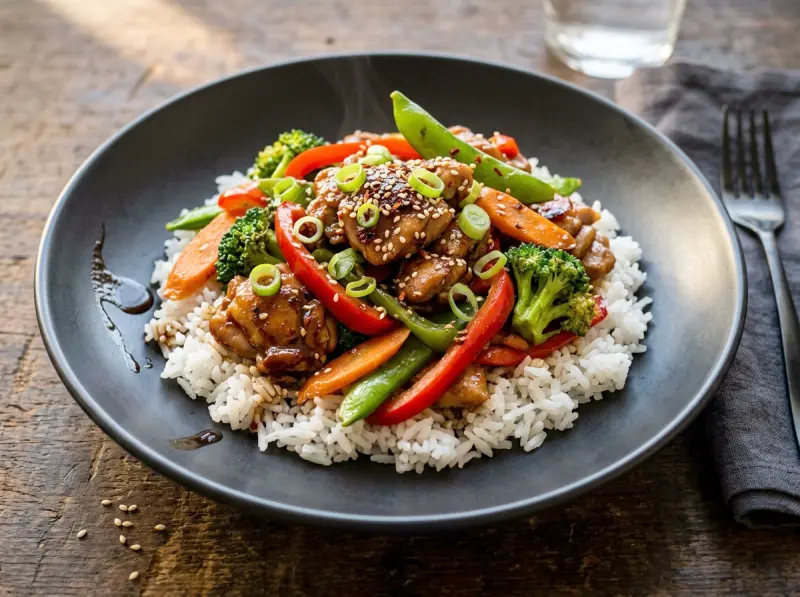
Fast jedes Gemüse passt — Lo Mein ist eines der flexibelsten chinesischen Gerichte. Zuverlässige Klassiker: Bok Choy (Stiele zuerst, Blätter zum Schluss), Karotte in Streifen und Paprika (früh hinzufügen für Biss), Kohl (Chinakohl oder Weißkohl, in der Mitte) und Sojasprossen (zusammen mit dem Kohl, damit sie durchgaren). Pilze — Shiitake, Austernpilze oder Champignons — geben fleischige Tiefe. Zuckerschoten und Kaiserschoten brauchen nur 1 Minute. Zu wässriges Gemüse (Tomate, Gurke) meiden, es gibt Flüssigkeit ab und verdünnt die Sauce. Der Schlüssel ist gestaffeltes Garen: erst das härtere Gemüse, dann das weichere. Dieselbe Garreihenfolge funktioniert beim Hähnchen-Pfannengericht mit Gemüse.
Shaoxing ist ein chinesischer fermentierter Reiswein mit erdigem, leicht süßem Geschmack. Er gibt Pfannengerichten eine Komplexität, die sich schwer nachahmen lässt. Beste Ersatzoptionen in dieser Reihenfolge: trockener Sherry (geschmacklich am nächsten), Mirin (süßer, japanisch), Sake (japanischer Reiswein, leichter). Ohne Alkohol: natriumarme Hühnerbrühe in gleicher Menge — die Sauce wird etwas weniger komplex, bleibt aber gut. Normalen Weißwein oder Wodka meiden, ihr Geschmack passt nicht zur chinesischen Küche.
Zwei Hauptursachen. Erstens: Wok oder Pfanne waren nicht heiß genug — Lo Mein braucht wirklich hohe Hitze. Eine nur warme Pfanne dämpft die Nudeln, statt sie zu braten, und sie kleben. Zweitens: Die Sauce war für die Nudelmenge zu knapp. Nudeln saugen die Sauce beim Garen schnell auf; ist es zu wenig Sauce oder sind es zu viele Nudeln, trocknen sie aus. Lösung: beim Schwenken 1–2 EL heißes Wasser oder Hühnerbrühe auf einmal zugeben. Die Stärke der Nudeln bindet das zu einer Glasur.
Bewerten
Rezepte per E-Mail
Ein Brief pro Woche: ein Rezept nach Ihrem Geschmack und alles Neue auf der Seite. Abmelden mit einem Klick.
Als Geschenk: Sergeis Kochbuch (E-Book).
Mit der Anmeldung akzeptieren Sie die Datenschutzerklärung.
Verraten Sie uns, was Sie gern kochen (30 Sekunden) →Weiter stöbern
Weitere Gerichte aus dem Archiv — ausgewählt nach Überschneidung mit dem, was du gerade kochst.
An der Diskussion teilnehmen
Kommentare (1)
Salt your cooking water generously for lo mein — about 1 tablespoon per liter. This is the only chance to season from inside. No amount of sauce compensates for bland, under-seasoned pasta or grains.