
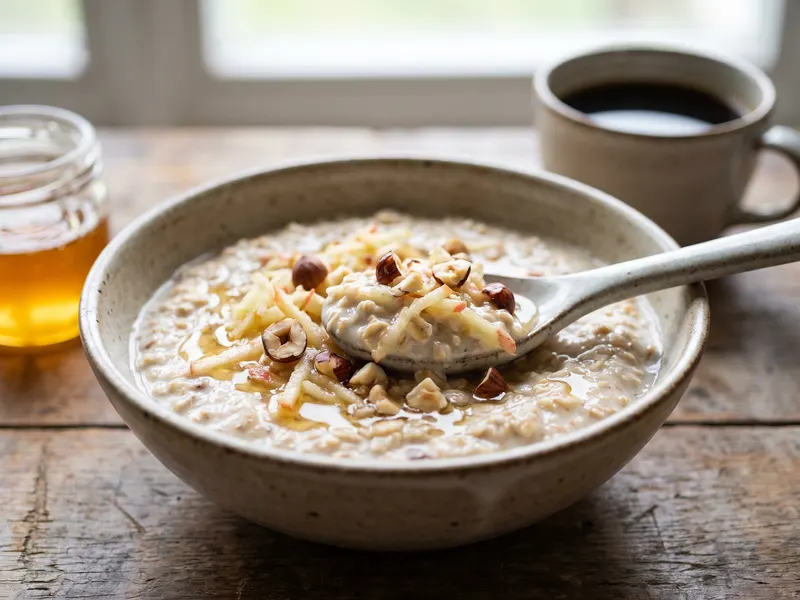
Bircher Muesli (Avena Nocturna suiza)
El muesli Bircher es un plato frío suizo de avena a base de manzana rallada, creado por el médico Maximilian Bircher-Benner alrededor de 1900 para los pacientes de su clínica de Zúrich. Los copos de avena se remojan toda la noche en yogur, leche y zumo de manzana junto con la manzana rallada y el zumo de limón, y por la mañana se cubren con fruta fresca, frutos secos y miel. El propio Bircher-Benner, como las recetas suizas de hoy, rallaba la manzana justo antes de comer; esta es la versión que se prepara con antelación, con la manzana remojada toda la noche junto a la avena. A diferencia de la avena nocturna moderna, centrada en los copos, en el muesli Bircher lo protagonista es la manzana: se ablanda y se funde con los copos durante la noche, dando sabor a todo el plato.
Ingredientes
- 100 gcopos de avena tradicionales
- 150 gyogur natural entero o yogur griego
- 100 mlleche entera
- 80 mlzumo de manzana
- 2 manzanas medianas
- 1 cdazumo de limón fresco
- 1 cdamiel o sirope de arce, y más para rociar
- 0.5 cdtacanela molida
- 30 gfrutos secos mixtos, picados groseramente
- 20 gpasas o sultanas
- puñadofrutos del bosque frescos o fruta de temporada, para servir
Preparación
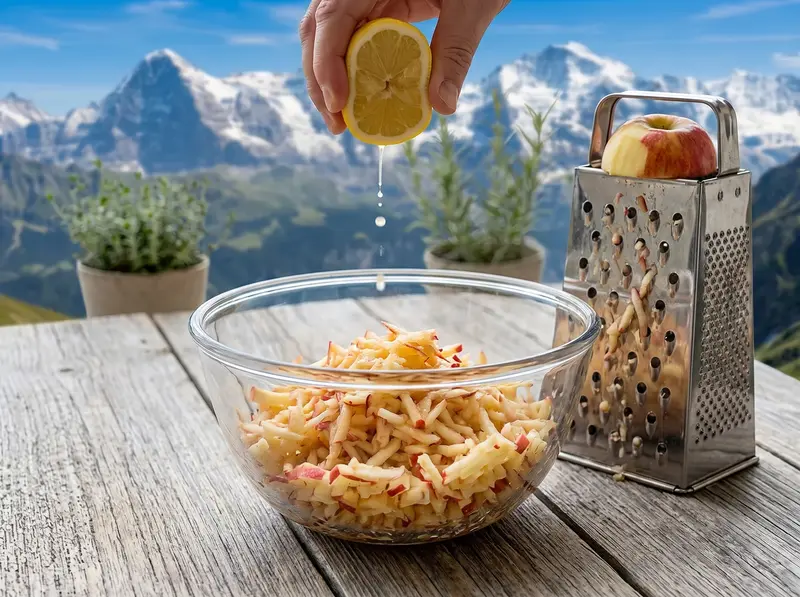
- Rallar la manzana. Coger una manzana y rallarla en grueso — con piel. La manzana cruda fresca rallada — no cocinada, no seca, no triturada — es el corazón del Bircher muesli. Rallar directamente en el bol de mezcla. Inmediatamente exprimir el limón sobre la manzana rallada y remover — el ácido evita la oxidación y el oscurecimiento y es esencial para el sabor del plato acabado. La manzana se ablandará durante la noche y se fundirá con los copos, soltando humedad y dulzor natural.
- Combinar todo y refrigerar. Añadir los copos de avena, el yogur, la leche, el zumo de manzana, la miel y la canela al bol con la manzana rallada. Remover todo hasta que esté uniformemente combinado. La mezcla parecerá bastante líquida — esto es correcto. Los copos absorberán el líquido durante la noche y la textura cambiará por completo. Añadir las pasas ahora si se quieren blandas. Si se prefieren firmes y diferenciadas, añadirlas por la mañana. Tapar bien el bol con film transparente o pasar la mezcla a tarros o recipientes herméticos. Refrigerar al menos 6 horas, idealmente toda la noche, para que los copos se hidraten por completo.
- Comprobar la textura por la mañana. Después de refrigerar toda la noche, el Bircher muesli debe estar espeso, cremoso y cohesionado — los copos totalmente ablandados, la manzana casi invisible, todo con un tono dorado pálido. Si se ve demasiado espeso, añade un chorrito de leche o zumo de manzana — el espesor depende de la humedad de la manzana que hayas usado. Si aún está líquido, déjalo una hora más en la nevera. La textura debe ser como unas gachas frías y espesas — suave y cremosa, ni crujiente ni aguada.
- Preparar los toppings. Corta la segunda manzana en rodajas finas o dados pequeños, dejando la piel. Dispón los toppings: rodajas de manzana fresca, frutos del bosque, frutos secos picados y un chorrito extra de miel. Se añaden justo antes de servir, no se mezclan de antemano — el contraste entre la base fría y cremosa y los toppings frescos y ligeramente crujientes es lo que hace que el Bircher muesli merezca la pena comer, y no solo ser nutritivo. Los frutos secos en particular deben ponerse en el último momento para que se mantengan crujientes.
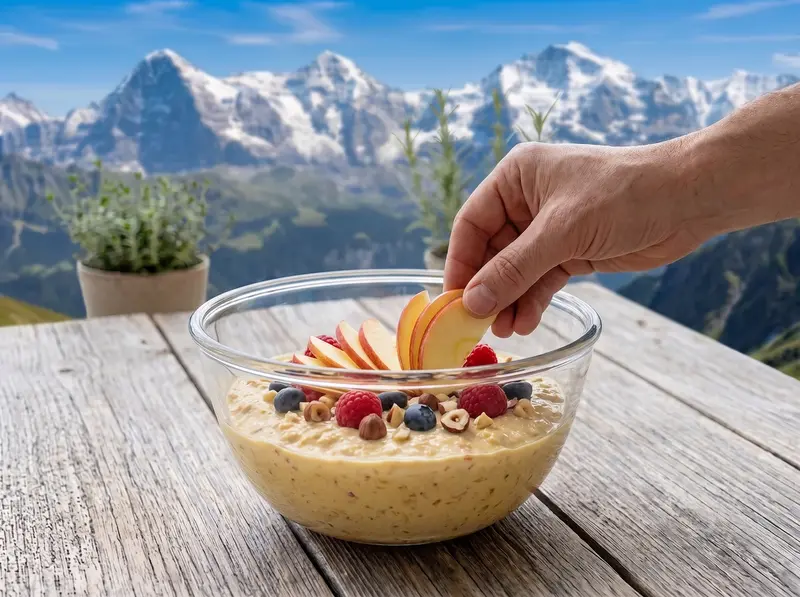
- Servir frío, directamente de la nevera. El Bircher muesli siempre se sirve frío. Repártelo en boles, coloca los toppings encima y añade un chorrito de miel. Se conserva refrigerado hasta 3 días — la base incluso mejora ligeramente al segundo día, según se asientan los sabores. No lo congeles (el yogur se separa al descongelarse). Si lo preparas con antelación, haz hasta 3 días de base y guárdala, añadiendo toppings frescos a cada porción justo antes de servir.
Preguntas
Comparten la misma idea básica — copos remojados en líquido durante la noche —, pero el Bircher muesli tiene un origen concreto: el Dr. Maximilian Bircher-Benner lo desarrolló para los pacientes de su clínica de Zúrich hacia 1900 como un plato de manzana, no de avena; la receta llegó a la imprenta en 1927, en el libro de cocina Wendepunkt de su hermana, Berta Brupbacher-Bircher. Su versión original llevaba 2-3 manzanas pequeñas, ralladas con piel y corazón incluidos, frente a solo una cucharada rasa de copos remojados en agua, una cucharada de leche condensada, el zumo de medio limón y una cucharada de frutos secos — el zumo de manzana y el yogur son incorporaciones posteriores que suavizaron la acidez y facilitaron prepararlo en casa. Los overnight oats, en cambio, son una reinterpretación estadounidense moderna, normalmente más dulces y con una proporción de avena mucho mayor respecto a la fruta; prueba nuestra receta de avena nocturna para esa versión.
Dos razones: el zumo de limón añadido nada más rallar inhibe la oxidación enzimática, y el yogur y el zumo de manzana recubren la manzana rallada en un ambiente ácido que ralentiza el oscurecimiento. Por la mañana, la manzana se ha integrado tanto en los copos que aunque hubiera algo de decoloración sería invisible en la mezcla. Lo importante es añadir el zumo de limón justo después de rallar — si tardas, la manzana empieza a oxidarse antes de que actúe el ácido.
Las recetas suizas piden simplemente una manzana ácida y firme. Braeburn y Cox encajan bien — un equilibrio entre dulce y ácido, con una textura firme que ralla bien y suelta buen sabor durante la noche. Granny Smith da un resultado más ácido y pronunciado. Gala y Fuji son más dulces y blandas. Evita manzanas muy blandas o harinosas (algunas variedades antiguas, manzanas muy maduras) — se deshacen en vez de rallarse limpiamente. Para el topping, una variedad más firme mantiene mejor la forma en rodajas.
Sí, y funciona bien. Usa yogur de coco o cualquier yogur vegetal en lugar de yogur lácteo — el de coco en particular da un resultado muy cremoso. Sustituye la leche por leche de avena, almendra o coco. El zumo de manzana ya es sin lácteos. El sabor y la textura son ligeramente distintos a la versión láctea pero igual de agradables. Si usas yogur vegetal sin azúcar, quizá quieras aumentar un poco la miel o el sirope de arce.
La mezcla base (copos, manzana rallada, yogur, zumo) se conserva 3 días en el frigorífico en un recipiente hermético. El sabor mejora el segundo día, mientras los aromas de manzana y avena siguen desarrollándose. No añadas los toppings frescos (rodajas de manzana, frutos rojos) hasta el momento de servir — se estropean y quedan blandos en la nevera. No congeles — el yogur se separa y la textura queda granulosa al descongelar. Para preparar con antelación, haz de una vez hasta 3 días de base y añade los toppings frescos cada mañana.
Valora
Recetas en tu correo
Un correo a la semana: una receta elegida a tu gusto y lo nuevo del sitio. Puedes dejar de recibirlo con un clic.
De regalo: el libro de recetas de Sergei (e-book).
Al pulsar el botón aceptas la política de privacidad.
Cuéntanos qué te gusta cocinar (30 segundos) →Sigue explorando
Más platos del archivo — elegidos por su solapamiento con lo que estás cocinando ahora.
Únete a la conversación
Comentarios (1)
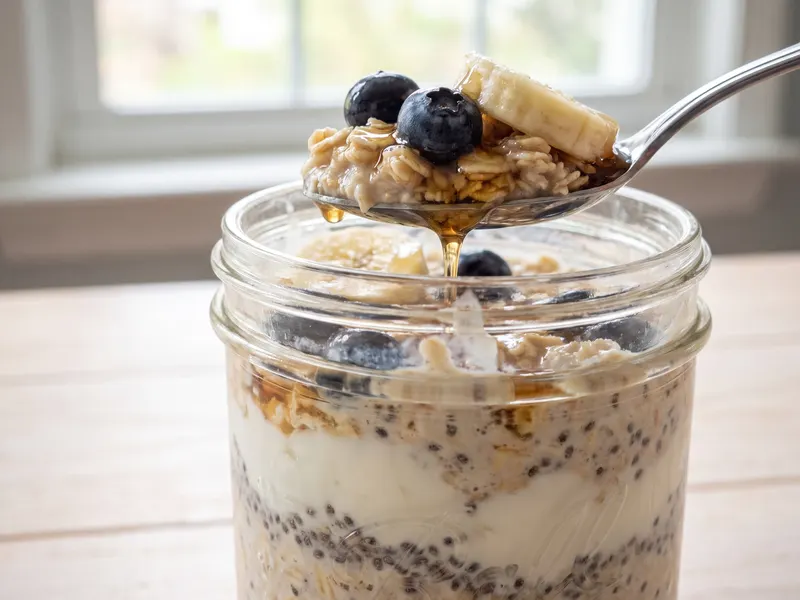
I soak the oats for this bircher muesli overnight in the fridge — never less than 8 hours. The oats soften completely and absorb all the apple and yogurt flavors while you sleep. Rush it with warm milk and you get a completely different, inferior texture.